World Responsible Tourism Awards
Responsible Travel founded the Responsible Tourism Awards in 2004 (we renamed them the World Responsible Tourism Awards later). At the time there was only one failing award scheme of its type and we wanted to shine a spotlight on the remarkable achievements in responsible tourism in order to inspire others by example.
We ran and presented these Awards at The World Travel Market in London for 13 years between 2004 and 2016 to celebrate the very best innovations and practice in responsible tourism globally. We found and awarded new ideas, which we've since seen copied globally, and they acted as a benchmark for new stages of development in the responsible tourism movement. We saw awareness of the sector grow quickly throughout this period.
Over the years a number of people approached us to ask if they could create local versions of our Awards. We agreed and the Irish, South African and Indian Responsible Tourism Awards were created using our judging criteria. In addition, we were delighted to see around a dozen other Award schemes of this type start. We see this as a success, as all of them help showcase good examples of responsible tourism and build awareness of the great things that can and are being achieved.
Having watched the number of awards schemes grow and flourish, our hopes and plans have been fulfilled. We now see other priorities for us, ways to pioneer creative projects to deliver change through our business; our activism and Trip for a Trip scheme; and we won't be running the Awards in 2017 or in the foreseeable future. We've archived all the stories of previous Responsible Tourism Award winners - some of the heroes of our industry - on these pages and we hope they'll inspire you too.
We ran and presented these Awards at The World Travel Market in London for 13 years between 2004 and 2016 to celebrate the very best innovations and practice in responsible tourism globally. We found and awarded new ideas, which we've since seen copied globally, and they acted as a benchmark for new stages of development in the responsible tourism movement. We saw awareness of the sector grow quickly throughout this period.
Over the years a number of people approached us to ask if they could create local versions of our Awards. We agreed and the Irish, South African and Indian Responsible Tourism Awards were created using our judging criteria. In addition, we were delighted to see around a dozen other Award schemes of this type start. We see this as a success, as all of them help showcase good examples of responsible tourism and build awareness of the great things that can and are being achieved.
Having watched the number of awards schemes grow and flourish, our hopes and plans have been fulfilled. We now see other priorities for us, ways to pioneer creative projects to deliver change through our business; our activism and Trip for a Trip scheme; and we won't be running the Awards in 2017 or in the foreseeable future. We've archived all the stories of previous Responsible Tourism Award winners - some of the heroes of our industry - on these pages and we hope they'll inspire you too.
Winners by year
Winners by category
2017 WTM Awards onwards
We are pleased that WTM have chosen to continue with a global Awards, with Harold Goodwin continuing to chair the panel of judges and to oversee the process of the WTM Responsible Tourism Awards, and the others in the family in Africa, India and Ireland.
Overall winners of the Awards
Each year we choose one winner from among all our category winners to be declared the Overall Winner. This organisation will demonstrate achievements clearly above and beyond those of the other Award winners.
Previous winners have been as diverse as New Zealand and London city tours offered by formerly homeless people.
Previous winners have been as diverse as New Zealand and London city tours offered by formerly homeless people.
2016 overall winners
There are two overall winners in the 2016 World Responsible Tourism Awards: Lemon Tree Hotel and Tren Ecuador. We want to leave a mark as to where Responsible Tourism is at present, to highlight organisations that really are taking tourism in a new and highly responsible direction for the future. The judges found it very difficult to separate the two overall winners, as both have had significant impacts at scale in their respective areas and have the potential to inspire real change - as such they are awarded jointly:
Winner: Tren Ecuador, Ecuador
The judges recognise an unusual and multifaceted approach to tourism planning. They hold Tren Ecuador up as an outstanding, holistic example of how all tours should be designed, and feel that if all tourism was planned in this way it would be very effective at making better places in which to live, as well as better places to visit.
Winner: Lemon Tree Hotels, India
Lemon Tree Hotels are recognised for tackling, effectively, a huge social problem in their destination. A big business, the third largest hotel chain in India, is successfully getting people of many different social and physical special needs into the tourism workforce and also making this a core part of their operations. This is an exciting, powerful statement that we hope will inspire and inform many of the other big players in tourism today.
Watch our 2016 film, with footage from the
2016 finalists:

PLAY
2015 winner
Winner: LooLa Adventure Resort
In choosing the overall winner, the judges look for examples which are surprising and inspiring. And this year, they all went loola for LooLa. An Indonesian island idyll, LooLa Adventure Resort that is more switched on to sustainability, ecotourism and social responsibility than many of the top brand businesses claiming to be green leaders on these islands. Leaders who are not only committed to employing local staff, but supporting them to become entrepreneurs in their own right. And yet it hides its achievements under a tropical bushel. Not for long though...
2014 winner
Judges' comments:
The judges wanted to recognise two very different category winners, Campo and Parque dos Sonhos and South African Animal Sanctuary Alliance. The Sanctuary Alliance for demonstrating that animal attractions can liberate previously captive wildlife and, without petting or exploitation, be commercially successful. Parque dos Sonhos for demonstrating that truly inclusive tourism can enhance the adventure activity experiences for everyone and enable families and friends to share the experience. Both winners demonstrate that it is possible to address the rights agenda, to swim against the tide, and be commercially successful.
The judges wanted to recognise two very different category winners, Campo and Parque dos Sonhos and South African Animal Sanctuary Alliance. The Sanctuary Alliance for demonstrating that animal attractions can liberate previously captive wildlife and, without petting or exploitation, be commercially successful. Parque dos Sonhos for demonstrating that truly inclusive tourism can enhance the adventure activity experiences for everyone and enable families and friends to share the experience. Both winners demonstrate that it is possible to address the rights agenda, to swim against the tide, and be commercially successful.
Joint winners: Campo & Parque dos Sonhos
Joint winner: South African Animal Sanctuary Alliance
In 2013 the Awards celebrated their 10th anniversary. Watch our film, and discover 10 years of inspirational winners:
2013 winner
Winner: TUI Nederland
TUI Nederland developed policies and trained staff to identify child abuse, whether amongst the families for whom they provide holidays or abuse perpetrated by travellers in the destination. They have been working to protect children from abuse since 2002 when they signed the Child Protection Code with ECPAT Nederland. They have worked to embed child protection into their routine business operations and have extended this commitment through their network of supplier and partners.
Realising that child sex tourism is silently growing in the Northeast of Brazil, TUI Nederland and its numerous partners launched a campaign to say "a collective 'NO' to child sex tourism in the Northeast of Brazil". TUI Nederland has contributed over €100,000 since 2008 to fighting child exploitation in the region; 80 adolescents from 14 to 17 years of age have been trained as 'Youth Mobilizers', for the prevention of sexual exploitation of children and adolescents, reaching over 2,000 people. Their vocational training programme has 104 graduates of whom 39 were employed throughout 2012.
Realising that child sex tourism is silently growing in the Northeast of Brazil, TUI Nederland and its numerous partners launched a campaign to say "a collective 'NO' to child sex tourism in the Northeast of Brazil". TUI Nederland has contributed over €100,000 since 2008 to fighting child exploitation in the region; 80 adolescents from 14 to 17 years of age have been trained as 'Youth Mobilizers', for the prevention of sexual exploitation of children and adolescents, reaching over 2,000 people. Their vocational training programme has 104 graduates of whom 39 were employed throughout 2012.
2012 winner
Winner: Reality Tours and Travel, India
Established in 2005, Reality Tours had 10,000 guests last year. They offer city and village tours in Mumbai and beyond, this Award is for their educational Dharavi Slum Tours.
In recent years slum tourism has become increasingly popular, and increasingly controversial. Reality's tours aim to be an educational look at the strengths, opportunities, challenges and issues of life in the Dharavi community.
They donate 80% of post-tax profits to their sister NGO, Reality Gives. Reality Gives provides educational programmes for residents of Dharavi, and supports a number of micro-enterprise and community initiatives including sports, beekeeping, and youth empowerment programmes.
Among the success stories the company is able to lay claim to is that of Kaveri, who participated in their Youth Empowerment Program in 2011. A resident of Dharavi all her life, she had been a school drop-out. Although she had been unable to afford the course deposit of Rs500, which is charged to ensure attendance and reimbursed upon successful completion of the programme, Krishna, Reality's co-Founder paid Kaveri's deposit as he believed in her enthusiasm and willingness to succeed. In May of this year Kaveri joined Youth Career Initiative's Hotel Management Programme and is now training at the Four Seasons in Mumbai.
In recent years slum tourism has become increasingly popular, and increasingly controversial. Reality's tours aim to be an educational look at the strengths, opportunities, challenges and issues of life in the Dharavi community.
They donate 80% of post-tax profits to their sister NGO, Reality Gives. Reality Gives provides educational programmes for residents of Dharavi, and supports a number of micro-enterprise and community initiatives including sports, beekeeping, and youth empowerment programmes.
Among the success stories the company is able to lay claim to is that of Kaveri, who participated in their Youth Empowerment Program in 2011. A resident of Dharavi all her life, she had been a school drop-out. Although she had been unable to afford the course deposit of Rs500, which is charged to ensure attendance and reimbursed upon successful completion of the programme, Krishna, Reality's co-Founder paid Kaveri's deposit as he believed in her enthusiasm and willingness to succeed. In May of this year Kaveri joined Youth Career Initiative's Hotel Management Programme and is now training at the Four Seasons in Mumbai.
Previous winners, 2004 - 2011
2011 - Joint winners: Robin Pope Safaris & Sockmob Event/Unseen Tours
"This year the Judges wanted to Award two joint overall winners to recognise both long term excellence, and bold innovative new ideas. Robin Pope Safaris' 20 year record of remarkable work with local communities in Zambia is a standard for tourism organisations to aspire to. At the same time, Sock Mob Events/Unseen Tours offers a glimpse of new perspectives for the future. The Judges feel the combination of proven and new, Africa and London, demonstrate the breadth of achievement in responsible tourism."2010 - Nihiwatu, Indonesia
"The Judges were impressed by the unquestionable scale of change achieved by this comparatively small resort. Importantly, Nihiwatu has been able to leverage the income from what is a very luxurious tourism experience to alleviate poverty among the Sumbanese, and they have done so without compromising the comfort of that experience."2009 - Whale Watch Kaikoura, New Zealand
“Rarely do we see a tourism initiative developed from the ground up by a local community to such a successful and grand scale, growing from modest beginnings.Whale Watch Kaikoura provides consistently responsible whale watching tours with minimal impacts. The founding of the enterprise by four Maori families has demonstrated that the local Maori community can not only grow a considerable tourism business, but, more significantly, use that business to buy back their ancestral land for the benefit of the indigenous people and their cultural identity."
2008 - New Zealand
The judges declared New Zealand the overall winner for proving that it is possible to develop a national strategy which uses tourism to help make better places to live and to visit.“New Zealand has implemented many of the principles of the Cape Town Declaration on Responsible Tourism in Destinations and demonstrated what national government can achieve - working with the private sector, local communities and local government - by harnessing tourism to benefit their people and their environment.
If more national governments followed their example, tourism would make a much more positive contribution around the world.”
2007 - The New Forest, UK
“This is a destination which has worked over the last 15 years with visitors, the industry, the community - including commoners and small holders - to look after the environment (the VICE model: Visitor, Industry, Community, Environment) and to benefit all interests as well as providing a model for other destinations to follow.This includes the exciting contribution of the New Forest Breakfast to sustainable development, only possible because there are now sufficient local suppliers to meet the demand for local produce from locals and visitors.”
2006 - Joint winners: Intrepid Travel, UK & Ol Malo Lodge & Trust
Intrepid stood out for its efforts and foresight in empowering the local communities it works with by establishing local businesses in its destinations, using and training local operators. The judges were particularly impressed by the way in which Intrepid facilitates interaction between tourists and the host community, providing extensive guidelines to their travellers on how to travel responsibly both prior to and during travel.Intrepid was also notable for submitting itself to a rigorous external audit, and for thoroughly thinking through the work of its foundation, The Intrepid Foundation, over and above what others have done, creating an endowment to help the local people through a disaster on the scale of the recent tsunami. Intrepid Travel have set the bar very high this year.
Ol Malo Lodge & Trust are an eco-lodge and charitable trust situated in the deserts of Samburuland in Northern Kenya, on what was an overgrazed cattle ranch. Their key achievement to date is the establishment of The Ol Malo Eye Project which focuses upon the eradication of Trachoma - a cause of painful blindness in over 80% of adults over 30 – from the Ol Malo area. This is an infectious and preventable disease, the root of which is poverty.
They value most highly of all their interaction with the community through the women and children who come to Ol Malo to produce beadwork and paintings. This a chance for Ol Malo to see if they are achieving their aim for the community: to contribute to the preservation of the Samburu people in such a way that the Samburus are independent, strong and empowered to live their lives in the way that they strongly desire and choose.
2005 - Tribes Travel Ltd
“One of the first tour operators (if not the first in the UK) set up specifically to promote holidays which benefit local people, wildlife and environment - particularly community tourism. Their outstanding contribution has been to show that it really is possible to make a valid and successful business in tourism whilst promoting local community tourism products.”2004 - Joint winners: The Calabash Trust & Exodus
Calabash Trust and Tours - township tours in Port Elizabeth South Africa - are a shining example of how tourism can benefit the poor.Exodus are an outstanding example of how responsible tourism can become part of a company’s DNA and run like a thread through all the company’s activities.
More Responsible tourism articles
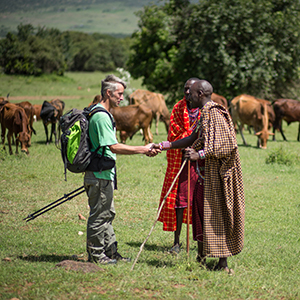
Our guide celebrates the good that tourism can do in nature and communities.
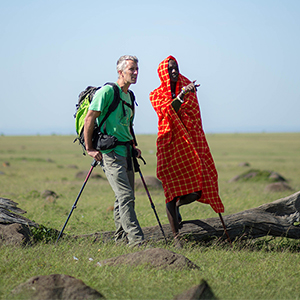
When it comes to the future of tourism, it's essential that local people have their say.

The era of unrestricted growth is over – here’s how we can fix the overtourism issue.
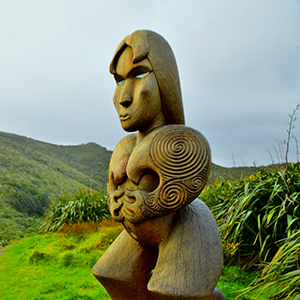
A radical concept, regenerative tourism differentiates itself from sustainable tourism – but can its big ideas catch on?
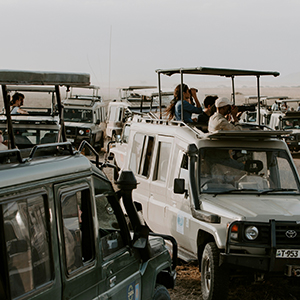
There are certain aspects of tourism where we believe we have a responsibility to just shout ‘stop!’.
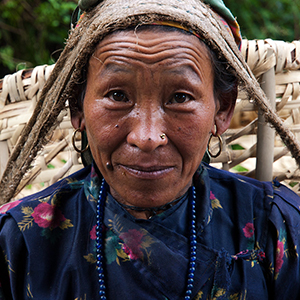
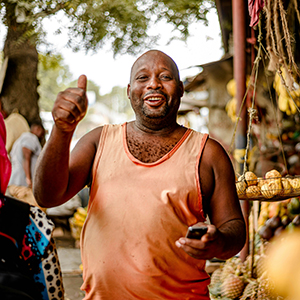
Small travel companies, big impacts - read about some of our inspiring partners.

Indulge yourself with our guide to the joy of eating local when you’re away.

Congratulations to this year's winners: Lemon Tree Hotel and Tren Ecuador.
Meet this year's inspiring overall winner, LooLa Adventure Resort.
Learn who took home the Responsible Tourism awards in 2014, and why.
TUI Nederland took home the gold for its work in child protection.

This year's winners show how to tour India's slums on an ethical basis.

A small Indonesian resort made a big difference in alleviating poverty.
We celebrate a Kiwi community's amazing wildlife tourism initiative.
Worthy winner New Zealand uses tourism to make better places to live and visit.

Explore the full list of this year's winners, including the New Forest.
Ol Malo Lodge & Trust and Intrepid Travel share the glory in 2006.
Spoiler alert - Tribes Travel win for their brilliant community tourism work.
Browse the categories and the fantastic winners of our first RT awards.
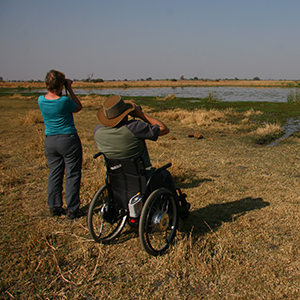
We highlight some of those doing great work to make tourism more accessible.
Highlighting those with a progressive ethical approach to animals in tourism.
Spotlighting brilliant bloggers who inspire people to holiday more responsibly.
Tourism can make places better to live, and to visit.