Why are there so few wildlife holidays in England?
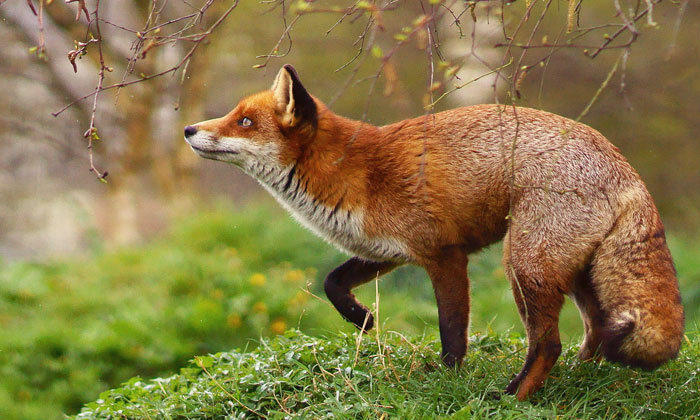
Fox. Photo by Peter Trimming
England is a nation of animal lovers. We care deeply for our pets, we spend hours watching nature documentaries and most of us would leap at the chance to take a safari in Africa. But when it comes to our native wildlife, the picture get more complicated.
Whenever the subject arises of badgers, wolves or birds of prey, it results in a huge, controversial and often vitriolic debate between the public, landowners, farmers, the media and the government. As a nation, we can’t seem to agree on the role of our wildlife. Opportunity or threat? Harmless or harmful? Should it even be allowed to coexist with us?
At Responsible Travel, we sell hundreds of wildlife vacations around the world. But wildlife vacations in England may as well not exist. Why?
To start with, there isn’t much to see. Deer and grey squirrels may be thriving, but many species in the UK are in decline, with one in six at risk of being lost altogether. And the wildlife that remains is rarely free to go about its business quietly. Badgers are culled in an attempt to halt the spread of bovine tuberculosis; birds of prey are routinely poisoned or shot if they are deemed a threat to livestock. Big predators like wolves, bears and lynx still roam many parts of Europe – keeping ecosystems stable and healthy, and drawing wildlife tourism – ours were driven to extinction many generations ago and their return to England feels like a near-impossibility.
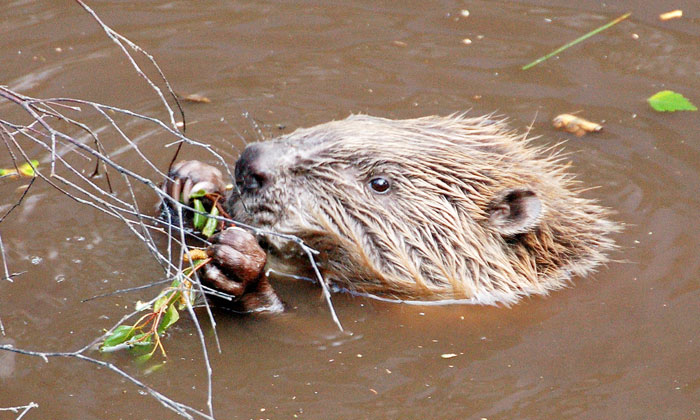
Beaver. Photo by Paul Stevenson
It doesn’t have to be this way – England could be hopping with wildlife. Mainland Europe shows us how. There, fertile lowlands are used for agriculture, while forested uplands, where the soil is poorer and the climate harsher, are allowed to provide natural wildlife refuges for large predators and herbivores. In England, however, habitat loss is significant. Aside from the odd conifer plantation, there are few trees growing more than 200m above sea level. Woodland cover in England stands at just 10 percent, with the UK as a whole one of the least wooded countries in Europe.
In certain parts of England, the landscape is managed and manipulated to support niche sports like shooting. Northern England’s grouse moors are burned and drained to suit grouse but few other species. Foxes, stoats and crows are trapped or shot because they eat grouse. Mountain hares are killed because they carry ticks that affect the prize birds. Protected birds of prey, including the hen harrier, have been illegally killed, as they predate on grouse.
Elsewhere, intensive farming has stripped much of the English countryside of its biodiversity, and although the national flock is down to levels last seen during the mid-20th century, sheep farming still influences and shapes many of our natural landscapes. Sheep selectively browse out tree seedlings, ensuring that forests cannot regenerate.
Deer also destroy woodland habitat and, with no natural predators, their numbers are at their highest level for 1,000 years. Reintroducing wolves and lynx to England would help reduce the deer population, but wolves’ perceived threat to human life – as well as to livestock, particularly sheep – frequently sparks resistance. Which is ironic, as in England today it’s the deer that are dangerous. Thousands of deer-vehicle collisions are reported every year resulting in hundreds of people being injured and several killed. Yet no human has ever been recorded killed by a lynx, while deaths by wolves are exceedingly rare.
In part it’s simply a lack of room that lies behind England’s complicated relationship with its own wildlife. In our tiny country, land is under pressure and while humans play the role of landlord, the wildlife sharing space with us is under pressure to behave right, or be forced out.
There is also a lack of vision. The advantages to be gained in drawing inspiration from Europe – healthier ecosystems, opportunities for tourism – are clear. Yet lawmakers remain timid, reluctant to face down media scare stories and the wealthy vested interests of those that want to keep England barren of wildlife for their own benefit.
But while England is still far from a wildlife-friendly country, recent years have seen some good news, which we outline below, as well as a lot more work to be done.
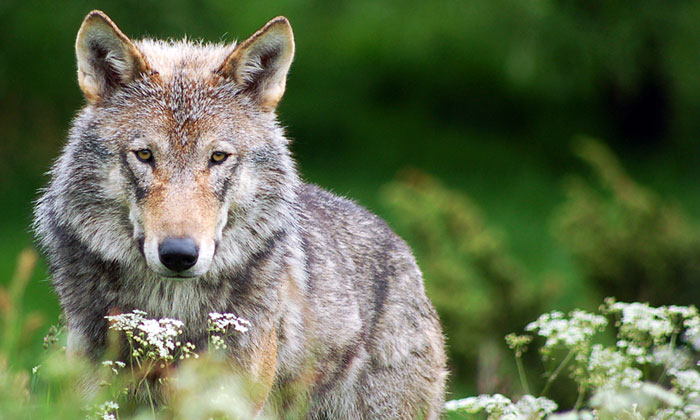
Wolf. Photo by Robert dewar
Badgers
Badgers can carry bovine tuberculosis and thousands of them are culled annually in an attempt to control the spread of the disease to cattle. This is a highly controversial approach. Scientists and activists say there is little evidence that the culls help cut TB rates (the vast majority of transmissions are cow-to-cow), and that it risks spreading the disease further by disrupting badger populations. Some question the economics of culling, too, with vaccination costing around £90 per badger, compared to £7,000 per culled animal.
But positive change is on the way. A vaccine for bovine TB has been developed, and cattle will begin to be vaccinated from 2030, with badger culls expected to end from 2029.
Foxes
Hunting foxes with hounds is banned, but attempts to repeal the law continue, despite regular polls showing the public is opposed to it being legalised. Trail hunting, where hounds and riders follow an artificial animal scent, is still legal, however, though animal rights activists claim the practise is simply a means of sidestepping the hunting ban, and still results in live foxes being chased and killed.
The National Trust, England’s largest conservation organisation, prohibits trail hunting on its land. It does allow drag hunting, however, which is similar to trail hunting with one crucial difference – the artificial smell the hounds follow is not that of an animal.
Beavers
Dozens of beavers are now being released into the wild across England every year in one of the country’s most successful (and needed) reintroduction programmes. Beavers are a keystone species – their presence, or lack of it, has a fundamental effect on an ecosystem. Their dams create habitats for tons of other species, slow rivers, reduce erosion and remove pollutants, and can protect towns and villages from flooding. Unfortunately, they sometimes also flood productive land, which puts the beavers in the bad books of farmers and landowners.
European beavers were once widespread in the UK, but in England they were hunted to extinction by the 16th century. Now, they are making a long overdue comeback and already there are clear and obvious positive effects on the river ecosystems where they are being released. Long may it continue, and hopefully inspire other reintroduction causes.
Wild boar
Wild boar live all over Europe, but in this country they are noticeable by their absence. England’s original wild boar were extinct by the 13th century but were reintroduced in the 17th, 18th and 19th centuries, before being hunted out. Today, there are populations in Kent, East Sussex and the Forest of Dean that have escaped from private estates. Their habit of rooting up the ground for worms and grubs makes them unpopular with gardeners and farmers, plus they sometimes feed on agricultural crops, can pass on disease to domestic livestock and can be dangerous if cornered. However, in their hungry hunt for bulbs and tubers, wild boar break up the soil, making it easier for plant seeds to take root. They’re not known as one of the ‘ultimate soil ecosystem engineers’ for nothing. Their return could be hugely beneficial to England's woodland ecology
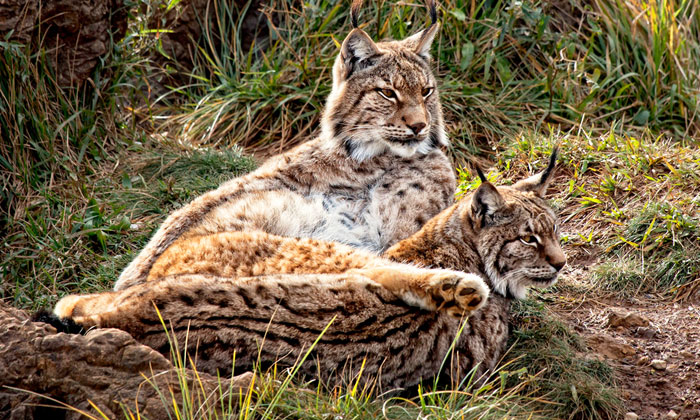
Lynx. Photo by Leon F. Cabeiro
Lynx
Hunted to extinction for its fur between 500-700AD, the lynx is a British Isles native. It preys mainly on deer, rarely taking agricultural animals, and poses no threat to humans. There are plans to reintroduce lynx in Kielder Forest, Northumberland, and local consultations are ongoing. Lynx would help control deer numbers and protect forests from deer damage, and where they have been reintroduced in Europe, wildlife tourism has flourished.
Projects of limited scope like this are where we could really do with seeing boldness from government. Reintroductions need to be properly researched and prepared for, but they shouldn’t drag on for years.
Wolves
There are no current plans to reintroduce wolves to the English countryside. While wolves are naturally shy of people, few areas of the country can really be called ‘remote’ so it is inevitable that the range of any population would bring them into proximity of human communities. As unjustified as their reputation is, a reintroduction currently looks unlikely.
However, a pack of six Swedish wolves was brought to a wildlife reserve in Devon by the Wildwood Trust, an organisation that works to conserve British wildlife and reintroduce animals to where they once lived.
Take action!
- Foxes: read more about the League Against Cruel Sports’ campaigns.
- Beavers: help Devon Wildlife Trust raise money to support its existing beaver community and ensure the animals are allowed to remain in the wild.
- Lynx: support the work of the Lynx UK Trust and get updates on plans to reintroduce Lynx to Kielder Forest.
- Rewilding: learn more about rewilding projects and donate at Rewilding Britain.
- Woodlands: Help increase woodland cover across the UK with the Woodland Trust’s tree pack giveaway for schools and communities.