Pangolins and mammals of Ghana holiday
Price
£4795 including domestic flights only
Convert currency:


Duration
16 Days
Type
Small group
More info
Inc.
local naturalist guides, all meals as metnioned, transfers & wildlife excursions including nocturnal safaris as mentioned and domestic flights (Tamale to Accra); exc.
international flights, visas and some meals in Accra, alcohol & personal items
local naturalist guides, all meals as metnioned, transfers & wildlife excursions including nocturnal safaris as mentioned and domestic flights (Tamale to Accra); exc.
international flights, visas and some meals in Accra, alcohol & personal items

Description of Pangolins and mammals of Ghana holiday
Price information
£4795 including domestic flights only
Convert currency:
Inc.
local naturalist guides, all meals as metnioned, transfers & wildlife excursions including nocturnal safaris as mentioned and domestic flights (Tamale to Accra); exc.
international flights, visas and some meals in Accra, alcohol & personal items
local naturalist guides, all meals as metnioned, transfers & wildlife excursions including nocturnal safaris as mentioned and domestic flights (Tamale to Accra); exc.
international flights, visas and some meals in Accra, alcohol & personal items
Check dates, prices & availability

Travel guides
Our holidays in Ghana are not so much about big sights, but appreciating the little things in life.

Responsible Travel was built out of a love of solo travel, and we want to share the joy of it with you.
Holiday information
Dietary requirements:
We can cater for vegetarian and vegan diets.
Responsible Travel
As the pioneers of responsible tourism, we've screened this (and every) holiday so that you can travel knowing we've worked to maximise the benefits of your holiday to local people and places, and minimise any negative impacts.
Planet
CARBON REDUCTIONIn Ghana (as with everywhere we go) we carefully choose accommodation, suppliers and transportation that either minimise their effect on the environment or that help to contribute to its sustainable development.
On this trip we drive in one vehicle when making ground transfers, so to reduce emissions by not using more than one vehicle. We have changed the itinerary order to make better use of the newer road networks in Ghana, which means a reduced mileage when driving between locations.
The accommodation we use on the trip are all locally owned private guest houses and small hotels and in Mole National Park we use the national park's own motel locating inside the park.
A couple of the accommodation options we use (in Kakum and Amedofze) run many local community projects including employment schemes in the local agriculture industry which provides the local hotels and lodges with most of their food as well as coordinating local guide training (not just in wildlife watching but general tours as well).
One property in particular (Hans Cottage Botel) runs many school based trips and educational programs which visit the accommodation as well as enter Kakum National Park to experience the wilderness areas and gain an appreciation for nature and how it can be protected sustainably.
When staying inside Mole National Park the accommodation gains a lot of their power from solar panels, and the water is locally sourced through bore holes.
Nearly all food is locally sourced where throughout the trip and vegetarian and vegan meals can be provided, red meat consumption is naturally low on this trip as the main proteins available are beans, fish and chicken.
ENVIRONMENT AND WILDLIFE
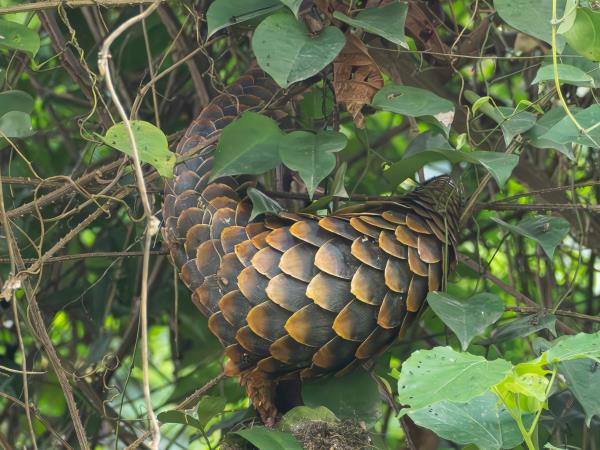
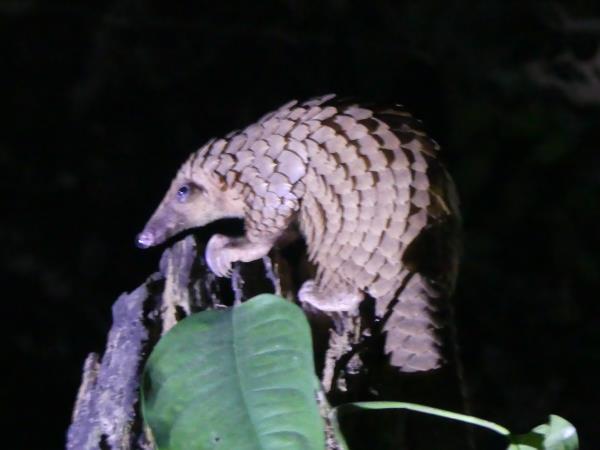
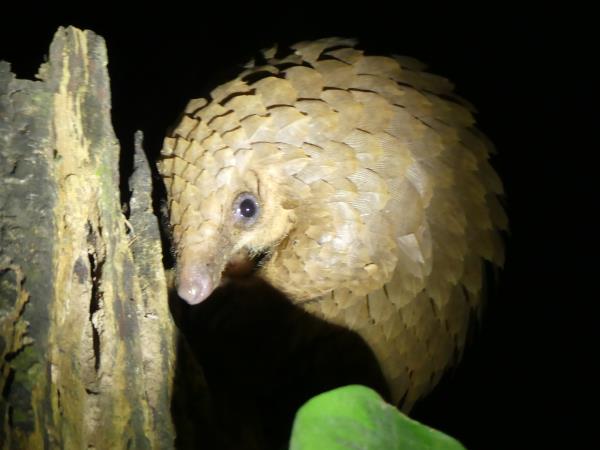
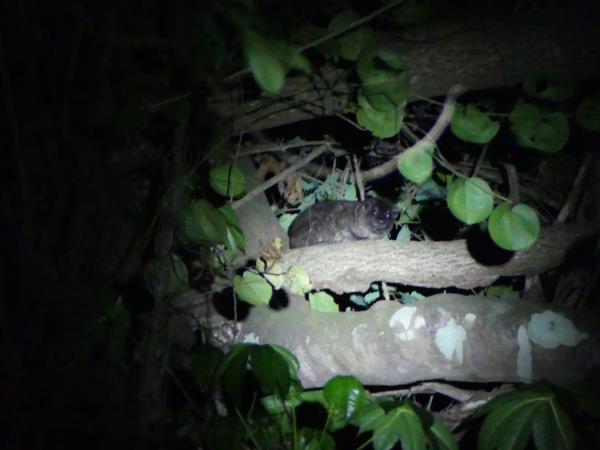
As touched on above, we visit several private properties at all locations possible (including when in Accra) as well as staying inside the Mole National Park. Nearly all of these properties are located in urban or semi urban locations (except for Mole) and so direct environmental projects are not easy to manage, but several of our chosen accommodation (in Kakum and Amedozfe particularly) have large private farmland which produce nearly all of the food consumed by our clients, hire many local people who would otherwise struggle for work and perhaps contribute to forest exploitation and are left semi-wild and thus increase habitat for species which can tolerate living around villages (such as fruit bats, pouched rats and in the case of one special forest near our picathartes site pangolins).
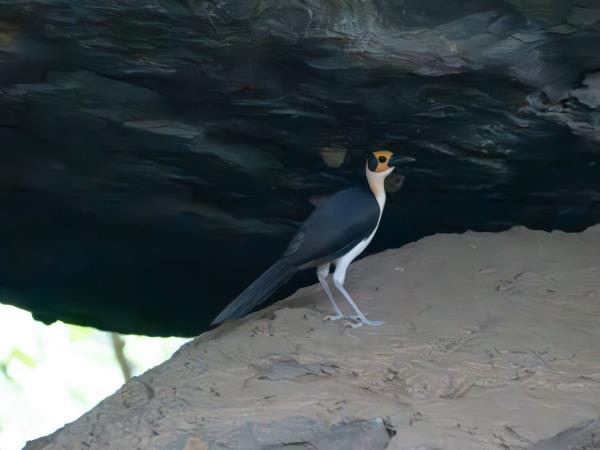
Our main local guide was responsible for the discovery and then after 20 years rediscovery of the population of yellow-headed picathartes in at the location we visit. This has lead to the whole village building up a network of local guides, guide training and employment for the many birding groups which now visit. The guiding is all done on a rotation system so all trained members of the village get employment and in recent times the local guides have found the benefit of understanding more about the different species in the forest, including pangolins. The forest is now perhaps the most reliable place for pangolin sightings because of the local empowerment of the villagers in their long term ecotourism projects.
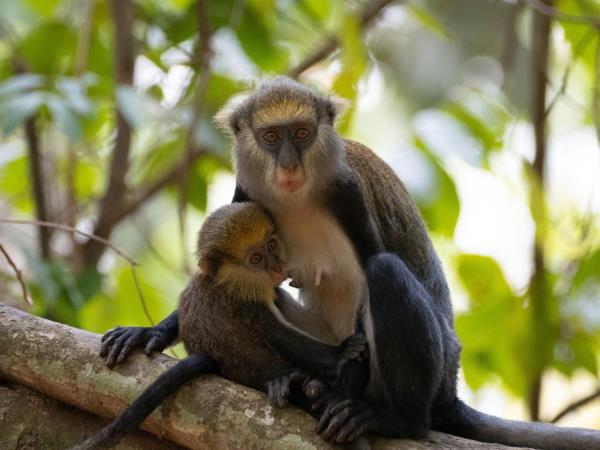
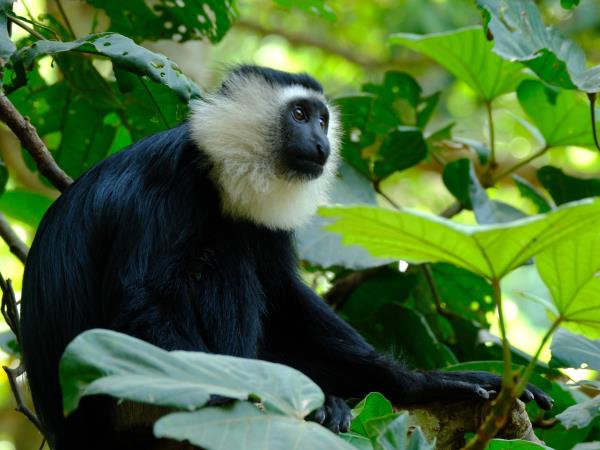
Another important aspect of our trip is a visit to the wonderful community based conservation project of Boabeng Fiema Monkey Sanctuary. Community work at the Boabeng-Fiema Monkey Sanctuary centers on a unique blend of centuries-old traditional conservation, ecotourism, and habitat management. Because the monkeys are revered as "children of the gods", community-led initiatives are the backbone of protecting the area's hundreds of Mona monkeys and white-thighed Colobus. This all started because of traditional taboos of the locals believing that harming, hunting, or eating the monkeys is strictly prohibted. This level of local protection and care meant that when people migrated to the area who didn't have these taboos the monkeys and therefore forest were well protected.
Residents actively participate in managing the sanctuary, serving as field guards, tour guides, and hosting visitors through village homestays to provide supplementary income. The locals and conservation stakeholders work to plant indigenous tree species and restore degraded forest areas to ensure the primates have adequate food and shelter - this project is mirrored perfectly near Amedozfe which we also visit.
By bringing people here with a professional naturalist as well as professional local guides we aim to showcase the environment in full but also to allow you to learn about the problems facing the ecosystems here and highlight the ways that continued development and human exploitation are affect the species and how cutting edge research is countering the problems as well as showing you examples of success stories. We also keep a record of all the great sightings we see on each tour and record the environmental factors, this data is used by ourselves but also given to the researchers who are working on many of these species. All the information collected in invaluable as the knowledge of some of the animals that live here are little understood. We also donate our pictures to the researchers to aid in their photo identification studies where species can be individually identified.
People
LOCAL ECONOMYAll of the accommodation we use throughout our Ghana tour are locally owned. Many are directly owned by the family of the management and in some cases (such as when in Techiman) we use locally owned (Ghanaian) small hotels. Meaning that all of the money for these stays enters and stays in the local economy.
With any of our tours throughout Africa or elsewhere in the world we always employ local guides and drivers. We also do our best to employ as many local guides as possible, so that we can share the money from tourism around more than one regularly used guide. On our Ghana tours we often include a trainee guide to come along with us and be trained on the spot by our main local guide and where we send one our tour leader.
On this trip our guide is from Cape Coast as is our driver and when we visit the various areas such as Mole, Amedozfe and others we hire local guides to that area and village. Always making sure that we adhere to the local community guide training schemes and employ people in their system (whether that is a senior and trainee partnership or a rotator program for guide allocation).
This not just helps in supporting the local people with income direct from wildlife tourism but these local people often have much better local knowledge of the wildlife.
As we cover a large amount of ground on this exploration of Ghana we make various stops for supplies and these are all done at small locally owned shops, where available. There are not many places to stop for souvenirs on this trip as we visit some remote places, but where the accommodation and national parks we stay and visit at have their own homemade handicrafts and food products (such as stingless bee honey which is a local project around Kakum) we promote these to our clients.
EMPLOYMENT, INCLUSIVITY & DIVERSITY
All of the people employed as part of this trip are from Ghana and many of the drivers we employ are from the local communities we are visiting for wildlife.
We work hard to provide a genuine pathway from driver to guide, by helping educate English speaking as well as providing coaching and informal training on guiding techniques. We also donate equipment which can help in this progression in the form of binoculars, field guide books and torches. We often bring along a young trainee guide from the Cape Coast region on our trips to be trained on the spot by our lead guide.
This trip is LGBTQ+ friendly.
A lot of the trip is on foot, walking along forest trails which are uneven and sometimes include steep stairs and a narrow canopy walkway. So people with severe mobility issues will struggle, the trip is not wheelchair safe.
Popular similar holidays
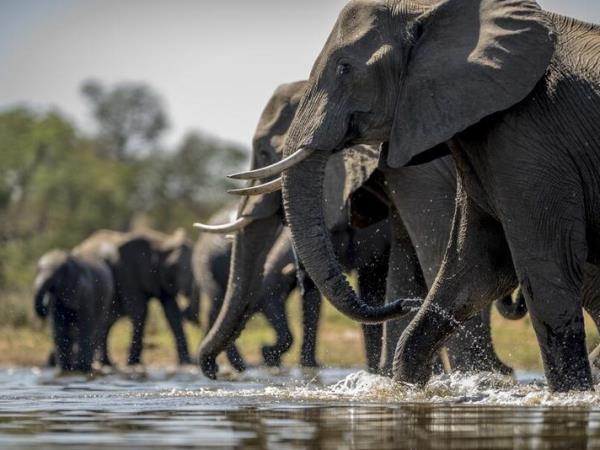
Ghana wildlife safari, 4 days
From US $1300 - US $1450 5 days including domestic flights only
Experience an exciting wildlife adventure at Mole NP
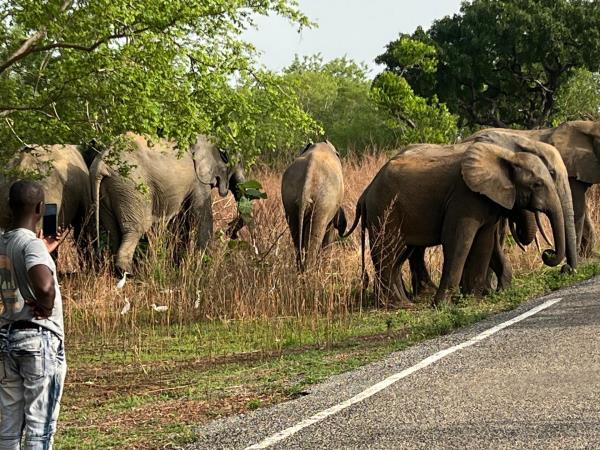
Mole National Park safari, Ghana
From US $2000 - US $2500 5 days excluding flights
Safari in the Guinea Savannah region of Ghana
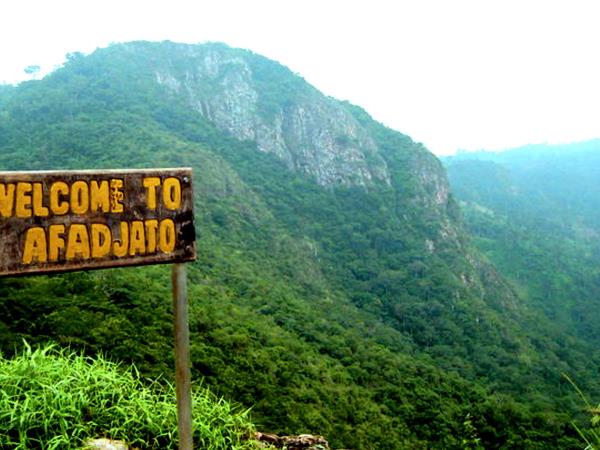
Hiking adventure in Volta, Ghana
From US $1450 - US $2200 5 days excluding flights
Waterfalls, wildlife and Ghana's highest peak