Trans Bhutan trail trek & black-necked crane festival
Price
£3599To£3949 excluding flights
Convert currency:


Duration
11 Days
Type
Small group
Group size
4-12
More info
Not included: Alcoholic drinks,
tips, souvenir items, travel insurance.
Single supplement is £180pp.
Single supplement is £180pp.

Description of Trans Bhutan trail trek & black-necked crane festival
Map
Price information
£3599To£3949 excluding flights
Convert currency:
Not included: Alcoholic drinks,
tips, souvenir items, travel insurance.
Single supplement is £180pp.
Single supplement is £180pp.
Check dates, prices & availability

Travel guides
Our guide shares insights into what hiking here entails, as well as practical information.
Be part of a pack on your next outing. These small group walks promise fun and friendship on the trail.
Responsible Travel
As the pioneers of responsible tourism, we've screened this (and every) holiday so that you can travel knowing we've worked to maximise the benefits of your holiday to local people and places, and minimise any negative impacts.
Planet
CARBON REDUCTIONThis journey through Bhutan has been designed to prioritise low-impact travel choices, wherever this is realistically possible in a mountainous country where infrastructure is deliberately limited to protect culture and environment. The itinerary avoids any internal flights within Bhutan, instead travelling slowly overland by shared vehicle and on foot. This significantly reduces the per-person carbon footprint compared with flying between regions, particularly on routes such as Paro to Bumthang or Paro to Gangtey. By committing to road travel, this trip also allows travellers to experience the gradual changes in landscape, altitude and culture that define Bhutan, reinforcing and celebrating the value of slow travel.
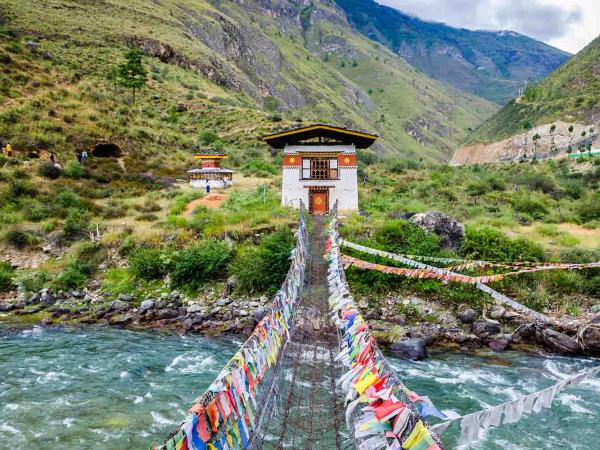
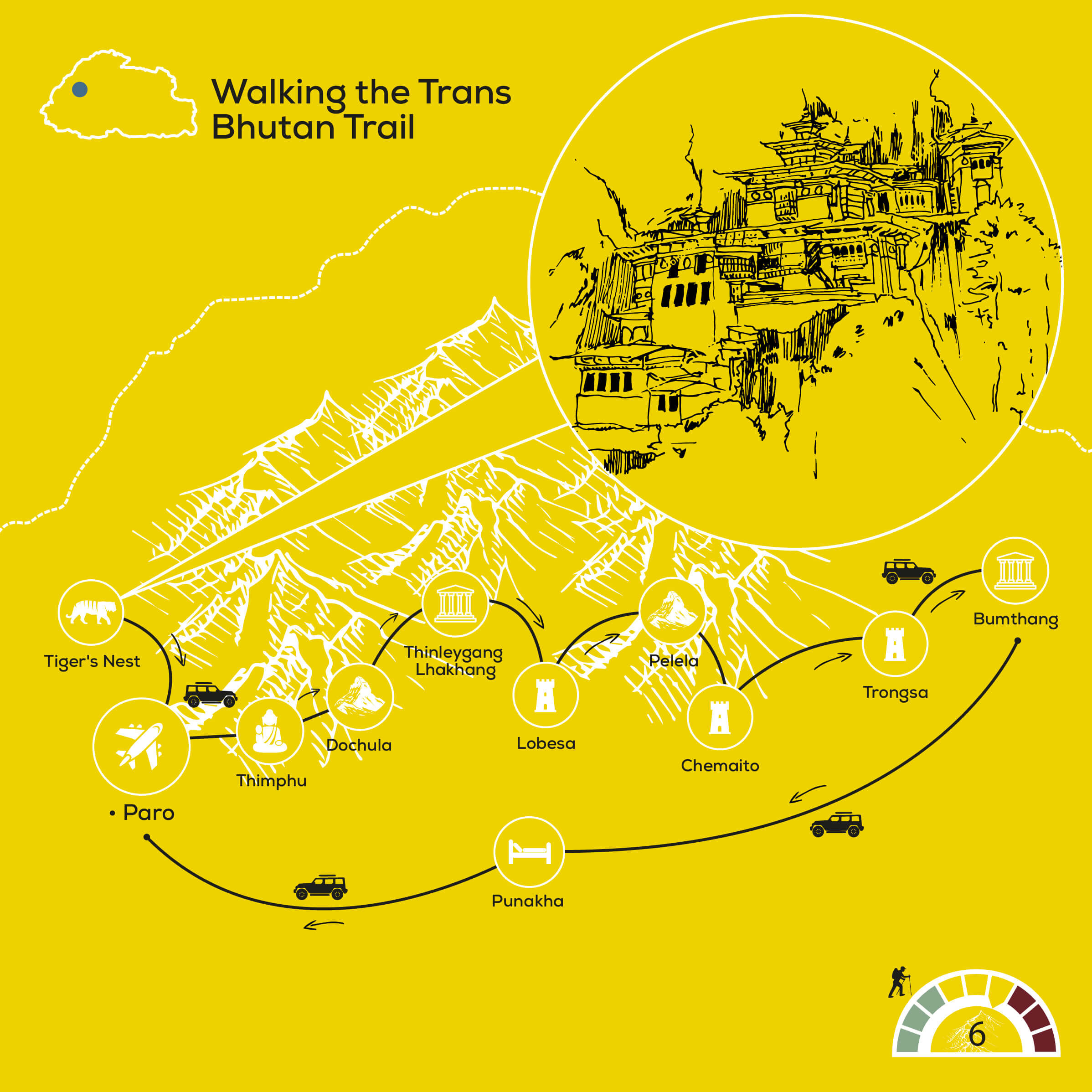
Walking is the backbone of the journey and plays a major role in reducing emissions. Across the itinerary, guests hike for parts of six days on the historic Trans Bhutan Trail, as well as completing the Gangtey Nature Hike and the ascent to the Tiger’s Nest Monastery. These human-powered sections are not short token walks but meaningful journeys between communities, temples and valleys that would otherwise require vehicle support. By using existing ancient pathways rather than newly constructed routes, the trip reduces pressure on fragile landscapes while actively lowering fuel use.
Transport that is required is shared across the group and operated locally, reducing emissions per person compared to private or individual travel. Vehicles are used strategically to link trail sections and access remote valleys, rather than replacing walking experiences. Guests are also encouraged before arrival to choose lower-emission international flights, where possible, to pack thoughtfully to reduce weight and to travel with refillable bottles and personal items that minimise waste and unnecessary resource use during the trip.
Accommodation throughout the itinerary is locally run and modest in scale. Many lodges and hotels in Bhutan rely partially on hydropower, which is the country’s primary national energy source and one of the cleanest electricity systems in the world. Where renewable energy infrastructure is limited, accommodations reduce energy demand through low-density design, limited heating and traditional construction methods suited to altitude and climate. Hot water is often solar-assisted and heating is used conservatively, in keeping with local norms.
Food choices also contribute to lower emissions. Bhutanese cuisine is largely seasonal and locally sourced and meals on this trip make use of regional produce, dairy and grains rather than imported goods. Vegetarian dishes are widely available every day and many meals are entirely plant-based by default. Farmhouse lunches in villages such as Thinleygang, Rukubji and Phomdrong rely almost exclusively on ingredients grown or produced nearby, reducing food miles while supporting local livelihoods.
By prioritising walking, reducing internal flights, supporting renewable energy use where available and embedding carbon awareness into trip preparation and daily decisions, this itinerary actively reduces operational emissions while remaining honest about the realities of travel in a remote Himalayan kingdom.
ENVIRONMENT AND WILDLIFE
Bhutan’s approach to conservation is deeply woven into its national identity and this trip has been designed to align with and support those values rather than simply benefit from them. Much of the journey takes place along the Trans Bhutan Trail, a restored historic route that reconnects communities. By using an existing trail system rather than constructing new paths, the trip supports conservation-led infrastructure that balances access with protection.
Accommodation partners on this itinerary are selected for their environmental practices and local ownership. Many actively limit plastic use, provide filtered or boiled water for refilling bottles and manage waste carefully in areas where disposal options are limited. Water conservation is a priority in mountain regions, particularly in Bumthang, Gangtey and Punakha where ecosystems depend on seasonal flows. Traditional building materials such as stone, timber and rammed earth are commonly used, reducing reliance on energy-intensive imports.
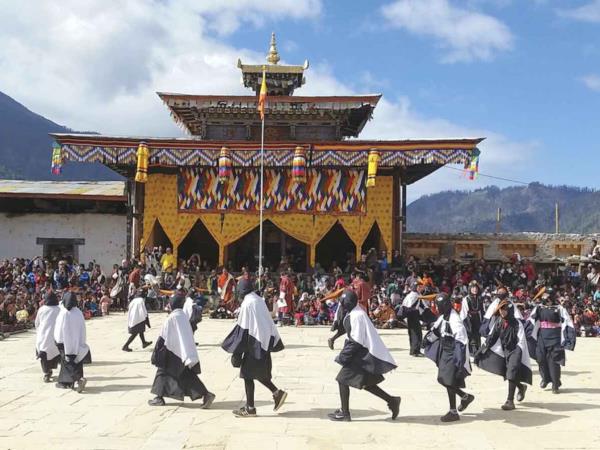
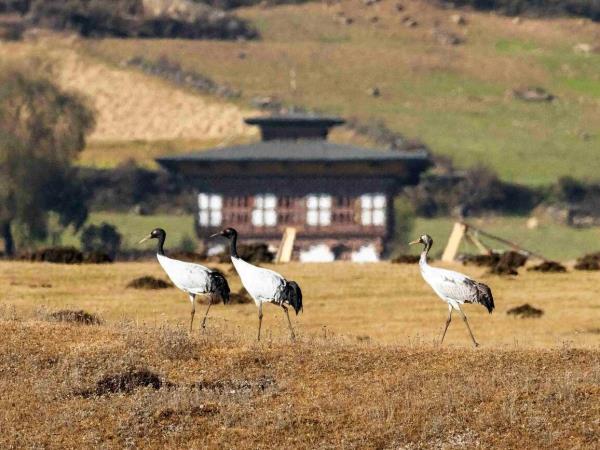
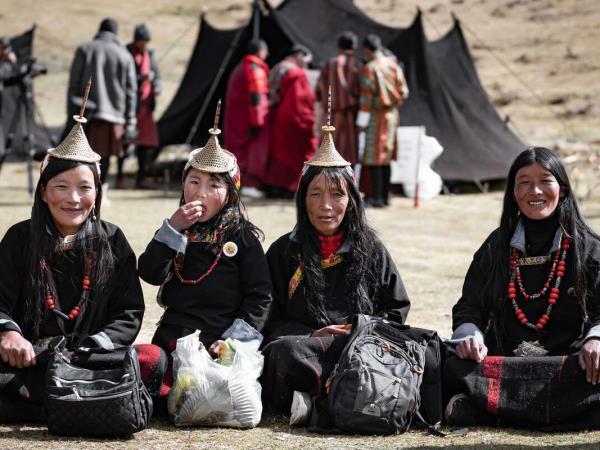
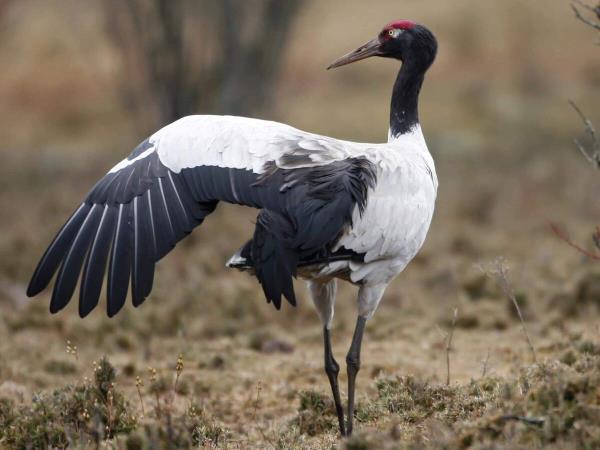
Wildlife encounters on this trip are observational and respectful, never staged or captive. The Black-necked Crane Festival in Gangtey is a strong example of community-led conservation in action. Attendance at the festival directly supports awareness and protection of an endangered species whose wintering grounds are under global pressure. Local schools, monasteries and residents participate not as performers for tourists but as custodians of a species that holds cultural and ecological importance. Visitor presence contributes to the continued recognition of the wetland’s value and the livelihoods tied to its protection.
Guides on this journey are local and trained to interpret both cultural and natural landscapes. They provide context around biodiversity, land use and conservation challenges, including climate change impacts on Himalayan ecosystems and the importance of forest cover in Bhutan, which remains above 70 percent nationally.
Several key sites visited, including monasteries, forests and river valleys, fall within protected or semi-protected landscapes, where entry fees and permits contribute directly to maintenance and conservation. Walking sections through forests near Pelela, Yotongla and Gangtey support low-impact visitation models that value presence without extraction. Picnic lunches are carefully managed to ensure all waste is carried out and single-use plastics are avoided.
The trip also benefits from Bhutan’s broader conservation framework, which restricts mass tourism, controls development and channels tourism revenue into environmental protection. By operating within this system and choosing experiences that strengthen it, the itinerary contributes to nature-positive tourism rather than passive consumption. Guests leave with a clearer understanding of how cultural belief, governance and ecology intersect in Bhutan and how thoughtful travel can support, rather than undermine, fragile mountain environments.
People
LOCAL ECONOMYThis journey is built around meaningful engagement with Bhutanese communities, ensuring that the economic benefits of travel are distributed locally rather than concentrated in external operators or international chains. All accommodation used on this itinerary is locally owned and operated, ranging from small hotels to family-run lodges and farmhouses. These properties employ local staff, source supplies regionally and retain profits within their communities, contributing directly to economic resilience in rural and urban areas alike.
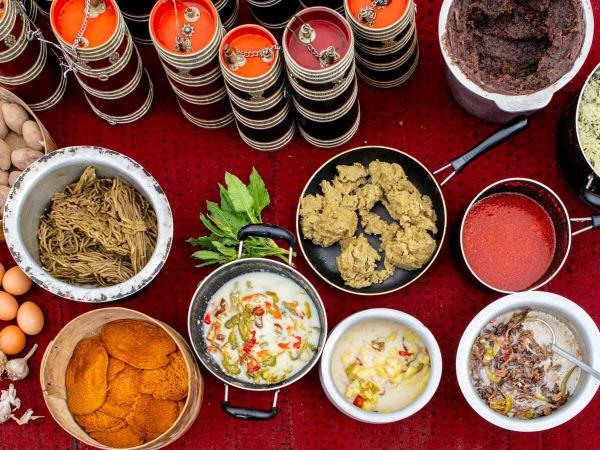
Farmhouse meals are a core part of the experience rather than an optional add-on. Lunches in places such as Thinleygang, Rukubji and Phomdrong provide income to families who maintain traditional ways of life, while also preserving culinary heritage. Guests are not passive diners but active participants, learning how dishes like Bumthap Putha are prepared and understanding the agricultural cycles that sustain them.
The itinerary also supports local economies through skilled guiding. Cultural and trekking guides are Bhutanese, trained and licensed, with deep regional knowledge. By using local guides throughout, the trip creates year-round employment opportunities in a country where seasonal income can be unpredictable.
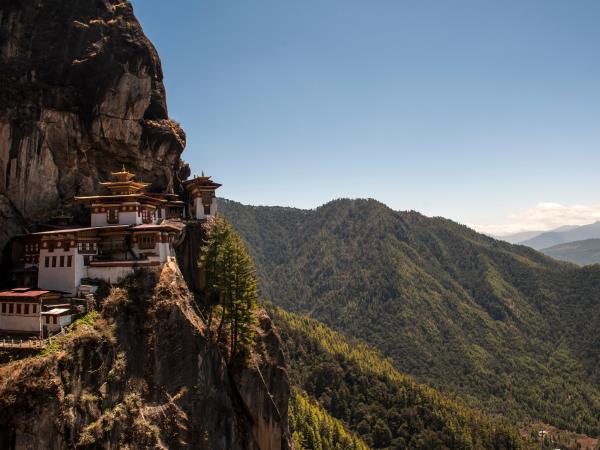
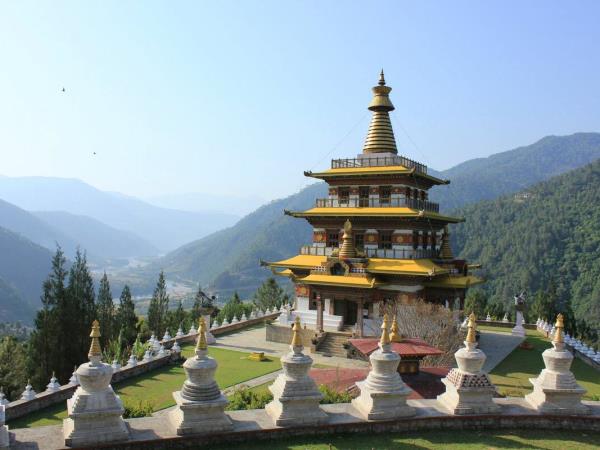
Visits to sites such as Trongsa Dzong, Punakha Dzong, Ta Dzong and Gangtey Goemba include entrance fees that support conservation, restoration and the monastic communities who maintain these living heritage sites. Local craft sellers encountered at passes such as Pelela benefit from direct visitor engagement, without pressure to industrialise production. Guests are encouraged to purchase thoughtfully and understand the cultural context of what they buy.
Time spent walking through villages rather than bypassing them by road allows for small, organic economic interactions that mass tourism often eliminates. Tea stops, informal conversations and simple purchases contribute to household incomes. By travelling at a human pace, the trip allows money to circulate locally and respectfully.
This approach ensures that the holiday is not just culturally immersive but economically responsible, recognising that sustaining Bhutan’s landscapes and traditions depends on viable livelihoods for the people who call them home.
EMPLOYMENT, INCLUSIVITY AND DIVERSITY
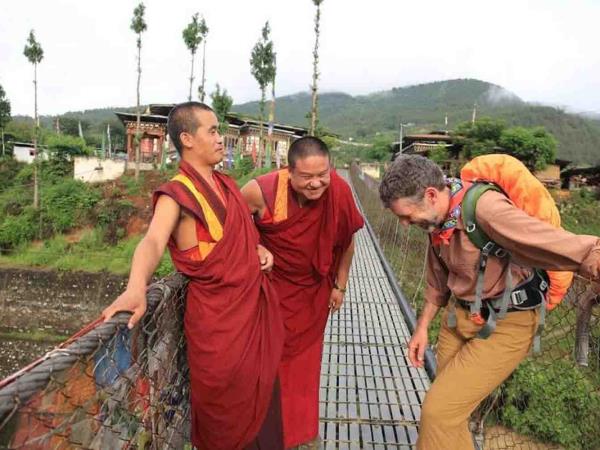
The operation of this trip prioritises local employment and inclusive participation at every level within Bhutan. The majority of staff involved in delivering the itinerary, including guides, drivers, hotel staff, cooks and porters where required, are Bhutanese nationals, many drawn directly from the regions visited. This ensures that economic benefits remain within the country and that travellers engage with people who have a genuine connection to the places they are exploring.
Guiding teams include both men and women, reflecting Bhutan’s relatively strong gender balance in tourism and cultural sectors. Women play visible roles in hospitality, food preparation, administration and cultural interpretation, particularly in farmhouses and community settings. By working with locally owned accommodations and partners, the trip supports businesses that provide stable employment and fair wages in line with national regulations.
Staff are paid at or above local minimum standards and working conditions are shaped by Bhutan’s national tourism policies, which place strong emphasis on wellbeing, cultural preservation and sustainability.
Bhutan is a culturally conservative country and this trip is presented honestly in that context. While visitors of all backgrounds are welcome, guides are trained to support respectful engagement with local norms around dress, behaviour and religious practice. This clarity helps create a safe and inclusive environment for travellers while maintaining trust with host communities.
Due to the physical nature of the trekking and altitude involved, the trip is not suitable for travellers with limited mobility or certain health conditions. This is communicated clearly in advance so that expectations are aligned and participants can make informed decisions.
By fostering local employment, supporting fair working conditions and encouraging culturally respectful interaction, this itinerary builds partnerships rather than transactions. It recognises that meaningful travel depends on mutual trust, shared effort and the understanding that positive social impact begins with how people work together on the ground.
Popular similar holidays
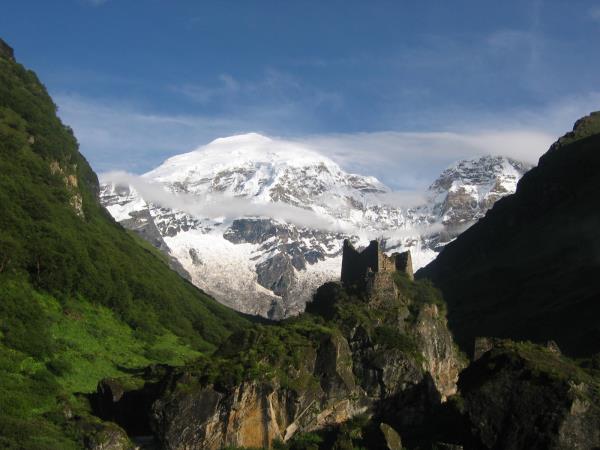
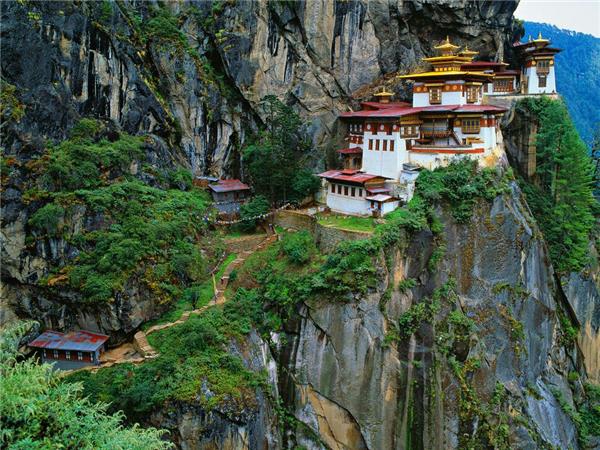
Small group tour to Bhutan
From £2376 - £3095 7 days excluding flights
Discover Bhutan's beauty, history and adventures
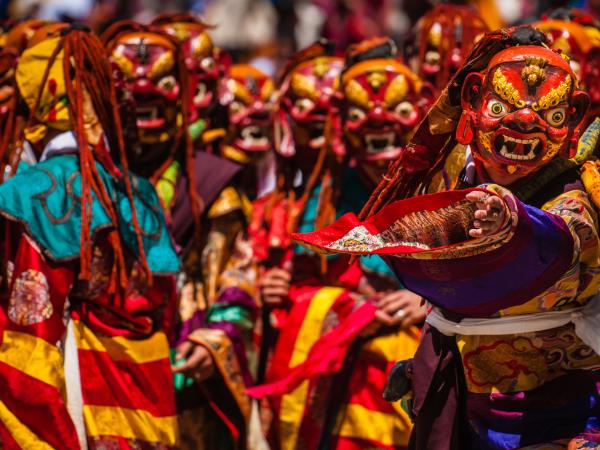
Buddhist Bhutan cultural tour, Black necked Crane Festival
From £2995 11 days excluding flights
Discover Bhutan's highlights and rare black-necked cranes