Pico rare whale watching holiday, Azores
Price
£2695 including domestic flights only
Convert currency:


Duration
9 Days
Countries
Azores, Portugal
Type
Small group
More info
Price based on 2 pax sharing.
Inc.
domestic flights, all meals & transfers in the itinerary, local expert whale watching guides & skipper, chartered boat for 10 trips and 2 group boat trips; exc.
flights, visas, tips.
Inc.
domestic flights, all meals & transfers in the itinerary, local expert whale watching guides & skipper, chartered boat for 10 trips and 2 group boat trips; exc.
flights, visas, tips.

Description of Pico rare whale watching holiday, Azores
Price information
£2695 including domestic flights only
Convert currency:
Price based on 2 pax sharing.
Inc.
domestic flights, all meals & transfers in the itinerary, local expert whale watching guides & skipper, chartered boat for 10 trips and 2 group boat trips; exc.
flights, visas, tips.
Inc.
domestic flights, all meals & transfers in the itinerary, local expert whale watching guides & skipper, chartered boat for 10 trips and 2 group boat trips; exc.
flights, visas, tips.
Check dates, prices & availability

Travel guides

With whales in every corner of the ocean, and so many species, how do you begin to plan a trip?

Our guide reveals the best ways to encounter these charismatic mammals in the wild.
Holiday information
Diet:
We can cater for vegetarians on this holiday. Sadly we cannot offer vegan food.
Responsible Travel
As the pioneers of responsible tourism, we've screened this (and every) holiday so that you can travel knowing we've worked to maximise the benefits of your holiday to local people and places, and minimise any negative impacts.
Planet
CARBON REDUCTIONIn the Azores we help the environment by hiring the best and most environmentally conscious whale watching boat operator on the island. By choosing this trip and the therefore the local operators we choose, you are choosing to limit your ecological footprint.
For each of our group tours here we plants trees and contributes for the “micro-reserve” project, to partly compensate the ecological deficit and the CO2 emissions related to our whale watching activity, in collaboration with association “Quercus”. For each customer approximately €0,50 cent will be donated, with the purpose to plant "Cabeço Santo" (GPS position: 40º31'52"N 8º20'36"W- Google Maps) in the mountain range of Caramulo, victim of a terrible forest fire in 2005. Soon the indigenous vegetation will substitute eucalyptus, acacias and other infestants . You may find more information about Quercus and about projects “criar bosques” (creating woods) and “micro reservas biologicas” (biological micro reserves) in Quercus' page.
Food is locally sourced as much as possible - the islands produce a lot of their own produce, and vegetarian meals are available throughout.
ENVIRONMENT AND WILDLIFE
Whenever we go out looking for whales and dolphins we always adhere to the International Whale Watching Guidelines as well as local guidelines such as:
-Approach the animal from a rear quarter, with reduced and constant velocity
-Never approach closer than 50 meters
-Never position the boat between calfs and adults
-Allow only a few boats within a 150-meter range of the group
-Group boats on the same side of the cetaceans, never encircling them.
-Don't stay more than 10 minutes with the same animal
-When departing, go slowly while within a 300-meter range of the animals
-Never try to touch or feed an animal
We also emphasize about refusing to buy souvenirs made from animals we observe in the sea. In the Azores you may encounter sellers of objects in whale bone and ivory (without a registration number), dolphin teeth, turtle shells, sharks' teeth etc. The CITES (the international agreement which governs threatened species) forbids this type of commerce.
So we make a point of informing visitors about the dangers of commerce in ivory - the only element of the sperm whale with commercial value...therefore a selling point used by whale hunters.
People
LOCAL ECONOMYOur local whale watching operators are at the heart of making sure that the local Azorean population can also benefit from the abundant marine life around them. Instead of just relying on the foreign tourists and the extra money they bring, the local boat operators we hire think that it is a right that seeing these cetaceans should be accessible for local population. "Solidariedade" is a project which allows habitants of Pico to meet whales and dolphins which cross south of Lajes do Pico by paying a symbolic sum of EUR39.
We also emphasize when on the trip to respect the local people and particularly not to hastily judge people whose culture is marked by 150 years of whaling, they are making a concerted effort to change from that past and to one of eco tourism where the local cetacean populations are hugely beneficial to them alive and not dead.
We also strongly recommend tips and gifts to compensate for the quality of service received. They are not a requirement and should correspond to the economic level in the Azores where the median salary is about 600 euros per month.
We use two hotels (one in Pico and one in Ponta Delgada) and both are locally owned by people on the islands, so as much of the money stays in the local economy as possible.
Popular similar holidays
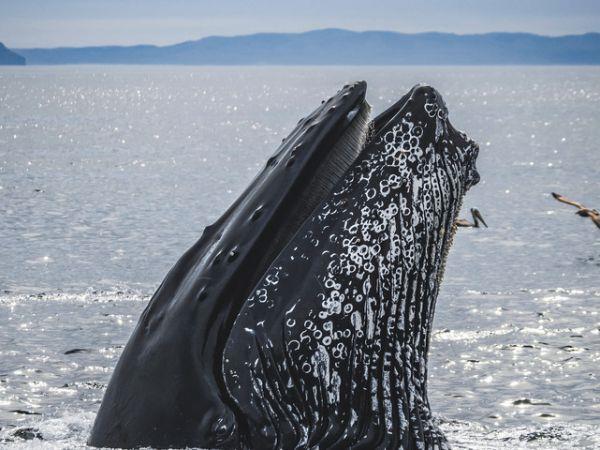
Whale watching in the Azores
From £995 - £1195 8 days excluding flights
Three chances to search for whales & dolphins in the Azores
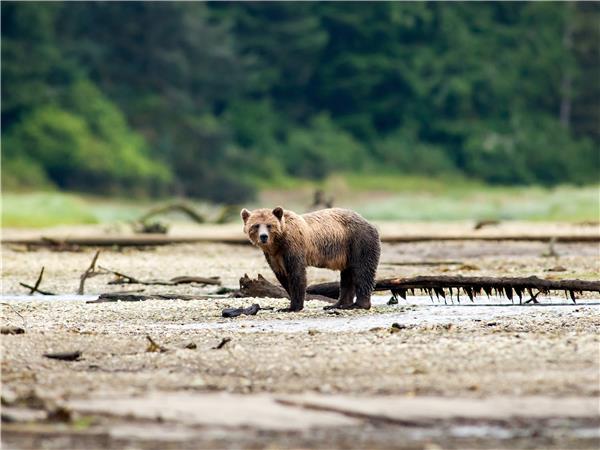
British Columbia wildlife holiday, whales and bears
From £6239 - £6551 9 days excluding flights
Rugged scenery and wildlife of Western Canada
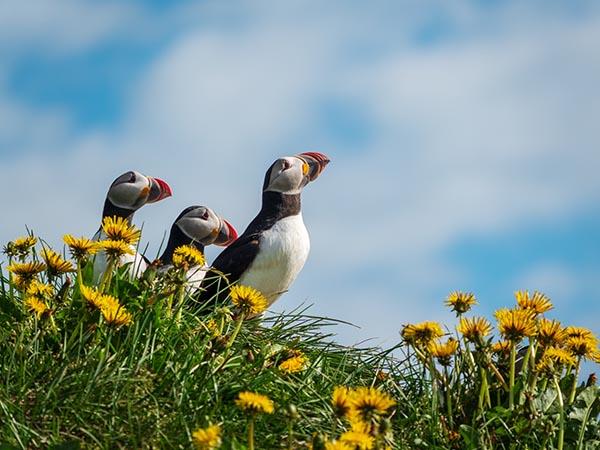
Iceland circumnavigation cruise
From £4330 8 days excluding flights
A thrilling, complete Iceland experience