Should I travel after a natural disaster?
The return of tourism in the weeks and months after a natural disaster can bring much-needed money to help with recovery efforts. But it’s vital to consider the feelings of local communities, and tour operators with in-country connections are a reliable source of advice.
When a country is hit by a natural disaster, the swift return of responsible tourism – once it is safe – can help with recovery. But every situation is different, and travelling to an area recently affected by disaster must be done with due care and consideration for local feeling, as well as the practicalities. Below, we explain how you can help, and what to keep in mind before deciding whether to travel.
There are several reasons why Morocco appears to have fared better, but one of the most important is connectivity. With several airports, none of them damaged by the earthquake, it was easy and fast for international aid to get into the country, and in doing so there was no conflict with the movements of tourists. Nepal in 2015 had only one international airport which would have slowed the response.
Justin Francis, founder of Responsible Travel, travelled to Thailand not long after the 2004 tsunami: “In Phuket, local people were telling me that the fact that tourists had stopped travelling was creating an ‘economic tsunami’, meaning that their suffering was being compounded by lack of income from tourism. However, that does not mean the situation might not be different in other disaster areas, and it is these sensitivities that we need to understand.”
But, as all the experts will tell you, in the immediate aftermath, we need to stand back and let the experts do what they do best. The doctors, the nurses, the emergency workers, the shelter builders, the food suppliers. They will always let us know if they need help but, until they do, please stand back, and think of other ways you can help, such as by donating to fundraising drives.
The advantage of booking with responsible holiday companies is that they work hand in hand with many local businesses. This puts them in a very good position to tell you if it is possible to get to the place in question, and if tourists are welcome during this difficult time.
The advantage of booking with responsible holiday companies is that they work hand in hand with local hoteliers, tour guides, airports, charities, conservation agencies, ferry companies, you name it. This puts them in a very good position to tell you if it is possible to get to the place in question, and if tourists are welcome, or when it would be realistic to travel there. If some tourists in Maui seemed oblivious to the suffering going on nearby, it may be that they were insulated from it by travelling with tour operators lacking that local connection.
Their websites and social media outlets may well keep you up to date. At Responsible Travel, where we represent many of these holiday companies, we can put you in touch with them for updates on the ground, when communication is possible.
When a country is hit by a natural disaster, the swift return of responsible tourism – once it is safe – can help with recovery. But every situation is different, and travelling to an area recently affected by disaster must be done with due care and consideration for local feeling, as well as the practicalities. Below, we explain how you can help, and what to keep in mind before deciding whether to travel.
Remember that every situation is different
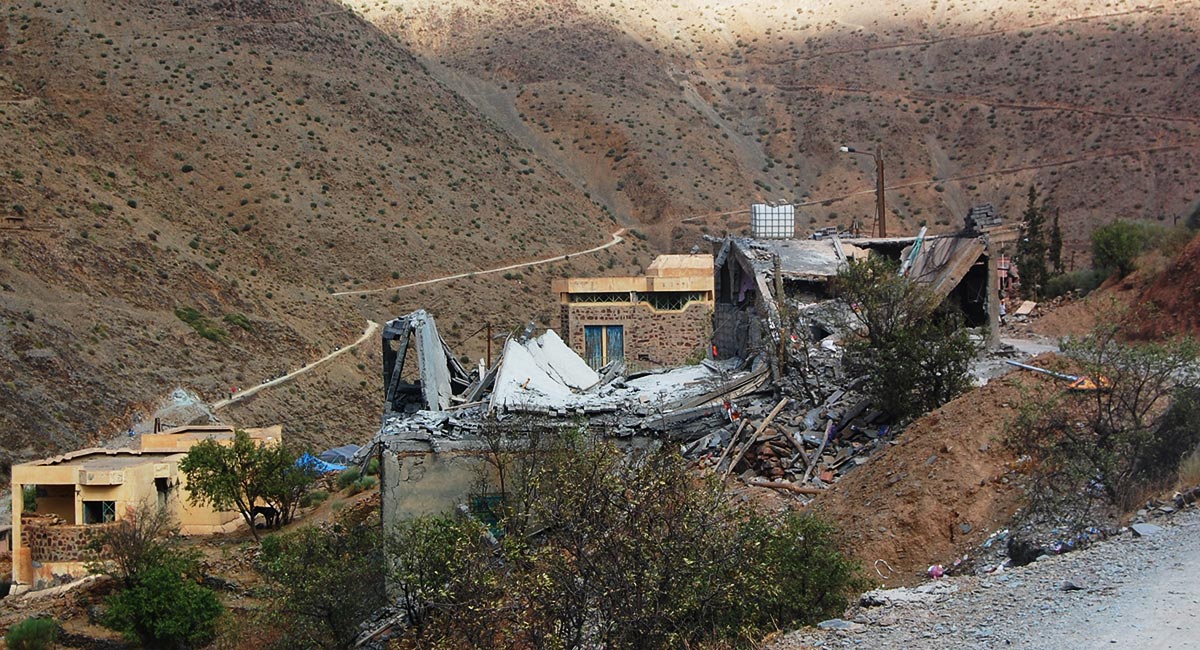
In September 2023 Morocco was hit by a 6.8 magnitude earthquake, with an epicentre in the High Atlas Mountains just 70km from the city of Marrakech. At least 3,000 people were killed and 300,000 others affected, many of them left homeless. The worst effects were felt in remote, rural areas that were hard for rescuers to access in the immediate aftermath. Our local partners informed us that in Marrakech life was almost back to normal just a few days after the earthquake, with most shops, restaurants and cafes open for business. Tour operators were able to continue with almost all their scheduled trips, with a few adjustments necessary for those trekking in the High Atlas Mountains.Damages in the village of Irhil after the 2023 Morocco earthquake. Photo by Lucyin
By contrast, when Nepal suffered a horrific earthquake in April 2015 that killed almost 9,000 people and injured 22,000, it took at least two years for tourism to fully recover. Trekking in remote parts of the Himalayas was possible again very quickly, and the country’s famous Annapurna Circuit was unaffected. But heritage tourism took much longer to return, with some sites in the capital, Kathmandu, left under rubble for years as rebuilding funds were tied up in bureaucracy and government inaction.There are several reasons why Morocco appears to have fared better, but one of the most important is connectivity. With several airports, none of them damaged by the earthquake, it was easy and fast for international aid to get into the country, and in doing so there was no conflict with the movements of tourists. Nepal in 2015 had only one international airport which would have slowed the response.
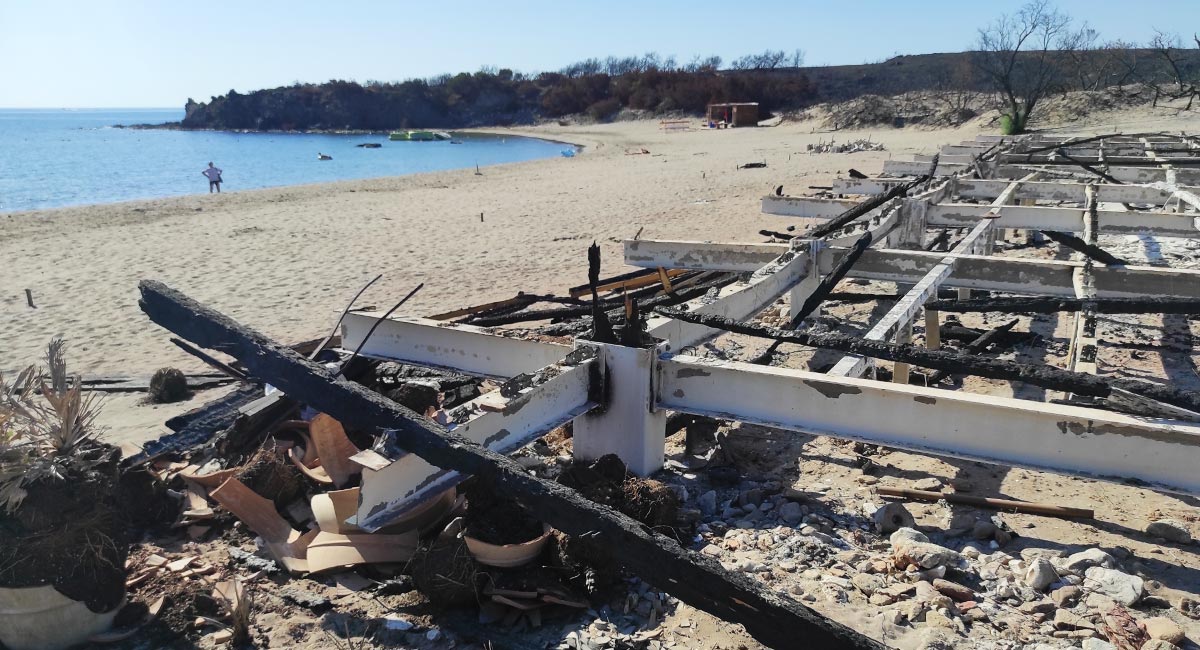
Glystra Beach in Rhodes, September 2023, after the fire in July 2023. Photo by Jana Sekyrová
Natural disasters hit destinations in different ways, too. For example, both Maui in Hawaii, and Rhodes in Greece, were wracked by wildfires in 2023. There was outrage at footage of people enjoying themselves on holiday on both islands, even as tourists were evacuated from their hotels and many residents were left homeless. Yet in both cases, only part of the island was affected by fires, and tourism was able to continue elsewhere. Many local people supported this, as a steep loss of tourism income would have been tragedy on top of tragedy. Justin Francis, founder of Responsible Travel, travelled to Thailand not long after the 2004 tsunami: “In Phuket, local people were telling me that the fact that tourists had stopped travelling was creating an ‘economic tsunami’, meaning that their suffering was being compounded by lack of income from tourism. However, that does not mean the situation might not be different in other disaster areas, and it is these sensitivities that we need to understand.”
Wait for things to calm down
The biggest dilemma is whether to travel to the disaster-struck area or not. Perhaps you have booked a trip already or were thinking of it for later in the year. Should you skip it and go to the next place on your wish list, or should you just go? Perhaps you have visited the country in the past, fallen in love with the place and, following news of a disaster, you are kept awake at night wondering whether to go back and help? This desire to help is a normal human reaction.But, as all the experts will tell you, in the immediate aftermath, we need to stand back and let the experts do what they do best. The doctors, the nurses, the emergency workers, the shelter builders, the food suppliers. They will always let us know if they need help but, until they do, please stand back, and think of other ways you can help, such as by donating to fundraising drives.
The advantage of booking with responsible holiday companies is that they work hand in hand with many local businesses. This puts them in a very good position to tell you if it is possible to get to the place in question, and if tourists are welcome during this difficult time.
Ask the experts
The next step is to talk with local experts to see if it is still advisable to go ahead with your travel plans. In many cases, you may have booked a holiday to a completely different region that hasn’t been affected. Or your trip might not be for another few months, at a time when tourism income will be vital for the local economy and business will boost morale. The Foreign and Commonwealth Office’s travel advice for each destination can be a useful first source of information. But it is often overly cautious, with blanket warnings in place for long periods, when really some places may be perfectly safe to visit.The advantage of booking with responsible holiday companies is that they work hand in hand with local hoteliers, tour guides, airports, charities, conservation agencies, ferry companies, you name it. This puts them in a very good position to tell you if it is possible to get to the place in question, and if tourists are welcome, or when it would be realistic to travel there. If some tourists in Maui seemed oblivious to the suffering going on nearby, it may be that they were insulated from it by travelling with tour operators lacking that local connection.
Their websites and social media outlets may well keep you up to date. At Responsible Travel, where we represent many of these holiday companies, we can put you in touch with them for updates on the ground, when communication is possible.