Mongolia tour, mountains & nomads


Explore Mongolia’s monasteries and mountains and the people that call them home.’
Ulaanbaatar urban walking tour Trans-Mongolian train route Amarbayasgalant Monastery Rural Naadam Festival Khogno Khan Nature Reserve homestay with yak herders in the Khangai Mountains cultural Orkhon River Valley
Price
US $2300 excluding flights
Convert currency:


More info
Includes a local Naadam Festival.
We have built up a personal long-term partnership with the families you will stay with.
Max group size of 6 for a more personal and flexible experience.
Can also be adapted into a private tailor made experience
We have built up a personal long-term partnership with the families you will stay with.
Max group size of 6 for a more personal and flexible experience.
Can also be adapted into a private tailor made experience

Description of Mongolia tour, mountains & nomads
Map

Price information
US $2300 excluding flights
Convert currency:
Includes a local Naadam Festival.
We have built up a personal long-term partnership with the families you will stay with.
Max group size of 6 for a more personal and flexible experience.
Can also be adapted into a private tailor made experience
We have built up a personal long-term partnership with the families you will stay with.
Max group size of 6 for a more personal and flexible experience.
Can also be adapted into a private tailor made experience
Check dates
2027: 6 Jul
Travel guides
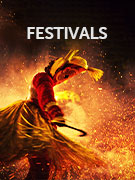
Attending a local festival provides a fascinating insight into a culture – as well as being great fun.
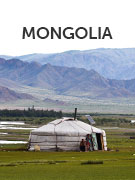
Insightsinto the world's least densely populated country, covering steppe and ger camp, camel treks and eagle festivals...
Accessibility
Accessible tourism overview:
Mongolia is one of the largest and most remote countries in the world with a limited infrastructure in place. However, we work solely in Mongolia so have local knowledge and can provide support and guidance. Our trips can be organised with your own driver/guide and we can adjust our trips specifically to your individual needs but this is also dependent on the budget available. We are more than happy to take individual requests into consideration.
Limited mobility:
We have had guests with Parkinson’s, MS and also Prader Willi syndrome on both our small group and tailor made trips. However, we request clear guidelines in advance as to your needs and requirements before we accept the booking. Depending on the level of limited mobility, we might advise that you travel with a companion.
Blind or limited vision:
We are more than happy to cater for people who are blind or have limited vision - both our small group trips and tailor made trips are available to book if travelling with a sighted person. Our tailor made programmes can be adapted for ease of travel and to suit your needs. All pre departure information before the trip is provided in a written format but I am more than happy to go over these verbally by phone. Information in braille is not available in Mongolia which means all the information during the trip will be delivered verbally.
Deaf or limited hearing:
We are more than happy to cater for people who are deaf or who have limited hearing - both our small group trips and tailor made trips are available to book if travelling with a hearing person. Our tailor made programmes can be adapted for ease of travel and to suit your needs. Our guides are not trained in sign language however, hence why it would be useful to have a travelling companion who can sign.
Cognitive conditions:
We have had guests with Parkinson’s, MS and also Prader Willi syndrome on both our small group and tailor made trips. However, we request clear guidelines in advance as to your needs and requirements before we accept the booking. Depending on the severity of the condition, we might advise that you travel with a companion.
Free from food:
We can cater for vegetarians, vegans, gluten free and other specialist diets. However, travellers book knowing that their will be limitations in place due to what is available in Mongolia. We provide clear guidelines as to what style and type of meals we can provide so travellers know in advance what to expect.
LGBT:
We welcome everyone. Our teams of guides and drivers are open and welcoming people. We make you aware in advance of any challenges you may face in Mongolian culture which is still a traditional society.
Reviews
3 Reviews of Mongolia tour, mountains & nomads
5 out of 5 stars
Reviewed on 25 Jul 2019 by Gerrie Leenders
The most memorable part of the holiday was Nadaam festival. That's the reason I wanted to join this trip. Read full reviewReviewed on 21 Jul 2018 by Catherine Challies
The whole trip was full of memorable moments. I particularly enjoyed Naadam and also the nights we spent camping on the steppe. Read full reviewResponsible Travel
As the pioneers of responsible tourism, we've screened this (and every) holiday so that you can travel knowing we've worked to maximise the benefits of your holiday to local people and places, and minimise any negative impacts.
Planet
Mongolia has been part of our lives since 2006, and over those years we have witnessed changes in the landscapes, climate and communities we work alongside. For Mongolia's herding families, changing weather patterns, pasture conditions and the availability of water are not abstract environmental concerns. They affect livestock, livelihoods and the decisions families make throughout the year.We are a small, independent tourism business, and we recognise that travel has environmental consequences. Mongolia is vast, distances are considerable, and much of the infrastructure that visitors might expect elsewhere simply does not exist in rural areas.
We cannot claim that our journeys are environmentally sustainable or without impact. What we can do is explain the decisions we make, the practical steps we take and the areas where we still have much to learn.
For us, responsible travel is an ongoing process rather than a label. We do not claim to get everything right. We keep questioning, learning and trying to make better choices.
Carbon Reduction: Domestic Flights | Local Transport | Electric Vehicles | Human Powered Transport
Mongolia is a country where travelling relatively short distances on a map can involve long days on the road. Roads vary from modern highways to unmarked dirt tracks, and public transport options are limited in many rural areas.
This journey is designed around overland travel, allowing time to move through the landscapes of central Mongolia rather than travelling between destinations by domestic flight.
This is partly a reflection of our travel philosophy. We believe the road is part of the holiday, not simply the space between places. Travelling overland offers opportunities to stop in provincial towns, visit local businesses, share a meal in a roadside guanz and experience the ordinary places that are often overlooked in conventional itineraries.
We recognise that overland travel still requires fuel and that long vehicle journeys generate emissions. We therefore do not present travelling by road as an impact-free alternative to flying.
Our drivers own their vehicles and know how to maintain and repair them. Vehicle reliability, repairability and the experience of the driver are particularly important in rural Mongolia, where specialist mechanics and replacement parts can be difficult to access. Electric vehicles are not yet a practical alternative for many of the remote routes we operate.
We design and operate our own journeys, giving us the flexibility to consider routes, journey times, the places we visit and how long we spend with local families.
We also produce an annual Impact Report that looks at the bigger picture of how we operate as a tourism business. It considers who we work with, the people and communities we're part of, where our money goes, the employment opportunities we create and how our decisions affect the places we visit. We share our progress, achievements, challenges and limitations.
Measuring the emissions associated with our journeys remains an area of work. We recognise that having plans and commitments is not the same as demonstrating measurable reductions.
Carbon Reduction: Meals On Tour | Locally Sourced Food | Vegetarian & Vegan Food
Food is part of experiencing everyday life in Mongolia, whether that means drinking salty milk tea with a herding family, sharing a meal in a ger or stopping at a small roadside guanz where local people eat.
Most meals on this journey are prepared by our Mongolian team using a compact mobile kitchen carried in the tour vehicle.
This gives us flexibility over what we prepare, the ingredients we purchase, dietary requirements and the quantities of food we carry. It also means that host families are not expected to provide every meal for our guests.
We purchase ingredients locally where practical, using shops and markets along our route. However, availability varies considerably between towns and rural communities, and many food products in Mongolia are imported or transported over long distances.
Traditional Mongolian food is closely connected to the country's pastoral heritage, with meat and dairy playing a significant role. We respect these traditions while also preparing vegetarian and vegan meals for guests who request them.
We also encourage guests to experience local food businesses rather than relying entirely on meals prepared within the tour vehicle.
Our approach is to make considered purchasing and catering decisions while acknowledging that food production, transport, packaging and waste all have environmental costs.
Environment & Wildlife: Reducing Impacts On Nature
Mongolia's landscapes are often described as empty or untouched. But many of the places we visit are working landscapes, shaped by generations of herding families, livestock and the seasonal movements that remain part of rural life.
We want guests to understand these landscapes as places where people live and work, rather than simply as scenic backdrops.
Our small-group departures have a maximum of six guests, and we offer a limited number of departures each year. This is an important part of how we organise visits with our partner families and manage the practicalities of travelling through rural areas.
We do not suggest that smaller groups automatically have a smaller environmental footprint. However, they allow us to adapt plans more easily, work around family routines and avoid arriving as a large group in someone's home.
Water and waste management are ongoing challenges in Mongolia, particularly in rural areas where recycling and waste-disposal infrastructure is limited.
We do not provide individual plastic bottles of drinking water on our journeys. Instead, our vehicles carry two 20-litre water containers, refilled from local water stations. We also carry drinking-water treatment equipment, including Lifesaver filters or Steripen systems, depending on the vehicle. Guests are encouraged to bring refillable drinking bottles.
Our accommodation choices also reflect the realities of rural Mongolia. Rather than relying exclusively on purpose-built tourist camps with private bathrooms, we stay in simple accommodation provided by local families, often using public shower houses in nearby towns.
These arrangements do not eliminate our water use or environmental impact, but they avoid requiring additional facilities solely for our visitors.
Rural Mongolia has very few public toilets, and managing human waste responsibly is an important consideration when travelling overland. Our trip assistants explain appropriate toilet practices, including the disposal of toilet paper and other waste. We call this our toilet talk — not the most glamorous part of travelling, but an essential one.
We also invite our team and guests to take part in our Mini Plastic-Free Mongolia Challenge, encouraging everyone to think about avoidable packaging and single-use plastics.
We recognise that there are limits to what individual travellers and small tourism businesses can achieve, particularly where waste-management infrastructure is inadequate. We focus on practical actions while continuing to consider where improvements are possible.
Environment & Wildlife: Entry Fees To Parks/Protected Areas | Environmental/Wildlife NGOs
When designing our itineraries, we consider not only the people and communities we want to work with, but also the places we visit.
This includes Mongolia's national parks, nature reserves and protected landscapes. We incorporate visits to protected areas and pay the applicable entrance fees, recognising that these places require funding, management and ongoing care.
We believe that places receiving visitors should also receive financial support from tourism. Entrance fees are one small contribution, although we recognise that paying them does not cancel out the environmental impact of visiting.
Many of Mongolia's protected landscapes are also connected to local livelihoods. Herding families may depend on surrounding pasture, rivers and seasonal grazing areas, and the relationship between conservation and local communities is not always straightforward.
We believe visitors should understand both the natural environment and the people whose lives are connected to it.
Since 2014, we have organised community rubbish collections in partnership with local communities and protected-area rangers. These events provide a practical opportunity for our team to work alongside people who care for these places throughout the year.
They do not solve the wider challenges of litter, waste management or conservation funding, but they are one way we contribute time and resources beyond our normal tour operations.
We also maintain relationships with Mongolian wildlife organisations and specialists. Our trip assistants receive wildlife awareness training when opportunities are available, while specialist nature and conservation experiences involve people with relevant field knowledge.
We recognise that protecting Mongolia's landscapes involves much more than responsible visitor behaviour. It requires the involvement of the communities who live within and alongside them, as well as the people and organisations responsible for their management.
People
We are an independent, Mongolian-registered, profit-making tourism business. But we believe commercial success and social responsibility should not be separate ambitions. That is why we describe ourselves as a social-impact tourism company.We are not a charity, and we don't believe responsible tourism is simply about making donations. For us, social impact begins with how we operate: who we employ, who we purchase from, whose knowledge we value, where we choose to travel and how we develop relationships with the people and communities involved.
An important part of this is addressing tourism leakage — the money travellers spend that leaves a destination or bypasses local businesses and communities. Some leakage is unavoidable, particularly when tourism depends on imported products and international services. But we can make deliberate decisions about where the money we control is spent.
We research, design and operate our own journeys rather than outsourcing them to another operator. We work directly with Mongolian families, drivers, small businesses and community organisations, recognising their knowledge, time and contribution.
We cannot claim that every dollar remains in Mongolia or that every decision produces a measurable benefit. But we can consider who benefits from our work, beyond the guests travelling with us.
Our annual Impact Report helps us examine this wider picture, including employment, community partnerships, purchasing decisions and the challenges we continue to face.
Above all, our approach is built around long-term relationships. The people we work with are not simply tourism providers. They have families, responsibilities, changing circumstances and priorities of their own. We try to make space for those realities in how we work together.
Local Economy: Locally Owned Accommodation
Staying alongside Mongolian herding families is an important part of this journey.
Rather than relying entirely on purpose-built tourist camps, we stay in simple ger accommodation provided by families with whom we have established long-term partnerships. These stays offer an opportunity to experience contemporary herding life, where longstanding traditions exist alongside mobile phones, motorbikes, solar panels, education, small businesses and the everyday realities of living in modern Mongolia.
Our hosts are not there to recreate a traditional way of life for visitors. They are families going about their lives, and those lives continue whether guests are present or not. There may be opportunities to help with livestock, share tea, learn about a family's work or simply sit and watch the daily comings and goings. Sometimes there is a great deal happening; sometimes there is very little. Both are part of the experience.
Families are paid for the accommodation and hospitality they provide. Working directly with them means this income reaches the households involved rather than passing exclusively through larger accommodation businesses or intermediary agencies.
We recognise that welcoming guests requires time, work and space within a family home. Our visits are arranged with the families, and we remain flexible around their circumstances and responsibilities.
Across Mongolia, our wider network includes 28 partner families in 12 of the country's 21 provinces, although only a small number are involved in each individual journey.
Some of these relationships have developed over many years. We know the families beyond their role in tourism, and we try to maintain those relationships as their lives, livelihoods and circumstances change.
For us, a homestay is not simply a more personal alternative to a hotel. It is part of a long-term working relationship in which hospitality, time and local knowledge are valued.
Local Economy: Creating Local Economic Opportunities
Much of the tourism industry in Mongolia is concentrated around a relatively small number of well-known destinations and a short summer season.
We design our journeys differently, considering not only the landscapes and experiences that visitors may want to see, but also where tourism spending goes and which communities have opportunities to benefit.
We want to support Mongolia as it is, rather than presenting a version of the country shaped entirely around visitor expectations.
Mongolia's rural communities are not defined solely by herding traditions. They are also home to small businesses, cooperatives, market gardeners, craftspeople, teachers, entrepreneurs and people adapting their livelihoods to changing economic and environmental conditions.
This journey creates opportunities to explore that wider picture.
Through our long-term partnerships in the Khangai region, guests spend time with herding families whose lives may include livestock breeding, cooperative activities, small-scale enterprise and other forms of work alongside traditional pastoralism.
We are particularly interested in how families diversify their livelihoods and make decisions about their futures. Tourism is one possible source of additional income, but it is not the only one, and we do not expect families to organise their lives around it.
We also deliberately include ordinary places within our journeys: provincial towns, roadside restaurants, markets and local services that might receive relatively little attention from international tourism.
Sometimes that means stopping for lunch at a family-run guanz, purchasing supplies from a small shop or spending time in a town that is not regarded as a major tourist attraction.
These decisions matter because tourism income is not distributed evenly. Some locations attract considerable visitor spending, while other communities see much less of it.
We cannot address these inequalities through tourism alone, but we can look for practical ways to direct some of our spending towards businesses and communities that might otherwise be overlooked.
Importantly, we do not believe every community needs to become a tourist attraction in order to benefit from tourism.
Sometimes the most useful contribution is simply buying from a local business, paying fairly for someone's time or services, or maintaining a working relationship over many years.
We also consider the places themselves when designing itineraries. Visits to protected areas, smaller communities and locally managed attractions provide opportunities to contribute through entrance fees, local services and partnerships.
This reflects our belief that the financial opportunities created by tourism should extend beyond the best-known destinations.
Another important consideration is seasonality. Although Mongolia's main international tourism season is concentrated in summer, we offer departures in spring and autumn as well, creating opportunities for our team and partners outside the busiest months.
Across Mongolia, we maintain partnerships with grassroots community initiatives, including six rural projects and four in Ulaanbaatar.
These include the Mongolian Quilting Centre, which creates handmade fabric bags for our guests while providing training and paid opportunities for women.
Our complimentary introduction to Ulaanbaatar also offers an opportunity to explore the contemporary capital through local businesses, neighbourhoods and community initiatives, including Uuliin Nuur, a project we have supported since 2016 through financial contributions linked to guest visits.
These relationships are not simply charitable additions to our journeys. They are part of how we choose to spend our money and organise our business.
We believe tourism can support people and places without requiring them to reshape their lives entirely around visitors.
Employment, Inclusivity and Diversity: Creating Opportunities
Our team is at the centre of our social-impact approach.
We are a Mongolian-registered company, and our operational team lives and works in Mongolia. Our office-based management team and all our trip assistants are Mongolian women.
More than 60% of our overall team is female. Of those women, 93% are mothers and 53% are single mothers, according to our team records.
Our team also reflects different parts of Mongolia. Some members grew up in Ulaanbaatar, others moved to the capital from rural provinces, and others continue to live in provincial communities.
We know that opportunities within tourism are not equally accessible to everyone.
Rather than recruiting only experienced guides who are already established in the tourism industry, we also welcome Mongolian women who may not previously have had the opportunity to work in tourism or develop their confidence within a professional role.
We provide free training, mentoring and practical experience, recognising that knowledge, confidence and professional skills develop over time.
Some women join us because they want to build a tourism career. Others value the independence, personal development or additional income that the work can provide.
We do not expect every trip assistant to arrive as a polished professional guide. We invest in people and support them in developing their own abilities and approach.
Our trip assistants bring much more than information about Mongolia. They bring their own experiences of growing up, working and living in the country, as well as different perspectives on its contemporary challenges and changes.
In 2024, our work was recognised through the Gender Equality Champion Award from Equality in Tourism International.
Our employment approach also extends to our drivers.
Many of our drivers are older Mongolian men with extensive experience navigating the country's varied road conditions. They bring practical knowledge, mechanical skills and perspectives shaped by their own lives.
Each driver owns his vehicle, giving him greater independence in how he works. We maintain long-term working relationships and aim to provide opportunities beyond the main summer tourism season.
On this journey, guests travel with a Mongolian woman trip assistant and an experienced male driver. Their different generations, skills and experiences are an important part of the team approach.
We believe this intergenerational model reflects something of contemporary Mongolia itself — a country where tradition and change exist alongside one another, and where people of different ages bring different knowledge and expectations to their work.
Many of our team members have worked with us for over a decade. That continuity matters, as does making space for newer team members to gain experience and develop their skills.
Ultimately, the experiences we offer guests are only one measure of what we do.
The employment opportunities, professional development, working relationships and community partnerships behind those experiences matter just as much.
We do not believe tourism automatically creates positive social change. But we believe the way a business chooses to operate, and the decisions it makes about who benefits from its work, can make a difference.
For us, responsible tourism is not something separate from the everyday running of a tour company.
It is part of why we exist and how we choose to do business.
Popular similar holidays
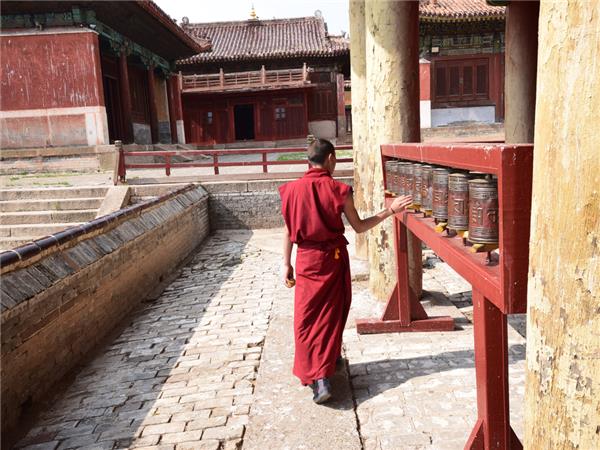
Mongolia small group holidays
From £2920 - £3580 15 days excluding flights
Discover the raw beauty and tradition of Mongolia
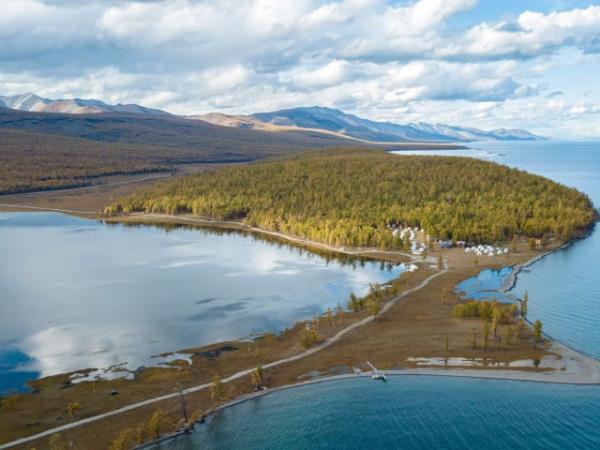
Mongolia's Naadam Festival tour at Lake Khovsgol
From £2899 14 days excluding flights
Experience a traditional community-focussed Naadam Festival
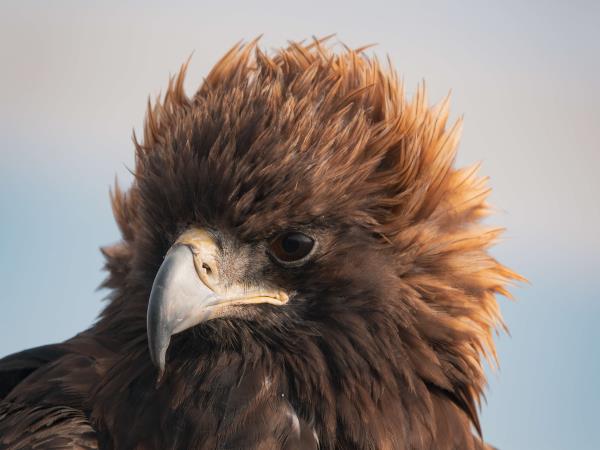
Western Mongolia tour, the Altai mountains & eagles
From US $3385 - US $4445 12 days excluding flights
Culture and adventure in the landscapes of western Mongolia