Tunisia solar eclipse 2027 tour



Description of Tunisia solar eclipse 2027 tour
This Tunisia solar eclipse 2027 tour puts you in prime viewing position for over five minutes of totality on the beautiful Chaffar Beach, just south of Sfax. Travel in confidence that all the arrangements are made for you on a fully escorted small group trip which also explores many of Tunisia’s most renowned historic sites.
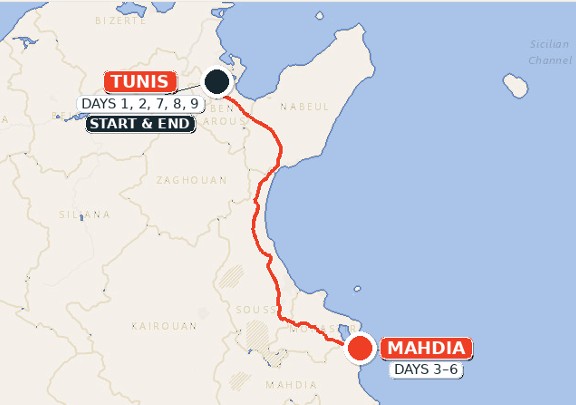
Your nine-day holiday (with the eclipse taking place on 2 August, day four of the itinerary) gets underway in Tunis, where you’ll meet your tour leader and fellow eclipse-hunters before heading south along the coast to Mahdia, via the many charms of Hammamet and Sousse.
After a day trip to admire the magnificent ribat fortifications at Monastir, it’s time to pop on the glasses to enable safe viewing of the eclipse, which will occur at around 10.11am local time and last for nearly six minutes. Your tour leader will ensure you are in the comfortable viewing area, which offers facilities, refreshments and shaded areas, in plenty of time to witness this spectacular celestial event.
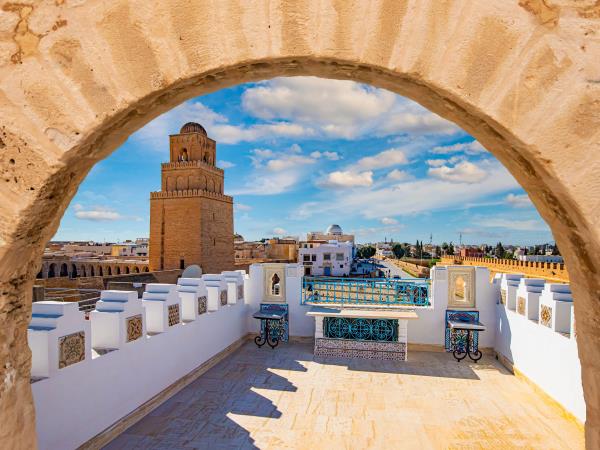
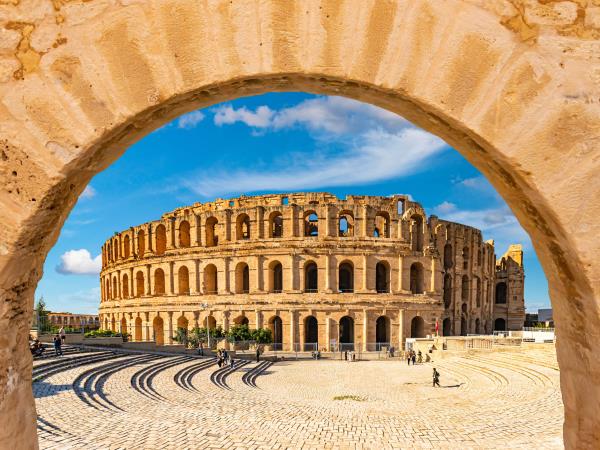
Following the eclipse, the adventure continues. You’ll proceed to the legendary Roman amphitheatre at El Jem, a UNESCO World Heritage Site, thence to the Great Mosque of Kairouan and the nearby Roman ruins of Uthina. Returning to the capital, enjoy a tour of the Tunis medina before touring Ancient Carthage and Sidi Bou Said. A final treat comes with a stop at a family-run olive oil estate where you can enjoy some delicious tastings before lunch, a lovely way to bid your group farewell.
Map
Price information
Check dates, prices & availability

Travel guides

Responsible Travel
Planet
CARBON REDUCTIONEfforts to Reduce Flying
International flights are not included in the tour price. This is a deliberate choice that allows guests to select flights with lower CO? emissions, choose airlines committed to sustainability, and, where possible, combine the journey with other travel plans, rather than being tied to a single set routing.
The itinerary includes one short domestic flight from Djerba to Tunis on Day 9. This is used because the tour begins and ends in Tunis and Day 9 includes both a hands-on cooking class in the Medina of Tunis (starting with a guided visit to the central market) and an afternoon exploration of the Carthage Archaeological Site. The overland alternative from Djerba in the far south back up to Tunis on the same day is not feasible, so the short flight enables the rest of the day to be spent in the destination on foot rather than in a vehicle.
Shared airport meet-and-assist transfers are provided on the first and last days of the tour at Tunis-Carthage Airport, reducing the need for individual taxis and supporting more efficient group transport.
Shared Local Transport
All ground transport during the tour is shared among the group, helping to reduce per-person emissions compared to individual travel. The tour uses private air-conditioned minibuses or coaches (subject to the final size of the group of 10–20 travellers), with 4x4 vehicles only where required for the desert regions (mountain oases of Chebika, Tamerza and Midès, and the Sahara). Public transport options across Tunisia’s terrain are limited, which is why a dedicated shared vehicle is used.
Advising Customers to Reduce Carbon Impacts
Travellers receive practical guidance through the tour notes on reducing the carbon and resource footprint of their trip, including: switching off lights, air-conditioning and fans when leaving their hotel room; not wasting water; removing superfluous packaging before leaving home; and choosing environmentally friendly, biodegradable sun creams, shampoos and detergents.
Human-Powered Transport
Sightseeing throughout the tour is carried out on foot, with walking-based exploration on most days of the itinerary.
Local-Sourced and Seasonal Food
On Day 9, the private cooking class in the Medina of Tunis begins with a guided tour of the central market, where travellers select fresh, seasonal ingredients before learning ancestral cooking techniques from a local chef in a restored traditional house. This directly supports the use of locally-grown, seasonal produce on the tour.
Travellers are also encouraged to use Water-to-Go filter bottles, which use a 3-in-1 filtration technology to provide safe drinking water from any non-salt water source.When booking international flights, recommendations are made to consider flight CO2 emissions.
ENVIRONMENT & WILDLIFE
Nature Encounters and Low-Impact Visits
The itinerary brings travellers into a range of Tunisia’s most distinctive natural landscapes, all visited on guided day excursions rather than through permanent infrastructure:
-Chott el-Jerid - a vast salt lake, visited as a roadside photo stop to minimise disturbance to the surface.
-Mountain oases of Chebika, Tamerza and Midès - explored on foot through canyons, palm groves and hidden waterfalls.
-The Tozeur date palm oasis - one of the largest in Tunisia, with a guided introduction to its traditional irrigation systems.
-The Sahara dunes around Ong Jemel - visited at sunset as a viewpoint, rather than through heavy off-road activity.
Protected and Heritage Sites
Entrance fees are included for all tourist sites mentioned in the itinerary, including several UNESCO World Heritage Sites - the El Jem Amphitheatre, the Medina of Kairouan and the Carthage Archaeological Site. These contributions support the preservation and ongoing management of Tunisia’s cultural and environmental heritage.
Environmental Awareness
Travellers are provided with responsible-travel guidance in the tour notes covering specific behaviours that help protect local environments, including:
- Avoiding littering and, where possible, taking plastic waste (e.g. water bottles) home, as many of the countries we visit have a tough challenge dealing with rubbish.
- Reducing waste and packaging before departure.
- Using biodegradable sun creams, shampoos and detergents to reduce pollution of local water sources.
- Respecting local environments and wildlife, and following the dress and behaviour guidance for religious or sacred sites.
Guided Environmental and Cultural Interpretation
All sightseeing is led by fully-trained, local English-speaking Tunisian guides, with additional specialist local guides in cities. Only local Tunisian guides and reps are used in Tunisia, giving travellers expert insight into the country’s landscapes, oases, desert ecosystems and traditional ways of life.
People
LOCAL ECONOMYSupport for Local Enterprises and Artisans
The itinerary is structured to channel spending into local Tunisian businesses, artisans and cultural institutions, including:
• Kairouan - visits to local workshops famous for traditional carpet weaving.
• Tozeur - exploration of the Ouled el-Hadef district’s traditional kiln-fired brick architecture and the surrounding date palm oasis.
• Douz - a visit to the bustling local souk, where travellers can browse crafts, textiles and spices from local traders, including the M’razig nomadic community.
• Tamezret (Matmata) - the small Berber Museum of Tamezret, a local cultural space preserving Berber heritage.
• Djerba - the Guellala Museum (traditional pottery and crafts), the Djerbahood open-air street-art village in Erriadh featuring over 150 international and local artists, and the markets and artisan stalls of Houmt Souk.
• Tunis - a private hands-on cooking class in the Medina with a local chef, beginning with a guided tour of the central market to select fresh, seasonal ingredients.
• Optional purchases of handicrafts and local goods throughout the tour directly support Tunisian artisans.
EMPLOYMENT, INCLUSIVITY AND DIVERSITY
Local Employment
Only local Tunisian guides and reps are used for this tour. Tour leaders, drivers, hotel staff and additional city-based specialist guides are all Tunisian nationals, ensuring that employment income from the tour stays in the country and that travellers benefit from authentic, in-depth local knowledge.
Fair Working Conditions
All porters used are employed and equipped following the guidelines set by the International Porter Protection Group (IPPG).
Accessibility
This itinerary includes extensive walking through medinas, souks and archaeological sites, hiking through canyons and palm groves at the mountain oases, 4x4 travel over desert terrain and travel across mountain roads in the Matmata region. As such, it may not be suitable for travellers with significantly limited mobility. Travellers with concerns, pre-existing conditions, or physical disabilities are asked to contact us in advance so we can help assess suitability.
Cultural Respect
Travellers are given clear guidance in the tour notes on respecting local customs, including loose-fitting and non-revealing clothing in keeping with the importance of modesty in Tunisia, and covering legs, arms and shoulders in towns, city centres and when visiting mosques and other religious sites.
Popular similar holidays
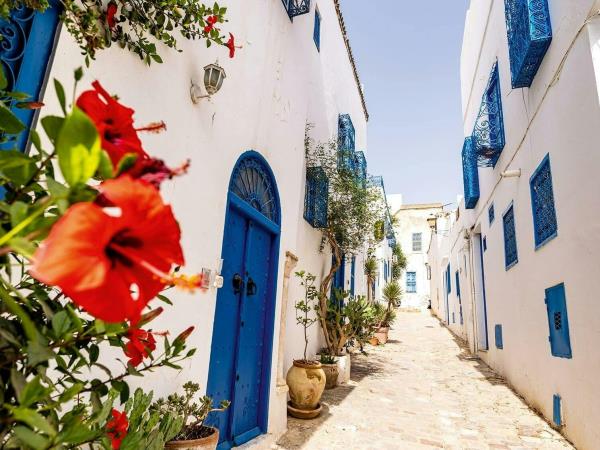
2027 solar eclipse holiday, Tunisia
From US $2226 - US $2644 8 days excluding flights
Enjoy your eclipse
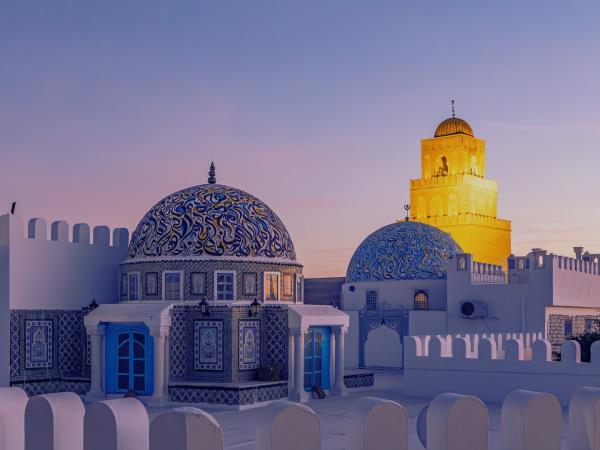
2027 full solar eclipse holiday in Tunisia
From US $2098 - US $2447 8 days excluding flights
Experience one of longest solar eclipses from Gafsa
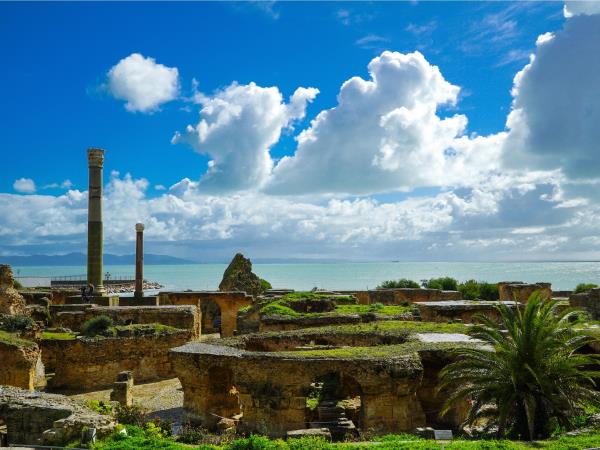
Hannibal and hinterlands history tour, Tunisia
From US $2655 8 days excluding flights
In the footsteps of Hannibal's military