Tunisia 9 day tour
Price
£2395To£2495 excluding flights
Convert currency:


Duration
9 days
Type
Small group
Last minute
Late availability on these dates: 14 Nov, 05 Dec, 27 Dec

Description of Tunisia 9 day tour
Map

Price information
£2395To£2495 excluding flights
Convert currency:
Check dates, prices & availability

Travel guides
Experience North African culture, ancient Roman architecture and beautiful Mediterranean beaches.

Responsible Travel was built out of a love of solo travel, and we want to share the joy of it with you.
Responsible Travel
As the pioneers of responsible tourism, we've screened this (and every) holiday so that you can travel knowing we've worked to maximise the benefits of your holiday to local people and places, and minimise any negative impacts.
Planet
PLANETCARBON REDUCTION
Reduction in avoidable internal flights
This tour avoids all internal flights. All travel between destinations such as Tunis, Sousse, Matmata, and Tozeur is completed by shared, air-conditioned minibus or 4x4 vehicles, reducing the need for air travel and its associated emissions.
Shared local transport
The itinerary is designed for a small group of up to twelve travellers who share local transport throughout the trip. Travelling together in one vehicle for transfers and sightseeing lowers per-person carbon emissions compared to private or individual transport.
Human-powered transport
Walking is an important part of the tour. Guided walking tours take place in the Medinas of Tunis, Sousse, and Kairouan, as well as in natural locations such as the Mides Canyon and the mountain oases of Chebika and Tamerza, promoting low-impact exploration.
Local-sourced and seasonal food
Travellers experience Tunisia’s fresh, seasonal produce first-hand. During the Tunisian cooking class, guests visit the Central Market to select local ingredients with their chef before preparing a traditional meal. Meals at the Women of GDA El Ferch cooperative and in the Berber desert camp also use locally produced food.
ENVIRONMENT AND WILDLIFE
Accommodation environmental impact reduction
Accommodation on this tour is locally owned and uses existing infrastructure, helping to limit the impact of new developments. The Berber desert camp operates with minimal environmental footprint, using traditional desert practices suited to its fragile surroundings.
Entry fees to parks or protected areas
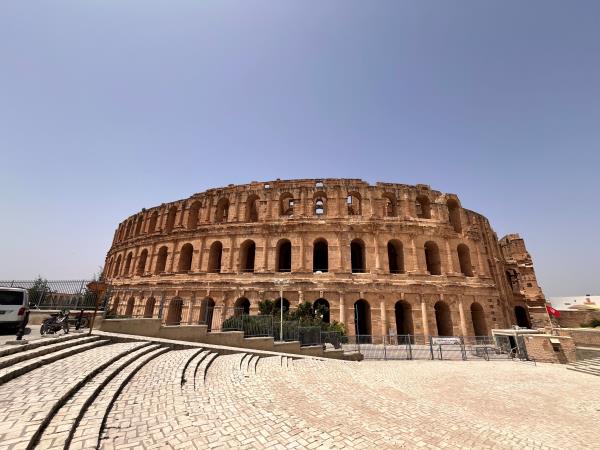
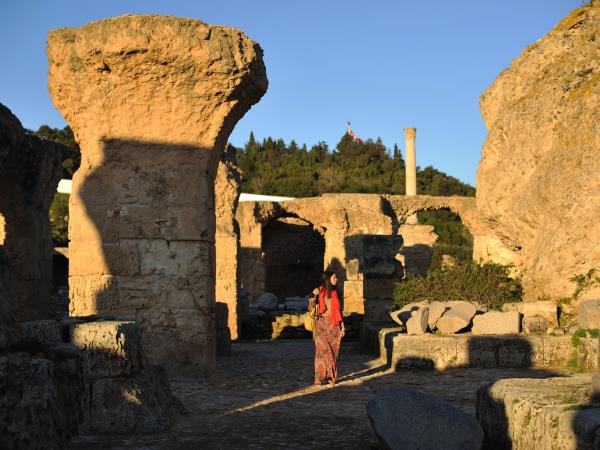
Entrance fees are included for several UNESCO World Heritage sites such as the Medinas of Tunis, Sousse, and Kairouan, and the Amphitheatre of El Jem. These fees contribute directly to the preservation of Tunisia’s cultural and environmental heritage.
Contribution to nature recovery or rewilding projects
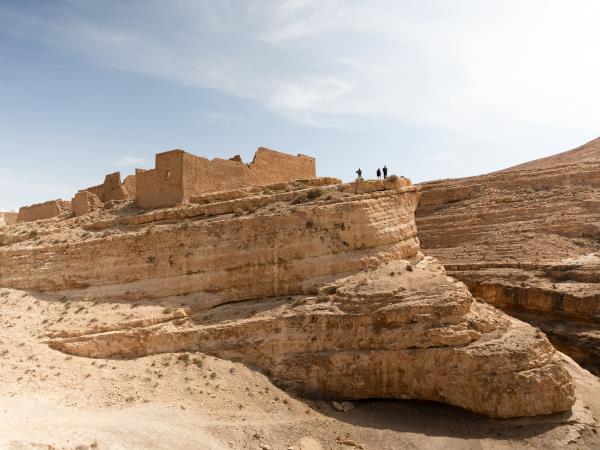
Visits to the mountain oases of Chebika, Tamerza, and Mides support local communities that maintain these vital ecosystems. Guests learn about water conservation and the relationship between people and the desert environment.
Expert nature guides
All guides are local Tunisians with deep knowledge of the regions visited. They share insight into desert ecology, traditional living practices, and the importance of protecting Tunisia’s natural and cultural landscapes.
People
PEOPLELOCAL ECONOMY
Locally owned accommodation
All accommodation used during the tour, hotels and the Berber desert camp, is locally owned or managed, ensuring that tourism income remains within Tunisia and benefits local communities.
Local economic opportunities
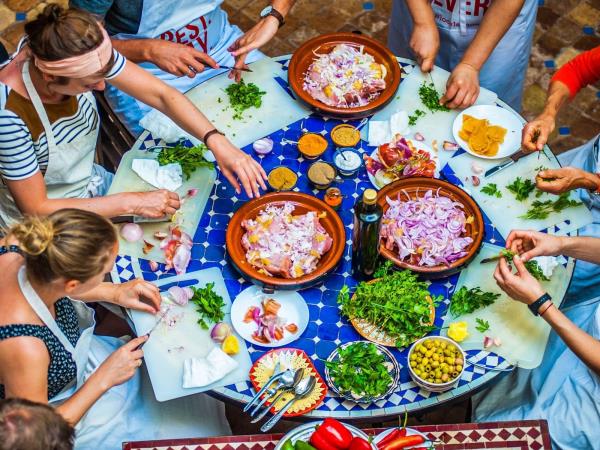
The tour highlights Tunisia’s living traditions and small enterprises through a series of immersive, hands-on experiences. A Tunisian cooking class begins with a guided visit to the bustling Central Market in the Medina, where fresh, seasonal ingredients are sourced before joining a local chef in a traditional home to prepare classic regional dishes using time-honoured techniques.
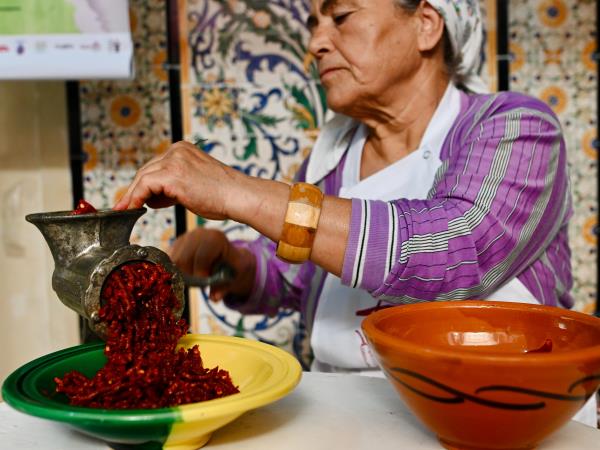
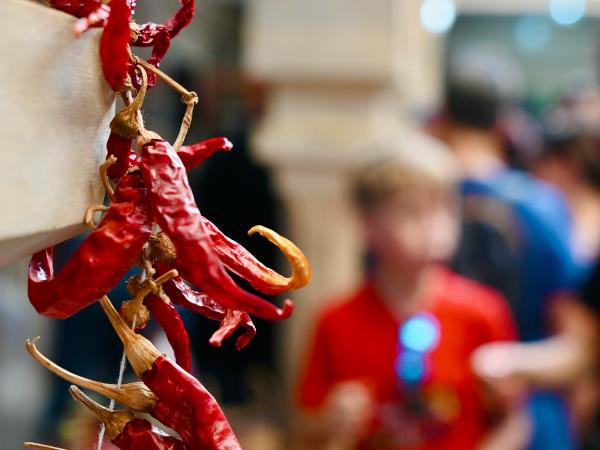
Culinary discovery continues in an interactive Harissa-making workshop, where the national condiment is created from hand-selected chillies and spices using ancestral methods.
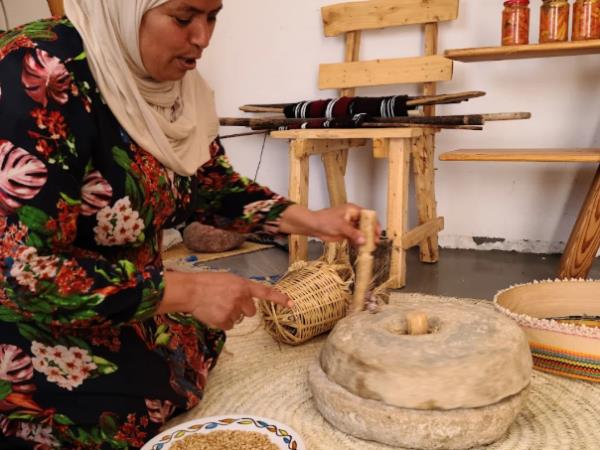
The tour also includes a visit to the Women of GDA El Ferch, a cooperative run by rural women committed to empowerment through sustainable agriculture and the preservation of artisanal skills. Guests are welcomed into their workspace to help prepare traditional sauces and snacks, while learning about the women’s stories and achievements.
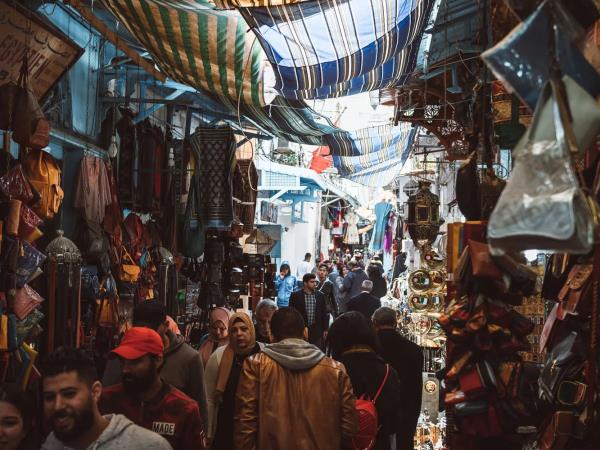
A visit to the lively Douz souk, renowned for its desert crafts, spices, and characteristic Bedouin textiles, offering a vivid glimpse of local trade and craftsmanship.
Together, these experiences create meaningful economic benefits for local artisans, cooperatives, and small producers, helping sustain livelihoods, strengthen community resilience, and preserve Tunisia’s culinary and cultural heritage.
EMPLOYMENT, INCLUSIVITY AND DIVERSITY
Local employment
All tour operations are run by Tunisians, including guides, drivers, and workshop hosts. Many are from the specific regions visited, ensuring direct employment and economic benefit for local people.
Opportunities for marginalised groups
The visit to the Women of GDA El Ferch cooperative provides opportunities for rural women to earn income through sustainable agriculture and traditional food production, promoting empowerment and cultural preservation.
Fair wages
Fair employment practices are followed, ensuring that all staff are paid at least the legal minimum wage in Tunisia.
Popular similar holidays
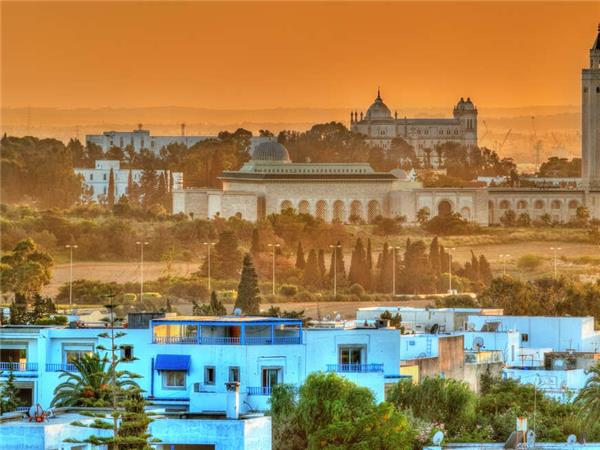
Tunisia small group holiday
From £1810 - £2045 10 days excluding flights
Experience the sights and sounds of Tunisia
Tunisia tours, off the beaten track
From £3449 - £3599 14 days excluding flights
Discover Tunisia's hidden gems on this in depth journey
2027 solar eclipse holiday, Tunisia
From US $2226 - US $2644 8 days excluding flights
Enjoy your eclipse