Geoffrey Bawa architecture tour in Sri Lanka
Price
£2590excluding flights
Duration
14 Days
Type
Tailor made
More info
B&B accommodation, a/c transport with dedicated chauffeur guide, cost of all entrance fees and activities described in the itinerary, and current taxes.
No group tours.

Description of Geoffrey Bawa architecture tour in Sri Lanka
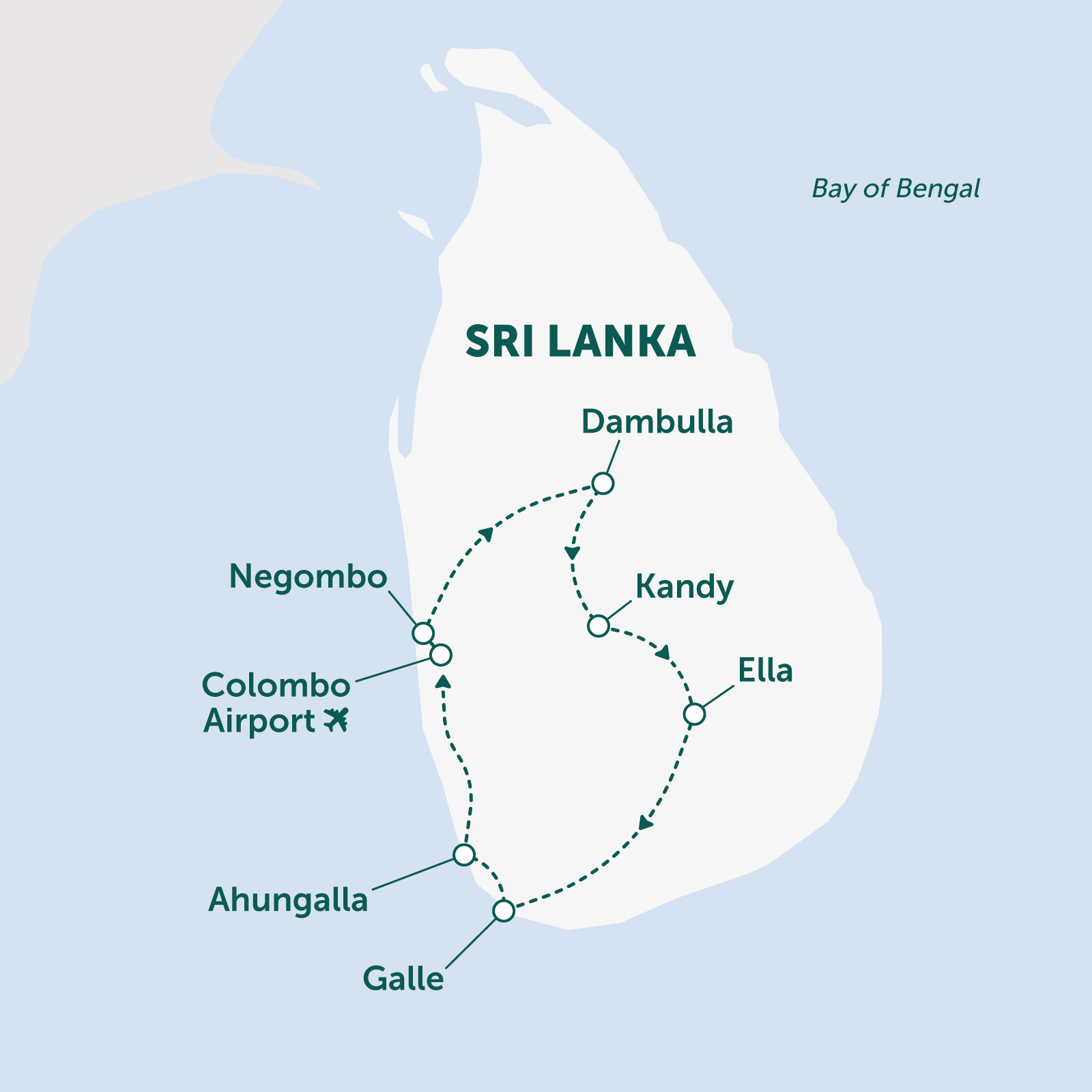
Map
Price information
£2590excluding flights
B&B accommodation, a/c transport with dedicated chauffeur guide, cost of all entrance fees and activities described in the itinerary, and current taxes.
No group tours.
Departure information
This trip can be tailor made throughout the year to suit your requirements
Travel guides
For whether you are travelling by train, wildlife watching in rainforests, or just blissing out at the beach.
Providing you with a balance of rated, underrated and overrated things to do in Asia.
Responsible Travel
As the pioneers of responsible tourism, we've screened this (and every) holiday so that you can travel knowing we've worked to maximise the benefits of your holiday to local people and places, and minimise any negative impacts.
Planet
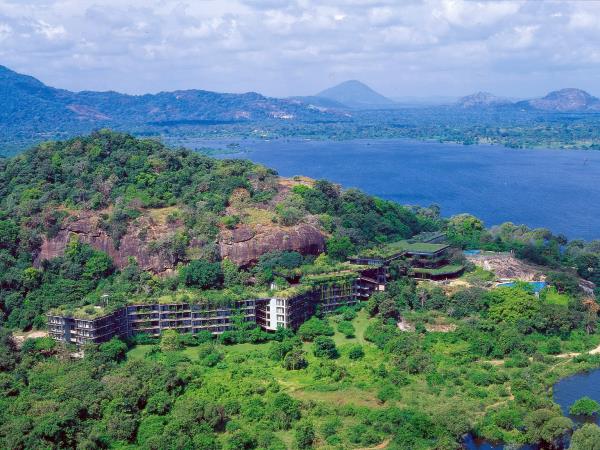
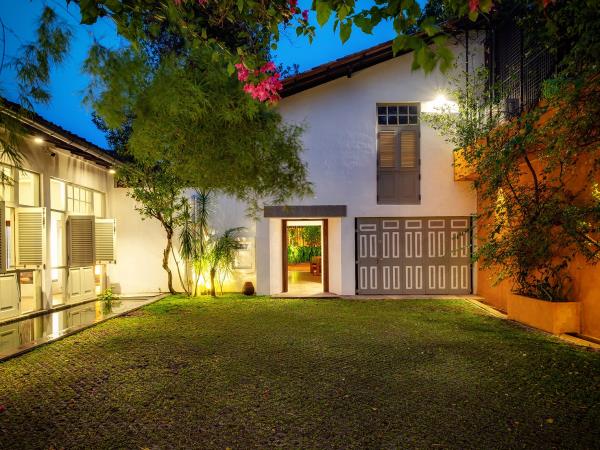
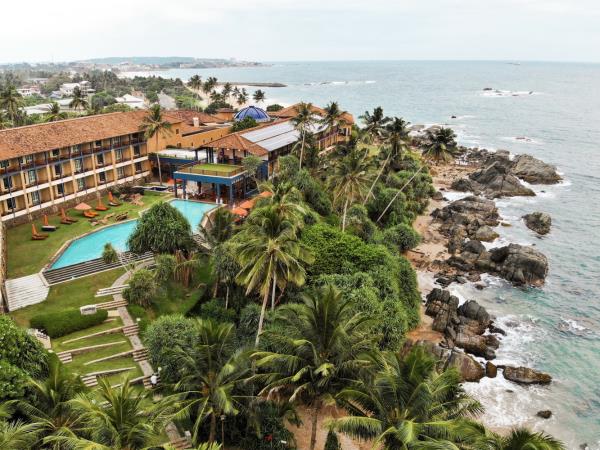
The ethos behind many of Geoffrey Bawa’s projects was based on sustainable design concepts and traditional construction techniques, particularly regarding natural ventilation and cooling which negated the need for supplementary, artificial air conditioning – Jacobson House (now The Last House) near Tangalle, Bawa’s final design project, was the epitome of this approach which has since had air conditioning installed due to popular demand.Although a lot of concrete has been used to build his hotel developments, much thought was put into the overall schemes to reduce or avoid tree felling, or unnecessary rock blasting – in the construction of Kandalama Hotel (now Heritance Kandalama), for instance, no trees were removed and the building forms itself around and over the bedrock and follows the natural topography of the location – or, again, to cool buildings by harnessing the freshening effect of sea breezes, as at Blue Water Hotel (now The Blue Water) in Wadduwa, Triton Hotel (now Heritance Ahungalla) in Ahungalla and Lighthouse Hotel (now Jetwing Lighthouse) in Galle. These hotels were also positioned to maximise the effect of the breeze, and designed with tall atria, open elevations and vented public areas to allow the breezes full impact.
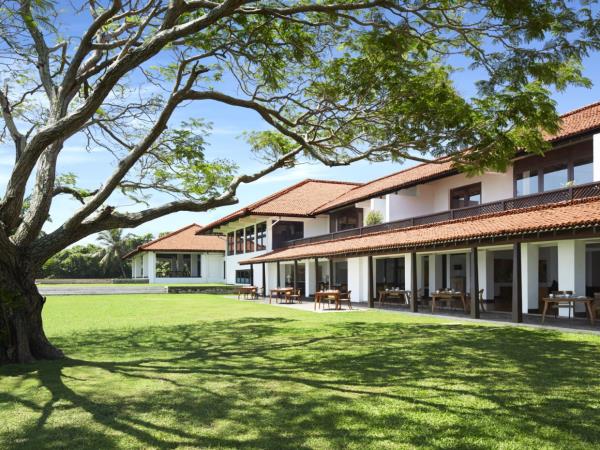
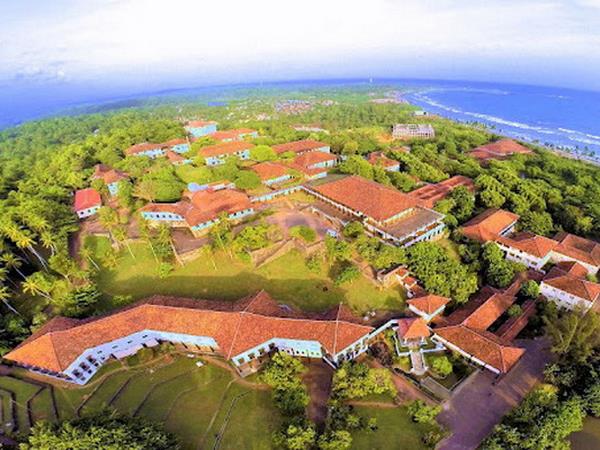
Local materials and design hues as well as the history and classical Sinhalese architecture of the island were also close to Bawa’s heart. Although he drew on his vast knowledge of European architecture, Geoffrey Bawa is first and foremost a Sri Lankan architect and his work should be viewed in the context of the geography, people, history and traditions of Sri Lanka. The clay-tiled roofs of traditional walauwas (mansion houses), for example, are emulated in the roof elevations of most of his coastal hotels as well as the various roofs and colonnades of the University of Ruhuna near Matara. Samara, a locally-derived ochre pigment, is employed liberally at his various projects, including Jetwing Lighthouse, the original Bentota Beach Hotel (now Cinnamon Bentota Beach) and The Last House. Bawa also preferred native timber to imported wood for his buildings. Seema Malaka, the only modern Buddhist temple in Sri Lanka to be built to a non-traditional plan and a Bawa project in the 1970s, appears to take design themes from the forest monasteries of Anuradhapura and an early ambalama at Panavitiya near Kurunegala.
It goes without saying that you need a long-haul flight to reach Sri Lanka and this has an impact on your overall holiday carbon footprint. In fact, the flight to Sri Lanka accounts for approximately 80% of the total carbon emissions of the whole holiday. At the present time, possibly the best alternative to mitigate your flights’ emissions is to invest in a local community generation project at home.
Our holidays include a private tour of Sri Lanka by either petrol- or diesel-engine vehicles as a matter of necessity, although we are using fully electric vehicles (EVs) for transfers from the airport to various locations within range. Currently, there is limited uptake of EVs on the island and the charging infrastructure for EVs is essentially non-existent. We don’t use internal flights for obvious climate action reasons but we do encourage train journeys around the island, particularly through the spectacular Hill Country, along the palm-fringed west and south coasts to Galle and Matara, and up to seldom-visited Jaffna in the far north.
Jetwing Lagoon is the first hotel in Sri Lanka to feature 100% LED lighting, including in the garden and swimming pool, which is much more energy efficient than using either compact fluorescent lamp or incandescent bulbs. The hotel also features two roof-mounted solar photovoltaic systems. The 20 kW off-grid system provides all the electricity needed for room lighting, with a dedicated in-room indicator to show when solar or grid power is being used. The 10 kW grid-tied system, however, provides energy for the hot water circulation and distribution pumps of the onsite biomass boiler.
Jetwing Lagoon also installed the first vapour absorption chiller (VAC) in a Sri Lankan hotel. Sustainably operated via steam generated from the onsite biomass boiler, the VAC provides air-conditioning for the entire property – the VAC system consumes only 7 kW of electricity compared with approximately 88 kW consumed by a conventional chiller of equal capacity. The biomass boiler is fuelled by sustainably harvested cinnamon wood, and operates 24 hours a day to produce up to 1500 kg of steam per hour – most of which is used to operate the VAC, as well as for hot water generation during the night. The central hot water system of the hotel is operated completely on renewable energy. With 50 flat plate collector-type solar panels, the system is able to provide all the hot water required for hotel operations between 09.00 and 16.00, while steam from the biomass boiler generates hot water during the night.
The onsite effluent treatment plant at Jetwing Lagoon allows 100% of wastewater generated through hotel operations to be processed. Ensuring that all produce is put to sustainable use, treated water from the plant is used for garden irrigation and the operation of the cooling towers. Storm water collected from the entire property is also diverted to a collection pond, which aids in groundwater recharge.
In addition, while an enhanced composter at Jetwing Lagoon processes all food waste from the kitchens and restaurants within a rapid digestion process of 21 days, all garden sweepings and other tree clippings from the hotel gardens are composted using a traditional above-ground compost pile. Compost produced from both processes is then used as a nutrient-rich soil enhancer in the hotel garden. The organic garden grows local fruits and herbs whenever possible, which features in all of the hotel's meals. Jetwing Lagoon also makes use of sustainable glass water bottles, which are sourced from a bottling plant at nearby sister property Jetwing Blue.
From its inception, the theme of sustainability was ingrained into the Heritance Kandalama DNA and it continues to follow international conservation practices today. The hotel holds the coveted LEED Gold-accreditation of the US Green Building Council and is Gold Certified for Accommodation Sustainability by Travelife, which is a leading training, management and certification initiative for tourism companies committed to reaching sustainability.
SWP Eco Lodge was designed to make the most of its location in Kandy city centre without obliterating the natural landscape, which has been the unfortunate and detrimental typology of most previous construction in the area. Instead of glass and concrete boxes stacked one above the other in search of the expansive views of the city, the stone- and timber-built lodge is terraced and tucks into the sloping land to avoid unnecessary cutting and removal of earth, so protecting the ecology of the site and the city as a whole with a move towards responsible tourism. As a consequence, the lodge captures the best of the city views without altering the visual and physical landscape of the hills as seen from the city itself. The building relies heavily on maximising natural light and cross ventilation through an innovative design, and expansive eaves provide shading from the intense tropical sun, both interventions negating the need for air conditioning in public areas.
98 Acres Resort & Spa is surrounded by the eponymous scenic tea estate near Ella in the southern Hill Country, and it was constructed with the emphasis on eco-friendliness and sustainability. The uniquely designed resort of spacious chalets mostly made of recyclable materials blends well with the natural surroundings. Discarded railway sleepers form decks and walls, rough-hewn granite lends simple elegance to floors, and traditional thatched roofs of locally-sourced Iluk straw add to the rustic splendour.
Jetwing Lighthouse hosts an onsite biomass boiler, which is fuelled by cinnamon wood for 24 hours a day, and is primarily used to generate steam for hot water and laundry requirements. The hot water requirements of Jetwing Lighthouse are met through a central hot water system, driven entirely through renewable means via the biomass boiler. In addition, a 125 kW grid-tied and net-metered roof mounted solar photovoltaic array contributes towards 10% of the total electricity requirement of the hotel.
The effluent treatment plant at Jetwing Lighthouse treats 100% of wastewater generated onsite, which is then used for garden irrigation. The sludge produced forms a nutrient-rich soil enhancer for the gardens. All garden sweepings and other tree clippings are composted in a traditional above ground compost pile, where the resultant compost is also used as a nutrient-rich soil enhancer in the hotel gardens. Food waste from the kitchens and restaurants are added to a biogas digester on a daily basis, which then produces a CH4-rich output gas that helps fuel modified stoves in the staff kitchen.
All glass bottles used at Jetwing Lighthouse are filled with purified water at an onsite water bottling plant. With a maximum bottling capacity of 2000 litres per day, the plant features semi-automated washing, and fully automated filling and capping systems in a unit that is housed in a repurposed container, powered by a dedicated solar array. Jetwing Lighthouse also maintains an organic garden, which grows fresh regional produce that is primarily used in the staff cafeteria kitchen at the hotel.
Sri Lanka is home to one of the largest resident blue whale populations in the world and Jetwing Lighthouse is in the ideal location on the southern coastline of the island for both the observation and awareness of this magnificent specie. Jetwing Lighthouse features an onsite cetacean information centre, which shares knowledge of these marine mammals with guests, local schoolchildren and the wider community. The hotel also works with local boat and tour operators to conduct awareness programmes and responsible whale watching tours, which are carried out by the resident naturalist.
Heritance Ahungalla is Gold Certified for Accommodation Sustainability by Travelife.
People
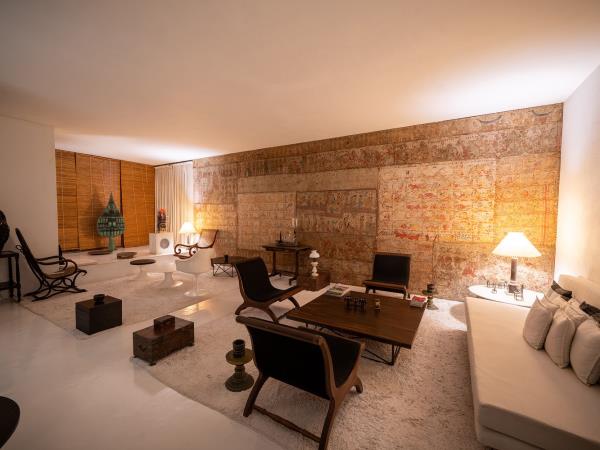
Geoffrey Bawa preferred to employ local artisans and craftsmen for the construction of his buildings, and to commission Sri Lankan artists such as Laki Senanayake, Ena de Silva and Barbara Sansoni, all of them close friends of Bawa, to decorate the spaces with traditional and indigenous design themes. This is no more evident than at Jetwing Lighthouse where the central, winding and impressive staircase conceived by Laki Senanayake depicts the Battle of Randeniya as a swirling mass of Dutch and Sinhalese warriors. He also sculpted the flying owl and tree-themed motifs in the main restaurant at Heritance Kandalama, and the magnificent peacock adorning one of the new restaurants at Cinnamon Bentota Beach (a rebuild project of the Bawa-designed Bentota Beach Hotel, which was overseen by one of his close collaborators, Channa Daswatte). The original Bentota Beach Hotel also had a batik ceiling above the reception area fabricated by Ena de Silva, and the handloom ceilings of the dining room and lounges were the work of Barbara Sansoni, whose art is still on display today at Jetwing Lighthouse.At Tikalanka, like Bawa, we only employ Sri Lankan locals as our guides, who are all trained and licensed by the Sri Lanka Tourism Development Authority, which assures you of their quality and knowledge. Our team of expert and passionate chauffeur guides has many years’ experience of introducing foreign visitors to the wonders of their country. Not only that, they are friendly, caring and a joy to be with! Don’t be shy, relax in their company and you will come away with an incredible experience that will stay with you for the rest of your life. But don’t take it from us – our very positive feedback from past customers is testament to that fact.
Our accommodation on this tour is locally owned and managed which contributes directly to the local economy as well as providing essential employment to local people. Tourism to Sri Lanka accounted for 25% of foreign exchange income and 12% of GDP at its height before the pandemic which shows how important your holiday is to the local economy and the difference you can make by travelling there.
Jetwing Lighthouse runs lectures and workshops on the environment, which are frequently conducted by the resident naturalist at local schools. The hotel has also undertaken a number of projects to support the communities in the neighbourhood. Following the 2004 tsunami, Jetwing Lighthouse has collaborated with a number of parties to build a community swimming pool supervised by professional coaches, who teach valuable aquatic skills to local schoolchildren, a programme of free swimming lessons that continues to benefit local children. In addition, Jetwing Lighthouse also collaborates with local tuk tuk drivers to give them a sense of belonging by making them welcome at the hotel and eliminating the need for a third party taxi service. Today, the local tuk tuk drivers provide guests with tours and transport in and around the Galle area.
Popular similar holidays
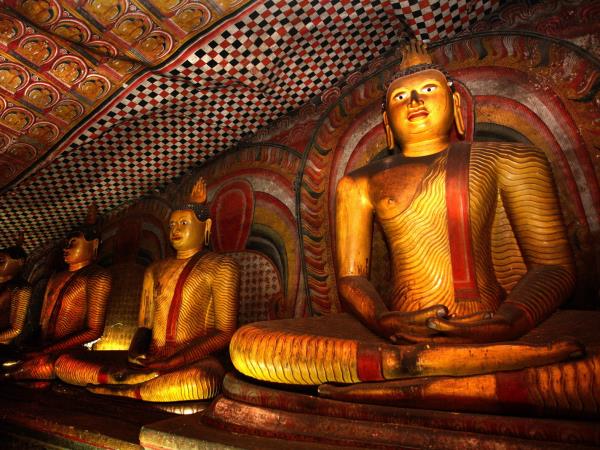
Sri Lanka holidays, tailor made
From £2395 14 days excluding flights
Independent tailor-made holidays to Sri Lanka
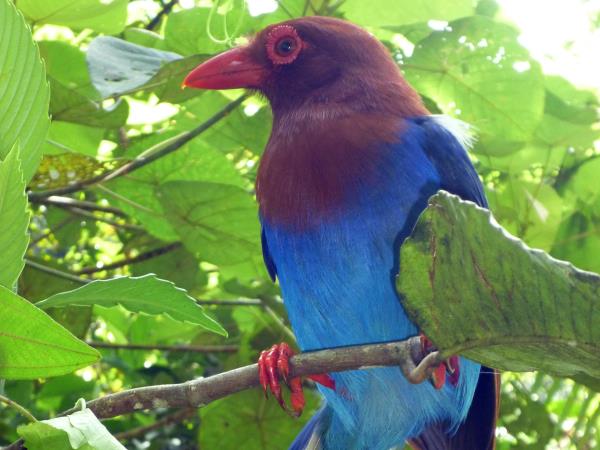
Bird watching tour in Sri Lanka
From £1795 10 days excluding flights
Sri Lankan endemic birds & flagship mammals
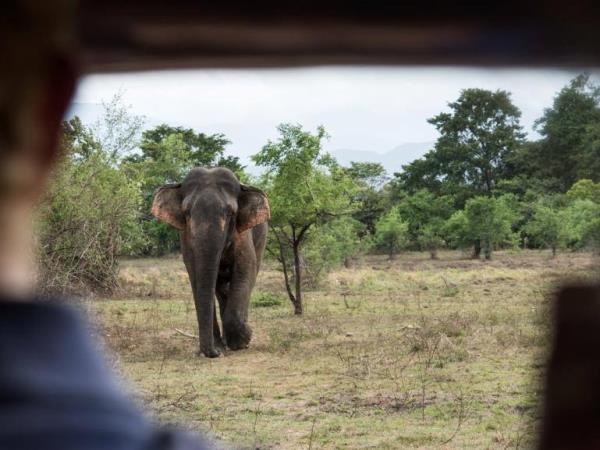
Elephant & wildlife conservation volunteering in Sri Lanka
From £895 7 days excluding flights
Help wild elephants & wildlife in Sri Lanka