Paris to Mont-Saint-Michel cycling holiday, France
Price
€1212 excluding flights
Convert currency:


Duration
8 Days
Type
Tailor made
More info
The trip includes: 8 days & 8 nights with breakfast, 24-hour support, phone holder, helmet, lock, app with maps, GPS tracks & stage descriptions, hybrid bike with pannier (E-bike +€30/day) and insurance.
Luggage transfer between hotels is not included
Luggage transfer between hotels is not included

Description of Paris to Mont-Saint-Michel cycling holiday, France
Price information
€1212 excluding flights
Convert currency:
The trip includes: 8 days & 8 nights with breakfast, 24-hour support, phone holder, helmet, lock, app with maps, GPS tracks & stage descriptions, hybrid bike with pannier (E-bike +€30/day) and insurance.
Luggage transfer between hotels is not included
Luggage transfer between hotels is not included
Departure information
This trip can be tailor made throughout the year to suit your requirements
Travel guides
Our cycling in France travel guide finds quiet country lanes across the land.
Electric bikes might be about to make our cities greener and our lives better, but first, let them improve your holiday.
Holiday information
Dietary requirements:
We cater for vegetarian and vegan diets. As meals are prepared for small groups, we can cater for allergies or other dietary requirements, such as a gluten-free diet.
Renewable energy:
3 accommodations use renewable energy, either through on-site production (solar, etc.) or through green energy tariffs.
Responsible Travel
As the pioneers of responsible tourism, we've screened this (and every) holiday so that you can travel knowing we've worked to maximise the benefits of your holiday to local people and places, and minimise any negative impacts.
Planet
CARBON REDUCTIONHuman-powered transport
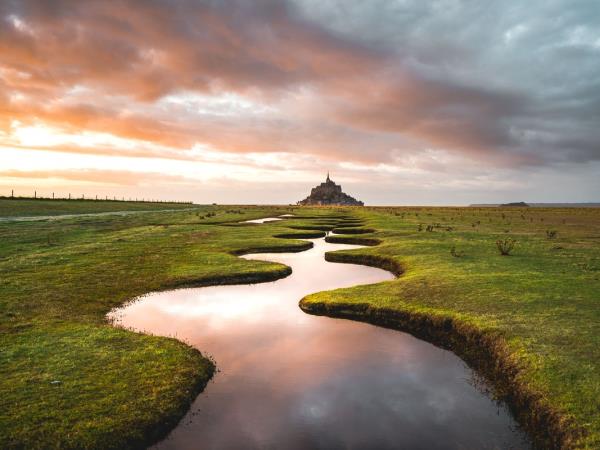
Cycling is at the heart of this eight-day journey from Paris to Mont-Saint-Michel. Travellers cover approximately 450 km by bike, following the Véloscénie from the French capital through the Chevreuse Valley, the Perche and Normandy before reaching the Bay of Mont-Saint-Michel.
The daily stages are completed by bicycle rather than by motorised transport, allowing travellers to experience the changing landscapes, towns and villages along the route at their own pace.
Reducing the need for motorised transfers
The journey has been designed as a continuous point-to-point cycling route, so no motorised transfers are required between the daily cycling stages.
Our one-way bike service allows travellers to collect their bicycles in Paris and finish the journey at Mont-Saint-Michel without having to transport the bicycles back to the starting point themselves.
Paris is served by extensive national and international rail networks. There are also several railway stations along the Véloscénie, giving travellers options for reaching different sections of the itinerary by public transport.
Accommodation
Wherever possible, we favour small-scale, independent and locally operated accommodation along the route.
When information is available from accommodation providers, we also take into consideration specific measures such as reducing water and energy consumption, limiting single-use plastics, recycling waste, reducing unnecessary laundry and using environmentally responsible cleaning products.
We do not require all accommodation providers to meet a specific environmental certification, so these practices may vary between properties.
Vegetarian and vegan options and local food
Travellers are encouraged to discover seasonal and locally produced food during their journey and are provided with recommendations for independent restaurants, cafés and regional producers along the route.
Vegetarian and plant-based options are recommended where available. As the journey crosses several regions between Paris and Normandy, travellers have opportunities to discover different regional food traditions and products throughout the itinerary.
Choosing independent restaurants, cafés and regional producers means that part of the travellers’ spending goes directly to businesses located in the areas visited.
ENVIRONMENT AND WILDLIFE
Travelling along established cycling routes
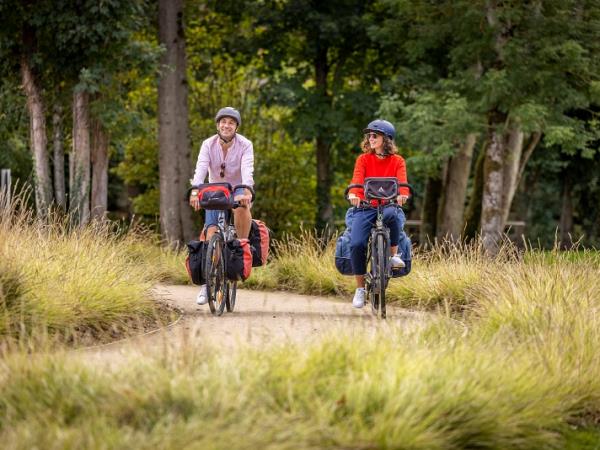
The itinerary follows the established Véloscénie route, using a combination of cycle paths, greenways, small roads and forest tracks. Around half of the official 450 km route is made up of greenways and cycle paths.
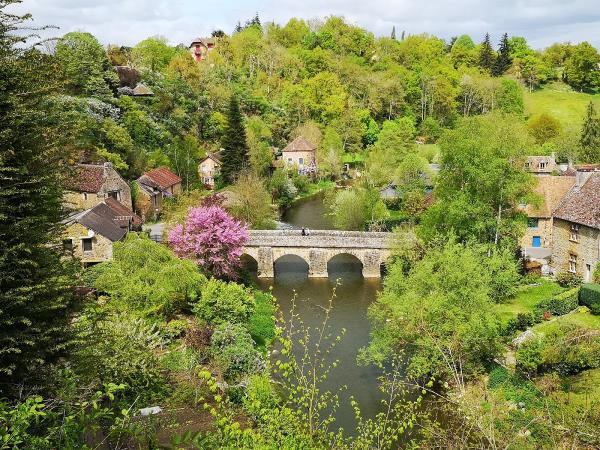
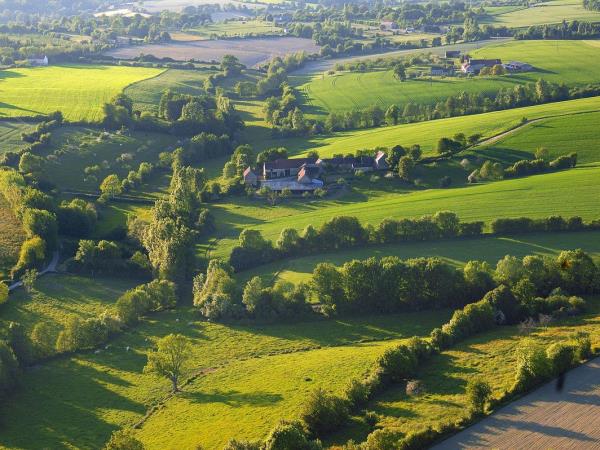
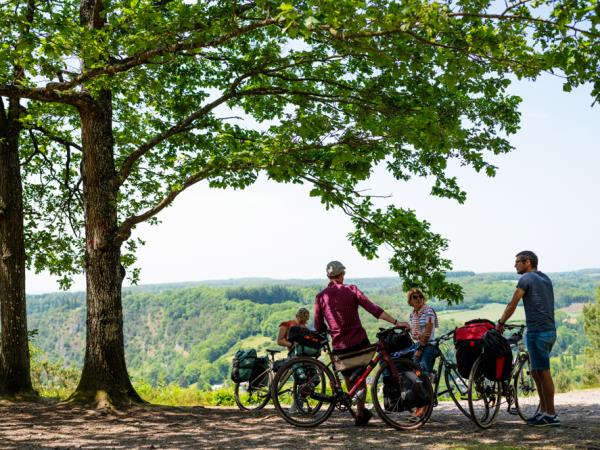
The landscapes change considerably throughout the journey. After leaving Paris, travellers pass through the Chevreuse Valley and continue through forests and agricultural landscapes towards the Perche. The route then crosses the Normandie-Maine area and the Norman bocage before reaching the Bay of Mont-Saint-Michel.
The Véloscénie passes through three regional natural parks: the Haute Vallée de Chevreuse, the Perche and Normandie-Maine. Travellers are asked to remain on designated cycling routes and marked paths, particularly when passing through forests and other natural areas.
Raising traveller awareness
Each traveller receives a digital roadbook containing practical recommendations for their journey, including guidance on behaviour in natural areas.
Travellers are asked to stay on marked paths, respect rules applying to protected areas, avoid disturbing or feeding wildlife, keep noise to a minimum and take their waste with them when bins are not available.
These recommendations are particularly relevant in the regional natural parks, forests, rural areas and around the Bay of Mont-Saint-Michel.
Travellers are also encouraged to carry reusable water bottles and bags and to use recycling facilities where these are available.
People
LOCAL ECONOMYThe journey includes overnight stops in different communities between Paris and Mont-Saint-Michel. Travellers therefore spend several days travelling through towns, villages and rural areas rather than travelling directly between the two destinations.
Wherever possible, we select independent hotels, guesthouses and locally operated accommodation. Our roadbook also recommends independent restaurants, cafés, shops and regional producers along the itinerary.
Travelling by bicycle gives travellers the opportunity to stop in smaller communities for meals, refreshments, visits and overnight stays. The route crosses areas including the Chevreuse Valley, the Perche and rural Normandy, providing opportunities to spend directly with businesses operating in these destinations.
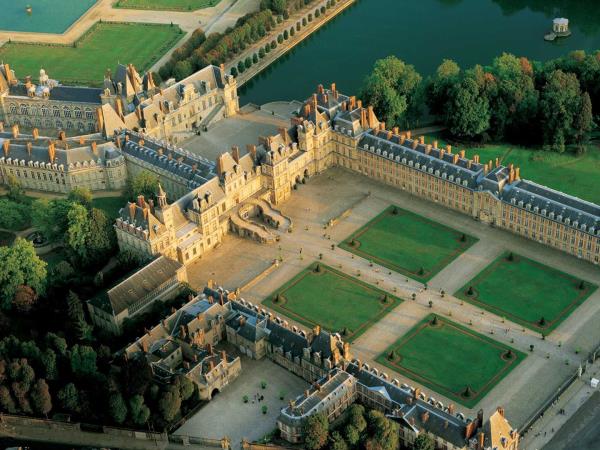
The journey also introduces travellers to the cultural heritage of the regions crossed. The DolceVia itinerary includes visits to the Palace of Versailles and the Château de Nogent-le-Rotrou, while the wider route passes through historic towns such as Chartres and Alençon before reaching Mont-Saint-Michel.
EMPLOYMENT, INCLUSIVITY AND DIVERSITY
We work with tourism providers located along or close to the itinerary, including accommodation providers, cultural attractions and other businesses.
Wherever possible, we choose locally operated providers. This means that expenditure on accommodation, visits and other services is made with businesses operating in the destinations through which travellers pass.
We and our operational partners are expected to comply with applicable employment legislation and working standards in France, including legal wage and employment requirements.
The trip can be undertaken with conventional bicycles, e-bikes or gravel bikes. Offering different bicycle options allows travellers with different cycling preferences and experience levels to choose the type of bicycle that best suits them.
Travellers can complete the daily stages at their own pace.
Popular similar holidays
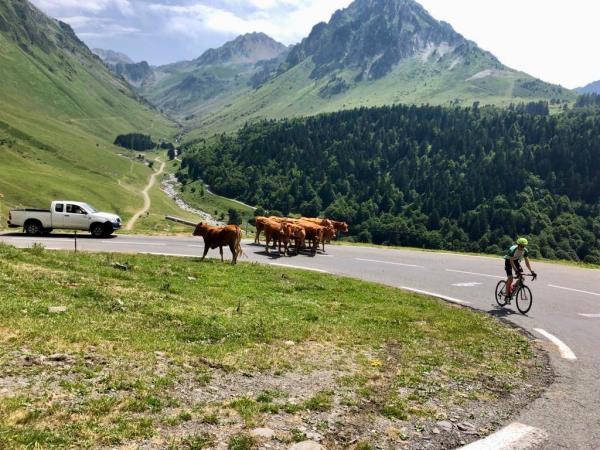
Tour de France cycling holiday
From £2590 10 days excluding flights
Tour de France challenge, historic stages, Nice to Pyrenees
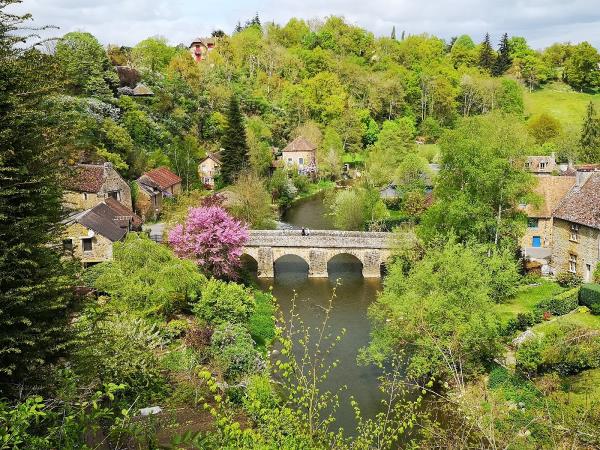
Cycling holiday along the River Seine, France
From €1133 8 days excluding flights
Self guided cycle from Paris to the sea
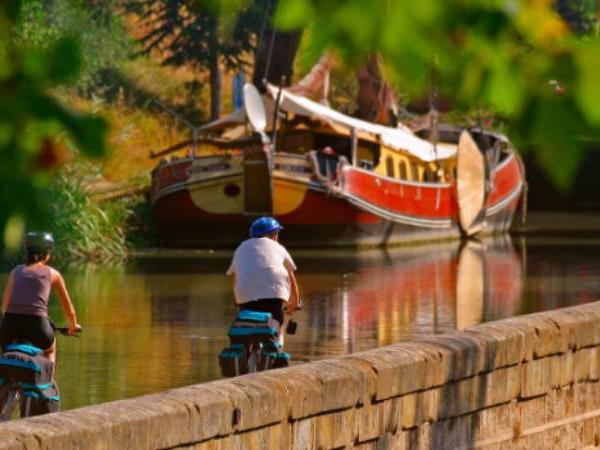
Canal Du Midi self guided cycling holiday
From £1050 7 days excluding flights
Cycle the changing landscapes from Toulouse to Sète