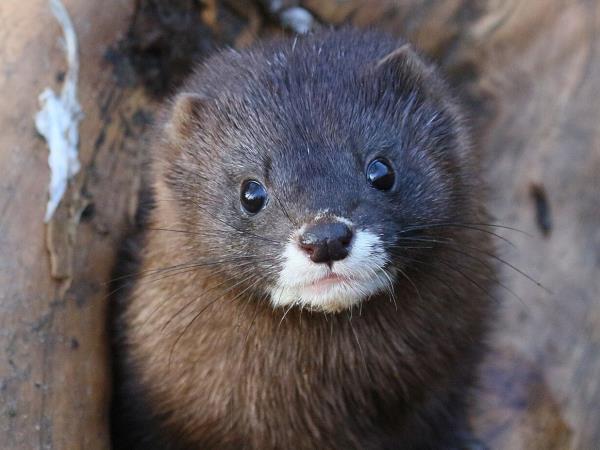
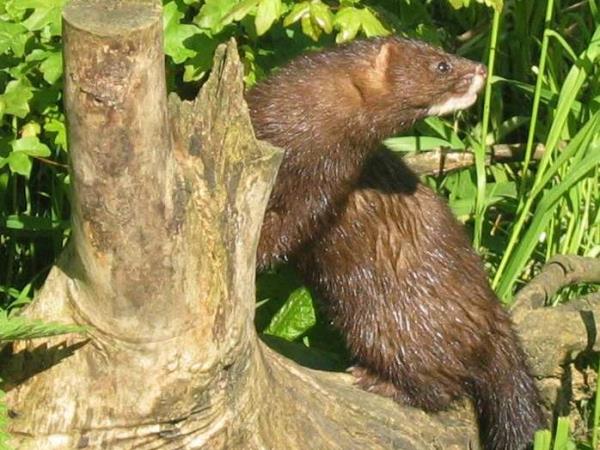
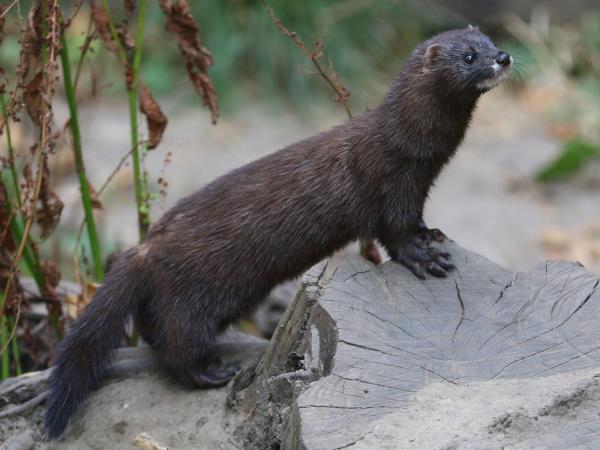
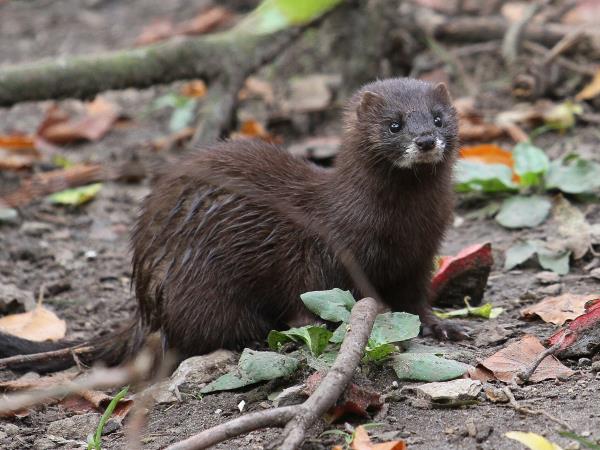
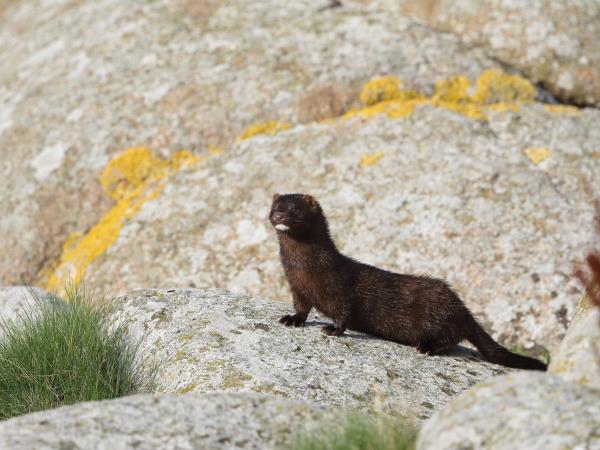
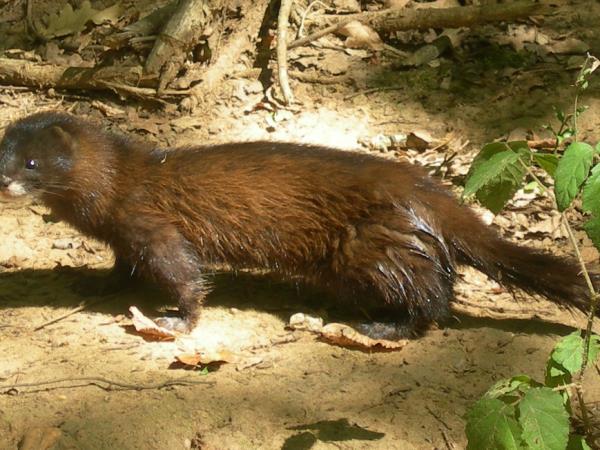
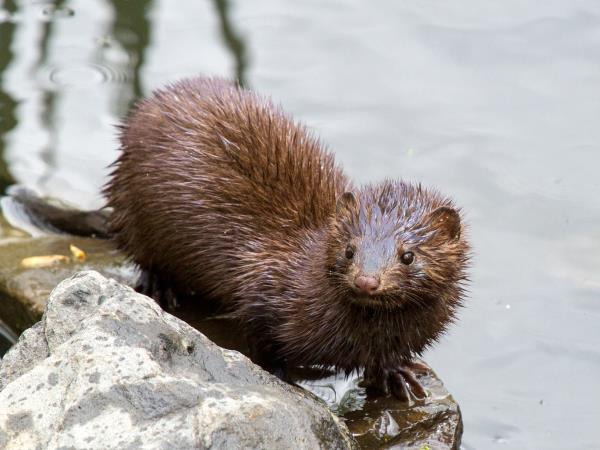
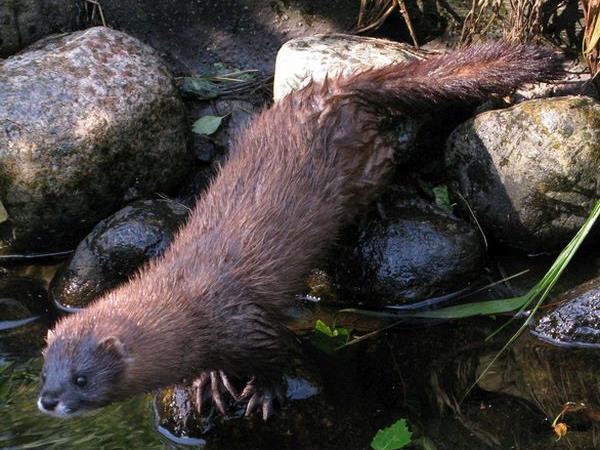
European mink watching holiday in Romania
Price
£1850 excluding flights
Convert currency:


Duration
5 Days
Type
Small group
More info
Price based on 2 pax sharing.
Inc.
all meals &transfers in the itinerary, local guides & driver.
permits and wildlife watching activities & private boat; exc.
flights, visa, tips.
Price depends on party size.
Can also run as a private tour.
Contact for specific price.
Inc.
all meals &transfers in the itinerary, local guides & driver.
permits and wildlife watching activities & private boat; exc.
flights, visa, tips.
Price depends on party size.
Can also run as a private tour.
Contact for specific price.

Description of European mink watching holiday in Romania
Price information
£1850 excluding flights
Convert currency:
Price based on 2 pax sharing.
Inc.
all meals &transfers in the itinerary, local guides & driver.
permits and wildlife watching activities & private boat; exc.
flights, visa, tips.
Price depends on party size.
Can also run as a private tour.
Contact for specific price.
Inc.
all meals &transfers in the itinerary, local guides & driver.
permits and wildlife watching activities & private boat; exc.
flights, visa, tips.
Price depends on party size.
Can also run as a private tour.
Contact for specific price.
Check dates, prices & availability

Travel guides
Venture into the forests and mountains of the Carpathians, roamed by wolves and bear.
An introduction to everything from whales in Iceland to lynx and bears in Romania.
Responsible Travel
As the pioneers of responsible tourism, we've screened this (and every) holiday so that you can travel knowing we've worked to maximise the benefits of your holiday to local people and places, and minimise any negative impacts.
Planet
CARBON REDUCTION In Romania (as with everywhere we go) we carefully choose accommodation, supplies and transportation that either minimises its effect on the environment or helps to contribute to its sustainable development. By choosing small, privately owned accommodation where possible we also look to only stay in accommodation that abides by either basic and also pioneering methods of reducing their impact on the environment. Where possible, we make sure that the lodges, camps and ranches that we use support local projects for the protection of the wildlife and local communities which rely on tourism as the principal source of income. We make sure that all the food consumed on the tour is locally sourced. In particular on this trip we only stay in two accommodations, one in the small town of Tulcea which is a locally owned and run eco lodge, where most of their power comes from solar panels and then we use a locally owned house boat on the Danube Delta. This boat also gets most of its energy from solar panels and when we head out into the delta to look for wildlife our boat has a hybrid electric engine which is not only quiet (which is good for wildlife watching) but also reduces our carbon footprint when out in the delta. The house boat (as is the nature of boats) does not have any mains electricity and the hybrid battery / generator is only used when absolutely necessary, instead solar power is the principle source of energy and water is recycled and mostly sourced from rainwater. With the boat being licensed to stay inside the Danube delta they are bound by certain environmental practices and the owners generate nearly all of their business from taking people here to see wildlife. We like the symmetry between owners of accommodation who have as much need and desire to maintain protected areas as the people we bring to explore the wild areas. We make sure that all the food consumed on the tour is locally sourced.In this particular tour we look to us hybrid vehicles and in particular it is the hybirid engine of the boat we use when looking for wildlife in the delta that meets this requirement.
ENVIRONMENT AND WILDLIFE This trip is working to protect the European Mink in the Danube Delta. IUCN Red List status is Critically Endangered
The biggest threats to the European mink are competition with the invasive American mink, severe habitat loss, human-induced mortality, and predation.
What action is being taken to address these threats?
Eradication of the Invasive American Mink is a huge task and one being conducted throughout Europe. We are lucky in the Danube Delta that the American mink is not very prevent and the area remains the last stronghold of the European mink. Captive Breeding and Controlled Reintroductions are also very popular and again in the Danube the population is so secure that this is not really needed at present. Habitat Restoration is undoing decades of river modification is vital to ensure released minks have places to live. Rewilding Waterways: Multi-national projects fund the restoration of natural riverbanks, reintroducing meanders and riffles into agricultural canals to improve water quality and boost populations of native frogs and fish. Mitigating Direct Human Threats such as conservation groups working directly with local trappers and pest control agencies to teach identification techniques, ensuring traps meant for other semi-aquatic pests (like coypu or muskrat) do not accidentally kill European minks.
Where possible, we make sure that the local guides we hire and the boat owners for our time on the Delta support local projects for the protection of the wildlife and local communities which rely on tourism as the principal source of income.
What successes have there been?
Romania has been successful in helping the numbers and range of the European mink by maintaining an American Mink-Free Refuge. The single greatest success in the Danube Delta is environmental exclusion. While the aggressive, invasive American mink has decimated native mink populations across western and central Europe, field expeditions and trapping monitors have confirmed that the American mink has failed to establish a population inside the core of the Danube Delta Biosphere Reserve. This absence provides an ecological "safe zone" where the native species can feed and breed without direct, violent territorial competition. This has been helped by the "SAVE E-MINK-RO" Initiative. Where Romanian researchers and government bodies executed a massive targeted habitat restoration program which will be looking to increase their range beyond the Delta.
How can tourists expect to see the conservation work, or make a contribution?
Wildlife Promise: By bringing people here with a professional local guides we aim to not just showcase the European mink and its natural environment in full but also to allow you to learn about the problems facing Europe's carnivores and other endangered European species in the area and how the actions of the local people here as well as the natural geography of the delta has helped to maintain the healthy mink population in Romania.
People
LOCAL ECONOMY In all of our tours of Romania we stick to our policies that strive for continued environmental conservation ethics to be upheld by ourselves and all the local suppliers that we use. We look to employ as many local staff in our tours and in Romania we employ the services of local mink spotters when visiting the Danube Delta, and as these mink expert guides spend a lot of time in the Delta the local people coordinate and cooperate with them with regards to mink sightings. This has created an official network of 'rangers' who are all invested in the success of the mink in the area and benefit financially (directly - being paid by our spotters for their time - or indirectly - by providing services such as the house boat, boat driver, food provider etc).We spend time on a locally owned house boat when looking for the European mink in the Delta and the boat employ only local people as crew, this then increases their revenue and as a result the locals are now very keen to have mink around and are less likely to have to rely on fishing (which is a conflict area between people and mink). We also encourage the purchasing of local handicrafts which are all created in a sustainable way and provide great unique souvenirs.
The vast majority of the food on this trip comes from local producers and we look to reduce the amount of meat consumed on the trip by providing vegetarian meals where possible and more fish (sustainably harvested from the local Black Sea and fisheries within the Delta) than meat, as a result on the trip freshwater fish is the major protein source. EMPLOYMENT, INCLUSIVITY & DIVERSITY Our local guides are just that, local on this tour, so their travelling distances to and from the tour are small, the house boat and hotels we use on this tour have very small energy requirements, instead of using heating by using accommodation with modern and effective insulation, which helps in lowering the energy requirements on the trip.
This trip is LGBTQ+ friendly. Nearly all of this trip is conducted from a boats and vehicles, however some walking may be needed, to get closer to wildlife and this walking will be done on uneven ground and at altitude. It is also necessary to be able to get in and out of boats and walk up and down plank gangways to access the boats. Some of the corridors and cabins in the boat may not be wide enough for wheelchair access. So people with severe mobility issues will struggle, the trip is not wheelchair safe.
Popular similar holidays
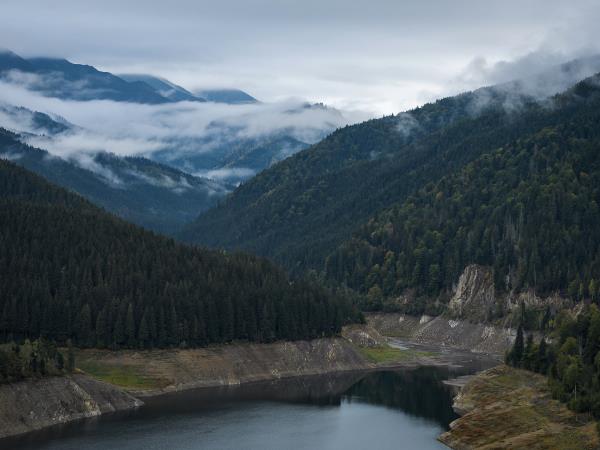
Romania wildlife holiday stay in wildlife hides
From €580 - €756 4 days excluding flights
Explore some of the wildest forests of Europe
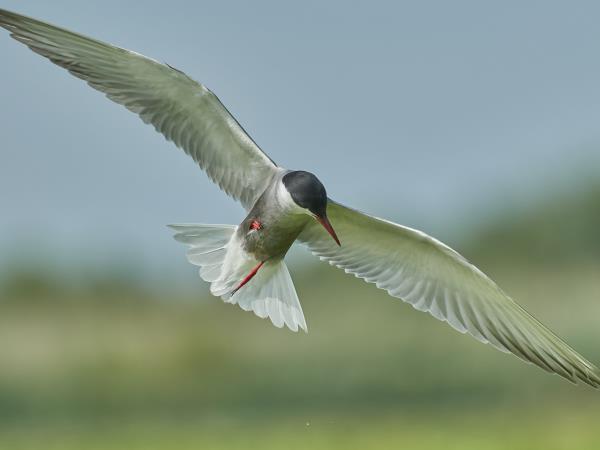
Danube Delta birdwatching in Romania
From €452 4 days excluding flights
An incredible Danube Delta birdwatching experience
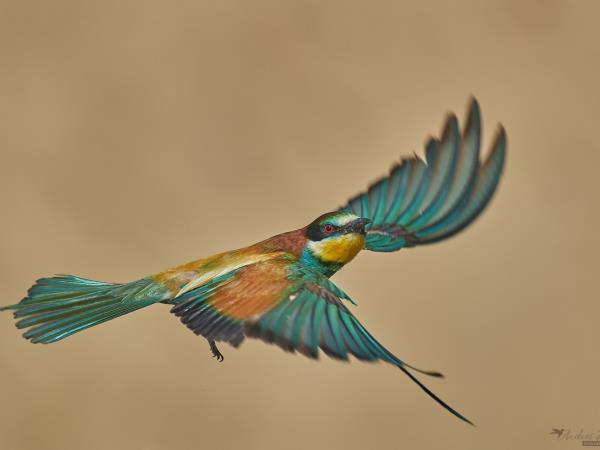
Danube Delta Bird Watching, Romania
From €192 2 days excluding flights
Discover the incredible biodiversity of the Danube Delta