Grenada luxury sailing holiday
Price
€2470To€5485 excluding flights
Convert currency:


Duration
14 Days
Type
Small group
More info
Price per person based on sharing a double/twin cabin and varies by low/high season.
Solo supplement surcharge is 75%.
Whole-boat charter for private groups available on request.
Solo supplement surcharge is 75%.
Whole-boat charter for private groups available on request.

Description of Grenada luxury sailing holiday
Price information
€2470To€5485 excluding flights
Convert currency:
Price per person based on sharing a double/twin cabin and varies by low/high season.
Solo supplement surcharge is 75%.
Whole-boat charter for private groups available on request.
Solo supplement surcharge is 75%.
Whole-boat charter for private groups available on request.
Check dates, prices & availability

Travel guides
What makes for a great sailing holiday? The Caribbean knows the answer.
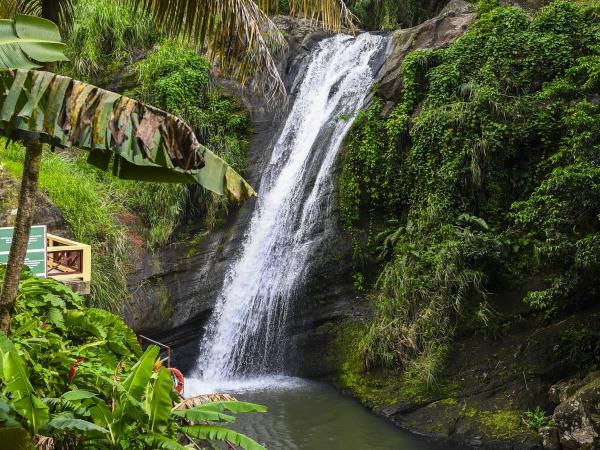
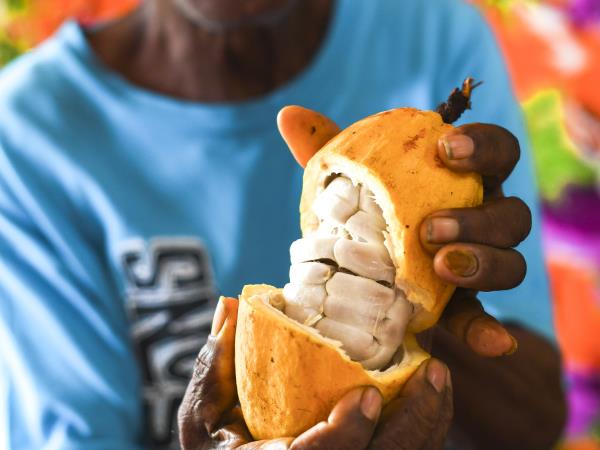
Nicknamed the Spice Island, Grenada has a lush interior that’s as beautiful as its coastline.
Responsible Travel
As the pioneers of responsible tourism, we've screened this (and every) holiday so that you can travel knowing we've worked to maximise the benefits of your holiday to local people and places, and minimise any negative impacts.
Planet
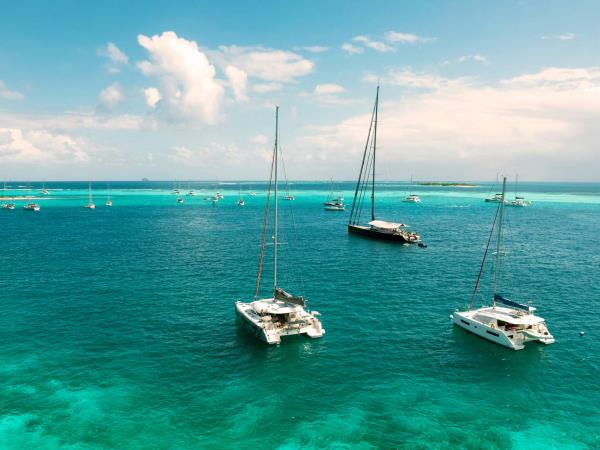
CARBON REDUCTIONThe Caribbean trade winds blow reliably from the east at 15–25 knots from December through April, which means almost every leg of this route can be sailed under sail alone. Skippers are coached and tracked on sail-vs-motor ratio across the season; engine fuel is included in the trip price specifically so the crew has no commercial incentive to motor for convenience.
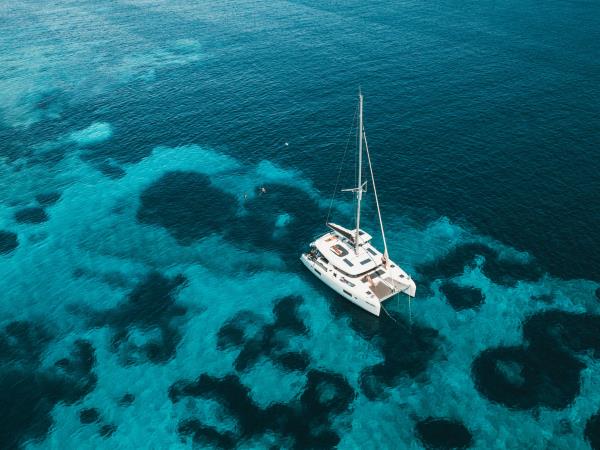
Solar panels onboard handle most of the catamaran's house electrical load, reducing generator hours to a minimum even on long anchor stays.
ENVIRONMENT AND WILDLIFE
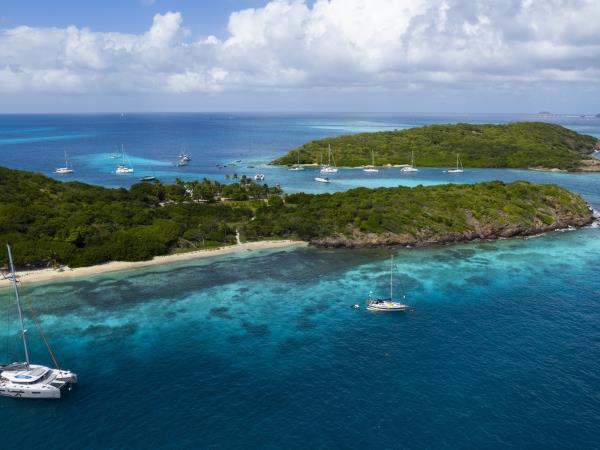
The Tobago Cays Marine Park, where the trip spends two nights, is one of the most protected marine areas in the southern Caribbean. Inside the park, anchoring on coral or seagrass is prohibited; the boat uses installed mooring buoys only. Park rangers brief guests on snorkelling etiquette around the resident green sea turtles — keep distance, no touching, no feeding — and crews carry that briefing to every other reef stop on the route (Petit Tabac, Sandy Island, Mopion).
Single-use plastic stays off the boat. Each guest is given a reusable water bottle on day one, drinking water is refilled onboard from large containers, and the host's provisioning excludes individually-wrapped snacks. Waste is sorted in the cockpit and landed at the marinas in St George's, Tyrrel Bay or Clifton — not at the smaller island anchorages where waste handling is limited.
People
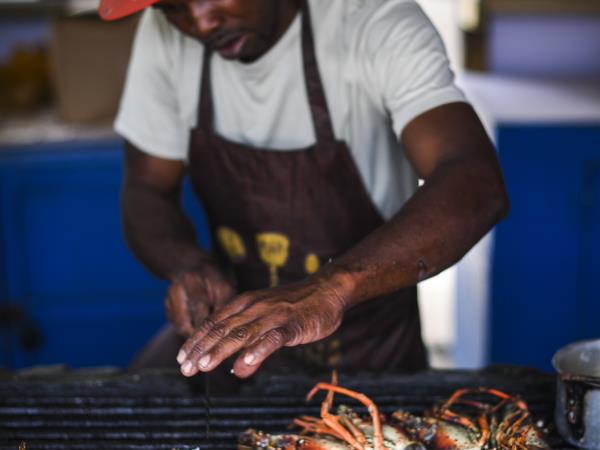
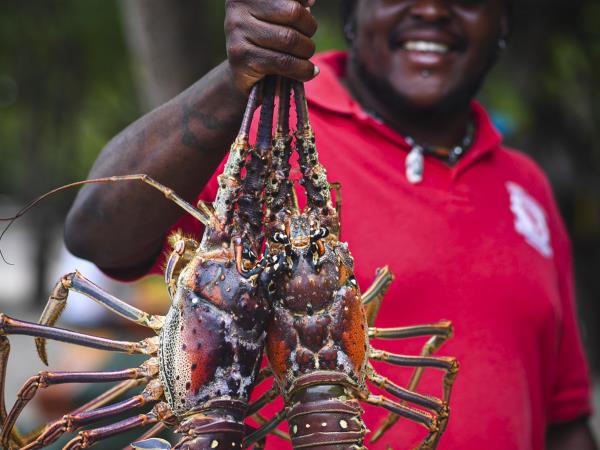
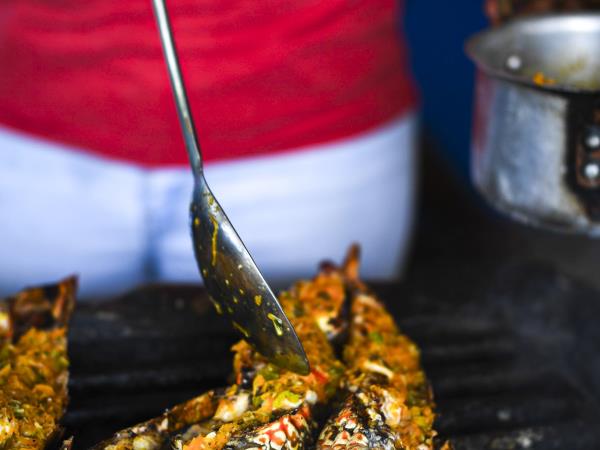
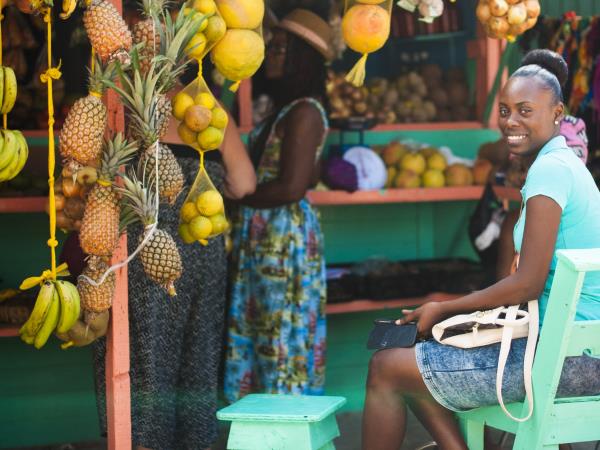
LOCAL ECONOMYSpending from each trip stays in the small islands rather than flowing back to a head office abroad. The lobster grills on Petit Bateau and Petit Tabac are run by local Grenadines families — the same boats, the same names, year after year. The conch-shell bar at Happy Island on Union Island is one man's hand-built business, started from a sandbank in the 1990s. The beach bars in Salt Whistle Bay, Chatham Bay and Anse La Roche are family-run and bring their food directly to the boat by tender. There is no commission arrangement with any restaurant, so guests are sent to the place that's best on the night, not the place that pays.
Provisioning is done locally — fresh produce from St George's market, fish and lobster from the Carriacou and Mayreau day fishermen, rum from the Carriacou distillery (River Antoine). Marine services in St George's are contracted to Grenadian yards. Mooring fees inside the Tobago Cays Marine Park go directly to the park authority, which funds turtle conservation and ranger patrols.
The trip format helps too. A 12-guest catamaran with a 2-person onboard crew brings a very different kind of presence to a small Grenadines island than a cruise ship — spending is more dispersed, the staff-to-guest ratio is much higher, and the smallest islands (Mayreau, Petit Martinique, Petit St Vincent) receive a meaningful share of the contribution.
EMPLOYMENT, INCLUSIVITY AND DIVERSITY
The hosts and skippers in Grenada are a mix of long-term Grenadian and Vincentian residents, employed year-round through a local operating arrangement with social-insurance contributions where the destination's labour law allows for it. Several of the crew positions are held by women — unusual in Caribbean charter, where deckhand and skipper roles still skew heavily male — and the hiring approach is deliberate about it.