Cycling the Icefields Parkway in Canada

The Icefields Parkway has long been loved by hikers and road-trippers, but the route is increasingly popular with a new type of visitor in these parts: cyclists.

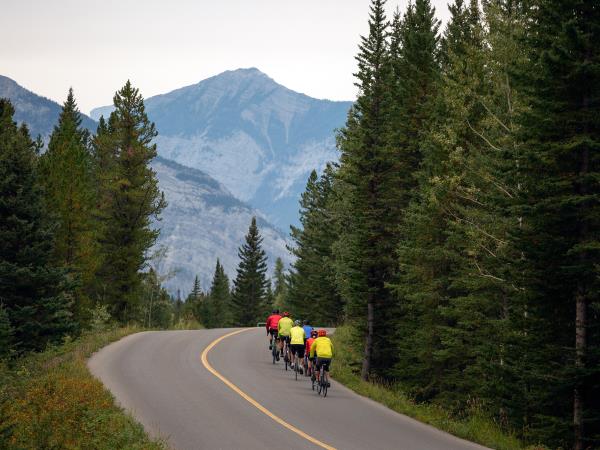
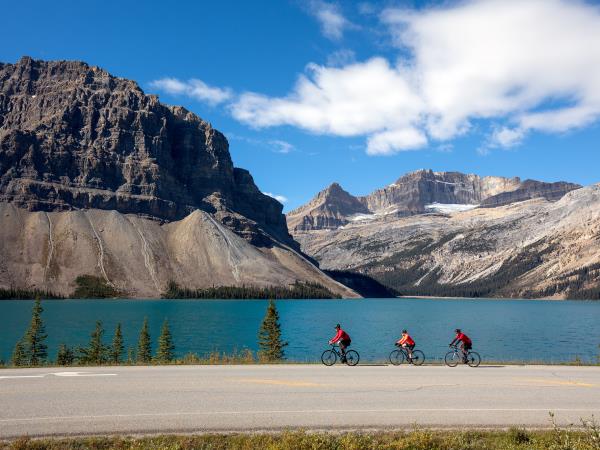
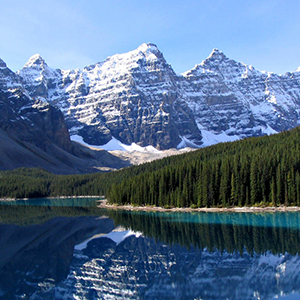
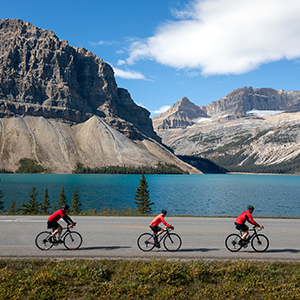
It’s little wonder. Some of the tallest mountains and waterfalls in Canada frame this two-lane highway, which swoops for over 200km between Jasper in the north and Lake Louise in the south. Icefields Parkway cycling holidays head to the highs of Sunwapta Pass and Bow Summit (which, at over 2,000m, is the highest public road in the Canadian Rockies) and back down to the Saskatchewan River Basin and Lake Louise – with plenty of chances to admire famous views like Athabasca Falls and Peyto Lake en route.

Visiting the Icefields Parkway as a cyclist has an unexpected knock-on effect: catching the attention of the government agency Parks Canada.

“When people come here, they’re mostly going hiking, so they’ve put in an amazing trail system,” says Étienne Labelle, owner of our partner Rocky Mountain Cycle Tours and lead guide on their Icefields Parkway trips. “But in recent years, the park services have recognised how important cycling is to our economy.”
I fell in love with it. The whole energy and the way people look at cycling here... It became a second passion.
With these increasingly keen cyclists in mind, Parks Canada has invested in the road – a boon to both visitors and local cyclists. “It’s a growing sport,” says Étienne. “They’ve repaved the entire Icefields Parkway in the last few years. They’ve widened the shoulder so much that it’s like a lane pretty much the whole way.”

The combination of smooth cycling and spectacular scenery makes the Icefields Parkway one of the best cycling experiences in the Canadian Rockies. The roads around here were enough to transform Étienne from an avid mountain biker to a road cycling enthusiast.

“I fell in love with it,” says Étienne. “The whole energy and the way people look at cycling here... It became a second passion.”

The collective awe of the scenery is contagious, especially when cycling in a small group. “You stop for a refreshment, and you look at people’s faces and they’re amazed by how grandiose the place is,” says Étienne. “They didn’t know it could be as good as it was.”

How long does it take to cycle the Icefields Parkway?

Technically, pro cyclists could cycle the Icefields Parkway in a day or two – but what’s the fun in that? Our cycling holidays take around six days to cycle from Jasper to Lake Louise, and then on to Banff. This gives you the time to immerse yourself in one of the most spectacular bike rides in the world, as well as – if travelling on a small group tour – enjoying the company and encouragement of your guides and fellow cyclists.

How difficult is it to cycle the Icefields Parkway?

The Icefields Parkway is around 230km of mountain roads, with all the climbs and winding descents that come with traversing the Rockies. Cyclists confident on smooth mountain roads will manage well. If in doubt, just ask. There are electric bike options and a support vehicle helps make the more challenging climbs achievable for cyclists umming and ahhing over fitness levels. Lodge accommodation also means that you won’t be weighed down by camping gear.

Cutting crowds & carbon on Canada’s most scenic road

Welcome to the 200-year-old tourist trail

More than 1.2 million people visit the Icefields Parkway each year, tempted in by the near-legendary views of this stretch of the Rockies.

However, visitors are no new thing. The Icefields Parkway was a travel, hunting and trade route for Indigenous people long before European colonists occupied what is now called Canada. Over its 200km, the road travels through the traditional territory of many Indigenous groups, including the Ktunaxa, Secwépemc and Aseniwuche Winewak Nations, who have lived here for thousands of years – and many of whom were evicted when Jasper and Banff national parks were created.

Mountaineers, botanists, surveyors and tourists descended on the Rockies in the late 19th and early 20th centuries, drawn by the new national parks, hotels and marked trail systems.

What was once known as the Glacier Trail was renamed the Wonder Trail – and then, finally, branded as the Icefields Parkway when it was paved as a two-lane highway in the 1960s, as car ownership rocketed. Throughout its constructions and reconstructions, much of the Icefields Parkway was built using forced labour. ‘Relief’ labour camps were built for unemployed men shipped out from the cities during the Great Depression, and interned people considered ‘enemy aliens’ during World War I finished the road to Lake Louise. You can visit the memorial statue on the site of the old Castle Mountain Internment Camp near Banff en route.
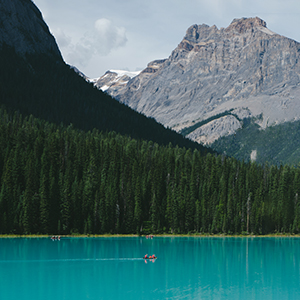
Glide past elk herds grazing on river plains, stop to peer up at Rocky Mountain bighorn sheep balanced on crags high above – and follow your guide carefully around bears rummaging for berries at the side of the road.

A new future: pedal power

Cycling is a tonic to the polluting vehicles that have dominated the Icefields Parkway since the 1960s. It’s a low-impact way to travel, bringing you closer to nature and the people who live here than you get in the capsule of a car.

“On the road at any time of the day, you will see traffic,” says Étienne. “We manage our time very well. If I know there’s a part of the road where we can stay in the middle if we go in the morning, we leave as early as possible. That way, we can have the first couple of hours’ cycling in quiet.”

This is one of the many perks of cycling with experienced local mountain guides. Once the mid-morning traffic starts up with gusto, the guides know all the escape routes to the side roads that run parallel with the Icefields Parkway proper.

The newly widened road shoulder keeps cyclists well away from traffic, and the only trucks allowed on the Icefields Parkway are those doing supply runs to the handful of lodges along the road. The biggest vehicles around are usually coaches and RVs in holiday mode; cyclists can easily leave them in the dust.

“When people drive the Icefields Parkway, they’re on vacation,” says Étienne. “They travel slowly, they stop a lot, they take pictures… The fact that there are no trucks makes a huge difference too.”

Contact Us

Responsible Travel, Travel Team

Call us for a chat about our holidays. We are happy to discuss your holiday and help in any way we can. No bots, queues or awful hold music.

Responsible Travel, Travel Team

Slow travel on the Icefields Parkway

Most people driving the Icefields Parkway chug along it in a day, stopping for a brief breather at the viewpoints along the way. Cycling tours on the Icefields Parkway, however, take their time, spending almost a week marvelling at the beauty and learning about the history and geology of this route.

“You have time to get to know people,” says Étienne. “You can chat on the bike while you’re riding; you can chat at lunch. You’re not forced to talk to people – it’s very organic…. We had one guest who fell off the bike and couldn’t complete the trip, so everyone rallied around and rooted for them, even though they were complete strangers. There’s that sense of community… seeing people from different countries come together.”

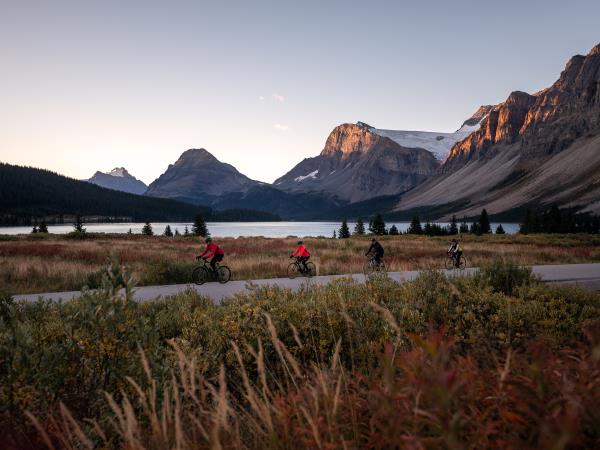
In fact, spending nights on the Icefields Parkway – waking up to the first gold-pink hues of the sun rising over the mountains – is a privilege in itself.

“You’re one of the select few who has an opportunity to be on the Icefields Parkway because there are very few places to stay,” says Étienne. “My favourite accommodation is at Sunwapta Falls. It’s a nice little lodge with cabins on the road. It’s a quiet place, the service and people are amazing, and the food is really good. It’s like a second home; our guests really like that place.”

The average age range of cyclists tends to be 40-60, but Étienne and the team have welcomed both teenagers and pedallers a decade or two older too. Couples, solo travellers, groups of friends, families, and cycling clubs have all joined the tours. You don’t need Lycra and a Tour de France mindset – just comfy mountain-proof clothing and a love for cycling.

Plus, there’s always a support vehicle on hand. If there’s a narrow section, or a steep climb that you’d rather skip, the guides are happy to cheer you on – or offer you and your bike a ride in the support vehicle. After all, this is a journey meant to be enjoyed.
Photo credits: [Page banner: Thomas Fuhrmann] [Intro: Ali Kazal] [Welcome to the 200-year-old tourist trail: Thomas Fuhrmann]