Painting holidays in France

Who says the creative process has to be solitary? Spend a week devoted to your creativity with likeminded individuals, and plenty of time to enjoy the French countryside in its celebrated warmer months.

The intense red of geraniums and grenadine, the blue of shutters and late afternoon shadows, burnt orange roof tiles and croissant crumbs: southern France has a palette all its own.

These are scenes that seem oddly familiar – because the French Impressionists spread visions of its paysage to the world. It’s hard to look at a poppy field or a garden in dappled shade without transfiguring it into paint flecks. These are irresistibly photogenic, painterly landscapes.

Our painting holidays in France give you a blissful week of relaxing creativity, optional tuition and plenty of free time – so you’re not just painting the French countryside, but engaging with it, too – via brocantes (second hand markets), night markets, festivals and fetes.

Why paint in France?

Those pale blue shutters that are so typical of the area? They’re painted with a dye made from the leaves of dyer’s woad – the same blue of colourful Celtic myth, and the illustrations in the Lindisfarne Gospels.
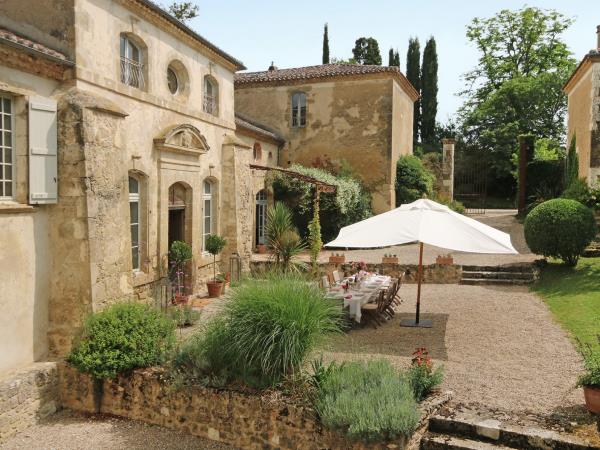
The south of France is an artist’s friend – there’s usually reliably lovely weather, and a great light no matter what time of day you’re painting. In fact, it’s the quality of the light that’s said to have attracted so many artists through the years. Under their special sun, the countryside and the villages are scenic. There’s a wealth of colourful subjects: gardens full of roses, historic villages, stone houses with terracotta tiled roofs. The interest changes day to day: there are markets in nearby towns nearly every day of the week, and the countryside celebrates in summer with festivals and fetes.

As the term itself suggests, France is the spiritual home of painting en plein air. The practice was expounded by 18th-century French artist Pierre-Henri de Valenciennes, and taken up by the Barbizon school, whose members included Daubigny, Manet, Millet and Degas, and who painted in the countryside around Fontainebleau, outside Paris.

This school of painters attracted the attention of painters like Renoir and Monet. Later the Impressionist movement took painting en plein air as a key concept. Photographs of Claude Monet often show him sitting astride his canvas in front of a waterlily pond, sunhat on, cigarette poking out of his unmistakable beard. Paul Cezanne painted this way until his death from pneumonia, after being caught in a storm.

It wasn’t that artists were timid of the great outdoors before the 19th century, rather hampered by their equipment. The advent of paint in aluminium tubes circa 1870 suddenly allowed artists to escape their studios without the difficulty of preparing their oil paints from scratch and carrying them on location. Further inventions suited to al fresco creativity followed – including the French easel, which folds up into a very portable case.

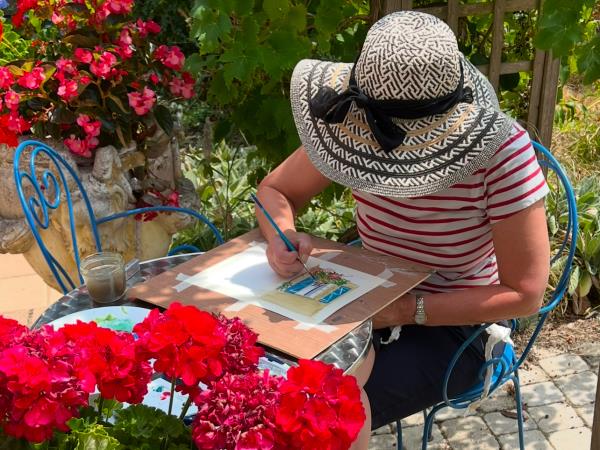
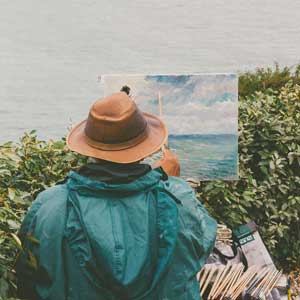
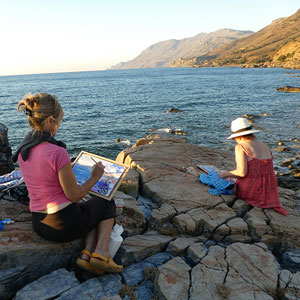
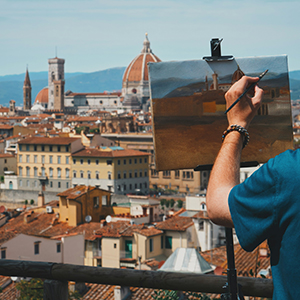
Today, you’ll still see artists propping up their easels in picturesque places – the scene, complete with battered hat and white parasol (useful for diffusing the light, and creating a bit of shade), is a timeless one.

Contact Us

Responsible Travel, Travel Team

Call us for a chat about our holidays. We are happy to discuss your holiday and help in any way we can. No bots, queues or awful hold music.

Responsible Travel, Travel Team

What are painting holidays like?

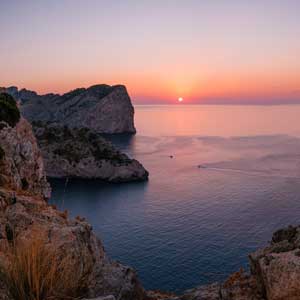
‘Golden hour’ might be spent painting, or equally spent relaxing on a terrace with a glass of rosé.

Communal culture

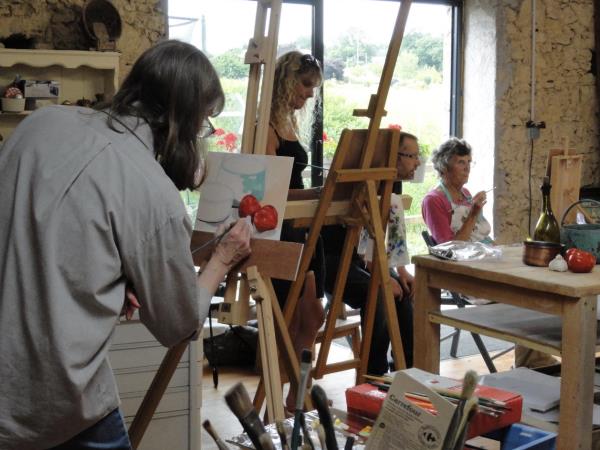
If you’re a painter, you’ll know the appeal of a painting holiday already – it’s a week where you allow yourself to be creative in a sympathetic group. You’ll be able to swap ideas and techniques with other artists and an experienced tutor.

You’ll spend time both in a studio, and out in the landscape. On your outings you can spend time sketching or exploring – there’s a good mix of both.

Van Gogh famously used to eat his own paint. Don’t do this: our painting holidays are catered, with great home cooking. Washing off the charcoal dust and pastel powder and sitting down to a long communal meal is one of the great pleasures of a trip.

Painters start with the same view and end up with completely different pieces of art. In the same way, you’ll go on your own artistic journey, in an environment that could not be more supportive and friendly. These trips attract lots of solo travellers, but non-painting partners are welcome, too.

And at the end of the trip you’ll have created something that accurately depicts how you spent the holiday – a kind of self-referential souvenir.

Taking more than photographs

Banish any idea of tortured artists isolating themselves for their art. On French painting holidays you’ll be getting out from behind the easel at every opportunity to engage with the community in which you’re staying.

France in summer is a riot of local festivals, son et lumiere (evenings with light projections and music used to tell the stories of chateaux and other tourism sites) and night markets.

The country has a ‘most beautiful villages’ association with 176 member villages. The scheme is designed to encourage tourism to villages that suffer from depopulation and are at risk of abandonment. These holidays encourage you to participate meaningfully in village life – whether visiting galleries, attending fetes or spending money with local businesses in the area.

Types of painting holidays

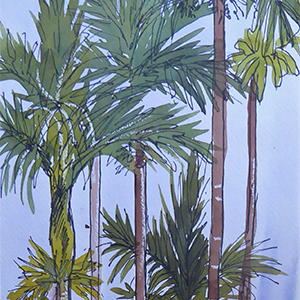
Holidays are organised around the medium of choice. You might use water-based mediums like watercolour, inks, and Brusho (watercolour in a powered form), which are commonly used for outdoor painting, as they dry quickly and are good for quick sketches. You might fancy a go with vibrant acrylic paints, or slower-drying oil paint. Oil painters can also try out the alla prima technique, which involves applying wet paint directly onto wet paint – resulting in impressionistic paintings with more carefree forms that can be attempted in one sitting.

Am I good enough?

Yes. No experience is necessary for a painting holiday, and non-painting partners are welcome too. There is an experienced art tutor – an exhibited artist in their own right – on hand to provide advice, whether you’re looking for step-by-step instruction, tips, or just someone with which to share ideas.

You’ll get around 25 hours of art tuition over a week, but this can be as instructive as you like. Tutors are very good at knowing what kind of feedback you’re looking for, when to step in, or when to step back and let you work uninterrupted.

What do I need to bring?

You’ll need to provide your own artist materials, and paper, for the medium in which you want to work. To spare your luggage allowance, bulkier equipment is all provided, including folding chairs, easels and boards, and a studio space.

Best time to go

Our small group painting holidays in France run from April to October.
Written by Eloise Barker
Photo credits: [Page banner: Pascal Bernardon] [Intro: Palettes de Gascogne Painting Holidays] [Why paint in France: Sarah Sheedy] [Communal culture: Elle Hughes] [Types of painting holidays : Daphne Be Frenchie]