Responsible tourism in Slovenia

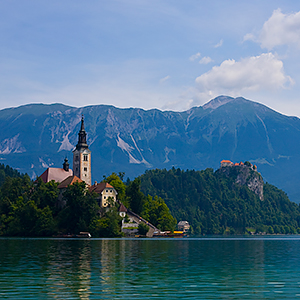
Slovenia’s tourism industry is enjoying a boom period. It has made major investment in infrastructure and public transport – train and road networks can whisk you from the capital, Ljubljana, to the spectacular scenery of Lake Bled or the Julian Alps. And a green tourism focus on natural landscapes means that cycling, hiking and wellness holidays here are becoming a big draw. Add to that the fact that Slovenia remains relatively quiet compared to many other parts of Europe and, well, you see the appeal.

Modernity is cleverly mixed with tradition. Slovenia is finding new ways of doing old things: innovative uses for the honey that many families produce from their own hives, such as wellness products and massage ointments; shepherds selling their traditional cheese to passing tourists on walking holidays, and bringing the country’s rich cultural heritage to different audiences, such as literary-themed walking trails.

While it receives only a small fraction of the visitors that, say, France or Spain does, that doesn’t mean that Slovenia has nothing to teach these tourism stalwarts, with capital Ljubljana boasting the largest car-free area in the European Union.

Our guide to responsible tourism in Slovenia explores how boosting visitor numbers can go hand-in-hand with protecting culture and environment.

People & Culture

Beekeeping in Slovenia

Honey is a staple of breakfasts in Slovenia, and chances are your hotel will always have a pot of the stuff on the table. But don’t waste it. To produce just 1kg of honey, bees must visit 4 million flowers and fly a distance equivalent to four times around the world – incredible. If you look at your average bee, you wouldn’t think he had it in him.

Britain, they say, is ‘a nation of shopkeepers’, and Slovenia is a nation of beekeepers. With more than 11,000 people looking after their own hives, from a population of just 2 million, that’s the highest density in Europe. “Beekeeping is not just a hobby in Slovenia, it’s a big part of life, part of the culture,” says Mojca Peterka, co-founder of our partner Grand Cuvée Tours.

Bees and the keeping thereof appear in folklore and popular sayings – if a Slovenian meets with some bad luck they might say “the axe has fallen into the honey.” (Look on the bright side, it could have fallen onto your foot). In fact, beekeeping is such a part of Slovenian heritage that it has been inscribed on the UNESCO Representative List of the Intangible Cultural Heritage of Humanity.

Some traditions date back centuries. One of the loveliest is the art of painting beehives’ wooden panels, thought by some to help the bees find their way home. Painting them is also believed to help ward off bad luck, and often these artworks depict religious iconography or scenes of pastoral life. The native honeybee, and by law the only one that can be kept, is the kranjska, or Carniolan bee, known to be a thrifty, hard-working type with a good sense of direction which frankly is a lot more than can be said for me.

Lectarstvo is one of the oldest handicrafts in Slovenia, dating as far back at the 14th century. Lectar hearts are a type of decorated gingerbread made with a special honey dough – you may find them in markets and gift shops. Historically, courting couples would press a mirror into the gingerbread so their loved one would know they were in the giver’s thoughts.

“You’ll often see small wooden bee houses near homes, in fields or by the forests,” says Mojca. “Some beekeepers even move their hives to different locations depending on what’s blooming (like acacia or rapeseed) so their bees can collect more pollen. Most people know someone who keeps bees, and many families have a few hives. It’s something people are proud of, not just for honey, but for the connection to nature and tradition. There are also a few bee-related museums, like the Slovenian Beekeeping Museum.”

On the Slovenia holidays that Mojca runs for us, you can visit an award-winning, family-run farm near Bled to admire their hand-painted hives and sample products like honey vinegar and honey soap. You can even take a nap in the apiary, something that is supposed to be good for relaxation and respiration.

But bees face serious problems around the world, and Slovenia’s kranjska are no exception. Extremes in spring weather damage both fruit trees and bee colonies, with some producers reporting a fall of as much as much as 90 percent in honey output. There are already shortfalls of locally produced honey in Slovenia, as well as fake products labelled as Slovenian on the market. “Weather is less predictable now (late frosts, unusual flowering times, too-rapid transitions from winter to spring), which makes it harder for bees to find food,” says Mojca. “Slovenia takes this seriously. Harmful pesticides are restricted to protect the bees.”

Slovenia was indeed the first EU country to ban neonicotinoid insecticides, but that will likely not be sufficient. Bees everywhere are in decline, and with some 35 percent of global crop production reliant on pollination to some extent, there’s a lot at stake.

What you can do
Buy honey from local producers if you see it. And if you’re in Slovenia, you’re almost certain to see it. Slovenian honey also makes a great souvenir but make sure it’s wrapped up well in your suitcase!

Make your own home and garden pollinator-friendly by planting flowers for them to feed on, avoiding pesticides and remember that bees need hydration, too, so a small bowl of water near the flower bed will also be appreciated.

Support organisations like Buglife fighting to save the tiny creatures that make a big difference to the world’s ecosystems.
Walking trails in Slovenia

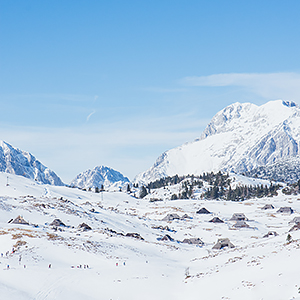
Slovenia has more than 10,000km of walking trails, from long-distance epics in the Julian Alps and Triglav National Park to easy-going short walks that you can do in a morning. Routes like the well-known Bistrici Trail explore serenely beautiful parks and nature reserves. But Slovenia also has a growing network of cultural and literary walking trails, highlighting local history and some of the country’s most renowned authors.

Among these routes is the 16km Jurcic Trail. Josip Jurcic was a romantic realist and a key figure in Slovenian literature – his work The Tenth Brother was the first novel written in the Slovenian language. The trail connects the medieval town of Visjna Gora where he attended primary school, to the Krka Cave, where local people once hid from Ottoman invaders, an incident that featured in one of Jurcic’s best-known stories.

The 9km Kette Trail is another literary route linking the birthplace (Prem) and a favoured holiday destination (Trnovo) of Dragotin Kette, who led a short but influential life as a neo-romantic poet and is regarded as the founder of modernism in Slovenian literature.

During World War II the province of Ljubljana (Slovenia as a state only came into being in 1991 when Yugoslavia split up) was annexed by Italy and a barbed wire fence erected around the city. Today, a 33km walking route known as the Trail of Remembrance and Comradeship follows the route of the fence, now long gone. In a happy piece of irony, while the purpose of the barrier was to imprison and repress city residents, now it is a symbol of freedom with many locals using it to walk, run and cycle.

Wildlife & environment

Ljubljana: a car-free capital

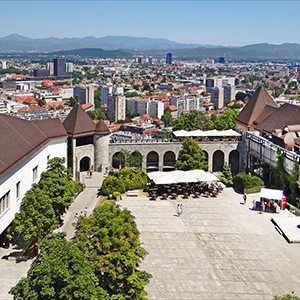
Ljubljana has largely closed the city centre to motorised traffic since 2012. In the decade prior, the city had seen a concerned 50 percent rise in private car use, and a near-25 percent decline in the use of public transport. The initiative formed part of a wider strategy to make the city a more liveable, sustainable and pleasant place to live.

To start with, however, it was an unpopular plan. Local people had concerns including around visiting frail or sick relatives, bringing home the shopping and running businesses that required deliveries.

In an attempt to counter negative perceptions, the city took a number of steps. Crucially, the mayor behind the plans, Zoran Jankovic, began the work at the very start of his term in office, so that residents would begin seeing the positive effects by the time of the next election. Door-to-door conversations helped bring people around, and when streets began to be closed off to traffic, the city organised a programme of festivals and events so that residents could see the potential for how this reclaimed space could be used going forwards.

A small fleet of electric vehicles was introduced to ensure that residents with mobility issues could continue to get around. Delivery vehicles are still permitted to enter the city centre in the early mornings. And kerbs were flattened, making the streets as walker-friendly as possible. Additionally, Ljubljana’s cycling and public transport networks were strengthened by investment – the capital now has over 450km of cycle routes (bike-sharing is popular) and there is also an EV car-sharing service in operation. There is even an electric sightseeing train to help tourists get from place to place.

“It works really well,” says Mojca. “The old town is now quieter, cleaner and much nicer to walk around. It also made the area feel more alive – there are more cafes, restaurants and places to sit outside, so the whole city centre has really come to life. It’s a change people are happy with and a good example of how a city can improve everyday life.”

One result of the car-free capital plan has been significantly lower air pollution. But perhaps more important is that it has been almost universally popular. A survey found that more than 90 percent of Ljubljana residents were either satisfied or very satisfied with quality of life in their home.

Ljubljana is far from the only European city to have developed plans for pedestrianisation over the years. Everywhere from Copenhagen to Paris to Zermatt, local officials have ploughed ahead with plans to nudge out cars from city centres and encourage people onto public transport. And inevitably, there is resistance.

Often the trouble with pushing a car-free narrative is that people find it difficult to imagine life without getting around by car. Ljubljana is a valuable example then, not only of how it can be done, but of how pleasant life can be afterwards.

What you can do
Car-free doesn’t mean difficult to get around; quite the opposite in fact. If you’re visiting Ljubljana then you can enjoy walking, hop on a bike or take the electric train.

Slovenia is one of our most popular destinations in Europe for a self drive holiday, but get out of the car whenever you can, especially in Ljubljana. And consider going electric to make your trip even lower carbon.

Responsible tourism tips

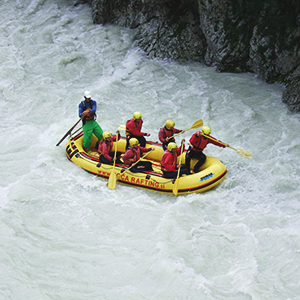
The two Slovenian regions of Gorenjska and Goriska have partnered with a neighbouring regions in Italy to create a Slow Tourism network. This comprises small businesses such as eco-accommodation, restaurants and activities. There is an emphasis on meeting local people, discovering traditions such as cheesemaking and folk music, and low-impact, “slow” activities such as walking, cycling and rafting. Look out for the Slow Tourism logo if travelling in these regions. Slovenia's deep-seated Catholic roots mean visitors should choose respectful attire – no sleeveless tops or above-the-knee skirts if visiting churches or other religious sites. Freshwater originates in the Alps and is safe to drink across the country – so bring a refillable bottle and forget about plastic.
Written by Rob Perkins
Photo credits: [Page banner: zkbld] [Triglav National Park in the Julian Alps: Ales Krivec / Unsplash+]