Mongolia spring tour, living traditions & Nauryz
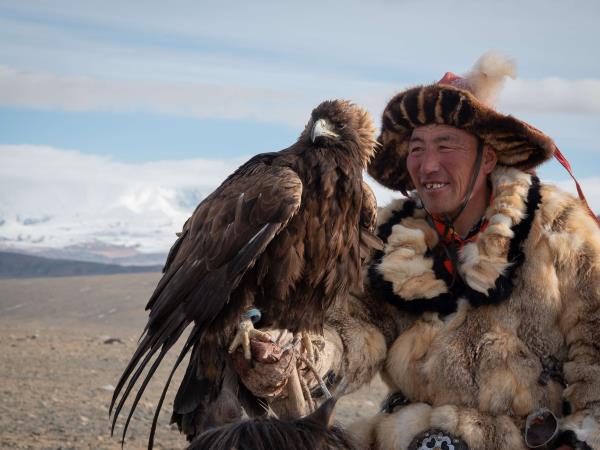


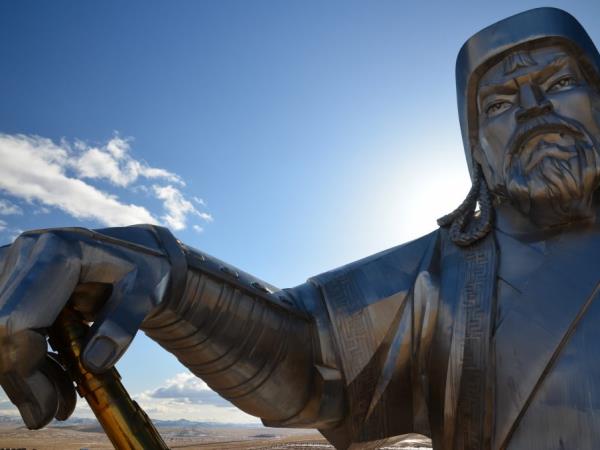
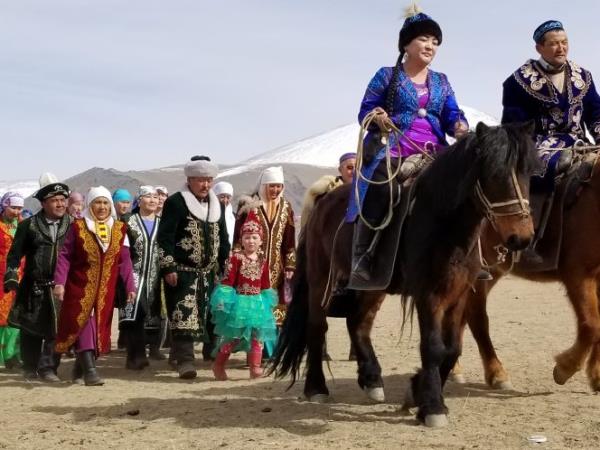
Welcome to Western Mongolia – the land of the Kazakh eagle hunters. Get the chance to live and learn alongside eagle hunter families on this homestay holiday to Mongolia.
Urban city walking tour of Ulaanbaatar Kazakh embroidery lesson Ulaankhuus Sagsai Tolbo Nuur Nauryz Eagle Festival Nauryz Spring Festival horse treks homestays with eagle hunters
Price
US $2435ToUS $3095 excluding flights
Convert currency:


More info
This trip can also be turned into a private tailor made experience, adapted to your travel preferences.

Description of Mongolia spring tour, living traditions & Nauryz
Map

Price information
US $2435ToUS $3095 excluding flights
Convert currency:
This trip can also be turned into a private tailor made experience, adapted to your travel preferences.
Check dates
2027: 15 Mar
2028: 14 Mar
2028: 14 Mar
Travel guides
Attending a local festival provides a fascinating insight into a culture – as well as being great fun.
Insightsinto the world's least densely populated country, covering steppe and ger camp, camel treks and eagle festivals...
Reviews
1 Reviews of Mongolia spring tour, living traditions & Nauryz
4 out of 5 stars
Reviewed on 03 Oct 2024 by Simon Ward
1. What was the most memorable or exciting part of your holiday?
The landscapes were magnificent, walking/climbing the smaller mountains and ridges, seeing wild eagles
2. What tips would you give other travellers booking this holiday?
Walking: you will need to be independent and plan your own walks and will be mostly on your own (happy with that). The food is (as expected) meat based and
very fatty, the change in diet takes a few days to get used to.
3. Did you feel that your holiday benefited local people, reduced environmental impacts or supported conservation?
Some local benefits staying with herders
4. Finally, how would you rate your holiday overall?
We thoroughly enjoyed seeing Mongolia
Responsible Travel
As the pioneers of responsible tourism, we've screened this (and every) holiday so that you can travel knowing we've worked to maximise the benefits of your holiday to local people and places, and minimise any negative impacts.
Planet
Mongolia has been part of our lives since 2006, and we established the company in 2010. Over those years, we have seen changes in the landscapes, weather patterns and communities we work alongside. For the herding families we know, climate change is not an abstract discussion. Changes in snowfall, temperatures and pasture conditions can affect their livestock, livelihoods and everyday decisions.We are a small, independent tourism business, and we recognise the environmental contradictions of travel, particularly in a country as vast as Mongolia. International and domestic flights, long journeys by road, and the realities of operating in remote areas all have consequences.
We cannot claim that our journeys are environmentally sustainable or without impact. What we can do is explain the choices we make, the practical steps we take and the areas where we still have much to learn.
For us, responsible travel is an ongoing process rather than a label. We do not claim to get everything right. We keep questioning, learning and trying to make better choices.
Carbon Reduction: Domestic Flights | Local Transport | Electric Vehicles | Human Powered Transport
Mongolia is a vast country, with considerable distances between communities, a limited road network and very little public transport in rural areas. Reaching western Mongolia involves difficult decisions about transport, particularly when travelling during the colder months.
This experience includes a domestic flight to western Mongolia, followed by overland travel between Kazakh communities and family winter pastures. We recognise that flying contributes to greenhouse gas emissions, but we also have to consider available transport, journey times, road conditions and the safety of our guests and team.
Our drivers own their vehicles and know how to maintain and repair them. In remote regions, where access to specialist mechanics and replacement parts is limited, reliability and repairability are important considerations. Electric vehicles are not currently a practical alternative for the routes we operate in western Mongolia.
We design and operate our own journeys, allowing us to make decisions about where we travel, how long we stay and what activities we include. Rather than continually moving between sightseeing stops, this experience includes extended time with host families, allowing daily life, the weather and the season to shape our plans. The road is part of the holiday, but so is the opportunity to stop travelling and simply spend time in a place.
We also produce an annual Impact Report that looks at the bigger picture of how we operate as a tourism business. It explores who we work with, the people and communities we're part of, where our money goes, the employment opportunities we create and how our decisions affect the places we visit. We share what we have achieved, where we have made progress, and the challenges and limitations we continue to face.
Measuring the emissions associated with our journeys remains an area of work. We recognise that having plans and commitments is not the same as demonstrating measurable reductions.
Carbon Reduction: Meals On Tour | Locally Sourced Food | Vegetarian & Vegan Food
Food is an important part of getting to know Mongolia, whether that means sharing tea and a meal in a Kazakh family kitchen, stopping at a small roadside guanz, or enjoying something prepared by our own team.
We travel with a compact mobile kitchen, allowing our trip assistant to prepare most meals. This gives us greater flexibility over ingredients, dietary requirements and the quantities we prepare. It also means we do not place the responsibility for feeding our guests entirely on host families, particularly during winter when rural households may have limited access to shops and supplies.
We purchase ingredients locally where practical, although availability is shaped by the season and the considerable distances involved in supplying remote western Mongolia. Fresh vegetables and fruit can be difficult to obtain, and we are open with guests about these limitations.
Meat and dairy are central to the traditional Kazakh pastoral diet. We respect these food traditions while also catering for vegetarian and vegan guests where arrangements have been made in advance.
Our approach is to make considered decisions about purchasing, food preparation and the quantities we carry, while recognising that food production, transport, packaging and waste all carry environmental costs.
Environment & Wildlife: Reducing Impacts On Nature
The landscapes of western Mongolia are sometimes described as remote wilderness. But these are also working, lived-in landscapes, shaped by generations of Kazakh herding families, their livestock and the wildlife that shares these environments.
This journey is deliberately small, with a maximum of six guests, and includes time spent living alongside families rather than moving constantly between attractions. Small groups allow us to fit more naturally into existing family routines and remain flexible when local circumstances change.
We do not suggest that small groups automatically have a smaller environmental footprint. However, limiting group numbers is important to the way we work with our hosts and organise visits to their homes.
Water and waste management are significant challenges in rural Mongolia, where public infrastructure and recycling facilities are limited.
We do not provide individual bottles of drinking water on our tours. Instead, our vehicles carry two 20-litre containers, which we refill from local water stations. We also carry drinking-water treatment equipment, including Lifesaver filters or Steripen systems, depending on the vehicle. Guests are asked to bring refillable drinking bottles.
Accommodation with our Kazakh host families is simple and reflects their everyday winter living arrangements. Guests stay in family homes with basic facilities, including outside toilets, and use public shower houses in local towns. We do not install or request additional private shower facilities solely for our visitors.
Rural Mongolia also has very few public toilets. Our trip assistants explain appropriate toilet practices during overland journeys, including how to manage toilet paper and other waste. We refer to this as our toilet talk — perhaps not the most glamorous part of travelling, but an important one.
We also encourage our team and guests to consider avoidable plastic waste through our Mini Plastic-Free Mongolia Challenge. We recognise that alternatives are not always available and that waste generated in remote regions remains difficult to manage.
Environment & Wildlife: Entry Fees To Parks/Protected Areas | Environmental/Wildlife NGOs
When designing our itineraries, we consider not only the people and communities we want to work with, but also the places we visit. This includes incorporating visits to Mongolia's national parks and protected areas, where our entrance fees contribute to the funding of these areas.
We know that protected areas face considerable challenges, including limited budgets, waste management and the pressures of increasing visitor numbers. While an entrance fee is only a small contribution, we believe that places receiving visitors should also receive financial support from tourism.
We recognise that paying an entrance fee does not cancel out the environmental impact of visiting. It is one practical way in which tourism can contribute to the places it uses.
This experience also introduces guests to the relationship between Kazakh families and their golden eagles. Eagle falconry is a living cultural tradition, but it involves working with wild animals and raises important questions about animal welfare, cultural representation and the responsibilities of visitors.
Our approach is based on spending time with families who practise eagle falconry as part of their lives, rather than arranging staged displays purely for photography. The weather, the birds, the families and their daily responsibilities shape what guests may observe.
To help us make informed decisions about this experience, we have established a relationship with the Eagle Hunter Cultural Centre in Ölgii, which opened in 2024. The Centre brings together cultural heritage, local knowledge and conservation, providing a place where visitors can learn more about Kazakh eagle falconry and the challenges facing both the tradition and the surrounding environment.
Our guests have the opportunity to visit the Centre, but the partnership also has a wider purpose for us. We look to the Centre and those involved in its work for guidance as we continue to question and develop our own approach to eagle-falconry experiences, particularly around animal welfare, cultural representation and the responsibilities of tourism.
We believe that the people and organisations with direct knowledge of the tradition and its conservation challenges should help inform how tourism engages with it.
We also ask guests to respect guidance from their hosts and our team, including when photography or interaction with the birds may not be appropriate.
Beyond this particular journey, Eternal Landscapes collaborates with Mongolian wildlife organisations and specialists. Our trip assistants receive wildlife awareness training when opportunities are available, and we work with people who have relevant expertise for our specialist wildlife experiences.
Since 2014, we have also organised community rubbish collections in partnership with local communities and protected-area rangers. These initiatives do not solve Mongolia's wider environmental challenges, but they provide a practical way for our team to contribute time and resources to places where we work.
People
We are an independent, Mongolian-registered, profit-making tourism business. But we have always believed that commercial success and social responsibility should not be separate ambitions.That is why we describe ourselves as a social-impact tourism company.
We are not a charity, and we don't believe responsible tourism is simply about making donations. For us, social impact begins with how we operate: who we employ, who we purchase from, whose knowledge we value, where we choose to travel, and how we develop and maintain relationships.
An important part of this is addressing tourism leakage — the money travellers spend that leaves a destination or bypasses its local businesses and communities. Some leakage is unavoidable, particularly when tourism relies on international transport, imported goods and services. But we can make deliberate choices about where the money we control is spent.
We design and operate our own journeys rather than outsourcing them to another operator. We work directly with Mongolian drivers, local families, small businesses and community projects, recognising the knowledge, time and work they contribute.
We cannot claim that every dollar stays in Mongolia, or that every interaction creates a measurable benefit. But we can look beyond the experiences we offer guests and consider who else benefits from the decisions we make.
Our annual Impact Report helps us examine that wider picture, including employment, community partnerships, purchasing decisions and the challenges we continue to face.
Above all, our approach is built around long-term relationships. The people we work with are not simply tourism providers. They are individuals and families with their own responsibilities, priorities and changing circumstances, and we try to make room for those realities in how we work together.
### Local Economy: Locally Owned Accommodation
One of the most important elements of this experience is the time spent living alongside Kazakh families in western Mongolia.
Rather than staying in purpose-built tourist accommodation, guests are welcomed into family winter homes. These are simple, practical spaces shaped by the realities of living through Mongolia's long, cold winters.
Guests share aspects of everyday family life. That might mean drinking tea around the kitchen table, helping with a small task, watching the care of livestock, or simply spending time together without a planned activity.
These stays are arranged through our long-term local partnerships, and families are paid for the accommodation and hospitality they provide.
For us, this matters because it means tourism income reaches households directly rather than passing exclusively through larger accommodation businesses or intermediary agencies.
We also recognise that hosting visitors involves work, time and space within a family home. Hospitality should not be treated as an unlimited resource simply because it is offered warmly.
We plan our visits around family routines and remain flexible when circumstances change. Our hosts are not expected to perform daily life for tourists or provide a fixed programme of cultural activities.
Across Mongolia, our wider network currently includes 28 partner families in 12 of the country's 21 provinces, although only a small number are involved in any individual journey.
Some relationships have developed over many years. We know families beyond their involvement in tourism, and we try to maintain those connections even when their personal circumstances or ability to host guests change.
For us, these relationships are important in their own right, not simply because they provide accommodation.
### Local Economy: Creating Local Economic Opportunities
Tourism in Mongolia is strongly seasonal, with most international visitors arriving during the short summer months. For many people working in tourism, this means earning much of their annual income within a limited period.
This journey takes place outside that main season, when the everyday costs and responsibilities of rural life continue but tourism opportunities are fewer.
By operating at this time of year, we create paid work for our Mongolian trip assistant, driver, Kazakh host families and locally based partners. We cannot suggest that one journey guarantees financial security, but providing work outside the summer season can offer additional income at a time when opportunities are more limited.
We also design our itineraries around more than Mongolia's best-known attractions.
We consider where tourism spending goes, which communities have opportunities to benefit from visitors, and which places are often overlooked by mainstream tourism.
For us, this is part of supporting Mongolia as it is, rather than presenting a version of the country created solely for visitors.
Mongolia is not just its nomadic heritage, extraordinary landscapes or traditional festivals. It is also small towns, family businesses, roadside restaurants, contemporary communities, and people making a living in many different ways.
We deliberately look for ways to include these places and people within our journeys. Sometimes that means stopping at a small guanz, purchasing supplies from a local business, spending time in a provincial town, or supporting an initiative that might not ordinarily benefit from tourism.
We also consider the locations themselves. When designing journeys, we look at how visits to national parks, protected areas and lesser-visited regions can contribute financially to the places involved, whether through entrance fees, locally purchased services or community partnerships.
We recognise that tourism income is not distributed evenly. Some destinations attract considerable attention and investment, while other communities receive relatively little.
We cannot address these inequalities through tourism alone, but we can consider how our purchasing decisions and itinerary design might direct some of our spending towards places and people who are otherwise overlooked.
Importantly, we do not believe every community needs to become a tourist attraction in order to benefit from tourism.
Sometimes the most useful contribution is simply buying from a local business, paying fairly for someone's time or services, or maintaining a partnership that exists beyond an individual tour departure.
Alongside our tourism partnerships, we work with grassroots community initiatives across Mongolia, including six projects in rural provinces and four in Ulaanbaatar.
These include the Mongolian Quilting Centre, which provides training and earning opportunities for women through textile and handicraft production. We commission handmade fabric bags from the Centre for our guests, making this a commercial relationship as well as a way of supporting its work.
Our complimentary introduction to Ulaanbaatar also provides an opportunity for guests to experience the contemporary capital through local businesses, neighbourhoods and community initiatives. This includes our relationship with Uuliin Nuur, a community project we have supported since 2016, to which we contribute financially for participating guests.
These partnerships are not simply additional activities attached to an itinerary. They are part of how we choose to do business.
We believe tourism can support the people and places that make it possible, without requiring them to reshape their lives entirely around the expectations of visitors.
### Employment, Inclusivity and Diversity: Creating Opportunities
Our team is at the centre of our social-impact approach.
We are a Mongolian-registered company, and our entire operational team lives and works in Mongolia. Our office-based management team and all our trip assistants are Mongolian women.
More than 60% of our overall team is female. Of those women, 93% are mothers, and 53% are single mothers, according to our team records.
We know that opportunities within tourism are not equally accessible to everyone.
Rather than recruiting only experienced guides who are already established within the tourism industry, we also welcome Mongolian women who may not have had the same opportunities to enter or develop within it.
We provide training, mentoring and practical experience, recognising that confidence and professional skills develop over time. Some women join us because they want to build a career in tourism; others value the independence, personal development or additional income that the work can provide.
We don't expect every trip assistant to arrive as a polished professional guide. We invest in people and support them in developing their own knowledge, confidence and approach.
This is particularly important to us because tourism is often presented through the experiences of the visitor, with considerably less attention given to the opportunities and working conditions of the people providing those experiences.
In 2024, our work was recognised through the Gender Equality Champion Award from Equality in Tourism International.
Our employment approach also extends to our drivers.
Many of our drivers are older Mongolian men with years of experience navigating the country's challenging roads and changing conditions. They bring practical knowledge, mechanical skills and perspectives shaped by their own lives and experiences.
Each driver owns his vehicle, which gives him greater independence in how he works. We maintain long-term working relationships and provide opportunities beyond the main summer season.
On this journey, guests travel with a female Mongolian trip assistant and an experienced male driver. The two bring different generations, skills and perspectives together.
We value this intergenerational approach. Mongolia is changing rapidly, and our team reflects some of that change — different ages, backgrounds, experiences and expectations working alongside each other.
Many of our team members have been with Eternal Landscapes for over a decade. That continuity matters to us, as does creating an environment where newer team members can develop their skills and confidence.
Ultimately, the experiences we offer guests are only one measure of what we do.
The employment opportunities, working relationships, community partnerships and purchasing decisions behind those experiences matter just as much.
We do not believe tourism automatically creates positive social change. But we do believe the way a business chooses to operate, and the decisions it makes about who benefits from its work, can make a difference.
For us, responsible tourism is not something separate from the everyday running of our small company. It is part of why we exist and how we choose to do business.
Popular similar holidays
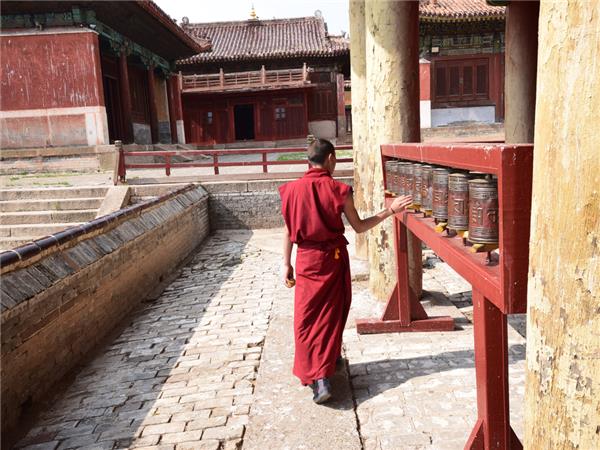
Mongolia small group holidays
From £2920 - £3580 15 days excluding flights
Discover the raw beauty and tradition of Mongolia
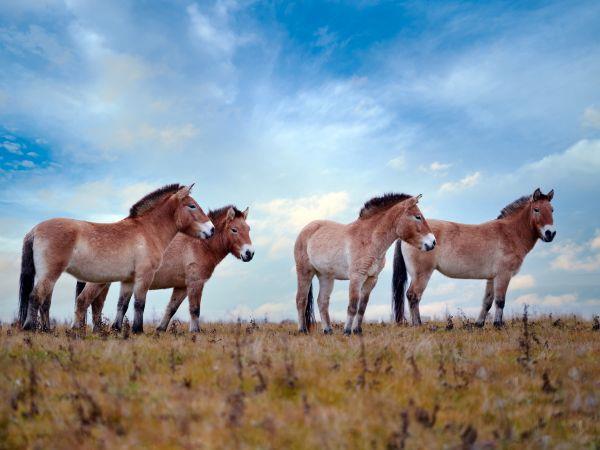
Mongolia tour, land of the great Khan
From £4370 - £4725 15 days excluding flights
Journey through Mongolia's epic landscapes
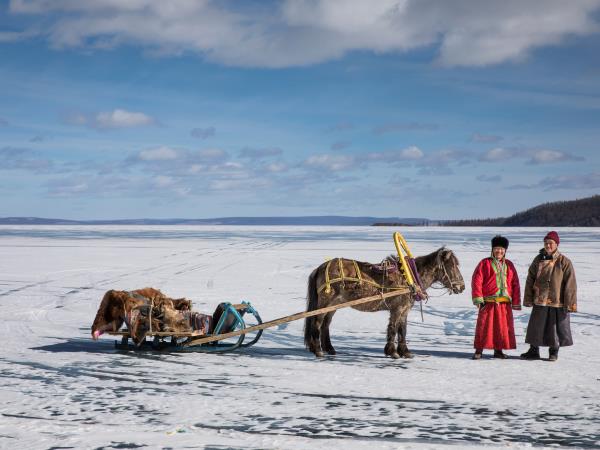
Mongolia tour, winter landscapes and Khovsgol ice festival
From US $3655 14 days excluding flights
Winter discovery tour with ice festival in northern Mongolia