Bhutan birdwatching tour


Inc.
flights, all meals &transfers in the itinerary, local guides & driver.
permits and wildlife watching activities, camera traps; exc.
flights, visas, tips.Please contact us to quote specific to your requirements.

Description of Bhutan birdwatching tour
As one of the few places in the world where you can still visit completely pristine tracts of forest, Bhutan is the ideal place for a birdwatching holiday. Combine that with this remote Himalayan country’s fascinating culture and you have a truly thrilling destination. This Bhutan birdwatching tour explores the country’s central highlands and valleys with an itinerary designed and led by one of the country’s most respected ornithologists – expect some amazing sightings.
The tour is timed perfectly to coincide with a key migratory season between February and May, when many species travel north into central Asia from India, and also arrive from the Arctic, joining resident populations. There is also the option to visit between November and February / March, in time to catch the endangered black-necked cranes in the Phobjikha Valley before they return to the Tibetan plateau.
In the company of local cultural and naturalist guides, explore forests and mountains at different altitudes, including many areas that are significant breeding and feeding locations for rare species such as great hornbills, Satyr's tragopans and more. Camera traps will be available for you to use on request.
You will travel by private air conditioned vehicle, but you will need to be a fit and experienced walker. The terrain is challenging, including dense forest, with some steep ascents and descents involved, in hot and humid conditions. Six-hour walking days are not unknown, although it is always at a relaxed pace.
Price information
Inc.
flights, all meals &transfers in the itinerary, local guides & driver.
permits and wildlife watching activities, camera traps; exc.
flights, visas, tips.Please contact us to quote specific to your requirements.
Departure information
Travel guides

Holiday information
Responsible Travel
Planet
In Bhutan we help the environment as most of the park and permit fees for trekking and walking through the parks goes to help maintain the conservation efforts inside the park. When camping all of the fees also go direct to the Community Development Fund which helps to maintain the trekking trails and conserve the parks. We also look to employ local scientists as they conduct their research into the forests here. We also contribute and participate in as many studies that the local researchers are conducting as possible. On request we can also look to arrange specific tours that help researchers on their wildlife monitoring studies.Wildlife Promise:
In Bhutan the mere presence of eco-tourism in potential tiger watching areas is improving the understanding that of wildlife in Bhutan and every sighting, every detail is recorded and passed on to the local scientists who are still working on creating the ‘Tiger Corridor’ as promoted on the BBC series Lost Land of the Tiger. Hopefully with a better understanding of the wildlife here and by increasing the revenue generated by eco-tourism here the Tiger Corridor can become a reality.
All the information collected in invaluable as the knowledge of the dwindling population of tigers is under such a threat. We also donate our pictures to the researchers to aid in their photo identification studies.
Throughout this trip we use as many locally produced and sourced foods as possible, by doing so we minimize waste as most of these locally produced products have less packaging that mass produced products. All waste we do create during the trek is taken back with us to the city so they can be recycled effectively. In fact nearly everything we consume along the way is locally produced in the villages that we pass through. Leaving next to no waste from packaging.
For water conservation we reduce washing of bedding and towels by encouraging our clients to use the same towel for the duration of their trip, so to reduce water usage in cleaning them regularly. Where washing has to be done when on the trek we use the rivers (not machines) and do not use any chemicals.
As we after often in the eco camps and small independent guest houses we are well off the power grid and so solar power is crucial for our trips. All of the camps and guest houses we visit use solar power as their primary source of energy and water heating.
We only use one vehicle on this trip, we minimize the amount of driving on the trip, most of the movement on the trip is walking.
All of our local suppliers in Bhutan are pioneers in establishing eco tourism, they work hard to introduce eco friendly practices such as employing local people, using local products and also saving water and energy as much as possible. In Bhutan our suppliers are involved eco tourism at a government level and are key in establishing eco tourism to some Bhutan's most remote rural communities.
People
In Bhutan the local community benefits as we use local guides from local villages which helps the local community generate extra revenue. We also encourage the purchasing of local handicrafts which are all created in a sustainable way and provide great unique souvenirs. Bhutan also uses a unique system where a national tourism tax is imposed by the government. This is payable by your tour operator into one bank account in Bhutan (that is governed by the Bhutanese government), this is then divided to the ground agents, local accommodation owners, drivers, guides and everyone else involved in tourism. This ensures that all the money is received by everyone in the tourism chain and not just siphoned off by the hotel management etc.This is keeping tourism in Bhutan at sustainable and workable levels as well as ensuring that the local people benefit from everyone visiting this wonderful country.
Also by visiting these remote rural areas we actively encourage employing the local village people as porters, guides, cooks and camp assistants as well as spending time to understand and observe their traditional ways of life.
All along the way on our trek from the central highlands to the lowland forests we have opportunities to purchase local crafts as well as seeing how they are produced. We will be traveling through communities that produce local crafts and products for their traditional uses as well as tourism. It is the hard work of our suppliers in Bhutan that are encouraging the local communities to produce such crafts to help stimulate their rural economies and also to help educate our clients on their local culture.
When traveling we give all of our clients the opportunity to contribute and participate in local traditions and activities. We are at the mercy of local people and the local communities when off the beaten track in Bhutan. So it is crucial we make sure that we have a great relationships between our clients, guides, suppliers and the local communities. By bringing supplies (such as medication, school supplies and solar chargers) from the towns to these rural communities we help to secure a strong relationship through eco tourism.
Popular similar holidays
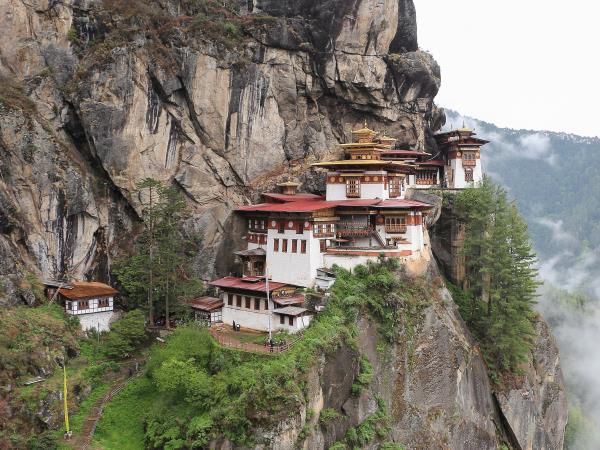
Bhutan walking and wildlife holiday
From £3995 - £4250 11 days excluding flights
Hike the hills and forests of Bhutan looking for wildlife
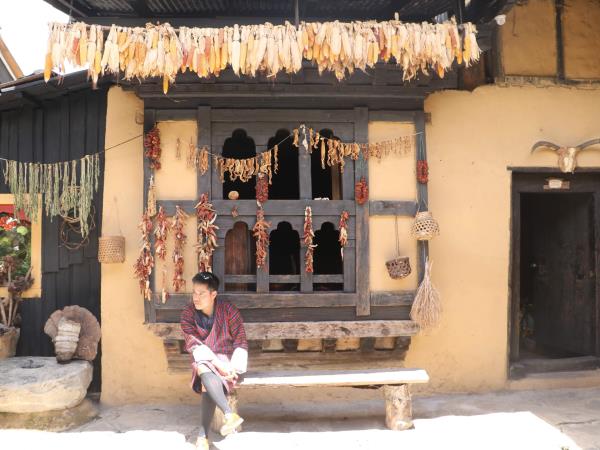
Nepal and Bhutan 15 day tour
From US $3150 15 days excluding flights
Experience only the best of Nepal and Bhutan in a one tour

Bhutan trekking and tiger safari
From £4395 - £4750 14 days excluding flights
Search for elusive tigers in Bhutan