African Golden Cat expedition in Uganda
Price
£3850 excluding flights
Convert currency:


Duration
11 Days
Type
Small group
More info
Price based on 2 pax sharing.
Inc.
all meals &transfers in the itinerary, local guides & driver.
permits and wildlife watching activities & internal flights; exc.
flights, visa, tips.
Price depends on party size.
Contact for specific price.
Inc.
all meals &transfers in the itinerary, local guides & driver.
permits and wildlife watching activities & internal flights; exc.
flights, visa, tips.
Price depends on party size.
Contact for specific price.

Description of African Golden Cat expedition in Uganda
Price information
£3850 excluding flights
Convert currency:
Price based on 2 pax sharing.
Inc.
all meals &transfers in the itinerary, local guides & driver.
permits and wildlife watching activities & internal flights; exc.
flights, visa, tips.
Price depends on party size.
Contact for specific price.
Inc.
all meals &transfers in the itinerary, local guides & driver.
permits and wildlife watching activities & internal flights; exc.
flights, visa, tips.
Price depends on party size.
Contact for specific price.
Check dates, prices & availability

Travel guides
Our guide takes you in search of the lions, tigers and leopards of the world, from jungles to frozen wilderness.
So much more than just mountain gorillas - our travel guide is your ultimate resource for Uganda.
Responsible Travel
As the pioneers of responsible tourism, we've screened this (and every) holiday so that you can travel knowing we've worked to maximise the benefits of your holiday to local people and places, and minimise any negative impacts.
Planet
CARBON REDUCTIONIn Uganda (as with everywhere we go) we carefully choose accommodation, suppliers and transportation that either minimise their effect on the environment or that help to contribute to its sustainable development.
On this trip we stay in all locally owned accommodation in Kibale, Queen Elizabeth and Bwindi. These locally owned guest houses and lodges employ local staff from the villages (reducing carbon in travel to and from their home / work), as well as focus on growing and rearing as much of the food they consume in the accommodation on neighbouring farms as possible. In Kibale the accommodation we use is the hub of local community projects to produce local food and reduce plastic usage, single use packaging and water wastage.
As well as making sure that nearly all of the food consumed is locally sourced, water is collected from the abundant rain and stored for cleaning, crop irrigation (for the local farm). Solar panels are used for most of the accommodation's power, with more and more panels being installed to reduce the reliance on the grid power.
We only use one vehicle for all of the transfers and wildlife watching activities, we have a range of vehicles we can use depending on the group size, so that we use smaller and more efficient cars for smaller group sizes and larger vehicles for larger groups, where the carbon impact is lessened by being divided by more people.
ENVIRONMENT AND WILDLIFE
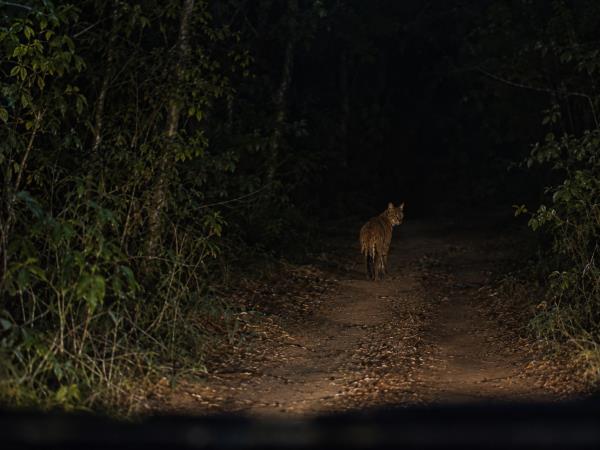
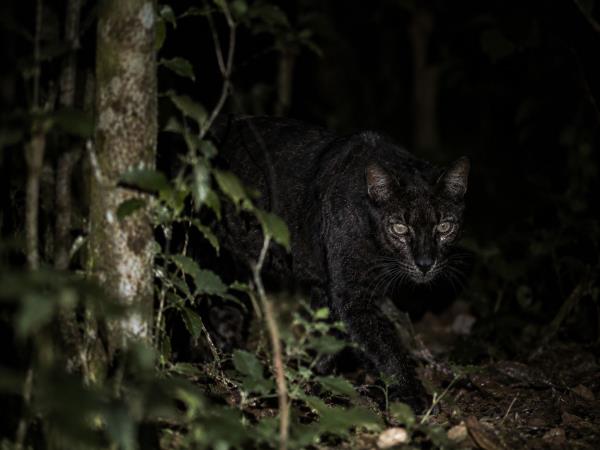
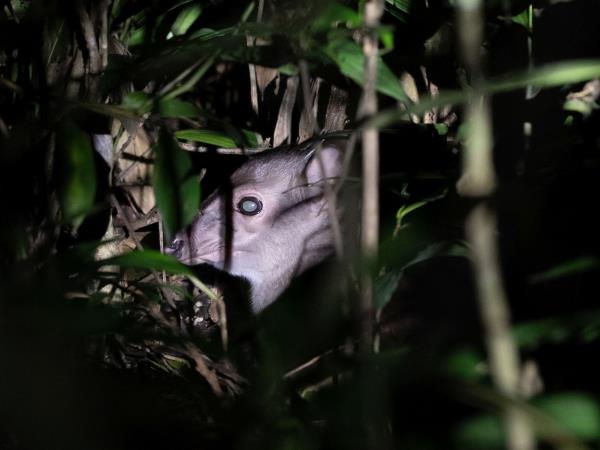
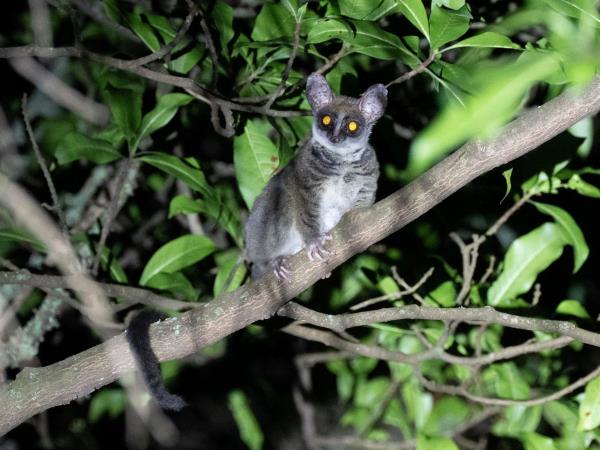
The owner of the guest house in Kibale has a good relationship with our local guides and also the national park itself and we have a special arrangement to enter the park after dark. In return we provide sightings and local information about the cats and their prey to help build the knowledge base for this poorly understood species.
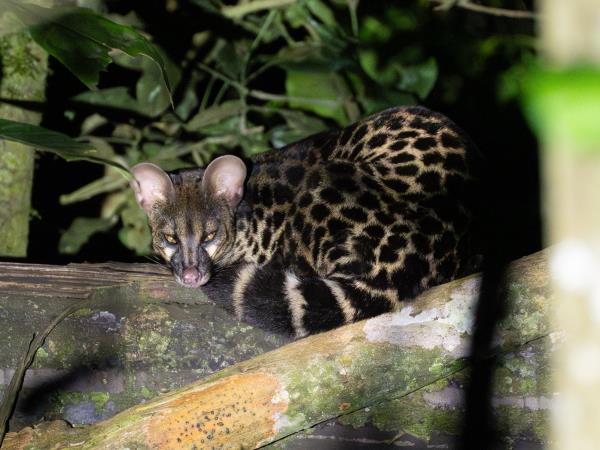
We also contribute to these studies by providing all of our camera trap images and data on sightings. All of which is crucial help for the ongoing conservation of the African golden cats and other rare species in the area. On this particular trip our local guides have experience working with large and small conservation bodies such as Panthera or by supporting reserves where researchers are based, such as small cat scientists.
By bringing people here with a professional naturalist as well as professional local guides we aim to showcase the environment in full but also to allow you to learn about the problems facing the ecosystems here and highlight the ways that continued development and human exploitation are affect the species and how cutting edge research is countering the problems as well as showing you examples of success stories. We also keep a record of all the great sightings we see on each tour and record the environmental factors, this data is used by ourselves but also given to the researchers who are working on many of these species. All the information collected in invaluable as the knowledge of some of the animals that live here are little understood. We also donate our pictures to the researchers to aid in their photo identification studies.
People
LOCAL ECONOMYOn this trip all of the accommodation we stay at are locally owned. In terms of the guest house in Kibale, this is run by people who live in the village outside Kibale and always have. They have land bordering the national park and employ people only from the local area. They also have a training scheme for local children to become guides and drivers.
As with any of our tours throughout Africa or elsewhere in the world we always employ local guides and drivers. We also do our best to employ as many local guides as possible, so that we can share the money from tourism around more than one regularly used guide. On this trip our guide and driver come from the immediate locale of Kibale national park.
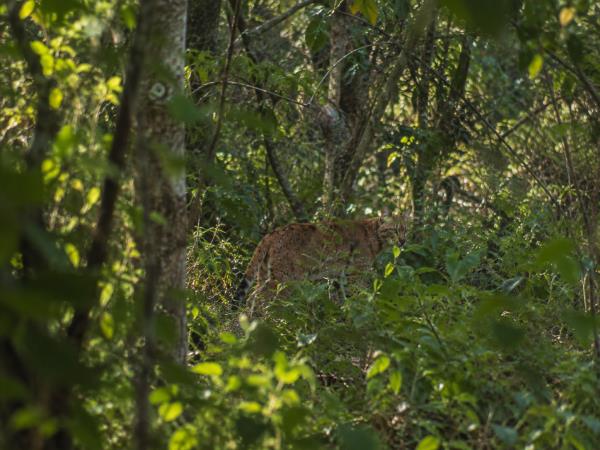
This not just helps in supporting the local people with income direct from wildlife tourism but these local people often have much better local knowledge of the wildlife. In fact most of the knowledge of how to look for African golden cats comes from these local guides living the area and seeing this species as they have grown up.
We encourage the purchasing of locally crafted souvenirs, particularly when in Bwindi as we stay at a guest house which is owned and run by a local woman's initiative to create jobs and income for woman in the local area.
EMPLOYMENT, INCLUSIVITY & DIVERSITY
All of the people employed as part of this trip are from Uganda and many of the drivers we employ are from the local communities we are visiting for wildlife. We work hard to provide a genuine pathway from driver to guide, by helping educate English speaking as well as providing coaching and informal training on guiding techniques. We also donate equipment which can help in this progression in the form of binoculars, field guide books and torches.
As touched on above, our Bwindi accommodation is run only by women from the local community and is heavily involved in providing education, vocational training and job experience to the local women in the region.
This trip, like all of our trips, is LGBTQ+ friendly.
Nearly all of this trip is conducted from a vehicle, however some walking may be needed, to get closer to wildlife and this walking will be done on uneven ground and if doing the mountain gorilla or chimp tracking (as extensions) hiking up and down slopes will be required. So people with severe mobility issues will struggle, the trip is not wheelchair safe.
Popular similar holidays
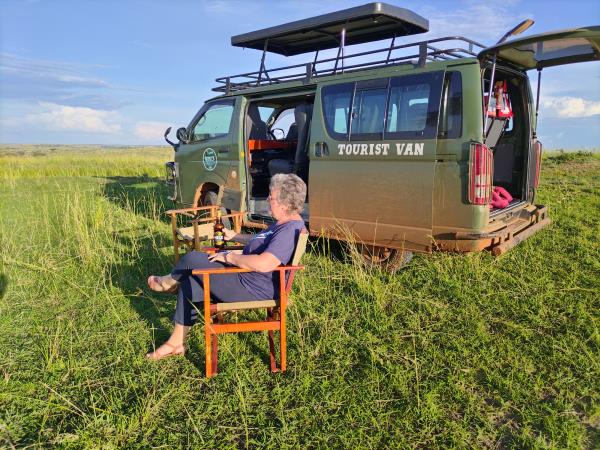
Uganda wildlife holiday
From US $4190 8 days excluding flights
Top selling Uganda holiday with primate expert guides
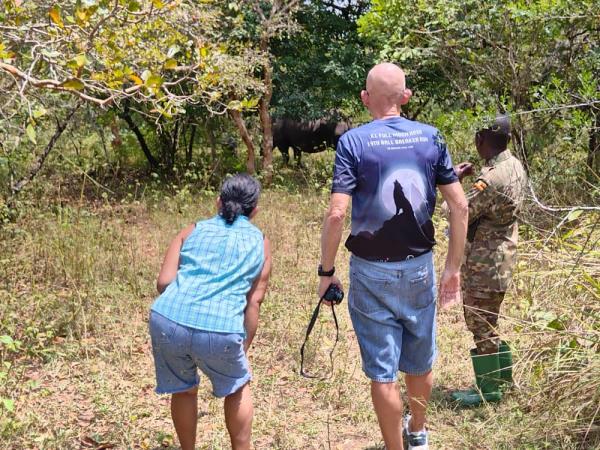
Uganda safari activity adventure
From US $4760 12 days excluding flights
Wilderness journey through Uganda's spectacular landscapes
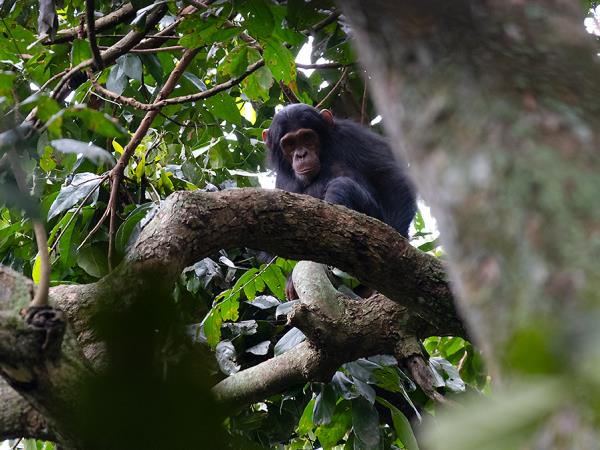
Uganda wildlife and conservation tour
From £2595 9 days excluding flights
Discover the wonders of Uganda & its extraordinary wildlife