World Nomad Games in Kyrgyzstan

The 2028 World Nomad Games are scheduled to be held in Russia. Due to the ongoing invasion of Ukraine we are not selling any holidays to Russia at the present time. Please email rosy@responsibletravel.com for more information.

The World Nomad Games showcases nomadic sports, culture and lifestyle and takes place every even numbered year. It is usually held in September, the 2026 edition returned to Kyrgyzstan, where the games originated. Nicknamed the ‘Olympics for nomads’ it’s a unique and fantastically entertaining chance to see a huge number of ethnic sports and games. Some might be familiar – archery, for example – but most are not. This must be the only place in the world where you can witness horseback wrestling, hunting with eagles, bowls played with cow kneecaps (ordo) and board games so complex they make mah jong look like tiddlywinks.
Many of the sports are not only unfamiliar to visitors, they are downright eye opening. Suddenly, the real Olympics look slightly wussy. Cirit, for instance, originates in Turkey and features two teams on horseback throwing spears at each other, with points awarded for hitting your opponent. Mas wrestling involves two contestants sitting on the ground opposite each other, their feet braced against a board between them, heaving on a stick to see who’s strongest. Headless goat polo is the most revered sport, with two teams on horseback competing to throw a headless goat carcass into a goal. In a brilliantly waste-not, want-not move, the winning team gets to barbecue the thoroughly tenderised meat afterwards.
Er enish is essentially wrestling on horseback, with two warriors trying to throw each other to the ground in impressive bouts of strength and agility. If you prefer your wrestling horse-free, there are numerous different styles of wrestling to enjoy, including Turkish, Turkmen, Tajik, Azerbaijani… the wrestling list is long.
The games have become incredibly popular, a glorious celebration that attracts people from all the Stans and further afield, too. Some arrive on horseback, before pitching yurts, donning traditional clothes and settling in to enjoy the competitions, food and fun.
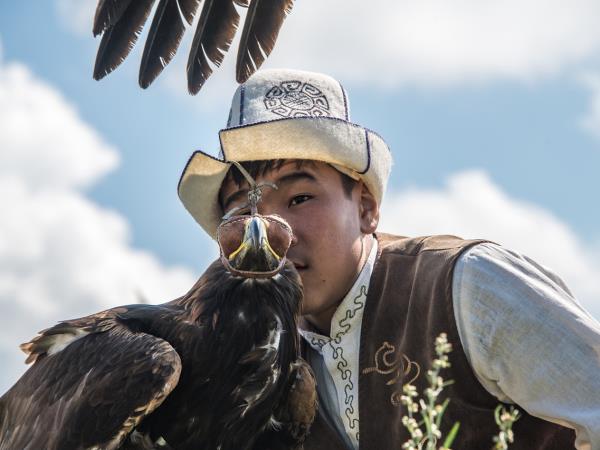
The joy of attending the games is getting to watch both the competitions and the crowds. Stroll around and you’ll see spectators on horseback (or even standing on their horse’s back to get a better view), young Kazak hunters wandering through the crowds with eagles on their arms, someone skinning a goat, tents where banquets of regional food are spread out and the odd camel, too. Wherever you go, you’ll meet hospitable nomads delighted to show off their culture. Food is cheap and plentiful, but as ever, it makes sense to steer towards the vendors with the most local people eating at them.

Contact Us

Responsible Travel, Travel Team

Call us for a chat about our holidays. We are happy to discuss your holiday and help in any way we can. No bots, queues or awful hold music.

Responsible Travel, Travel Team
The easiest way to visit the Games is as part of an organised tour. Tourism isn’t hugely developed in the ‘Stans, accommodation in the vicinity of the Games gets booked up well in advance, and information in English may be hard to find. Your tour guide will be able to explain what you’re seeing, and there are friendly local volunteers to help out, too.
Typically, a two week holiday might devote two or three days to the Games, so you can catch the opening ceremony, with its highly choreographed performances, explore all the sites and see a good range of competitions. Remember that once at the Games, logistics aren’t always perfect. Scheduling can change with no notice, so if you are determined to see a particular sport make sure you get there early, and be patient if it’s delayed or cancelled.

History of the World Nomad Games

The World Nomad Games began life in 2014 as a creation of the Kyrgyzstan government. Very much a tourism endeavour from the start (not all of the traditional activities on display are particularly old) it has grown to become one of the most renowned and spectacular showcases of nomadic culture.

Early tournaments were held in Kyrgyzstan and now alternate between different parts of Central Asia. They are typically held in September, which is when the seasonal migration period ends and nomadic communities are more able to attend. More than 100 countries now take part, ensuring a vibrant representation of many different ways of life.

Today, the World Nomad Games aren’t just about the thrilling physical pursuits for which they’re best-known. They include conferences, craft workshops, educational programs and demonstrations of traditional arts, cuisine and costume. Recognised by the United Nations for their effectiveness in promoting intercultural dialogue, the games are a superb example of the diversity of nomadic cultures.
Written by Joanna Simmons
Photo credits: [Page banner: Save the dream] [Kok buru (goat polo): Ceyhun Kavakci] [Archery: Bernd Thaller] [Er Enish(horse wrestling): Ceyhun Kavakci] [Opening ceremony: Save the dream] [Man on horseback: Save the dream]