


Brahmaputra River cruises

A bonfire on a sandbank, birding from the top deck, and rhinos in Kaziranga National Park. What better way to experience this area of north-east India, than travelling on the river that shapes it?

When the monsoon rains come to Assam, a mass migration happens. Kaziranga National Park completely floods; the animals swim to higher ground. The Mishing community, who live in stilted houses close to the Brahmaputra River, watch as the water rises up the stilts. As the mighty Brahmaputra swells to the horizon some communities, and even whole villages, leave for the season.

The Brahmaputra is not the longest river in India – though it does eventually merge with the Ganges – but it is mighty all the same. It’s the 15th longest in the world, 9th in terms of how much water it carries. It’s a river of heave and heft, carrying and depositing the sediment that makes Assam one of the most productive farming regions in India, with its world-famous tea plantations sprouting from rich river valley soil.

Every monsoon, this braided river becomes shapeshifter. New islands (chars) and sandbanks (chaporis) form, and others are eroded. Some become inhabited; others, uninhabited. One – Majuli – is the world’s largest river island, and has a population of over 160,00 people.

The river shapes Assam – so what better way to see the state than our 11 day Brahmaputra river cruise?
It’s slow travel, but where life feels full

Fishers, weavers & farmers

Assam sits in India’s north-east region – an area connected to the rest of the country by a sliver of land around 20 km wide between Bangladesh and Nepal. The north-east often sees itself as underrepresented by mainstream Indian media, and tourism numbers.

“What you notice most about the guests is that most folk are like-minded,” says Sanjay Oberoi, sales director at our partner Bespoke India Travel. “They tend to have travelled a lot. Often guests are there in India on their third or fourth visit.”

There’s well-trodden, and then there’s distinctly untrodden – by cruising the Brahmaputra you’re visiting a place that’s less visited by Indian visitors – let alone international ones.

This is a quiet area of the country, especially if your experiences of India to now have been major cities, and the focus of cruising is on smaller villages and towns, and wildlife areas.

“For someone like me, who enjoys history, wildlife and community interactions… all with wonderful Assamese cuisine, it’s ideal,” says Sanjay, “It’s slow travel, but where life feels full.”

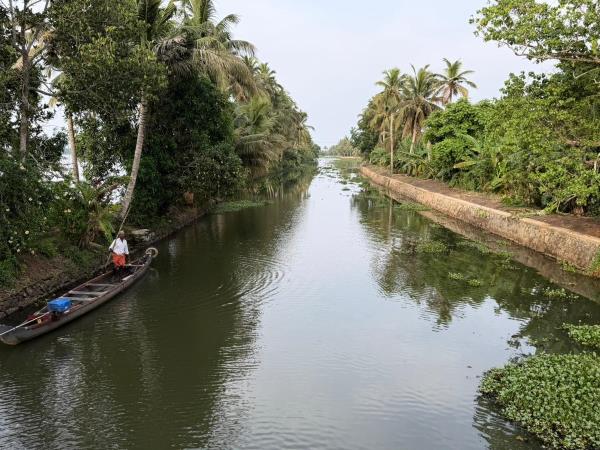
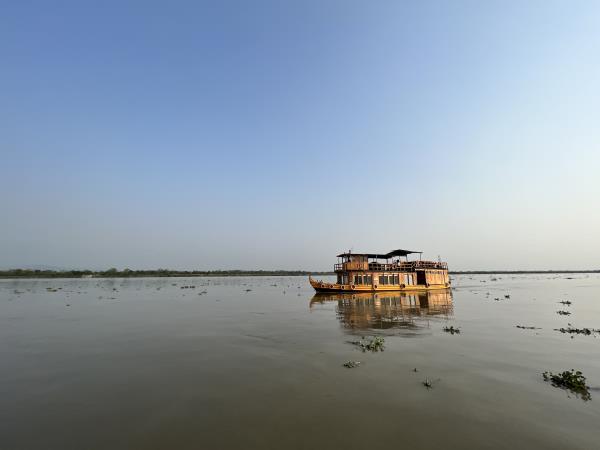
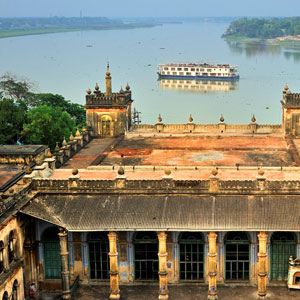
Your lazy cruise belies the mightiness of the river, which destroys its banks every year and causes massive flooding during monsoon time. In the dry season, boats can haul themselves against soft sandbanks, and anchorages are peaceful. Cruises venture gently upstream and downstream following a lazy course: past fishers netting their catches in woven jute baskets, and past villages and farms known for silk and sugar cane production.

River cruising, unlike seagoing, allows for frequent stops, and you can expect daily breaks at bankside villages and towns. Stops might include Tezpur, where you can visit the city’s temples and shrines by electric rickshaw, or Sualkuchi, a town with a silk weaving tradition that is thought to date from the 11th century.

Hornbills & one-horned rhino

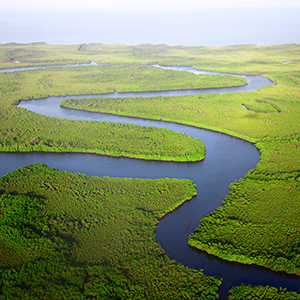
On still days, the river has a flattening effect on the landscape; mirroring the sky, it can seem like objects are floating into view. Against this flat palette of silvery blues and tans, it’s easy to pick out birdlife, of which there’s lots, and notice every flicker of movement on the bank – or keep your eyes on the water to spot rare Ganges river dolphins.

“It has huge appeal for wildlife enthusiasts,” say Powell Ettinger from our partner, The Small Cruise Ship Collection, who run our eight-day river cruises on the Brahmaputra. The river cuts through one of the best wildlife parks in the region, Kaziranga National Park.

“Kaziranga is the home of the majority of Asian one-horned rhinos, as well as tigers, lots of wildlife and fantastic birdlife,” says Powell. The park almost singlehandedly brought rhinos back from extinction at the end of the 20th century. While its tall, prevalent elephant grass conceals a high concentration of Bengal tigers, the rhinos are far easier to spot. Most cruises include time in the park, though you’ll disembark and explore the area on land by jeep, heading to the popular western range, which has the highest rhino concentration.

You might decamp to a smaller boat to visit the lesser-known Nameri National Park – reached with a drive, and then best explored by floating down the Jia-Bharali River which cuts through it. The park is known for its elephant populations and birdlife.

Sandbanks & banquets

Sometimes the river is so wide, and the braids of sandbanks and islands so many, that it’s hard to distinguish the shore. The river obliterates and becomes a disorientating plain, the landscape a mirage at the very edge of your view.

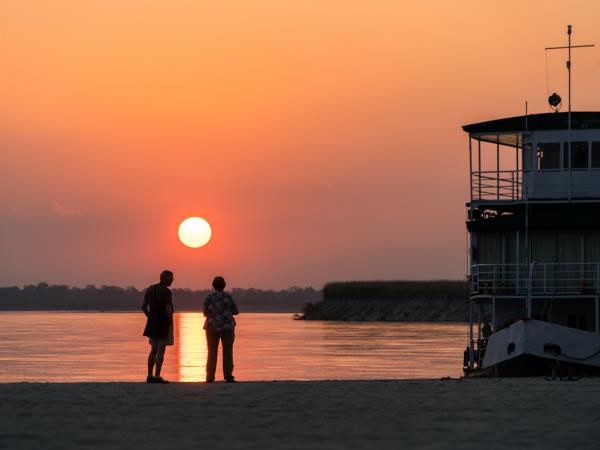
You might stop on a sandbank for a barbecue, and the flames will add more smoke to the obscuring heat haze. And then again the sky will clear, and the eastern Himalayas hove into view – the mountains where the Brahmaputra originates are just to the north. Extraordinary as it seems, the river is thought to be older than the mountains, originating before they were formed, over 20 million years ago. The Brahmaputra River is a flattening force, but with views like these, a holiday on it can come with fantastic emotional highs.

Contact Us

Responsible Travel, Travel Team

Call us for a chat about our holidays. We are happy to discuss your holiday and help in any way we can. No bots, queues or awful hold music.

Responsible Travel, Travel Team

What are Brahmaputra river cruises like?

Expect relaxation with a wildlife focus. By boat, you can see shoreside cities and settlements, take day trips to tea plantations, and be close to Kaziranga National Park. Cruises typically depart from the city of Guwahati and last three to five days. You can sail the river both upstream and downstream and there will be daily stops to visit settlements and sights along the way, as well as overnight stops.

Trips tend to couch three to five days of cruising in a longer holiday that includes sites like Majuli Island (reached by public ferry, not river cruiser), and cities like Jorhat. You might want to spend time after the cruise exploring more of north-east India, perhaps going on to Meghalaya or Nagaland.

Life on board

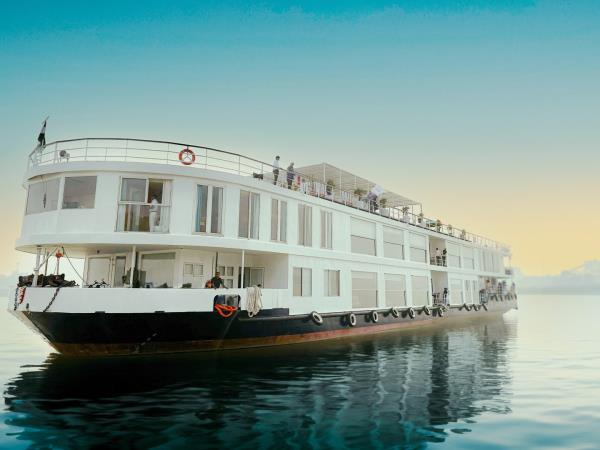
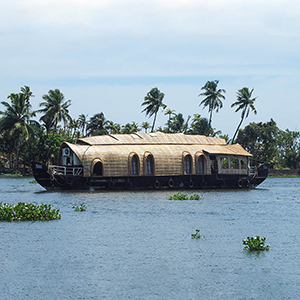
Boats are typical river cruisers: think lots of windows and decks, to maximise the views, and great service on board. “The partners who work with us take pride in being owner-managed cruising firms that use locally handcrafted, Indian-flagged ships, employing all-Indian crews on permanent contracts,” says Sanjay. “The aim is to offer an authentically Indigenous experience, from the ship’s design to the gourmet cuisine served on board.”

Best time to go

The cruising season on the Brahmaputra River is from October to April, avoiding the wetter months in and around monsoon. November to March is the most popular time to visit.
Written by Eloise Barker
Photo credits: [Page banner: Ishanjyotibora] [Intro: Donvikro] [Slow travel: Udit Kapoor] [What are river cruises like?: Mainak Das]