Congo River cruises: exploring the Congo Basin

Smoothly does it: cruising on the Congo River makes a little-visited area of Africa remarkably accessible.

Have you heard of water drumming? If you hit a river a particular way, you can make a range of convincing percussive sounds – well, you can if you’ve had enough practice. In central Africa you might witness a traditional, and very splashy, performance as women waist-deep in river water strike the surface in complex polyrhythms. They can make the Congo River and its tributaries the world’s largest instrument.

It’s not the only sound you’ll hear on a Congo River cruise: travelling upriver from Brazzaville in the Republic of Congo on a 16-day cruise via the river and its tributaries you’ll encounter the UNESCO-inscribed polyphonic singing of the Baka people, traditional dancing from the Moye people, and Nzango – a traditional children’s playground clapping, singing and dancing game. Villages might welcome visitors with song, or you might be drawn in to an evening dance.

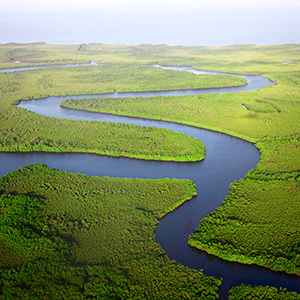
Far from the dark heart of Africa, the Congo Basin is the continent’s lungs. Yes, there are some powerful singing voices here; there are also some of the tallest trees in any rainforest and vital wetlands, together part of an ecosystem that’s a carbon sink of inestimable value in a river basin the size of the European Union.

“It’s a very different part of the world,” says Powell Ettinger, founder and director of our partner, The Small Cruise Ship Collection. He had recently returned from taking this trip himself when we spoke. “For people who haven’t been there it’s difficult to understand the size of the rivers and the remoteness of some of the places.”

Our top trip

Congo river cruise

Congo river cruise

Expedition cruise in the Congo and Dzanga National Park

From £8287 to £8659 16 days ex flights
Small group travel:
2026: 18 Nov, 5 Dec
2027: 19 Aug, 11 Sep, 12 Sep, 1 Oct, 24 Oct, 14 Nov

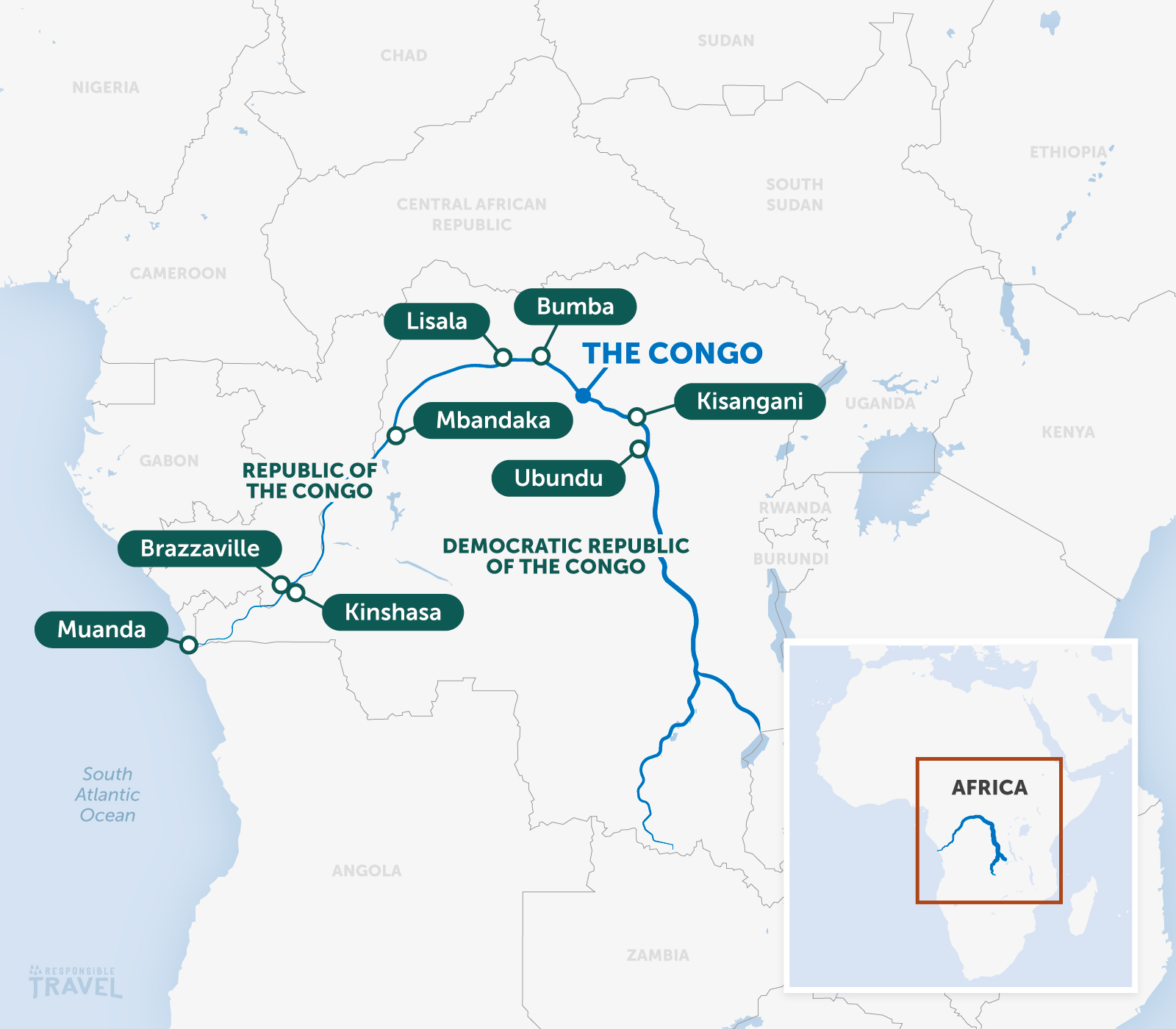
Congo River map and Congo River facts

Congo river map, Africa
Writing about large rivers is fun. There’s always a point in an article like this where you lay out all the facts in a heap, to impress the scale of your subject in a wodge of text: the fishhook-shaped Congo River crosses the equator twice and its basin lies across nine countries. It’s the world’s deepest river – yet in other places, dangerously shallow. Its outflow could power around a third of Africa, should a hydroelectric facility ever be completed here.

In some places the river is kilometres wide with islands hundreds of square kilometres between its banks – even as far upstream as hundreds of kilometres from its mouth. At its widest point the river is 24km across, and it’s here you’ll find two of the world’s closest capitals. On one side: Brazzaville, capital of the Republic of Congo, one of Africa’s most sparsely populated countries, 60 percent forest. On the other bank, Kinshasa, capital of the Democratic Republic of Congo, a country seven times the size of its neighbour. You can cross into DRC on a day visit on our trips without too much hassle.

What is it like to cruise the Congo River?

I’ve worked in travel a long time and it’s just a fantastic trip

Smooth sailing

“I have to say, the trip, for all its remote wilderness and its unusual locations, goes remarkably smoothly,” says Powell. The journey didn’t disappoint. “I’ve worked in travel a long time and it’s just a fantastic trip. You think you’re going to a wild and remote place, but it’s organised very well. You get a warm bed and a hot shower, good food, and a chef on board. Contrast that with walking through the jungle with a Baka guide, or tracking silverbacks. It’s very wild but not that difficult to do.”

Using a tour company

Make no mistake – this isn’t somewhere you can easily go on your own. It’s best to travel with an experienced guide. There are border crossings, permit checks, and unofficial negotiations where it helps to have personal connections. In this part of the world, even the capital cities evade Google Maps, as Powell discovered almost immediately on arriving in Brazzaville and trying to find the famous local market.

Enjoying life on the river

The Congo is a lifeline of a river for the tens of millions of people who rely on the river basin and its forests. Fishing is a major source of food. A common dish is salt fish accompanied by manioc, while the goliath tiger fish is a sports-fishing prize – a single fish can weigh over 50kg. As well as a larder, the river is a highway, navigable where roads are often not.

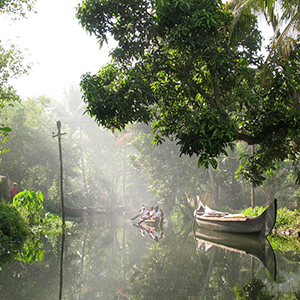
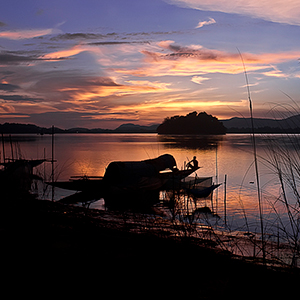
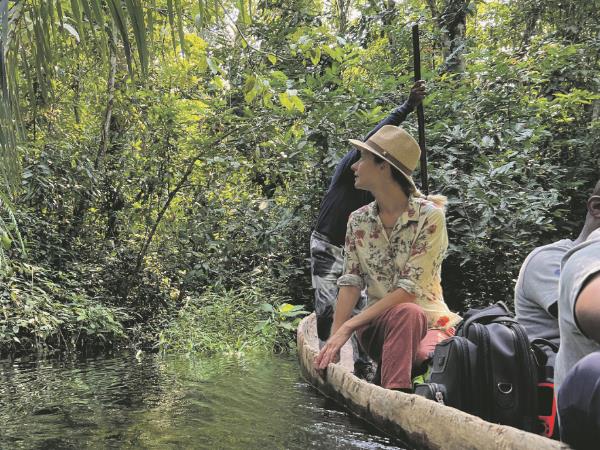
River transport – and you’ll see lots of it on this trip – is low and slow. Pirogues cut from rot-resistant trees ply the river, as do massive rectangular barges carrying illegal or legal timber, whose wooden decks barely clear the waterline. There are loud ‘daka dakas’ – wooden boats named after their engine noise. Extraordinarily, some local people will spend a month on the river on transport like this, which becomes a floating ecosystem of cafes and makeshift sleeping arrangements.

As for you, you’re on a multi-deck river cruiser, all the better for looking out for hippos ahead, plus the region’s 800 species of birds.

History of the Congo River

The story of the Congo River is a story of discovery and obscurity – while it’s totally vital for the local economy as a major transportation route for people and goods, it remains the least studied major river in the world. For a long time, it was considered unnavigable by outsiders – until it was navigated, to devastating effect.

The Portuguese were the first Europeans to investigate the river in the 15th century, but were stopped by the cataracts and rapids around 100km inland. The journalist Henry Morton Stanley was the first documented person to manage to travel from the Congo’s source to the sea, a journey that took nearly 1,000 days, and which was reported in the UK’s Daily Telegraph.

The journey got the attention of King Leopold of Belgium, who violently took the region under the country’s control. The Congo was plundered for its natural rubber, and it’s thought that ten million people were killed in the process.

Visiting today

Today the threats are different. The Congo rainforest suffers from rampant deforestation as unregulated logging prevails and the forest is eaten away from the riverbank inwards. Charcoal remains a crucial fuel for millions.

Nineteenth- and 20th-century history has cast a long shadow over the country – and endures in global perceptions. Today’s issues, particularly those in the DRC, lie in the east of the country, as distant from Kinshasa as Moscow is from London.

Today, people rarely visit the Congo Basin as leisure tourists and you might hear the cry mundele (white foreigner) from children, which is worth a good-natured ‘bonjour!’ back. Local people very rarely see tourists; Powell thinks this part of the world deserves more recognition. If you come hippo watching, bonobo tracking and village visiting here, you might end up singing the praises of the world’s lungs, too.

Contact Us

Responsible Travel, Travel Team

Call us for a chat about our holidays. We are happy to discuss your holiday and help in any way we can. No bots, queues or awful hold music.

Responsible Travel, Travel Team

Congo River cruising highlights

My favourite bit was going into the forest with the Baka
Going by river isn’t just an experience, but a practical way to get into the country – and a lot of the highlights are actually off-river – visiting villages and jungle areas in Republic of Congo, DRC and CAR, and leaving the Congo to travel up tributaries.

“My favourite bit was going into the forest with the Baka,” says Powell. You can spend a morning learning about living in the forest from people who know it best and live a subsistence lifestyle in its shadow. You’ll watch tracking and hunting techniques, and discover the uses of myriad different plants.

To reach certain areas you decamp to smaller, faster boats. “Travelling by skiffs was brilliant,” says Powell. “You stop five or six times as there are seemingly endless border checkpoints, but each stop was interesting. They were quite comfy, with padded seats and you see wildlife and birdlife on the way. It was a very enjoyable day.”

Animal tracking on foot is a special Congo Basin experience. Western lowland gorillas used to roam the whole territory but are now confined to particular areas where you can apply for a permit to see them. Bonobos – some of our most interesting ape relatives – can also be seen.

On one night, Powell and the group spent the night on a platform in a national park looking out for the elusive forest elephants – which you’d be unlikely to spot from a cruise. “It sounds cool, but elephants make a lot of noise! They were crashing around and wallowing all night.”

Congo River cruise practicalities

Guided tours are the way to go in the Congo Basin. Going with a tour means that you get help with visa, letters of invitation, permits for animal tracking, and reliable transport. Be flexible: not just mentally, but also with your airfare tickets. In case you are delayed, it’s useful to have a buffer day or two built into your itinerary. Expect to spend time off the boat every day exploring. There are wildlife-watching excursions, but it’s hard to see animals without help, so don’t expect an audience with an okapi. Visiting with local people is a highlight – on their terms, of course. Going with a responsibly minded tour can ensure that village elders have been involved with consultations, and agreements have been made for your stay.

Why is the Congo River so famous?

The Congo River is the deepest river in the world, and the second largest. For many, the Congo is associated with violent colonial history. The region became known to Europeans in the 1800s, who rapidly exploited the land’s natural rubber, and enslaved and brutalised its people. The famous novel, Heart of Darkness, which inspired the film Apocalypse Now, was set in the area, and painted a bleak portrait of conditions there. The book’s author Joseph Conrad was once a steamship captain on the river – though he quit and wrote this damning novella instead. The countries around the river became independent in the 20th century, but a reputation for disease and jeopardy unfairly lingers around the river.

Where is the Congo River?

The Congo River is in central Africa. It passes through the Republic of Congo, Angola and the Democratic Republic of the Congo, which holds the lion’s share of its 4,370km course. The river crosses the equator twice in its arc. The Congo Basin is the area of land which drains into the river. It is absolutely massive, covering nine countries.

Where does the Congo River start & end?

The Congo River starts in Zambia – where the Chambeshi River, its longest tributary, rises. It flows into the sea at Muanda in the DRC.

How big is the Congo River?

The Congo River is the second longest river in Africa, the ninth longest in the world, the second largest river after the Amazon, with the second largest drainage basin (though the Amazon dwarfs it by some margin). Does the Congo River claim any world titles? Yes, it’s the deepest river, with depths up to 220m. For this it’s actually very shallow in places – shallow enough for boats to run aground. You won’t on our comfortable trip, though.
Written by Eloise Barker
Photo credits: [Page banner: Bsm15] [Smooth sailing: Toza Productions] [Visiting today: Julien Harneis] [Where is the Congo River?: Coordenacao-Geral de Observacao da Terra/INPE]