Mafia Island holidays, Tanzania

Communities are working to protect their island and its wildlife – and responsible tourism can help too.

Gather sticks of driftwood on the shoreline, then place them along the beach into two lines like train tracks into the Indian Ocean. Congratulations, you’ve just built a highway for baby turtles. This corridor will direct them towards the water when they hatch from their nests and make their first fling for freedom.

Green and hawksbill turtles return time and again to the Mafia Archipelago to nest. They’re not the only wildlife thriving here. The archipelago, where Mafia Island is the largest island, is also home to resident whale sharks, gets visited by humpback whales in the autumn, and has Tanzania’s first marine park, filled with thriving coral reefs – over 270 species of coral, 400 species of fish, five species of sea turtle, and 12 species of sea grass have been recorded in the area.

The islands’ diverse habitats support a wide range of wildlife, including 130 bird species. Elusive hippos live in Mafia Island’s inland lagoons. Easier to see are the Comoros lesser fruit bats; this species is found only here and the Comoros Islands; Chole Island even has the world’s first dedicated fruit bat sanctuary.

Our trips whisk you here for the seductive ‘beach’ part of a Tanzania safari and beach holiday. Swim, dive, kayak among the sheltering mangroves, or simply make like the fruit bats and hang out: this archipelago is kind of place where if you lose your luggage you have no problem. Life is barefoot and casual: you might spend time sailing to a dive site in a wooden dhow; Chole Bay, a protected harbour, has diving all year round. On the way back, stop at a sandbank that only emerges at low tide. Here, a barbecue is waiting: skewers of fish are stuck into the sand around a fire and left to blister, or fresh cashews roasted over the flames. Or simply sit on the beach and watch local life: at low tide, octopus fishers wade out into the shallows and egrets poke around in the seagrass beds.

“Mafia Island is famous for its relaxed atmosphere, beautiful marine life, and authentic local feel,” says Anne Nthigah, from our expert partner for Tanzania holidays, Long Way Expeditions. “It is part of the protected Mafia Island Marine Park, so the reefs and sea life are very well preserved.” In fact, there’s evidence that the coral in the park has been less affected by El Nino weather events than the surrounding area. This, plus the lack of industrial development, means an abundance of thriving sea life.

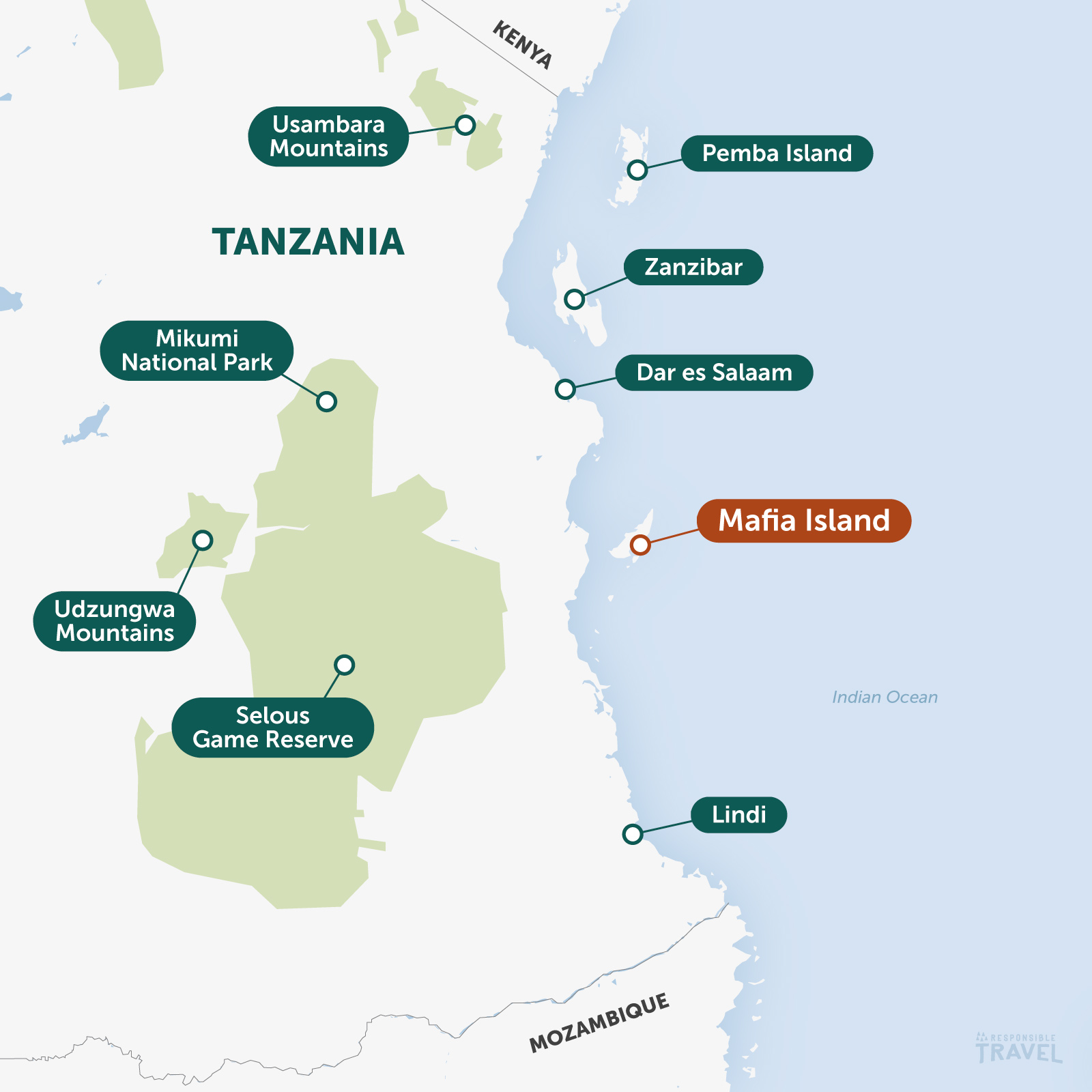
Mafia Archipelago map

Mafia Island Archipelago map

Travellers who visit Mafia Island say it feels like Zanzibar many years ago. It’s peaceful and authentic.

Why visit Mafia Island?

“Travellers who visit Mafia Island say it feels like Zanzibar many years ago,” says Anne. “it’s peaceful and authentic. It’s untouched.”

Lots of people combine safari and beach in Tanzania. Most people head to Zanzibar to do so. Visitor numbers to Zanzibar have nearly doubled in just over five years so that now the island gets close to a million sun-seekers – that’s 200 times more than Mafia Island, though Zanzibar is only five times larger.

Mafia Island is just 50km by 15km and other islands in the archipelago are even smaller. It gets fewer than 5,000 international tourists a year – that means far fewer people around, and can lead to more personal diving and snorkelling experiences in smaller groups than you’ll find elsewhere.

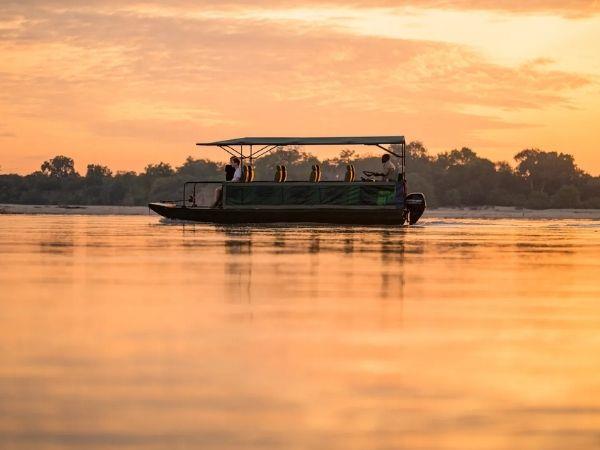
The difference with Zanzibar shows straight away – a tiny Cessna takes you over to the island on the 30-minute flight from Dar es Salaam and you transfer onto dirt roads to get around. Other islands in the archipelago can be reached by dhow – the primary mode of transport for local people too – and you can hop between Mafia, Chole, Joani, Jibondo, as well as a scattering of islets and sandbars.

This is one of the poorest parts of Tanzania and people rely on subsistence farming, fishing and other natural resources. The island used to be a major place for cashew and coconut plantations and you’ll still see their trees. As fishing becomes less reliable, more people have turned to seaweed farming.

Responsible tourism on Mafia Island

Mafia’s residents are dependent on its natural resources, and therefore every effort is made to protect them.

In this environment, responsible holiday practices are welcome, and good tourism projects can make a huge impact. Visiting turtle hatching events supports a local charity, Sea Sense, which also engages the local community in environmental projects, from beach cleans to planting trees.

Your snorkelling and diving expeditions will take place in the Mafia Island Marine Park – and this park’s daily entry fee, paid locally, has a direct effect on its protection. Divers can also visit reef restoration projects.

Chole Mjini Treehouse Lodge is an eco resort on Chole Island and winner of our Responsible Tourism Award in 2014. It was built without a single power tool, using local resources and expertise. Founders Anne and Dr Jean P. de Villiers went on to set up funds for projects including a medical centre, school, a fruit bat sanctuary, and, currently, a coral planting project.

You may notice local people engaged in protecting their island’s natural resources too, from closing the reefs to allow for more sustainable fishing, to planting seedlings for restored forest, to making seaweed soaps and lotions to sell.

Contact Us

Responsible Travel, Travel Team

Call us for a chat about our holidays. We are happy to discuss your holiday and help in any way we can. No bots, queues or awful hold music.

Responsible Travel, Travel Team

Highlights of the Mafia Archipelago

The Kiswahili name for the whale shark is papa shillingi: ‘shark covered in silver coins’.

Diverse diving & snorkelling

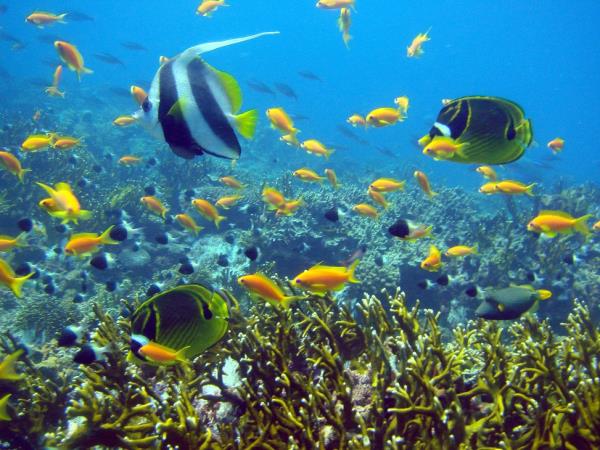
You can dive in the calm and coral-filled waters of Chole Bay all year round, whilst other dive sites are seasonal and best visited October to March – which is also the time with the best visibility. Sites include Nudi City, a reef that’s known for its large numbers of different nudibranchs (colourful sea slugs that aren’t the least bit slug-like when you see them rippling through the water), and Milimani, where divers must navigate through towers of coral to reach a cleaning station for moray eels and reef rays.

Humpback whales & whale sharks

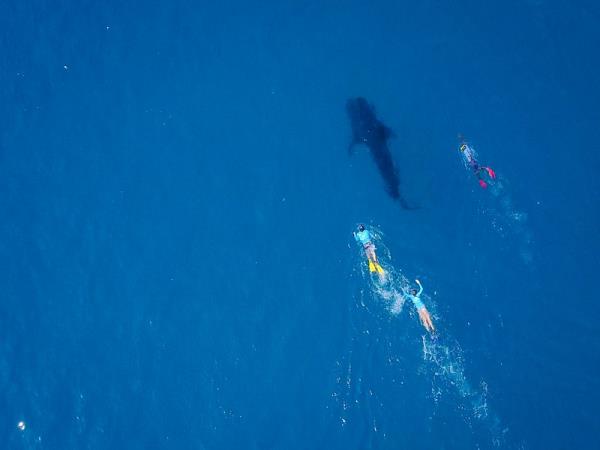
These giants of the ocean take it in turns to dazzle visitors: the humpback whales arrive from August until October whilst whale sharks can generally be seen from November to March, when they come to the surface between the island and the mainland to feed on plankton that has been blown towards the island by the kaskazi – northerly monsoon wind.

You can snorkel with the whale sharks, just make sure you’re using a responsible operator who follows a code of conduct for whale shark encounters. The resident population are a very interesting bunch who’ve been intensely studied. Unlike other whale shark populations, they live here year round, but tend to swim deeper, out of snorkelling reach, in the summer. The Kiswahili name for the whale shark is papa shillingi: ‘shark covered in silver coins’.

Island hopping & Kua ruins

Chole Island was once a centre for boat building, where beautiful dhows, including large jahazi ocean-going vessels, were hand-built from mangrove wood – the practice lives on today, though demand has diminished. Walks on the island take you to the ruins of the 19th-century German-built prison and customs house, and into the village, where you can visit the bat sanctuary.

Among the trees on Joani Island you’ll find the Kua ruins: medieval coral ruins that are the last remains of a medieval Swahili settlement. Today they are slowly being consumed by vegetation.

Watch out for tiny hippos: if you don’t spot these elusive wallowers, don’t despair, Mafia Island’s pretty inland lagoons are great for birdwatching too. Pass through Mlola forest and coconut plantations, and eventually you’ll reach the 19th-century Ras Mkumbi lighthouse, built by German colonisers. From the top, you can see Mafia in all its blue-and-green glory.

Best time to visit Mafia Island

June to August is the peak time to visit Tanzania for safari, and it’s a good time to head to Mafia Island afterwards. You might see hatching turtles at this time – they tend to hatch June to September, or humpback whales, which pass through from August to October. For whale sharks, head over from November to March, when they come to feed on plankton at the surface of the water. Rainy season is from March to June.

In summary

Our holidays tend to spend between three and four days in the Mafia Archipelago. You can’t fly directly to the Mafia Archipelago from international destinations. It’s a short flight from Dar es Salaam, Zanzibar, or Arusha – and luggage limits might be stricter than on your international flight. Prepare for some slow internet, some digital detox, a bit of solar power, and barbecues rather than cordon bleu. Shoes you don’t mind getting wet can be really useful for hopping in and out of boats. You may wish to bring clothing that covers your shoulders and knees, especially when exploring villages.
Written by Eloise Barker
Photo credits: [Page banner: Nina R] [Intro: Jenn] [Diverse diving & snorkelling: BRYNLLD] [Best time to visit Mafia Island: Abdul255]