

Seeing wildlife while kayaking

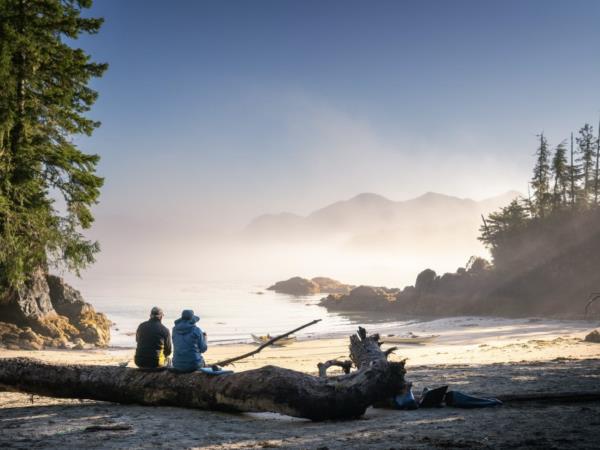
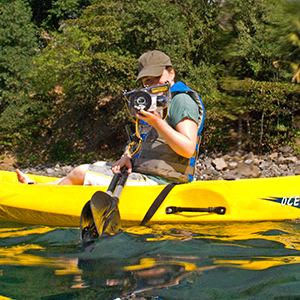
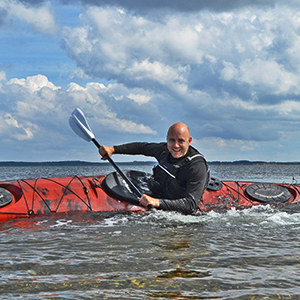
You will, hopefully, get to see a variety of wildlife on your sea kayaking holiday. But it is worth remembering that you are encountering these animals on their territory. Just as we are watching them, they are watching us. It is symbiotic and we need to respect that. The best way to do that is by keeping your distance. From whale watching in British Columbia to seal watching in Pembrokeshire, maintain the peace that you gain while paddling, when you spot wildlife.

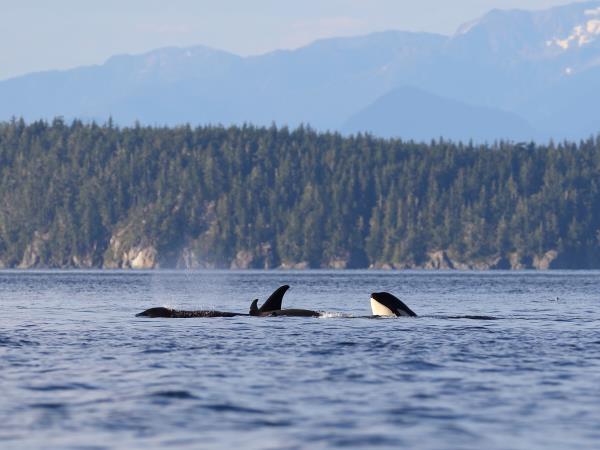
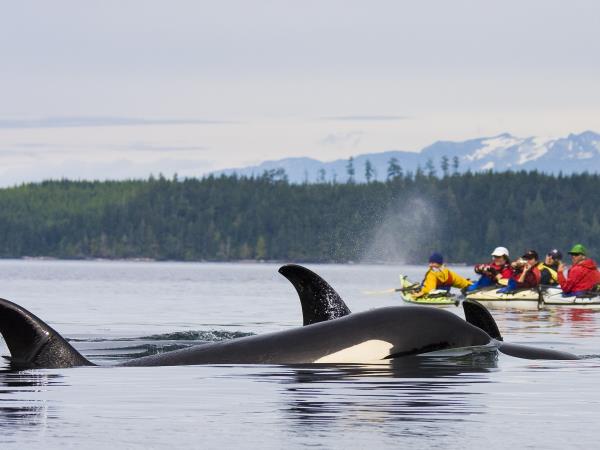
For example, if you are lucky to be sea kayaking around whales, you must keep your distance and never box them in. That goes for all cetaceans. You can learn more about this in our Whale Watching guide. Or if you are bird watching in Pembrokeshire, remember that guillemots and razorbills incubate eggs on their feet. If they are disturbed they fly off ledges in a panic, their eggs being dislodged or destroyed. Seals are generally good friends with kayakers, but you don’t want to mess with a mother and her pups. So don’t land on a beach where they go to pup, and never kayak between a mother and her babe either. And if you creep up on seals or approach them bow on, they may perceive you as a predator. And that is the end of a beautiful friendship.

Whales & dolphins

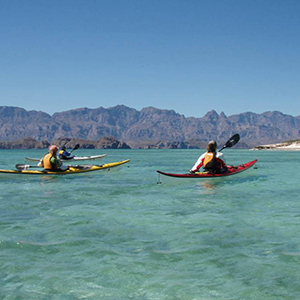
Dozens of islands and islets lie scattered between La Paz and Loreto in the tranquil Sea of Cortez, and one of the best ways to explore the Baja California Peninsula without disturbing the wildlife is by kayak. Sea lions and pelicans are fixtures on land, while dolphins leap offshore. Visit during February and March and you might want to swap craft and board a small boat as this is grey whale watching season. Watching grey whales emerge in sheltered lagoons is an amazingly unique experience. Find out more about responsible whale watching in Baja.

Monkeys, rays & dragons

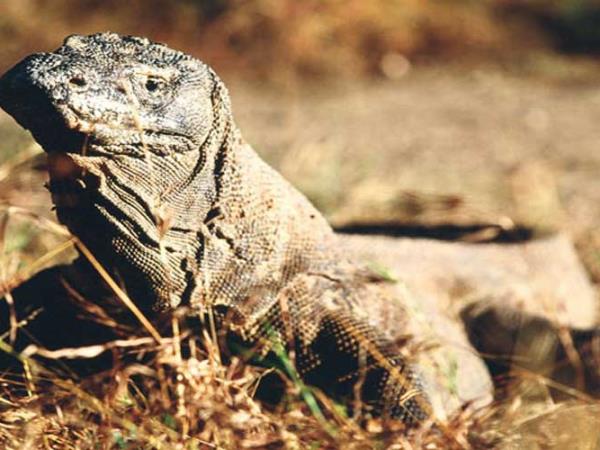
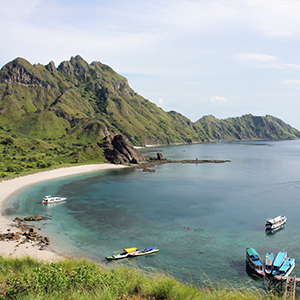
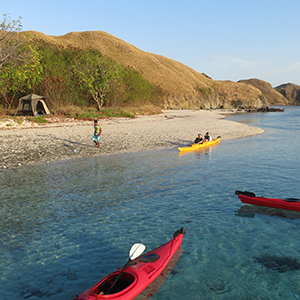
Sea kayaking in Komodo National Park opens up untold animal encounters where buffalo, deer and monkeys turn heads on dry land whilst manta rays and sea turtles glide by at sea. For many it will be the chance to spot a Komodo dragon that will stick longest in the mind however, don't discount the amazing coral reefs off Sebayor Kecil and the mangroves close to Kanawa if you're looking for a really wild sea kayaking experience in Indonesia.

Contact Us

Responsible Travel, Travel Team

Call us for a chat about our holidays. We are happy to discuss your holiday and help in any way we can. No bots, queues or awful hold music.


Responsible Travel, Travel Team

Seals & puffins

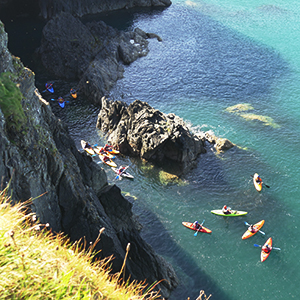
Paddling with seals is quite an amazing feeling and July until October is peak seal time in Wales. It is unusual to go out on the bays of Pembrokeshire at this time and not see a head pop up to say hello. There is a veritable fiesta of sea birds in the spring, such as razorbills and guillemots which live in the Irish Sea all year but come ashore to breed and nest in the cliffs. So kayaking is a great way to see them. Skomer Island is home to thousands of puffins too, but you will need a bit of sea kayaking experience to get out there.

Bears & eagles

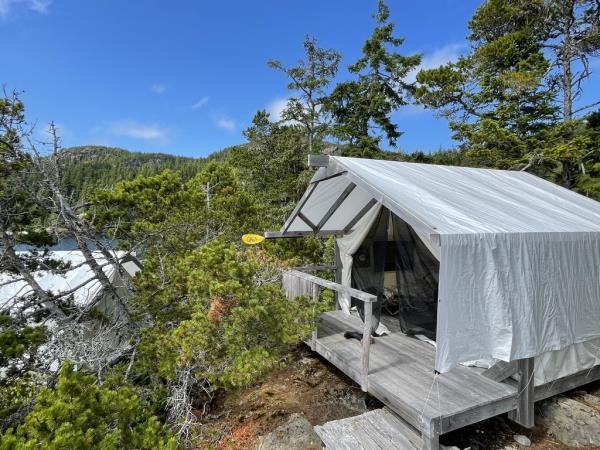
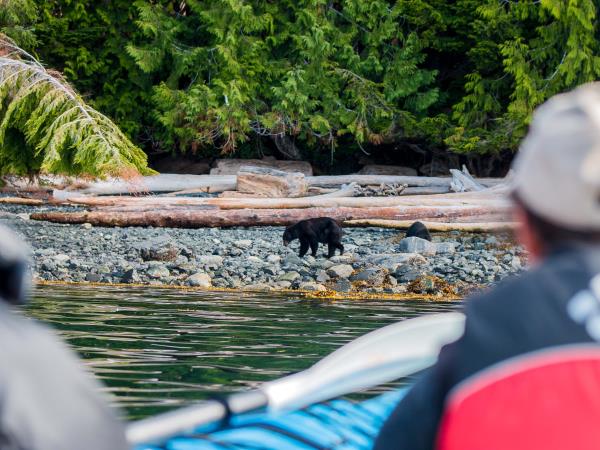
A sea kayaking holiday in British Columbia is like breaking open an exquisite piñata of wildlife. Turn your eye from the mind blowing sightings on the water towards the land, you have the chance to see grizzly bears along the shores, with bald eagles flying overhead. Combine this with wilderness camping for a sea kayaking holiday that feels like it is straight out of a David Attenborough special.
Paul Renfro, Sustainable Recreation Co-ordinator, Pembrokeshire Coastal Forum:
"One of the joys of kayaking on the sea is the freedom to view wildlife in its natural habitat. However kayakers have a responsibility to develop an understanding of the needs of wildlife in order to minimise any negative impact."
See the Pembrokeshire Marine Code for excellent tips on good practice. You can also see an excellent video from The Pembrokeshire Outdoor Charter Group on Sea Kayaking Best Practice.
Our partners ROW Adventures organise kayaking holidays in British Columbia, where wild camping is very much part of the trip: "Kayaking is a minimal-impact activity, and we are certified carbon-neutral in our operations through our carbon-offsetting program to address the use of van transport, and propane for cooking (most meals are cooked with a dutch oven). Since the main other attractions of the tour are hiking and tidepooling, this tour is almost entirely human-powered. This not only gives a more intimate experience with the land, but it doesn't harm the sea creatures we treasure."
Written by Catherine Mack
Photo credits: [Page banner: Aaron Burden] [Intro: PublicDomainPictures] [Whales & dolphins: Jon Spencer] [Seals & puffins: Pascal Mauerhofer] [Wildlife is just that. Wild.: Mike Baird]