Bird photography holidays
On the shore of Mývatn, a volcanic lake in northern Iceland, stands a small, award-winning museum dedicated to a local man by the name of Sigurgeir Stefánsson. A passionate collector of stuffed birds and eggs, Sigurgeir tragically drowned in an accident on the lake in 1999, before he could realise his ambition of displaying his acquisitions to a wider audience. Today the museum is frequently a waypoint on trips organised by our partner Wild Photography Holidays. Founder Geraldine Westrupp lived in the country for a long time and can easily reel off a list of where to photograph birds in Iceland.
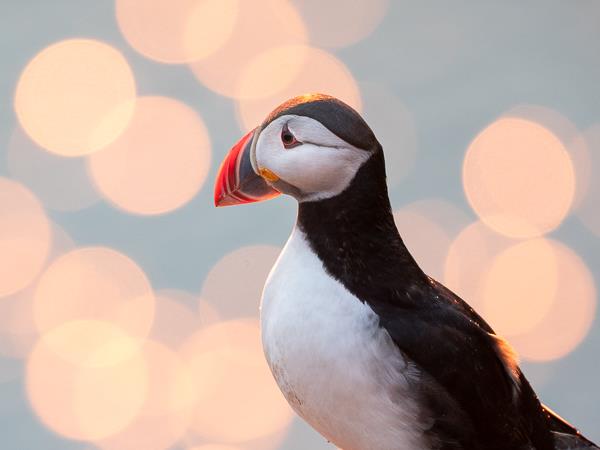
But it is around Mývatn that Geraldine and her partner Martin have traditionally focused their efforts. And now they are looking a little further north, to tiny Grímsey Island, inside the Arctic Circle, and one of the best places in Iceland for puffin photography.
“Photographing birds is actually my passion,” enthuses Geraldine, who has led a thrilling career both as photographer and expert guide. “In Iceland especially, where my partner, Martin, and I lived for years, the good locations are second nature for us, we lived and breathed them. With photography you always want to have back-up locations in case you need them, but in Iceland we have at least twelve. We never get stuck.”
But it is around Mývatn that Geraldine and her partner Martin have traditionally focused their efforts. And now they are looking a little further north, to tiny Grímsey Island, inside the Arctic Circle, and one of the best places in Iceland for puffin photography.
“Photographing birds is actually my passion,” enthuses Geraldine, who has led a thrilling career both as photographer and expert guide. “In Iceland especially, where my partner, Martin, and I lived for years, the good locations are second nature for us, we lived and breathed them. With photography you always want to have back-up locations in case you need them, but in Iceland we have at least twelve. We never get stuck.”

What do bird photography holidays involve?

We find that travellers start to trust our guides very quickly.![]()

Locations
These are fully escorted small group tours, with itineraries based on years of experience but kept very flexible so that you can adapt to changes in the weather. Your tour leader will know a range of locations so that if bird numbers are weak in one area, you simply move on to the next. “We find that travellers start to trust our guides very quickly,” says Geraldine, “and speaking personally, rearranging things on the go is actually one of my favourite aspects of this job.” Mind you, with the amount of local knowledge she and her team have accumulated over the years, it’s rarely that much of a challenge.
When to go
The timing of any photography holiday is crucial, but particularly so when it comes to wildlife. With bird photography tours the breeding seasons are always going to be popular, not only because of the number of species on display, both native and migratory, but also because of the behaviours you’re likely to witness as birds preen for partners, and do battle over nesting territory. Groups split up and wander around for a few hours at a time, rather than gathering at a set viewpoint. Naturally, considerable care is taken to ensure you’re not accidentally disturbing nesting birds or other wildlife.
Group sizes
Groups sizes vary, but expect to be travelling with between five and 11 others, along with at least one guide. The guides, incidentally, are very much a friendly part of the group, ever-present to offer advice on technique, or interesting nuggets of information about the area you’re in.
Accommodation
One of the most common things people want to know before departure, Geraldine notes, is where they will be staying. Small, locally owned hotels will be your accommodation wherever possible, offering comfort and a warm welcome in some remote areas. To access some locations such as cliffside colonies and islands you’ll head out with local fishermen or other boat owners, which provides a useful income in areas that are sometimes struggling economically.
Workshops
In the evenings, and on the occasional day, should bad weather prevent you from getting out and about, guides arrange practical workshops which mean that you’ll return home with some definite progression. This continual development, as well as the easy way groups form friendships, is key, Geraldine believes, to why Wild Photography Holidays see many of their travellers coming back for trip after trip.
What to pack
Every photographer, from the amateur to the pro, has their own preferred kit. There are no set equipment requirements for a bird photography holiday – tutors are as happy to work with someone wielding a smartphone as they are someone with an expensive camera rig. Before departure you’ll be given a list of must-packs, often clothing-related, as well as suggested kit you might want to consider.
Private bird watching and photography tour, Romania
An incredible Danube Delta experience
From
€645 to €796
5 days
ex flights
Iceland photography tour, puffins in the Arctic Circle
Puffins and other seabirds under Iceland's midnight sun
From
£4200
8 days
ex flights
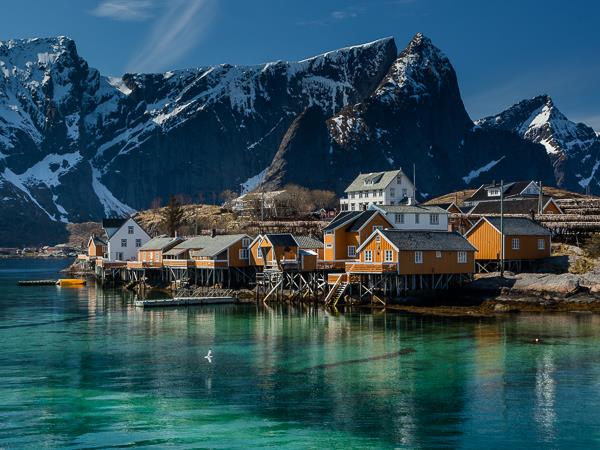
Lofoten Islands summer photography holiday, Norway
Midnight Sun photography in Norway's lovely Lofoten islands
From
£4350
9 days
ex flights


Contact Us
Call us for a chat about our holidays. We are happy to discuss your holiday and help in any way we can. No bots, queues or awful hold music.

01273 823 700
Call us Monday after 9am
Calling from outside the UK

Bird photography in Iceland
In Iceland the good locations are second nature for us.![]()
Late May is the perfect time for bird photography in Iceland when the birdlife is at its most active. Migrant species abound, nesting and squabbling over territory. Around this time of year you can find more species of duck in Mývatn than anywhere else in the world. Harlequin ducks, Barrow’s goldeneyes, common scoters, and Eurasian wigeons are likely characters to be spotted against the soft ambience of the midnight sun, as you perch in well-placed hides.
Other Iceland birds you may encounter include great skuas, snow buntings and – if you’re lucky – gyrfalcons. As for spotting the latter, much depends on the strength of the ptarmigan population, the falcons’ main prey. It’s a similar story with puffins, says Geraldine: “If there are no sand eels, which they feed their young on, they will move on or die out. They’ve disappeared from a couple of places such as West Iceland, although thankfully they remain prolific in other areas.”
Other Iceland birds you may encounter include great skuas, snow buntings and – if you’re lucky – gyrfalcons. As for spotting the latter, much depends on the strength of the ptarmigan population, the falcons’ main prey. It’s a similar story with puffins, says Geraldine: “If there are no sand eels, which they feed their young on, they will move on or die out. They’ve disappeared from a couple of places such as West Iceland, although thankfully they remain prolific in other areas.”
One of the biggest difficulties we face with bird photography is finding certain species. We’re losing them, sadly.![]()
Off to the west of Mývatn is the Svarfaðardalur Nature Reserve, which was the first wetland area to be granted protection in Iceland. Just walking the paths here (your guides will ensure no-one mistakenly strays into fragile habitat) reveals a range of waterfowl and waders, while from a hide on the bank of Lake Hrísatjörn you may see whooper swans and Slavonian grebes.
In the nearby Eyjafjörður, one of the longest fjords in Iceland, the island of Hrísey is another treasure trove of birdlife. Hunting and egg-gathering is banned here, and there are no natural predators either, so bird colonies are usually crowded. That’s not the case everywhere, though, frowns Geraldine. “One of the biggest difficulties we face with bird photography is finding certain species. We’re losing them, sadly.” Avian flu is a significant factor – it can decimate a colony in weeks – but extreme weather also kills birds – unseasonably intense cold, or higher waves, can be deadly. It’s a situation that will worsen as the climate warms.
In the nearby Eyjafjörður, one of the longest fjords in Iceland, the island of Hrísey is another treasure trove of birdlife. Hunting and egg-gathering is banned here, and there are no natural predators either, so bird colonies are usually crowded. That’s not the case everywhere, though, frowns Geraldine. “One of the biggest difficulties we face with bird photography is finding certain species. We’re losing them, sadly.” Avian flu is a significant factor – it can decimate a colony in weeks – but extreme weather also kills birds – unseasonably intense cold, or higher waves, can be deadly. It’s a situation that will worsen as the climate warms.
There’s a real feeling of magic in the air as you head out in the midnight sun to photograph birds against these majestic landscapes.![]()
Over to Grímsey
Geraldine and Wild Photography Holidays now extend their Iceland trips beyond the Mývatn area into the Arctic Circle region. Grímsey Island, just five square kilometres in size and home to only sixty permanent residents, is one of the best locations in Iceland for photographing puffins, as well as a wealth of seabirds from razorbills and kittiwakes to oystercatchers, sandpipers, wagtails and Arctic terns. There’s a real feeling of magic in the air as you head out into the midnight sun to photograph birds against these majestic landscapes, while most people are tucked up in bed.
You’ll stay in a hotel close to the cliffs where puffins burrow and a host of seabirds keep up a constant cacophony. In the harbour guillemots nest and fish, and you can also photograph the fishing boats coming in, perhaps even witnessing an egg collector going about their business. For the wildlife photographer Grímsey Island is a little slice of paradise – one that your expert tutor-guides will help you capture against a range of lights and dramatic backdrops.
You’ll stay in a hotel close to the cliffs where puffins burrow and a host of seabirds keep up a constant cacophony. In the harbour guillemots nest and fish, and you can also photograph the fishing boats coming in, perhaps even witnessing an egg collector going about their business. For the wildlife photographer Grímsey Island is a little slice of paradise – one that your expert tutor-guides will help you capture against a range of lights and dramatic backdrops.
Bird photography in Norway
Varanger Peninsula
Norway’s remote Varanger Peninsula, bordering Russia and Finland, is another exceptional place for puffin photography. Groups will often stay in the Arctic town of Vardø, whose main cliff, Fugleflåget, is home to raucous colonies of kittiwakes, black guillemots, razorbills and cormorants. You’ll often see Atlantic puffins here too along with European shags and Brünnich’s guillemots.
A riot of movement, noise and smell that will prove highly memorable.![]()
Offshore lies the island of Hornøya with its historic wooden lighthouse. Up to 150,000 seabirds including herring and black-backed gulls can be found here, and as you can imagine it’s a riot of movement, noise and smell that will prove highly memorable. Expect to capture numerous interactions framed against a snowy Arctic landscape – photography tours on the Varanger Peninsula typically take place in February, and subzero temperatures are likely, so hand warmers are a useful item to pack.
Besides exploring the moodily atmospheric Vardø and taking a thrilling snowmobile ride, other bird photography opportunities in the area can be had in the picturesque fishing village of Båtsfjord. Here you’ll spend some time occupying floating hides built on rafts in the harbour for fantastic low-level photography, and take boat trips around the coast in the hope of catching birds in flight.
Besides exploring the moodily atmospheric Vardø and taking a thrilling snowmobile ride, other bird photography opportunities in the area can be had in the picturesque fishing village of Båtsfjord. Here you’ll spend some time occupying floating hides built on rafts in the harbour for fantastic low-level photography, and take boat trips around the coast in the hope of catching birds in flight.
The beauty is that we don’t need to try too hard. It all happens organically.![]()
Lofoten Islands
Photography trips to the Lofoten Islands, off Norway’s northwest coast and within the Arctic Circle, usually depart during May and June, when your images will be bathed in gorgeous summer light. It’s not just stunning colours in the landscapes that you can expect here though, but a sensational breadth of birdlife – not to mention the occasional whale off the coast.
Daily excursions take you to reliable locations including Lake Solbjørnvatnet, where black-throated divers are often seen; the delightfully named Trollfjorden where you can photograph sea eagles at close quarters, and the pretty fishing village of Hamnøy. Here the nasal calls of kittiwakes can be heard echoing deafeningly from a split in the cliff. Depending on sea conditions you might also take a RIB (rigid inflatable boat) around the archipelago’s southern tip to enjoy sterling views of a gannet colony.
“We focus on the bird in the landscape as they’re intrinsically linked,” says Geraldine. “The scenery is fantastic of course, so landscape photographers are perfectly happy, but our priority is birds. When we’re in Lofoten we get sea eagles, gannets, cormorants, and the beauty is that we don’t need to try too hard. It all happens organically.”
Daily excursions take you to reliable locations including Lake Solbjørnvatnet, where black-throated divers are often seen; the delightfully named Trollfjorden where you can photograph sea eagles at close quarters, and the pretty fishing village of Hamnøy. Here the nasal calls of kittiwakes can be heard echoing deafeningly from a split in the cliff. Depending on sea conditions you might also take a RIB (rigid inflatable boat) around the archipelago’s southern tip to enjoy sterling views of a gannet colony.
“We focus on the bird in the landscape as they’re intrinsically linked,” says Geraldine. “The scenery is fantastic of course, so landscape photographers are perfectly happy, but our priority is birds. When we’re in Lofoten we get sea eagles, gannets, cormorants, and the beauty is that we don’t need to try too hard. It all happens organically.”
More Wildlife photography articles
Gorillas in the mist, wolverines in the snow, bears in the stream snatching up salmon...
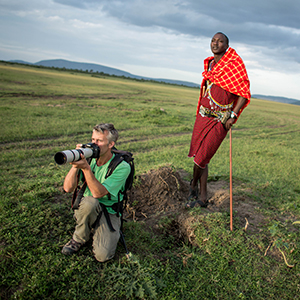
Alaska, India, Uganda, the Antarctic - you’re spoilt for choice.
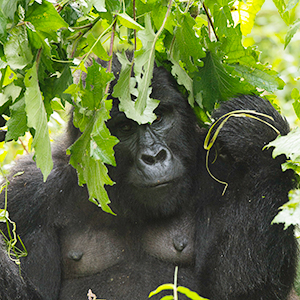
Getting up close with these incredible apes is an unforgettable experience.
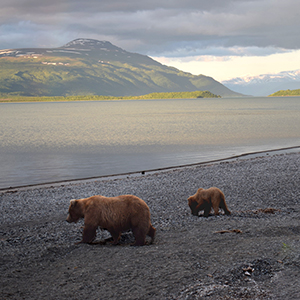
Holiday in a raw, volcanic wilderness, honing your skills with help from an expert.
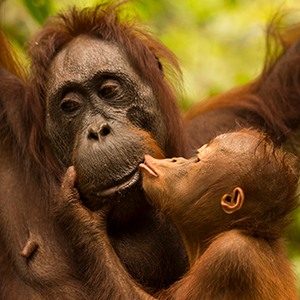
Capture spectacular, up-close footage of these charismatic apes and their forest homes.
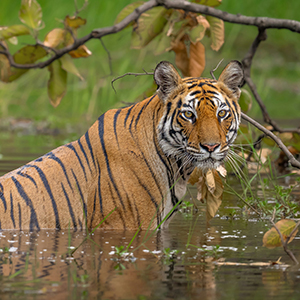
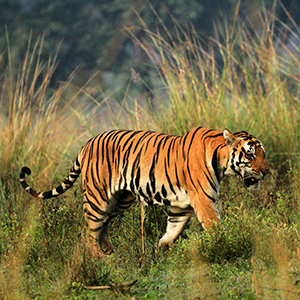
Learn about tiger photography in India, find out how see these amazing animals and do them justice in your photographs.