Cycling & wine tasting holidays

Move over, cheese platter, there’s no better pairing than cycling and wine tasting.

Cycling and wine tasting is a dangerous pairing, not least for the ever-present temptation to stop for an extra-long lunch. But wine country makes for great cycling country, whether you enjoy a tipple or not.

Like vines, cyclists benefit from rolling landscapes, reliable sunny weather, and the cooling influence of a river valley. The special relationship goes further: many of the world’s top wine producing countries are investing heavily in cycling infrastructure. France has invested billions in cycle tourism, whilst EuroVelo routes take in some of Europe’s best wine regions via traffic-free greenways.

Wine landscapes have been shaped by human hands for centuries and have the old paths and roads to show for it – many of which are well-adapted for cycle tours. In fact, name a famous wine region, and we’ll show you a cycle route through it.

Contact Us

Responsible Travel, Travel Team

Call us for a chat about our holidays. We are happy to discuss your holiday and help in any way we can. No bots, queues or awful hold music.

Responsible Travel, Travel Team

Hiccup-free trips

Take the Douro Valley, where you can go on our cycling and wine tasting holiday. “The valley has been cultivated and terraced over thousands of years, creating sweeping views and well-defined routes that suit a range of cycling abilities,” explains Carlos Santos from our cycling experts Portugal A2Z. Winelands are often long-established areas. Routes through them are well-trod, but they’re also very peaceful.

“They say wine production is eleven-and-a-half months of boredom, and then two weeks of 24-hour harvesting!” Mark Abela, from our partner Cycle Catalan, runs our foodie wine region cycling holidays through the Baix Emporda, a winegrowing area in the Girona region of Catalonia. These trips stick to the quiet roads and paths between small family-owned businesses, with plenty of chances to stop for tastings and tours. “It’s so quiet… on a three-hour ride you don’t see a car all day,” says Mark.

Diversifying the wine regions

The historic settings associated with wine production – monasteries, medieval towns, and country estates – seem timeless, but the industry is going through change. Once, grapes would have been hand harvested by itinerant labourers. In winter, the grass below the dormant vines might have been grazed by livestock brought down from the hills. But the livestock and the hand harvesting are all but gone. Now vines are increasingly likely to be picked in a hurry, by machines at night, to keep the grapes as cool as possible in an age of increasingly warm summers.

Wine tourism helps vineyards diversify their incomes. Climate change is affecting harvests, making some of the world’s best-known regions quake for the state of their grapes. Wine tourism – where visitors come to tour vineyards (where grapes are grown) and wineries (where wine is made), enjoy their settings, have lunch, or pay for an overnight stay – adds a much-needed income stream to the barrel. Wine producers love tourists – as you can see from the proliferation of ‘wine routes’ that you’ll find in famous wine regions.

Cycling tourists are an important part of wine region’s economy, as they travel thoroughly and spend money across the regions. “We definitely supported local restaurants and we navigated the entire trip by train,” says Jeff Burroughs, who travelled on our Burgundy self guided cycling tour.

The joy of small producers

Over in the Douro Valley, we prioritise family-owned wineries near the cycling routes rather than the larger, more commercial wineries who get plenty of tour groups. “Cyclists can engage with the vintners, hear their family histories, and appreciate the effort and skill behind every glass,” explains Carlos.

Jo Cooke, managing editor at Responsible Travel, sets out the benefits of visiting small wineries by bike (and the pitfalls of not fitting enough panniers): “Cycling is a great way to visit smaller producers and avoid the tour groups,” she says. “The tastings were informal and really social. We did get a little carried away though, carrying the purchased bottles home on the bike was a challenge!” Carrying bottles back is so common a problem that some of our partners offer a free wine transporting service, picking up your bottles for you, and keeping them safe until you're ready to fly them home.

Sharing the space

In general, cars are very careful around cyclists in wine regions. Take Girona, Catalonia. Known as a road cycling hub, you may even bump into Tour de France cyclists out on the local routes, riding for pleasure. “Everybody’s very considerate to cyclists here – not like in England,” says Mark, who moved to the region from the UK. “They will sit behind you on a climb. I’ve had it where they’ll sit behind me for 15 minutes before they overtake.”

Great gastronomy

Picnics among the vines, lunch on the terrace, dinner in a family-run hotel: wine lovers like their food.

“We’ve had a couple of real foodies come out here – including a few food bloggers,” says Mark. “They don’t think they’ve been anywhere as good as here.” The secret is provenance. “You see ‘zero kilometres’ mentioned everywhere here. It’s all about knowing the provenance of the food – down to the owner of the pig.” In Italy, our cycling specialists Itinera Bike prioritise organic farms, preferably those that are family-run, whilst the city of Bordeaux, France has food markets and a fun ‘bistronomy’ dining culture, where fine dishes are served in a relaxed bistro atmosphere.

Travelling by bike, lunches are often picnics – or you could have a lazy menu du jour or menu del dia, propping up your bike outside a local eatery, where they’re as formal about food as they are informal about how you arrive. “If you turn up in cycle gear they don’t worry,” says Shelley Abela from Cycle Catalan. “They’re relaxed.”

Where to go cycling & wine tasting

Italy

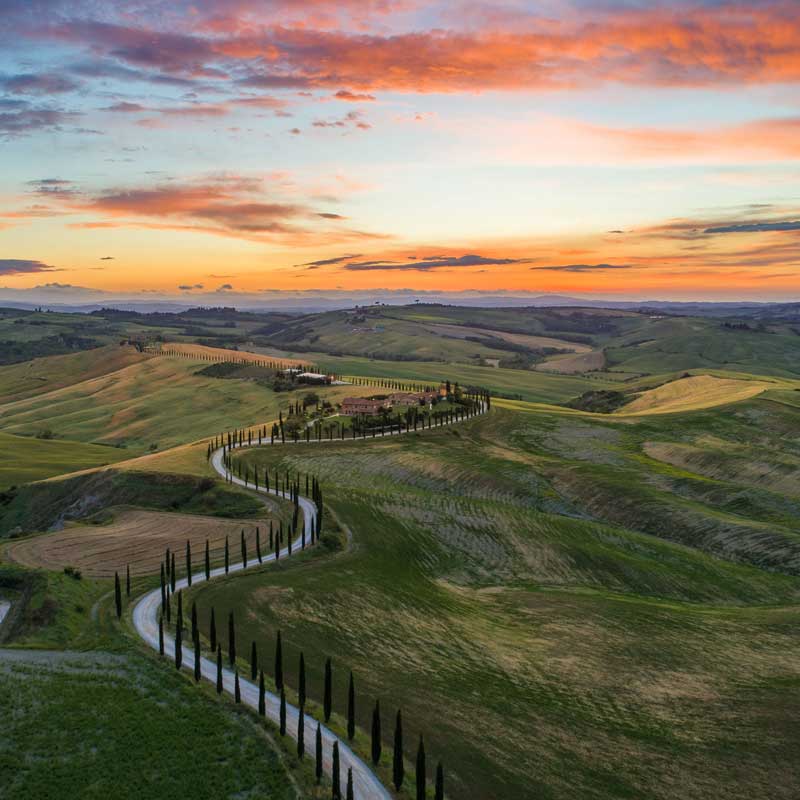
Whilst Italy’s mountains present a challenge for cyclists, looking to its wine regions can clue you in to more rolling routes – like the Caldaro wine region below the Dolomites, or the Veronese wines found around the city of Verona. Tuscany is famous for its Chianti and its undulating landscapes crowned by hilltop towns; neighbouring Umbria has lots of smaller producers, even quieter hillsides, pretty farmland, and white wines to answer to Tuscany’s robust reds.

Croatia

The Istrian Peninsula, shared between Italy, Slovenia and the lion’s share going to Croatia, grows plenty of grapes. Stop in on local konobas (local restaurants) for truffly pasta dishes and glasses of locally produced wine, between days on the ‘wine railway’ – a former railway line converted into a car-free cycle path that connects the area’s vineyards and medieval towns.

Spain

Spain has more land given over to grape growing than anywhere else in the world, from Rioja in the north, to Jerez in the sunny south of Andalucia, from cava to the lesser-known wines produced in the Canaries. Catalonia is the birthplace of cava; it is also fantastic for cycling, and you can enjoy supremely sunny climes, gentle climbs, and hills of vines along the way.

Portugal

Grapes have been grown in Portugal’s Douro Valley since Roman times, and the terraced hills along the banks of the River Douro are testament to humans conquering geography. You’ll find port-producing quintas quenched by the cooling influence of the river, where you can enjoy tours and tastings accompanied by remarkable views of the steep terracing all around.

France

Where to start? There’s the Champagne region, or the Cote du Rhone, there’s Bordeaux and neighbour/rival Burgundy. There’s Provence, where the pale light and sun-drenched towns pair perfectly with the petal-pale rose wines in production, or the Alsace – where the German border brings a cuisine less encountered and roads less travelled. Pair these with some of the best cycle infrastructure in Europe and a food culture that prizes the local and seasonal.

South Africa

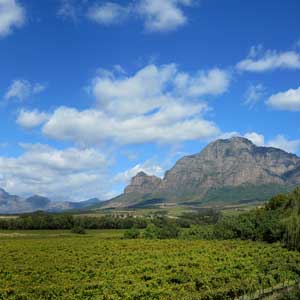
You’ll find most of South Africa’s excellent wine grown in its Western Cape. This includes Constantia, a suburb of Cape Town, one of the oldest wine producers in the southern hemisphere, as well as the Cape Winelands formed by the Stellenbosch, Paarl and Franschhoek valleys. The landscapes of veld and valley are beautiful and the hotels usually come with pools.

When to go

“In spring it is fantastic – the smell of the jasmine, the wildflowers on the side of the road, then the poppies appear. Then in summer crops start growing – in July and August you get fields of sunflowers. Then it’s the August heat; we don’t do holidays then as it’s too hot and busy.”

Shelley describes the delights of the seasons in Catalonia, but the story is the same across lots of European wine country: delightful springs and early summers, and hotter Augusts. In Europe, most cycling tours wrap up in October; some end earlier in September. Also note that some vineyards close to visitors during their vital harvest weeks.

What do cycling & wine tasting holidays involve?

How fit do I need to be?

Our partner Cycling for Softies offer tours of wine regions that are firmly in what they call ‘the slow lane’. In the Loire region, for example, the route is made as flat as possible by broadly following the river. Trails can be explored at your own pace, with plenty of stops.

But some regions are hillier. Some of the prettiest wine towns are in dramatic situations. Reaching the town of Hautvilliers, which looks down over broad swathes of Champagne country, involves an uphill climb, as do the Tuscan hill towns in the Chianti wine region, and the pretty hill towns that crouch on summits across the Istrian Peninsula in Croatia. Provence is hillier, too – and some trips include the option of scaling massive Mount Ventoux, too.

The cycling is generally graded easy to moderate, but you’ll get the most out of these trips if you know you’re comfortable spending time on a bike for multiple days in a row. A couple of practice rides before your trip can reassure you.

Small group or tailor made?

Tailor made, self guided trips suit the relaxed and explorative nature of spending time in the winelands. “The self guided approach allows travellers to interact directly with local communities, contributing to the region’s economy in a meaningful way,” says Carlos.

If you think self-guiding after an indulgent lunch sounds like a recipe for disaster, know that route mapping has come a long way. “Traditionally, paper-based maps meant that once you’d gone off route you’d gone off route,” says Mark. “I’ve been lost for hours – all of that time within a mile of where I’ve needed to be.” Nowadays, he, alongside many of our partners, uses very good GPS-based navigational applications that make it hard to put a foot wrong.

If you fancy a bit more structure, and a ready-made group of companions with whom to compare tasting notes, you can join our small group trips.

Centre based or point to point?

Many wine regions are large and situated in wider areas of great beauty, so it makes sense to go point to point. Our partners will transport your luggage between hotels so you just need to bring what you need for the day. You can choose centre based tours in some areas, such as the Loire Valley. These are usually suitable if you’re having a shorter break.

Can I hire an e-bike?

“We think 50 percent of our holidays are with e-bikes now,” says Mark. They bought a fleet of their own and haven’t looked back. “It was such a good move. We used to hire them in. The year before last we bought six and then expanded to 15.”

More and more of us are embracing cycling further, or getting back in the saddle with more confidence thanks to an e-bike, and cycling and wine tasting holidays are the perfect place to put these modern marvels through their paces.
Written by Eloise Barker
Photo credits: [Page banner: Tristan Schmurr] [Intro: Turismo Baquia] [The joy of small producers: mat's eye] [Croatia: Joanna Penn]