Mera Peak trekking holiday, Nepal


Description of Mera Peak trekking holiday, Nepal
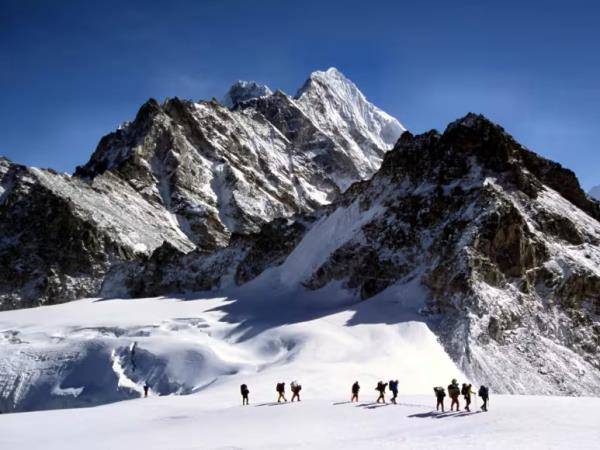
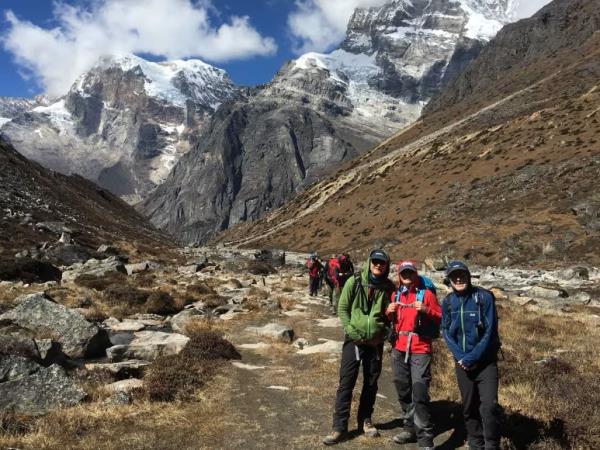
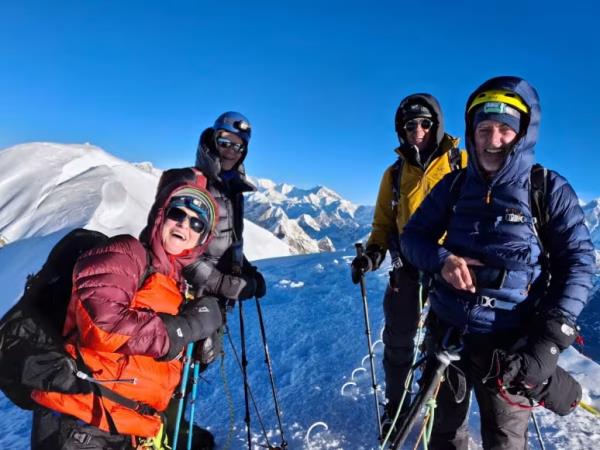
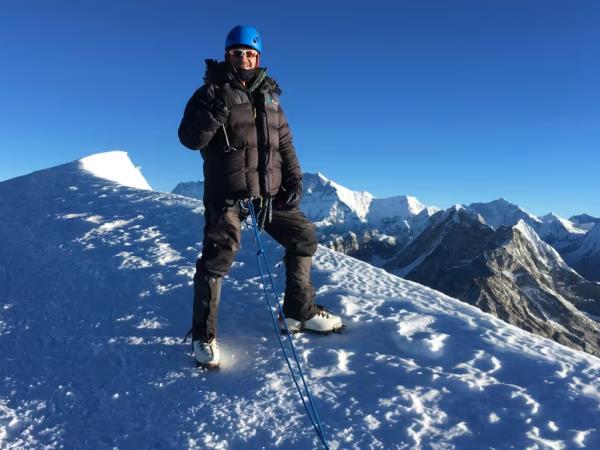
Test yourself against Mera Peak, the highest trekking peak in Nepal at 21,246ft (6,476m). Though tough, the ascent is a non-technical climb, which anyone with ice axe and crampon experience can attempt. With the help of our expert guides and porters, built-in acclimitisation and contingency days, and plenty of willpower, you can reach the summit of this beautiful Himalayan peak. The reward is a view over five of the six highest mountains in the world: Everest, Kanchenjunga, Lhotse, Makalu and Cho Oyu.
Why trek with us?
-One of the highest staff-to-trekker ratios on the trek with one staff member to every three trekkers
-More than 30 years’ experience running treks in Nepal
-Carefully planned ascent rates and itineraries with built-in acclimatisation and contingency days
-We beat the Everest crowds by rising early, avoiding foot traffic on the trails and getting into the next teahouse early for hot showers
-Established protocol for Lukla flight delays
-We annually commissions independent air-safety audits on domestic carriers in Nepal and only use those approved as part of the audit
-Experienced English-speaking local tour leaders who are qualified in first aid and trained to spot and deal with altitude sickness
-All staff (tour leaders, guides and porters) are fully insured and paid a fair wage
-Staff carry oxygen, a first-aid kit, and self-assessment acute mountain sickness cards, used to monitor every trekker at altitude
-Speak to staff who have done the trek themselves
Itinerary
| Day 1: | Begin your adventure at the Royal Singi Hotel in Kathmandu, the start point for many Himalayan trekkers over the years. Around 6pm, bid namaste to your tour leader and fellow travellers, when we gather as a group for the first time to get to know each other and learn more about the adventures ahead during a full trek briefing. Your leader will brief you on key safety points for the trek and carry out equipment checks to ensure everyone is traveling with the appropriate gear required for the summit. Please bring your climbing/summit equipment as well as your insurance details and two passport-size photographs for the climbing permits to this briefing. Your tour leader then ensures a big Nepalese welcome by arranging an optional group dinner (which is included for all in 2026). Want to explore Kathmandu further? Secure pre-tour hotel nights through your sales representative. Accommodation: Hotel Royal Singi (or similar) |
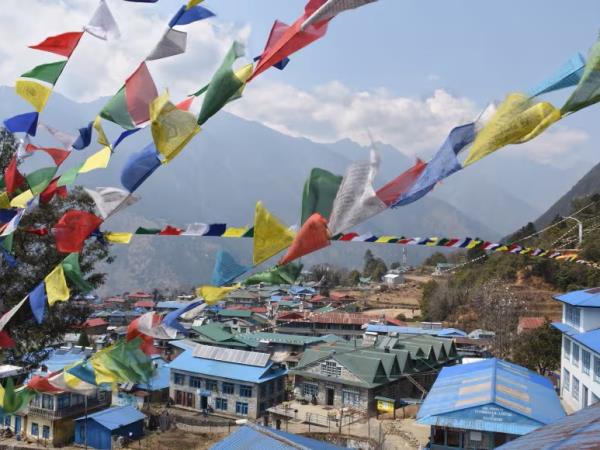
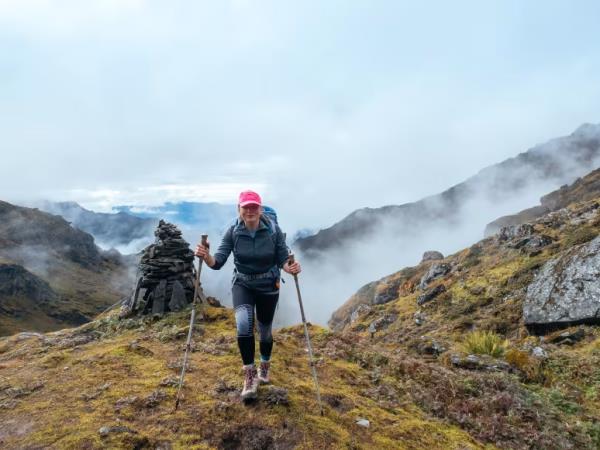
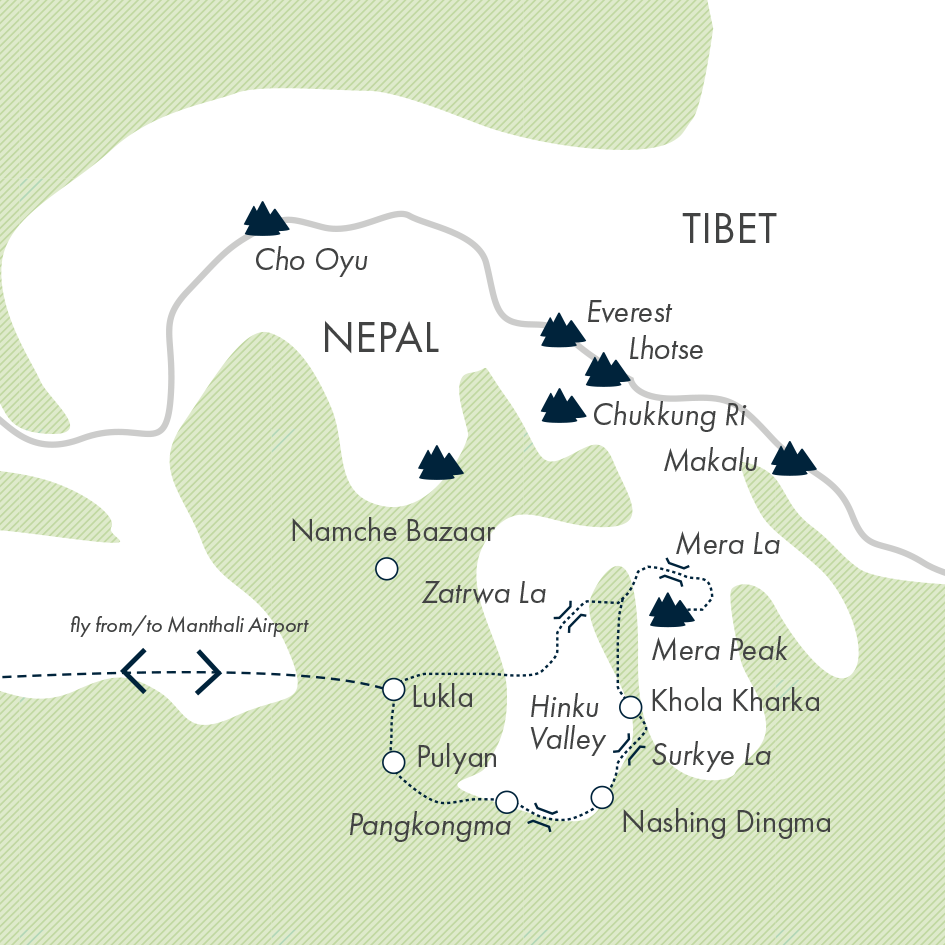
| Day 2: | Leave our hotel at approximately 3am to drive (approximately four hours) to Manthali Airport. Here, we catch our spectacular flight to Lukla, the gateway to the Khumbu region and the start point for the popular trail towards Everest. It is a busy village with lodges, equipment and supply shops. We start our trek heading south with a steep descent to the small town of Surke. From here, we have a steep climb up to the Chutok La pass from where we contour into a side valley to Piuyan. Accommodation: Teahouse (altitude: 9,121ft/2,780m) |
| Day 3: | This morning, we climb eastwards, steeply at first, on a trail that winds steadily upwards over the Khari La pass (10,000ft/3,050m) and through terraced farmland towards the small trading village of Pangkongma. Looking back, we get good views of Numbur and Karyolung mountains. Accommodation: Teahouse (altitude: 9,350ft/2,850m) |
| Day 4: | Climb steeply through a forest of bamboo and rhododendron with views looking back to Numbur and Kongde peaks to the Pangkongma La pass (10,400ft/3,170m). From the top, we can see Naulekh peak and, just below the pass, we catch our first views of Mera’s impressive south face. It’s a long, steep descent to the bottom of the valley, with views south over the hills of the lower Himalaya. We have lunch in a small lodge just above the river; after, we cross the Hinku Khola river using a suspension bridge and have a two-hour climb up the east side of the valley to Nashing Dingma. Accommodation: Teahouse (sleeping altitude: 9,721ft/2,963m) |
| Day 5: | We continue hiking the ups and downs that distinguish this first part of the trek. The trail becomes steeper as we climb to the Surke La, a pass that gives us a taste of the altitude yet to come. We’ll need a cup of tea to catch our breath in one of the teahouses just over the pass, before continuing our climb up to the summer grazing land of Chholem Kharka. We should arrive for a late lunch; in the afternoon, the energetic can hike up onto the ridges surrounding Chholem. Accommodation: Teahouse (sleeping altitude: 11,810ft/3,600m) |
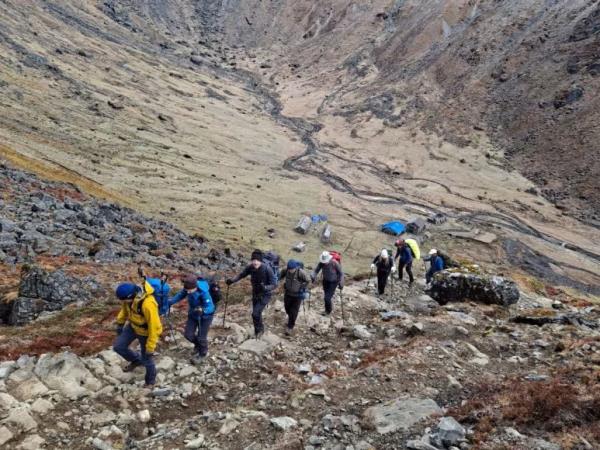
| Day 6: | Trek up above the tree line this morning and approach wilder country, where the Sherpa communities only herd their animals in summer. It’s quite a hard day today with steep climbs and several ridges to cross. We ascend on stone steps all the way to the first col at 14,100ft (4,300m) and then further up to a second col at 14,665ft (4,470m). On a clear day, we get a stunning view of Kanchenjunga and its pointed neighbour Jannu far away to the east in India. From the second col, we descend to the holy lakes at Panch Pokhari. Our teahouse in Khola Kharka is a short way past the lakes. Accommodation: Teahouse (sleeping altitude: 14,010ft/4,270m) |
| Day 7: | There are no lodges en route today, so we have a long morning and late lunch – take snacks and plenty of water. From Khola Kharka, we have a steep climb up stone steps for 30 minutes to prayer flags. Just around the corner, we get great views across to Numbur, Pikey Peak and the Lamjura Pass. The route contours around the hillside and then descends very steeply to the Mojang Khola. We cross the river and descend even further to the Hinku Khola river. A rolling trail brings us to a bridge across the roaring Hinku Khola and into Kote. We have a late lunch at the lodge and there is time in the afternoon to explore the village. Accommodation: Teahouse (sleeping altitude: 11,810ft/3,600m) |
| Day 8: | We have a wonderful hike today following the Hinku Khola on a rocky trail upstream, crossing several landslide areas. Just after leaving Kote, we can see the three peaks of Mera. As we ascend the valley, Kyashar peak appears ahead followed by Kusum Kanguru and East Peak. We stop for a cup of tea at Saure and reach Tangnag for a late lunch. We stay in Tangnag for the next two nights. We are now in a deep valley created by the towering walls of Kyashar, Kusum Kanguru and East Peak. Accommodation: Teahouse (sleeping altitude: 14,272ft/4,350m) |
| Day 9: | We spend the day acclimatising to the altitude. There is a hike this morning to the top of a ridge south of Tangnag. We hike to approximately 16,400ft (5,000m) and should have great views of Kusum Kanguru, Kyashar, East Peak and the Mera La pass. We return to camp for lunch and rest in the afternoon. Accommodation: Teahouse (sleeping altitude: 14,110ft/4,300m) |
| Day 10: | It’s a short day with approximately three to four hours of ascent past Dig Kharka to Khare, the Mera Peak base camp. The trail climbs steeply out of Tangnag to some prayer flags overlooking the glacier tumbling down from Kyashar. The trail gets easier as we climb up the valley past Dig Kharka and then there is a last steeper climb to the lodges at Khare. We have lunch in Khare and a free afternoon. We get great views of Mera, Charpati Himal, Kyashar and other Himalayan giants. Accommodation: Teahouse (sleeping altitude: 16,404ft/5,000m) |
| Day 11: | We have an acclimatisation day at Khare and there is a chance to hike up onto the glacier towards the Mera La pass, where we practice our ice axe, crampon and rope technique, and use of jumar. There is a full equipment check at Khare. Please note: Equipment checks and practice sessions are compulsory before the climb. Accommodation: Teahouse (sleeping altitude: 16,404ft/5,000m) |
| Day 12: | We have a short but hard hike up to the Mera La pass for our acclimatisation training today. The trail climbs steeply out of Khare on a rocky trail with great views ahead to the peaks of Mera and Khare. Continuing up, the trail gets steeper. There may be snow, and we need crampons and helmets as we climb the very steep rocky gully onto the glacier. On the glacier, the gradient eases off and we follow it up to the Mera La. After a short rest, we descend back to lodge at Khare base camp for the night. Accommodation: Teahouse (sleeping altitude: 16,404ft/5,000m) |
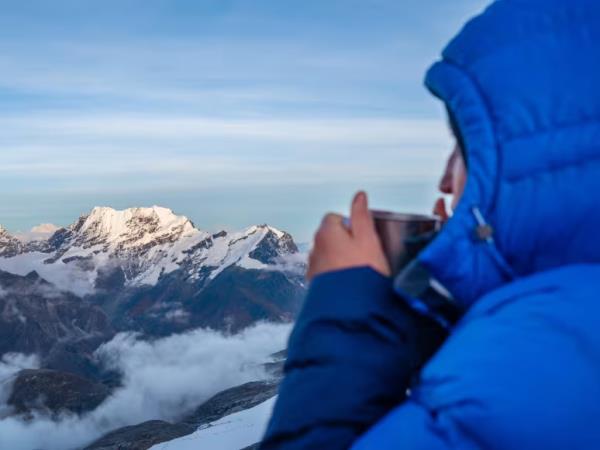
| Day 13: | Today we trek to High Camp. Retracing the first part of yesterdays practice route, we pass through the Mera La, a very cold and windy spot. The trail is not so steep from here, and it continues up the glacier to High Camp, a small, busy campsite. From camp, it is possible to see five of the six highest mountains on earth, stretching from Kanchenjunga in the east through Makalu, Lhotse and Everest to Cho Oyu in the west. There is a final gear check this afternoon and we prepare our clothes ready for tomorrow. After sunset (look out for the last orange glow on the summit of Makalu), we retire to our sleeping bags to rest before the summit attempt tomorrow. Please note: High Camp is extremely cold and basic, with camping space very limited. Due to the conditions, meals and briefings are delivered by the guides on a tent-to-tent basis. Accommodation: Full-service camping (sleeping altitude: 19,030ft/5,800m) |
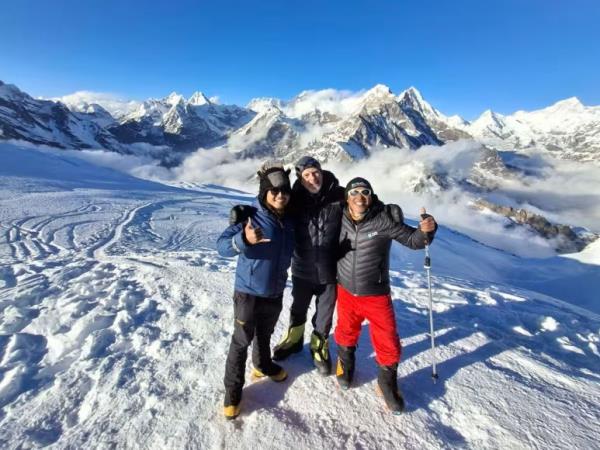
| Day 14: | We have a very early (and usually very cold) start – around 2am or earlier. We set off roped up in teams. You need to carry your ice axe and wear crampons as we ascend the wide, open glacier, avoiding the few crevasses. The terrain here is not very steep, but the going is very slow due to the altitude, and it can be very cold and windy. As dawn approaches, the trail starts to ascend steeply to the east of the left-hand ridge before swinging right on easier ground to approach the summit. As we approach the top, we rest at a col while the Sherpa guides fix a safety rope to the bottom of the last part of the summit climb. The last 165ft (50m) to the summit is the steepest part of the climb. We need the jumar for this last section – it is steep and makes the climb more challenging. Please note: Crevasses here change from year to year. Once at the top, the views from the sun rising over Kanchenjunga in the east, past Makalu to Everest in the middle and Cho Oyu further west, make every step worthwhile. Take a moment to enjoy your achievements and capture that all-important team photo! Descending this steep section involves abseiling from the summit and we use the fixed rope back to the col. From here, the descent is usually quicker, although we are still roped up. We descend to High Camp, where we have hot soup and drinks. We then descend all the way to Khare, usually arriving very late afternoon. After a long but rewarding day, returning to a lower altitude means we should all sleep soundly. Please note: Summit day can be extremely cold and sometimes windy. You must be able to get ready quickly and move as fast as you can to keep warm. Should a situation develop on summit day where members of your roped group are not suitable to continue then all people roped together will be expected to descend. This decision is made by the guide. Accommodation: Teahouse (sleeping altitude: 16,404ft/5,000m) |
| Day 15: | We can’t guarantee we will have favorable weather for the summit as planned; therefore, this day is set aside as a contingency in case we are unable to summit Mera Peak due to bad weather or any other unanticipated reason. If everything goes as planned, we continue down to Kote and enjoy an extra day to complete our return to Lukla. Accommodation: Teahouse |
| Day 16: | Today we have a long but beautiful hike as we retrace our steps down the valley. The route takes us through a mix of gentle ascents and descents, through yak pasture and scenic landscapes. We pass through the village of Thangnag, where we have lunch, entering dense forests of rhododendrons, oak, pine and birch. After a rewarding day of descending, we arrive in Kote, where we rest tonight. Spend the evening reliving your adventures together and enjoying each other’s company. Accommodation: Teahouse (sleeping altitude: 11,810ft/3,600m) |
| Day 17: | It’s a hard day today as we begin our ascent of the Zatrwa La, the pass that brings us back to Lukla. Leaving Kote, a small rocky trail takes us down the Hinku Valley for a couple of hours. There are some very steep rocky steps both up and down. We finally leave the Hinku Khola river and begin a very steep climb through the forest. We have an early lunch at Toktar, a small cluster of teahouses in the forest. Through the trees, we can just spot the summit of Mera Peak now far away. After lunch, we continue climbing up through forest. The rhododendron trees give way to smaller bushes and the mountains begin to appear across the valley. Looking back on a clear day, we can see all three summits of Mera, Peak 41 and Naulekh. The higher we climb, the better the views, and we can trace much of the route we have trekked the past couple of weeks. Finally, we reach a few prayer flags; from here, the trail eases as we approach the lodge at Chetrabu, where we can enjoy views of Mera’s vertical west face. Accommodation: Teahouse (sleeping altitude: 13,860ft/4,225m) |
| Day 18: | We need to carry crampons or microspikes today for the descent of the pass. From the lodge, it’s a steep climb to the top of the first (and highest) part of the Zatrwa La at 15,525ft (4,640m). There is a small tea shop near the summit. From the top, we get fantastic views of many of the peaks of Khumbu. There is a short, steep descent, which can be icy. Then the trail contours precariously around the hillside for an hour or so to the second Zatrwa La at 14,895ft (4,540m). From here, we have a very steep descent to Kharka Tseng. This section of the trail can be snow or ice covered, and we may need crampons, ice axes and ropes. After a snack lunch, we continue our descent on a rocky trail to Chutenga, then it’s a further couple of hours or so back to Lukla. Accommodation: Teahouse (sleeping altitude: 9,185ft/2,800m) |
| Day 19: | We fly back to Manthali Airport in the morning, then we transfer (four to five hours) to our hotel in Kathmandu and head straight for a hot shower or cold beer, depending on priorities! Accommodation: Hotel Royal Singi (or similar) |
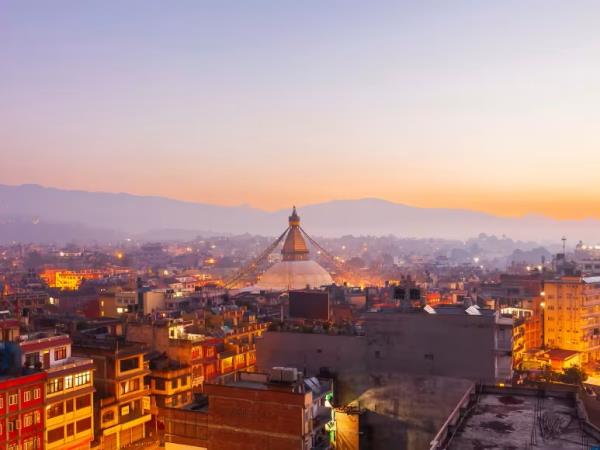
| Day 20: | The day is free to explore Kathmandu. You may wish to visit the monkey temple at Swayambunath, one of the largest Buddhist stupas in the world at Bodnath, or the most important Hindu temple in the valley at Pashupatinath. We offer a full range of sightseeing tours, which can be booked and paid for locally. Please see the Optional Excursions section within the Trip Notes or our noticeboard in the hotel in Kathmandu. Accommodation: Hotel Royal Singi (or similar) |
| Day 21: | The tour comes to an end after breakfast, so it’s time to start your return journey home. If you’d like a little more time to explore Kathmandu, speak to your sales representative about extending your stay. |
Map
Price information
Check dates, prices & availability

Travel guides
Holiday information
Responsible Travel
Planet
CARBON REDUCTIONMost of the hotels, tea house & lodges use renewable energy like electricity and some of the tea house even use solar energy and biomass energy.
Yes, vegetarian food is easily available each day and vegan food is also most available are mostly available. 40% food comes locally grown.
We also try and sell more trips in the Nepal like two trips or include extensions trips as the client travel by air from the UK to Nepal and back.
ENVIRONMENT AND WILDLIFE
The hotel in Kathmandu has follow our Nepal government rules on environment & wildlife environmental impacts which is regularly checked by the concern government department and up in the mountain the tea house/ lodges has their own rules as they are inside the national park area hence has no plastic bottled drinking waters, no waste is thrown anywhere rather then proper dumping area and all the waste like tin, papers, food waste etc, has proper disposal system.
The hotel in Kathmandu has follow our Nepal government rules on environment & wildlife environmental impacts which is regularly checked by the concern government department and the tea house/ lodges has their own rules as they are inside the national park area
Makalu Barun National Park and Khumbu Pasanglhamu Rural Municipality entry are included. We pay per pax entry fee for Makalu Barun National Park, Khumbu Pasanglhamu Rural Municipality and Mera Peak Climbing Permit.
We provide expert nature guide from the local community and they have be trained and has been certified with valid license from the Nepal government.
People
LOCAL ECONOMYAll accommodation is 100% Locally owned.
We employ local guides/ porters and use product mostly grown in the area like vegetables, food, etc.
We normally employ staff like guide/ porter and tea house/ lodges owned by the villagers and also indirectly will be helping to support their family who may be poor or disability.
As, we have to trek through the in the mountain trekking trail and high altitude etc we have to give big priority or must use the healthy and fit staff/ guide and porter.
In the main city in Nepal is generally considered a welcoming for LGBTQ+ travellers , a village in Nepal may be less friendly or open due to greater social conservatism.
Popular similar holidays
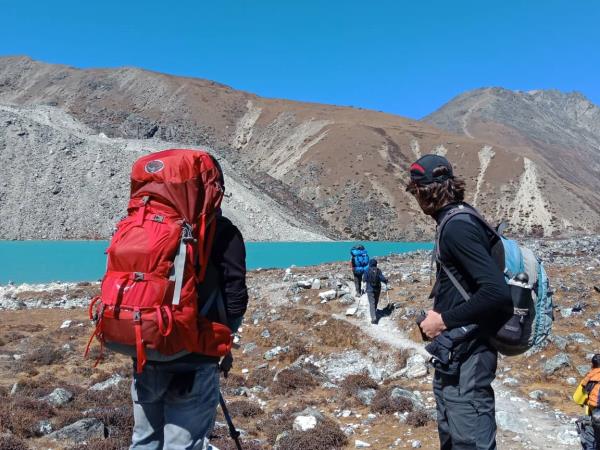
Gokyo Ri Valley trek in Nepal
From US $2150 - US $2420 15 days including domestic flights only
Gokyo Valley Trek: A Scenic Alternative to Everest Base Camp
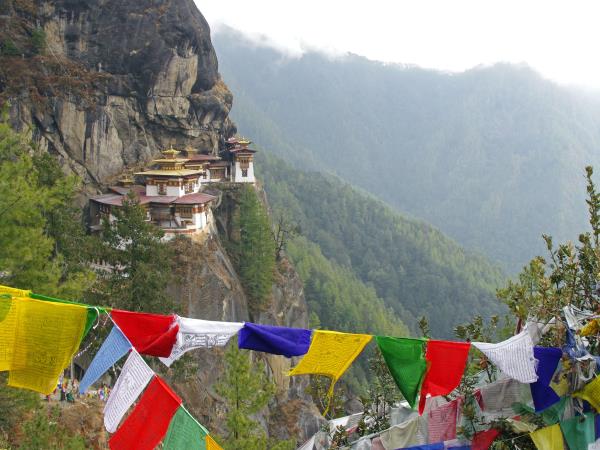
Nepal and Bhutan express tour
From US $2100 7 days excluding flights
Become one with culture and nature in Bhutan and Nepal tour
Nepal, Bhutan and Tibet Tour
From US $3600 21 days excluding flights
A cultural extravaganza in landlocked South Asian countries