Three High Passes trek in Nepal
Price
US $2175 excluding flights
Convert currency:


More info
Includes accommodation, all meals during the trek, all taxes, TIMS, permits, an authorised English speaking guide with a porter.
Join our guaranteed tour to explore the Himalayas in a group or let us customise your tour to meet your expectations!
Offers
$45 off per person on the Oct 31st departure. Limited seats available - contact us today to book.

Description of Three High Passes trek in Nepal
Price information
US $2175 excluding flights
Convert currency:
Includes accommodation, all meals during the trek, all taxes, TIMS, permits, an authorised English speaking guide with a porter.
Join our guaranteed tour to explore the Himalayas in a group or let us customise your tour to meet your expectations!
Check dates
2026: 14 Oct, 28 Oct, 11 Nov, 25 Nov
Travel guides
Discover whether a walk in the Himalayas is for you with our guide to the ups and downs.
Be part of a pack on your next outing. These small group walks promise fun and friendship on the trail.
Reviews
1 Reviews of Three High Passes trek in Nepal
5 out of 5 stars
Reviewed on 20 Jan 2020 by Luke Porter
1. What was the most memorable or exciting part of your holiday?
The scenery, visiting base camp and meeting local people
2. What tips would you give other travellers booking this holiday?
Pack light but be prepared for all eventualities
3. Did you feel that your holiday benefited local people, reduced environmental impacts or supported conservation?
The holiday helped to support local communities and provided work opportunities to local people. There are negative environmental and conservation impacts from mass trekking tourism, however the trip itself helped to minimise impacts e.g. sticking to marked trails, staying in tea houses, not using plastic bottles etc
4. Finally, how would you rate your holiday overall?
The holiday was fantastic. A once in a lifetime trip that will live long in the memory. The trek was both challenging and rewarding and combined stunning scenery with an insight into local culture and community. The operator were a great company that took fantastic care of guests with really personalised professional service
Read the operator's response here:
Thank you, Luke! It was great having you here in Nepal and your feedback means a lot to us. Looking forward to greeting you for your next adventure in the Himalayas!
Responsible Travel
As the pioneers of responsible tourism, we've screened this (and every) holiday so that you can travel knowing we've worked to maximise the benefits of your holiday to local people and places, and minimise any negative impacts.
Planet
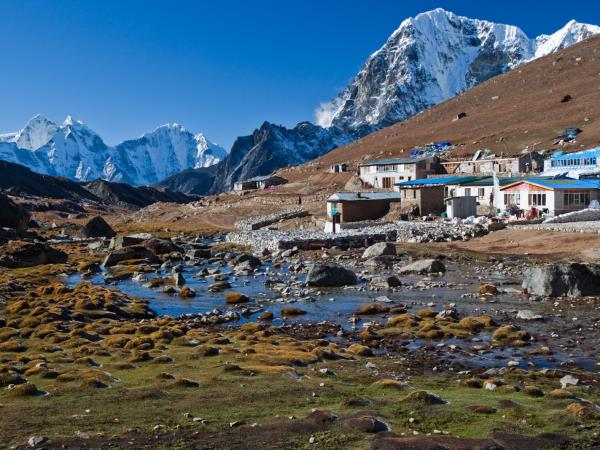
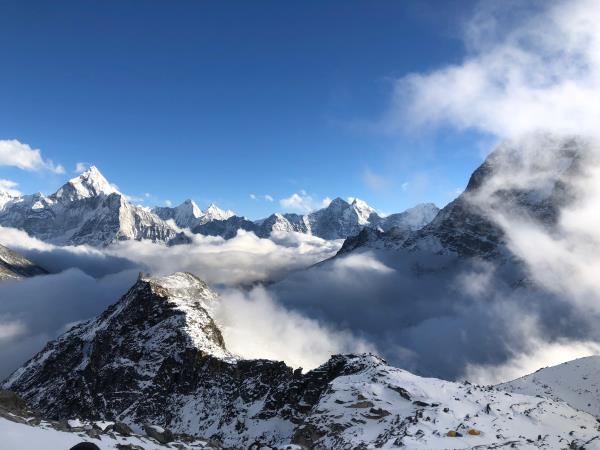
The Khumbu belongs equally to the mountains, the Sherpa communities who live among them, and the wildlife that calls this landscape home. Our job is to connect trekkers with all three while leaving no trace behind. That balance only works if everyone on the trail takes responsibility for it.Litter is non-negotiable. We educate our guides and porters on environmental practice from day one, and we extend the same expectation to every trekker. Having a support team does not mean your waste becomes their problem. Designated waste collection points exist along the trail — use them. For water, Sagarmatha National Park has clean spring water sources throughout the route; your guide will point out where to refill your bottle. Buying single-use plastic water bottles when clean alternatives are available is unnecessary and avoidable.
Power in this region runs entirely on solar energy. Every tea house, lodge, and guesthouse on the route uses solar panels — there is no grid connection above Lukla. If you want reliable charging for personal devices, bring a small personal solar panel. Clear skies are common during both the spring and autumn trekking windows, so it works.
This is a walking tour from start to finish. We fly Kathmandu–Lukla–Kathmandu (35 minutes each way) rather than the two-day bus option specifically because the environmental cost of that road journey is significant. No vehicles are involved once your boots hit the Lukla trail.
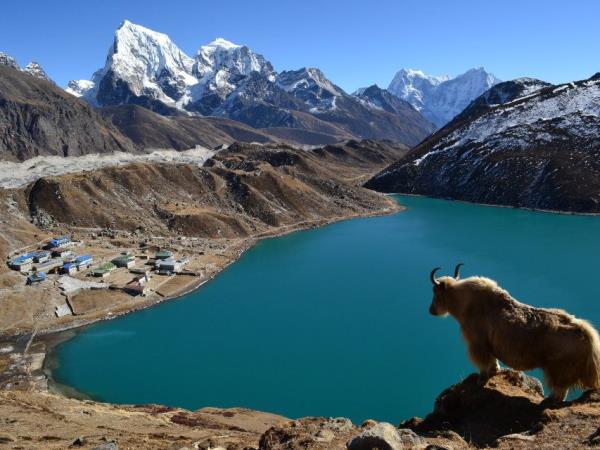
Parts of the route pass through protected habitat where yak, Himalayan tahr, snow leopard, and high-altitude bird species are present. If you encounter wildlife, maintain distance, stay quiet, and do not offer food. These animals are not accustomed to human interaction and should not become so. You are a guest in their habitat.
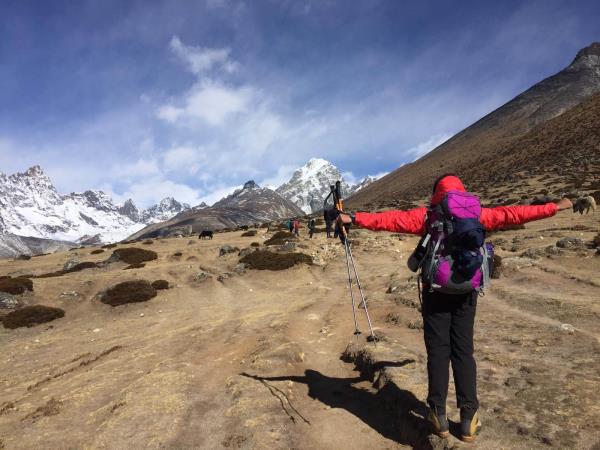
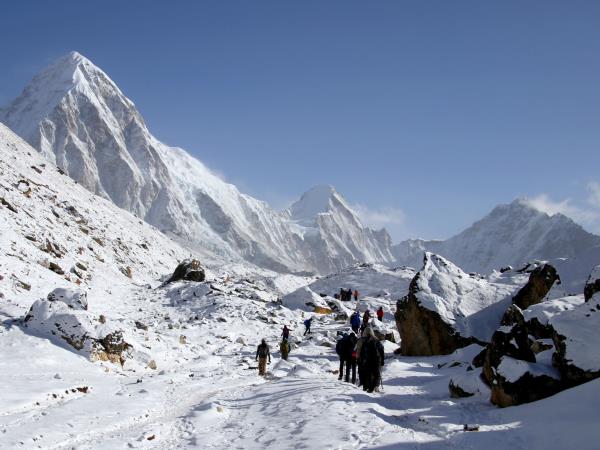
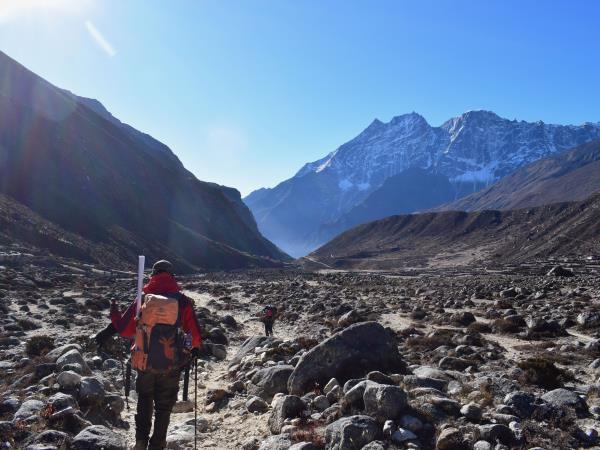
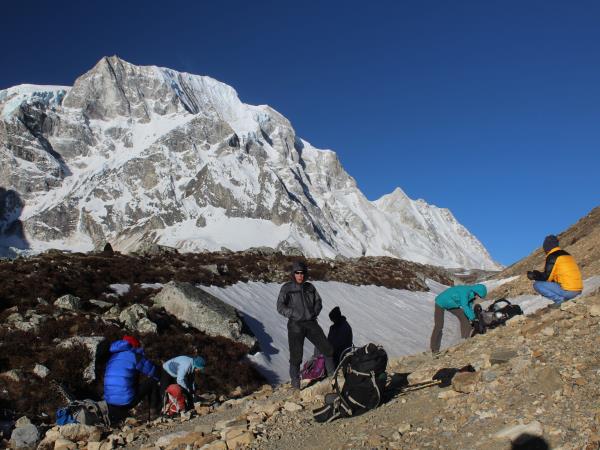
The Three High Passes circuit is a serious loop, not a tourist corridor. Much of it — particularly the Renjo La approach and the Bhote Koshi descent — sees far fewer trekkers than the main Everest Base Camp trail. Stay on marked paths and follow your guide's lead at all times. The Cho La crossing includes a glaciated section at the col that can be icy and unstable; treat it with the same respect you give any mountain terrain.
People
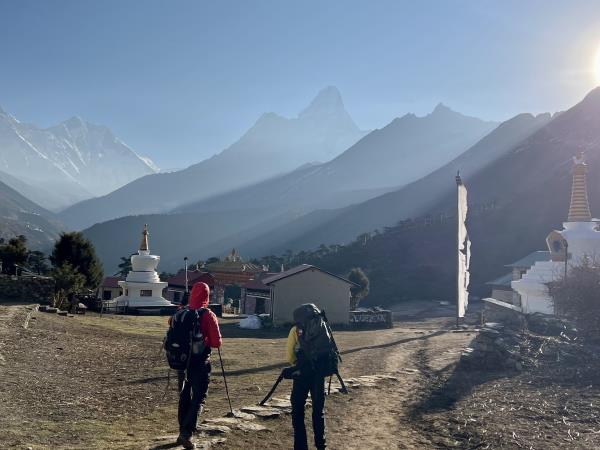
The Khumbu is Sherpa territory. The Sherpa people are an ethnic group indigenous to this high-altitude region, and their physiological adaptation to altitude, combined with generations of route knowledge, makes them the most qualified guides anywhere in the Himalaya. Every guide on this trek is a Sherpa. That is not a marketing choice — it is the only choice that makes sense here.Porter's employment matters too. A porter's income is seasonal and directly tied to trekking traffic. Hiring one is not a convenience; it is a concrete economic contribution to a local family. We ask that you do not decline the porter service. Beyond wages, tipping is entirely at your discretion, but if your team has looked after you well, it is the most direct way to show it.
On your acclimatization day in Namche Bazaar, the route passes through Khumjung village, where the Hillary School stands as one of the more enduring legacies of the 1953 Everest expedition. Sir Edmund Hillary, who with Tenzing Norgay Sherpa completed the first confirmed ascent of Everest on 29 May 1953, later established the Himalayan Trust, which went on to fund over 60 schools across remote Nepal. The Khumjung school is among the best-resourced in the country as a result.
The visit is observational, not a volunteering session. We schedule it for the afternoon, after classes finish, so there is no disruption to the school day. Entry into the building is not permitted, but teachers are sometimes available for a conversation in the yard. The point is simple: to see what access to education looks like in a mountain community that has had significant outside support, and to understand what it still looks like in communities that have not.
Swotah runs scholarship support for students in more remote, less-visited areas of Nepal where that support has not reached. If this is something you want to learn more about or contribute to after the trek, ask your guide — or look at our Millennium Homestay Trek, where we work directly with the Newari community in eastern Nepal.
Popular similar holidays
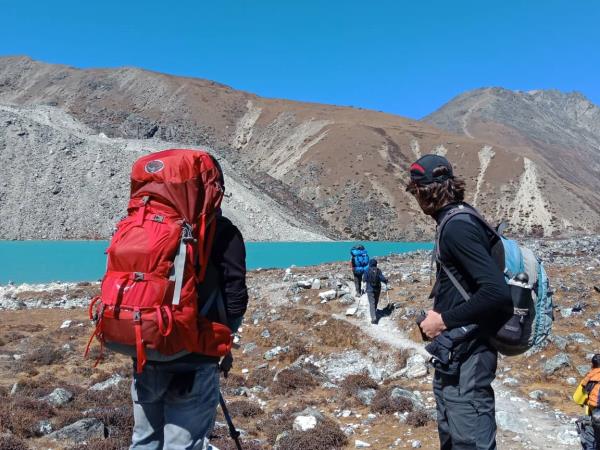
Gokyo Ri Valley trek in Nepal
From US $2150 - US $2420 15 days including domestic flights only
Gokyo Valley Trek: A Scenic Alternative to Everest Base Camp
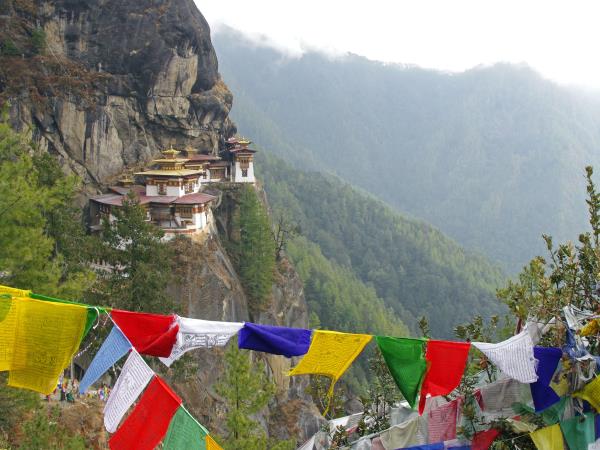
Nepal and Bhutan express tour
From US $2100 7 days excluding flights
Become one with culture and nature in Bhutan and Nepal tour
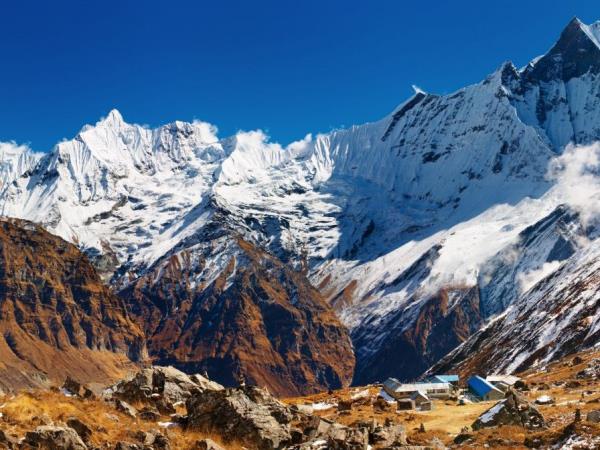
Annapurna Base Camp trekking holidays
From US $1135 - US $1550 8 days including domestic flights only
Most popular, legendary and classical trek in the world