Bush camp safaris in Namibia

You’d be forgiven for thinking that wildlife sightings would be the best part of camping in Namibia. But for many, it’s not what’s on the ground that’s most memorable – it’s what’s in the sky above. The Namib Desert is home to Africa’s only International Dark Sky Reserve.

“You get a night’s sky that is clear and full of stars,” says Grace Kemp, who has been part of the guiding team on some of our top Namibia camping safaris. “There’s no light pollution because you’re miles away from anywhere so the stars are really, really bright.”

The sense of vastness expands to the daytime too. In the vast vistas of places like the Namib Desert and fence-free Caprivi National Park, wildlife has plenty of room to roam – which is exactly what they choose to do. Tracking them is trickier than in countries like Botswana and Kenya, but safari guides here are up for the challenge. Plus, the challenge is half the fun. “You’ll see the footprints and know they’re somewhere close by,” says Grace. “The lions – you might hear them.”
It’s magical; there’s nothing like it.
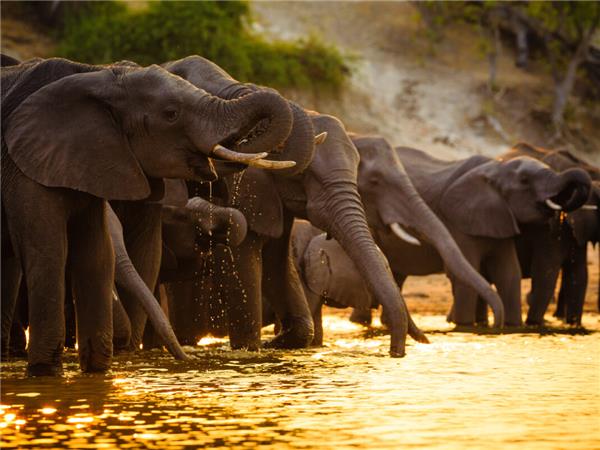
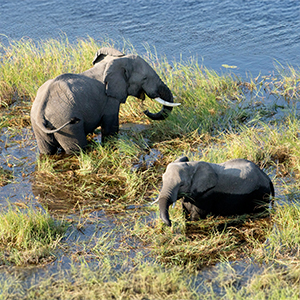
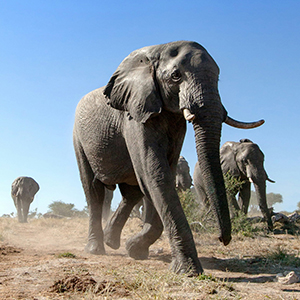
Namibia is the home of elephants (including rare desert elephants), herds of antelopes and zebras, leopards and lions, cheetahs, jackals, pangolins, buffalo and wildebeest, honey badgers and bats. Plus, you’ve got the seal colony at Cape Cross and a whole watery world of whales off the coast.

Our bush camp safaris in Namibia put you in the best possible position to see them. This isn’t Botswana, where elephants wandering through your camp is practically commonplace – but camps will be chosen for their proximity to some of the best wildlife viewing in the country. They’re the perfect launch pad for safaris.

“I always tell guests that we can never guarantee animal sightings, but it never, ever disappoints,” says Grace. “You come out having seen something amazing. Even if you had your heart set on a leopard and didn’t see one, you wouldn’t be disappointed because the things you’ve seen have outweighed what you thought you’d feel while seeing the leopard. It’s everything; it’s just being there.”

“It’s the best experience,” adds Grace. “You forget about everything else. All your other problems you might have going on – you’re not thinking about because you’re totally immersed in nature. It’s magical; there’s nothing like it.”

Where to camp in Namibia

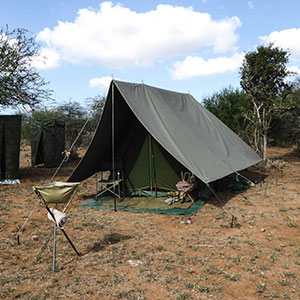
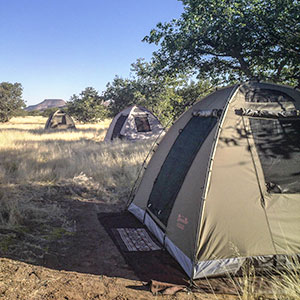
As with all bush camp safaris, exactly where you set up camp can change depending on the season and animals’ movements – but you’ll always stay in regions known for their animal sightings. Plus, our holidays make sure you’re staying in spots where camping is welcomed. Snooze in campsites with basic facilities, go wild camping with expert guides, or opt for a mix of both – with a sprinkling of guest houses and lodges thrown in for good measure.

Etosha National Park

Camping close to Etosha National Park means that you’re a gazelle’s hop, skip and jump from some of the best safaris in Namibia. Herds of zebras and antelopes patter across this vast dry pan in the north-west corner of Namibia. Rhinos scratch themselves against tamboti trees, giraffes peer through the foliage, and elephants crunch on fallen seedpods. Our tours pitch tents at the watering holes like Namutoni, Halali and Okaukuejo for a chance to see lions stepping down for a slurp.

Namib Desert (Spitzkoppe, Sossusvlei & Brandberg)

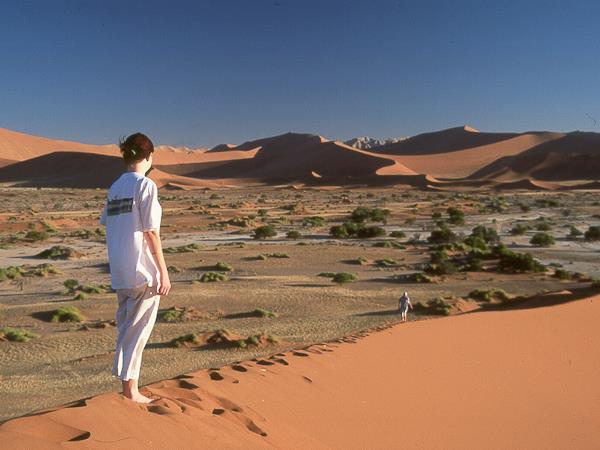
The approach through the Namib Desert to Spitzkoppe is spectacular – driving through red-sand landscapes towards huge granite domes that rise up before you.

“It’s magical,” says Grace. “It has almost a spiritual feel to it. And the scale too – often, people take pictures of the truck with the rocks behind. Our trucks are big, but when you put them in a picture with all those great big rocks the trucks look little, because it’s huge.”

You’ll wild camp at the foot of them without any fences, walking the wide-open spaces with guides, and enjoying some of the most spectacular sunsets in Africa. You’ll also get the chance to admire rock art at /Ui-//Ais (Twyfelfontein), that is thought to be over 2,000 years old.

For more in the way of towering nature, head to Sossusvlei for red sand dunes and Sesriem Canyon. You can stay amongst the sky-scraping sands in Brandberg, where elephants reside, waking up to the sounds of the desert – and perhaps the distant roar of desert lions. Camp next to the – usually dry – Ugab River for even more chances to see rare desert elephants.

Caprivi Strip

The Caprivi squeezes between Angola, Zambia and Botswana. There are large rivers here, including the Zambezi, which crashes to a dramatic head just over the border at Mosi-oa-Tunya/Shungu Namutitima (The Smoke that Thunders/Boiling Water – AKA Victora Falls). With all that water, the Caprivi Strip is greener than much of Namibia, flourishing with baobabs, forests and reedbeds, which draw in swathes of wildlife. The Popa Falls on the Kavango River is great for a wildlife boat cruise.

Ugab Wilderness Area

The Ugab Wilderness Area is fed by the Ugab River – a secretive subterranean waterway that you probably won’t see, as it only flows above ground for a few days a year. The wildlife, however, knows exactly where the water tends to pool on the surface, including herds of giraffes and zebras. This is a great spot for rhinos too. Ugab Wilderness Area is home to the biggest herd of free-roaming black rhinos in the world. You might even spot them from the edge of camp.

… & over the border to Botswana

If you have an extra week to spare, we recommend a camping safari that combines Namibia and Botswana. After all, it’s just a temptingly close hop over the border. Around 21 days is a good amount of time for a mix of organised campsites and wild camping – and massively increases your chances of seeing wildlife.
You’re part of the land and it’s all done with respect for the land. There are no fences between you and the wildlife.

Contact Us

Responsible Travel, Travel Team

Call us for a chat about our holidays. We are happy to discuss your holiday and help in any way we can. No bots, queues or awful hold music.

Responsible Travel, Travel Team

Tips for bush camping in Namibia

Be prepared for long drives

The best way to see so much of Namibia face to face is by travelling overland – so get ready for some long drives. Corrugated gravel roads and wandering wildlife make for sometimes slow going, which often catches out independent adventurers. You, however, will be in the company of great guides who’ll navigate the road for you while telling you all about the landscapes and towns you’re rolling through. Plus, they know the best craft shops and cafés for pit stops en route.

Travel will mainly be in 4WD vehicles designed to comfortably carry 12 and custom-built for safari viewing. That means little extras like canvas that can be rolled down for shade – or rolled up for widescreen viewing when the eagle-eyed driver spots a cheetah draped over a tree branch.

There aren’t many electric vehicles in Namibia yet – wild camping in the desert doesn’t come with charging points – but by travelling in a small group you’ll reduce fuel consumption when compared with a private driving safari.

Stay a week or more & be flexible

Our safaris in Namibia last around two weeks, maximising your chances of slowing down and seeing as much wildlife as possible. You’ll spend about half the time bush camping. These are itineraries designed by our Namibia experts, and led by tour leaders and local guides who’ll take care of any bumps in the road. The route is pretty fixed, but there are some detours – to choose the best spot for a sundowner before heading back to camp, for instance, or to spend more time observing a leopard and her cubs crouched in the grass.

Think about your comfort zone… then consider stepping out of it

Bush camping cuts down on accommodation costs, so it’s a great way to spend less while on safari. Our camping safaris in Namibia include a mix of campsites with basic facilities and wild camping, plus the odd lodge or guest house thrown in for good measure. “You’re part of the land and it’s all done with respect for the land,” says Grace, about wild camping. “There are no fences between you and the wildlife.”

Fancy a bit more comfort? Some of our Namibia camping safaris stay in semi-permanent camps that feel more like lodges. Tents might have wooden frames and en suite bathrooms – but still with the chance of wildlife rambling past the canvas.

Get stuck in

When camping, tour guides will lead setting up and taking down the camps – and you’re encouraged to get stuck in, whether that’s helping to Tetris everything back into the truck, washing up, or sorting the recycling. Evening meals around the campfire are often a highlight of the holiday. Food is prepped by the crew, who can cook up filling fare using ingredients bought locally and might even bake bread over the fire. Dietary requirements are catered for, including vegan and gluten free – just let our partners know ahead of time.

Pack compactly but cleverly

Pack little but don’t forget the essentials: binoculars, a torch, clothes for hot and cold weather (morning and nights can get chilly; days can get hot), and long trousers for walking safaris. Sometimes foam mattresses are supplied, but you might need to bring or hire your own sleeping bag; it’ll all be made clear in your itinerary. Vehicles are loaded up with tanks of water, so bring a reusable drinking bottle too. Our partner Sunway Safaris estimates that it saves them from buying – and polluting the planet with – a quarter of a million plastic bottles each year.

Look beyond the wildlife

It’s not all about the safaris. Some campsites and drives put you in reach of towns known for their great restaurants or wood carving markets, or next to rock paintings that depict millennia-old ways of life. You can explore Swakopmund (a great base for dune boarding, fat biking and sea kayaking), visit Windhoek, or swing by the AfriCat Carnivore Care Centre, which focuses on the research and rehabilitation of injured leopards and cheetahs. Whatever you do, our trips prioritise working with local people and staying in locally owned businesses – which benefits the local communities and gives you a better experience.

Decide if the wet or dry season is for you

June to November is generally considered best for wildlife viewing, as waterholes shrink and animals flock to those remaining. However, December to May definitely has its charm. It’s the wet season in Namibia, more peaceful, and great for green vegetation and bird watching.
Photo credits: [Page banner: Alan J. Hendry] [Intro: Ashim D’Silva] [Etosha National Park: Getty Images / Unsplash+]