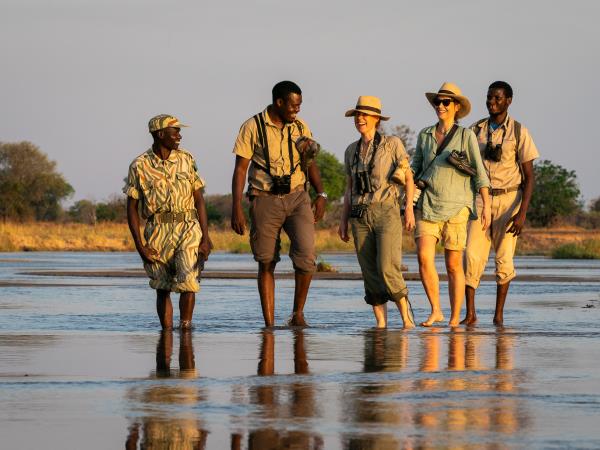
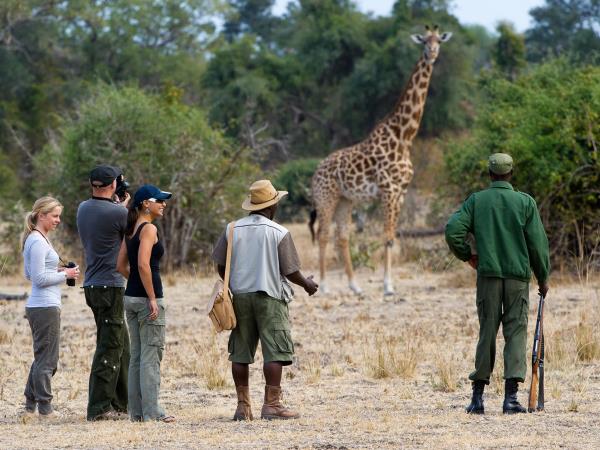
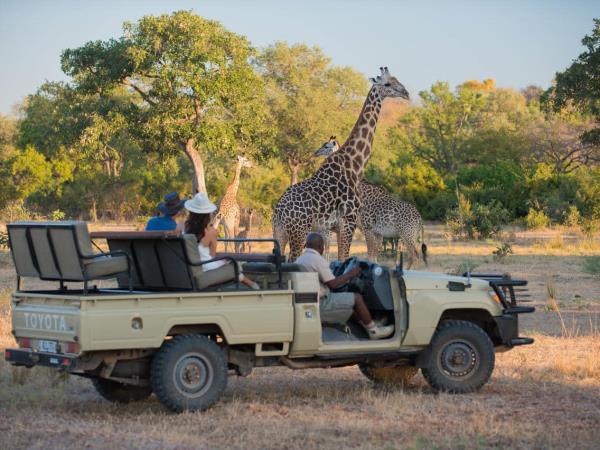
You’ll see more wildlife by 4x4, but you might just see more of life by hiking – and where better to walk than in Zambia, where walking safaris for tourists took their first steps?
“People are often put off by walking safaris,” says Joshua. “They think it’s hot and dangerous, but it’s not like that at all… The guide might see a new insect or a new phenomenon you’ve never seen before. By interpreting tracks from the night before, you gain a deeper safari understanding.”
Guiding is a sought-after job in areas like South Luangwa, where there are lots of opportunities to train to the walking safari level – which in turn opens up more opportunities for work. You’ll be travelling with local wildlife whizzes.
“A lot of the guides have been there 10, 15 or 20 years,” says Joshua. “Real experts in the bush.”
Zambia also stands out for its choice of walking safaris. They include easy afternoon rambles, multi-day treks – and everything in-between. For those up for a challenge, there’s our
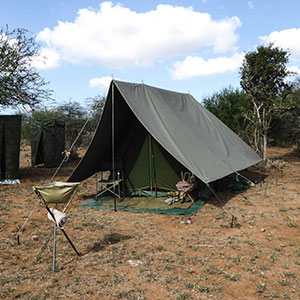
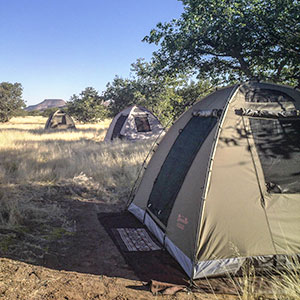
mobile walking safari. You might stay for a few days before moving on to the next camp – or go on a longer, even more intrepid trip that involves hiking between a different camp each day. “Walking between camps between destinations is a really cool feeling,” says Joshua.
Whatever type of bush camping safari you go on, guides will always be accompanied by an armed scout from the Zambia Wildlife Authority who’ll keep an eye out for any lions or buffalos around the corner. No one wants to surprise a buffalo. Walks can also be finely tuned to your interests in ways that are impossible when in a jeep with other people.
“If people want to spend two hours looking for a certain type of bird or go for a march across the land, that’s fine,” says Joshua. You also have the flexibility of seeing what’s around the corner; on driving safaris in South Luangwa, you can’t drive off the road. “The guides make it… Out in the bush on foot is when they really come into their own.”