Corfu travel guide

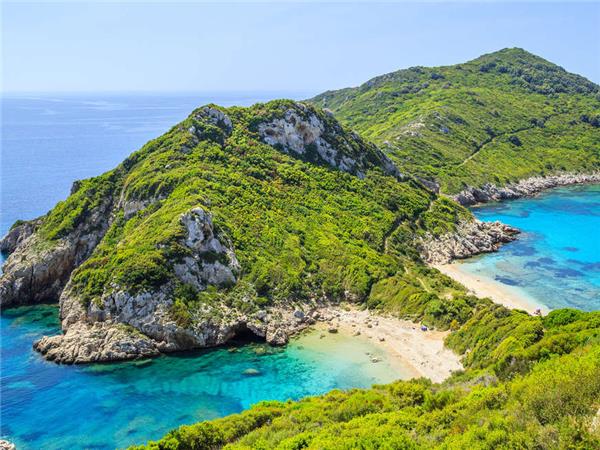
What colour is Corfu? The obvious answer would be, ‘green’ – this is Greece’s greenest island, its winter rains keeping it lush. But what about purple? That’s the colour of some of the island’s 36 orchid species. Consider, also, orange – for the flame-coloured kumquats that grow here and, as a liqueur, make an excellent cocktail ingredient. Then, of course, there’s the famous ‘rosy fingered dawn’ that lingers over the island in the morning, immortalised in Homer’s Odyssey.
Corfu – and many of the Ionian Islands – have a very strongly loyal population that wouldn’t want to live anywhere else
– Our partner Val Osborne-Androutsopoulou, who has lived here since 1977
Corfu has a long history of relationships with other nations – Venetian for 400 years, later falling under French and then British rule – the latter has given British travellers an affectionate connection with the island; they introduced ginger beer, and many Brits live here now, still drinking tsitsibira, the Corfu version. Corfu has close ferry links with Italy, and traditional Venetian specialties make appearances on menus. But Corfu is, of course, a very Greek destination. Here’s another Corfiot colour: blue – and the startling Ionian Sea around the island is a hue that only a Greek island can do.

Read our Corfu travel guide for more details.
Corfu is…

a musical island: many towns have marching bands and philharmonic orchestras – one of which is the oldest in Greece.

Corfu isn’t…

free of overtourism, which is putting strains on its infrastructure.

Corfu map & highlights

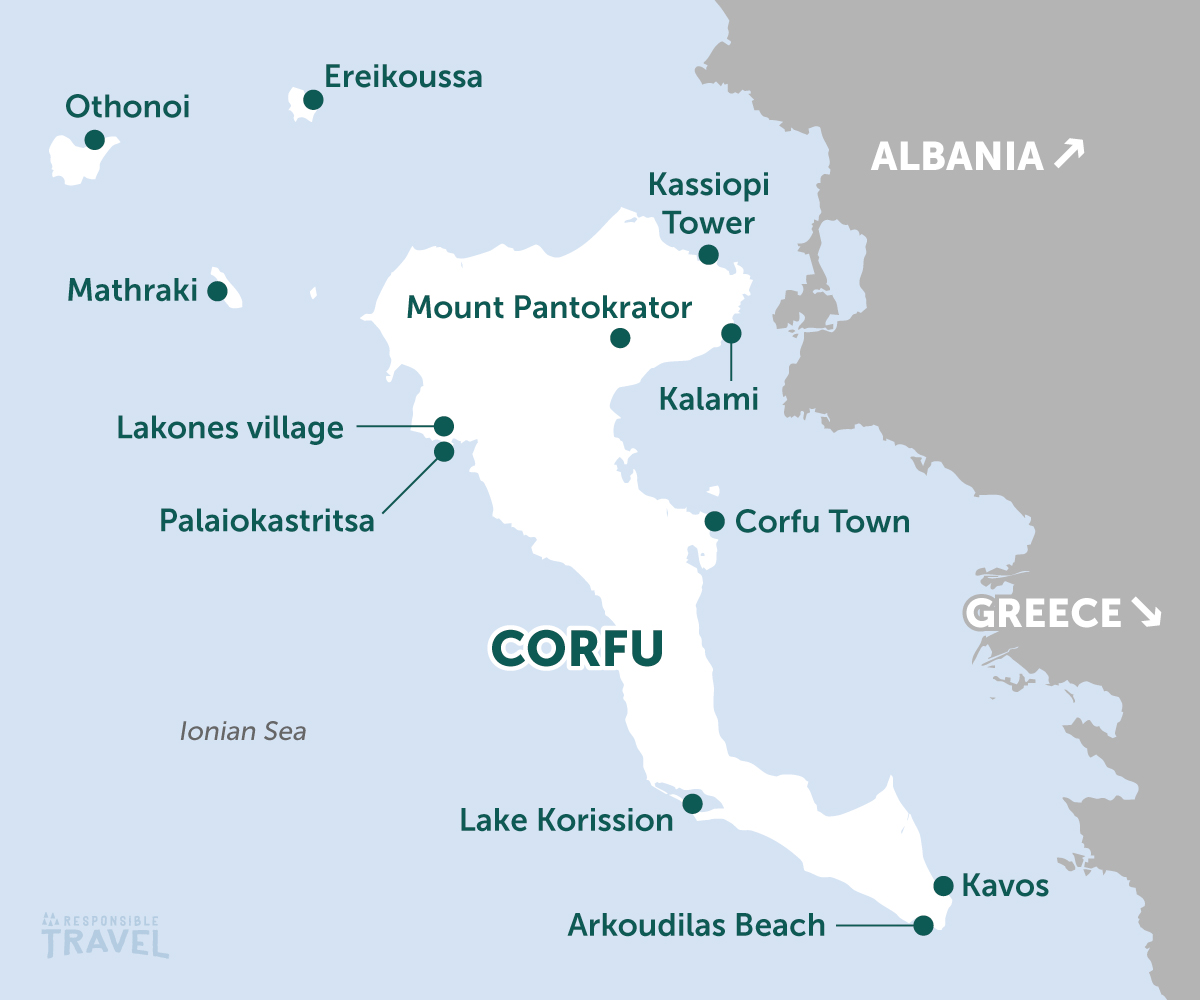
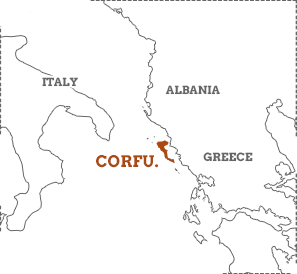
You’ll find Corfu kicking back from Greece – the island is shaped almost exactly like a horse’s front leg raised to paw the ground. The second largest, and northernmost, Ionian Island, it’s around 64km long, and 32km at its widest point. Climb the island’s highest point, Mount Pantokrator (906m), and you’ll see just how close the island is to Albania, the other side of the Staits of Corfu. Corfu Town, the UNESCO-listed capital, is halfway up the island. Most of the famous holiday resorts, like Benitses, are concentrated in the island’s southeast. The Corfu Trail, a walking route, wiggles along the island south to north, but spends a lot of the time enjoying the island’s wilder west coast – as should you.
Corfu map, Greece

North Corfu

All sorts of pretty places await in the north of the island: the pretty coastal town of Kassiopi, the dramatic sand-coloured, wind carved cliffs at Palaiokastritsa, the gorgeous views from high up at Lakones village, and the village of Kalami, where Lawrence Durrell lived and wrote. It’s also the more mountainous end of the island, featuring a karst plateau topped by Mount Pantokrator.

Corfu Town

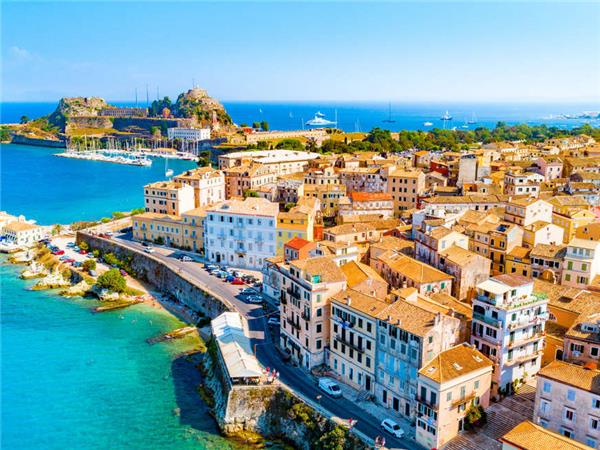
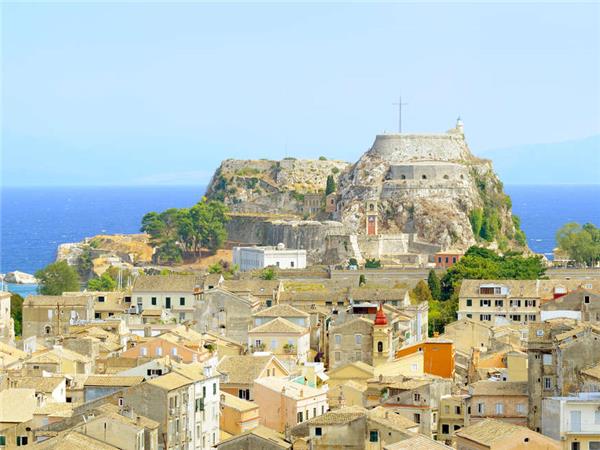
Corralled on either side by Venetian forts – in the 18th century this was one of the most heavily defended islands in Europe – UNESCO-listed Corfu Town is historic, its pretty streets lined by old buildings. Students from the Ionian University keep it lively and interesting year-round, and travellers can come for the bars and cafes, to people watch over strong Greek coffee.

Satellite islands

Smaller satellite islands with no airports surround Corfu and make easy day trips from Corfu – a long potter by fishing boat or a quicker trip by speedboat, hydrofoil or ferry. Better yet, make these out-of-the-way places the site of whole holidays. There are the Diapontian Islands, which include Ereikoussa, Mathraki and Othonoi, and then Paxos and Antipaxos, which lie to the south.

South Corfu

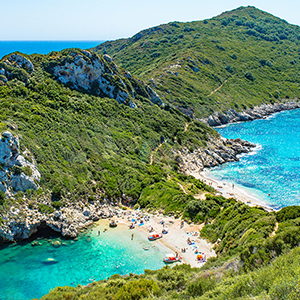
The narrow southern part of the island has places where you can see the sea to either side, and you can enjoy criss-crossing between the east and west coasts in search of the best sandy beaches: like Arkoudilas Beach on the southernmost tip of the island. Whilst there are party towns like Kavos in south Corfu, away from the crowds, you can bird watch at Lake Korission and walk between small fishing hamlets.

Contact Us

Responsible Travel, Travel Team

Call us for a chat about our holidays. We are happy to discuss your holiday and help in any way we can. No bots, queues or awful hold music.

Responsible Travel, Travel Team

Corfu travel advice

Getting to Corfu

International flights to Corfu International Airport (CFU), close to Corfu Town, run from March to October and domestic flights run year-round. It’s also easy to take a car ferry from mainland Greece (Igoumenitsa, 90-minutes away by boat); from elsewhere in the Ionian; from Sarande, Albania, and from Italy – “it’s an easy ride over from the south of Italy,” says Val Osborne-Androutsopoulou, who runs Casa Lucia, our partner for holiday accommodation on the island. She’s also noticed more people forgoing the plane: “We find people driving from northern Europe through the Balkans to come to us. That is becoming quite popular.”

What is Corfu like?

Corfu is a beloved holiday destination. People come because of its beauty, its culture, and because its size means there’s lots to do. “It’s a big island,” says Val. “It’s very cosmopolitan, and it’s got a very long history.” The capital shows the island’s history – including a long period where Venetians fended off Ottoman invasion – in its fortified architecture. “Corfu town is wonderful, very old and very beautiful.”

With a resident population of around 100,000 people, most living here year round, Corfu is lively. “It’s the kind of island that doesn’t close down in the winter,” explains Val. “We also have a university with a wonderful music department and it keeps the whole place vibrant during the winter. It’s an island that has its own life apart from tourism.”

Being a responsible tourist on Corfu

“Corfu has changed hugely,” says Val. She has run accommodation on the island since the 1970s, based in a small village in the interior. “When we first arrived in our village there were just two cars. One was ours – one was a man who was given a driving license because he had a horse and cart.

“There was a cafe that was the centre of the village – it had the telephone, the television, it collected the post, everybody went there. Now everyone has a telephone, a car, a television. From being a medieval, agricultural village, it’s become modern – not in terms of the buildings, but in terms of its way of life.”

Around four million tourists visit Corfu every year. There has been a lot of tourism development to accommodate holidaymakers. “It’s a problem, but it’s limited to the coast,” explains Val. “It’s still a shame because lots of the lovely little old beaches now have beds and umbrellas and a taverna and things like that. Even two or three years ago you could walk from a bigger beach to a smaller beach and be there on your own – but gradually all these beautiful, beautiful places are being developed, it’s sad.”

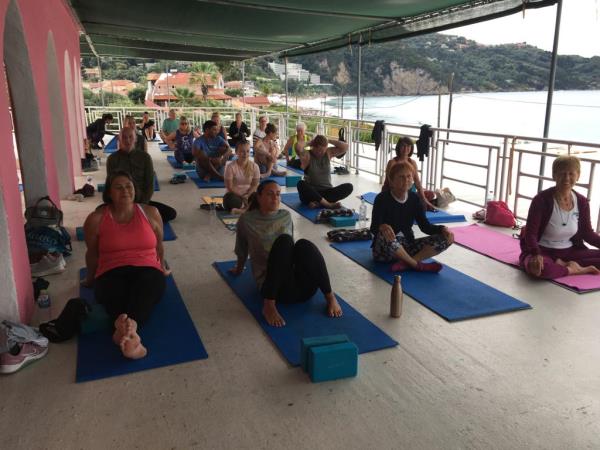
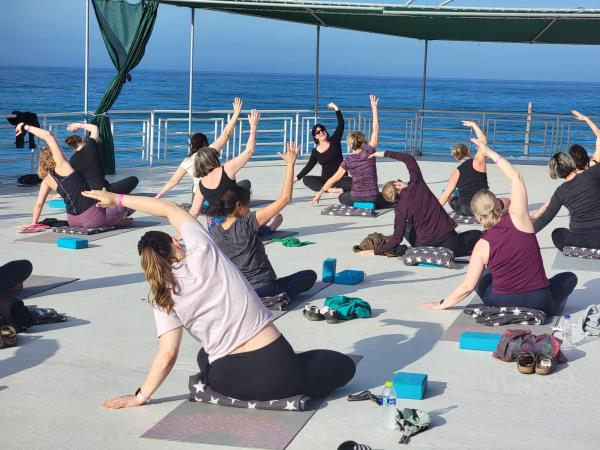
This is a problem for the island’s infrastructure: its roads, its waste collection and its water supply. “The infrastructure is not good enough to support this many tourists,” says Val. It’s something our travellers have noticed too. “Perhaps the biggest sustainability challenge the island faces is water supply, worsened by climate change,” says Louise Holloway, who went on our Corfu yoga holiday. “Aquifers are no longer sufficiently replenished by winter rain and the demand for water from tourism is great.”

Tourists can help by being mindful of their usage on the island – not just of water, but of electricity and food too. To this end, some of our partners choose not to run power-hungry air conditioning units, favouring traditional cooling methods instead. “Our old buildings are built to withstand everything,” says Val. “Earthquakes, the rain, the ice and snow – and in particular, the heat.”
Written by Eloise Barker
Photo credits: [Page banner: Alexander Mils] [Is/Isn't: Barbare Kacharava] [Corfu Town: CALIN STAN] [What is Corfu like?: Dawid Zawi?a]