Czechia (Czech Republic) travel guide
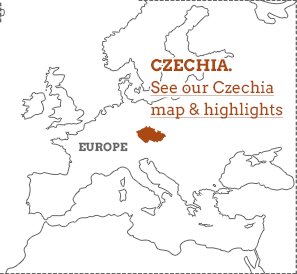
The Czechs have an eye for beauty. After all, they have one of the most beautiful capitals in Europe: Prague, city of 100 spires and countless architectural treasures. Czechs claim Alphonse Mucha as their most famous artist, and his irresistibly pretty Art Nouveau works include whimsical posters and striking stained-glass windows. Speaking of glass, it doesn’t get more exquisite than Bohemian crystal, adorning cathedrals and dining tables – and banquet tables, because this attractive country is made more so by having more castles than anywhere in the world. There are around 2,000 fortifications, often topping preposterously pretty karstic landscapes – landscapes like Bohemian Paradise – yes, that really is its name.

Pilsner-drinking Bohemia and wine-sipping Moravia make up the two sides of the Czech Republic, or Czechia, a country that drinks more beer per person of anywhere else in the world.![]()

The Czech Republic – known as Czechia since 2016 – is located in the heart of central Europe, so it’s often explored alongside Austria, Slovakia and Poland. This is indicative, too, of its historic relationships with its neighbours: under Hapsburg rule until the fall of the Austro-Hungarian Empire in 1918, part of the Eastern Bloc until 1989, bound to Slovakia as Czechoslovakia until the Velvet Divorce of 1992. But Czechia is well worth considering in its own right, especially if you’re aesthetically minded.
Read our Czechia travel guide for more details.
Read our Czechia travel guide for more details.

Czechia is…
Prague and Pilsner, castles and Christmas markets.
Czechia isn’t…
just a stag do destination.
Best time to visit Czechia (Czech Republic)
The Czech word for May is kveten – from the word for blossom. August is srpen from the word for sickle, used in the harvest![]()
The best time to visit Czechia is from May to October. Most small group tours run during these months. It’s not too hot, the chilly winter months are well behind you, and you can enjoy countryside cycling, vineyard tours and days at captivating castles without relying on svarak (mulled wine) to power you through. The hottest months are July and August, when average daily highs reach the mid-twenties °C, but this part of central Europe is rarely sweltering. Later in autumn and into winter the weather is less favourable, but it’s fun to visit Prague in December as part of a Christmas market tour.
Prague Weather Chart
MIN °C
MAX °C
RAIN (mm)
JAN
-4
1
25
FEB
-3
4
23
MAR
0
9
30
APR
3
14
37
MAY
8
19
66
JUN
12
23
70
JUL
13
24
68
AUG
12
24
71
SEP
9
20
43
OCT
5
14
31
NOV
1
7
34
DEC
-2
3
26

Central Europe holiday for under 30s
Experience bohemian Europe from Germany to Italy
From
£1539 to £2095
15 days
ex flights
Budapest to Prague holiday
Discover the beautiful & historic European capital cities
From
£1595
8 days
ex flights
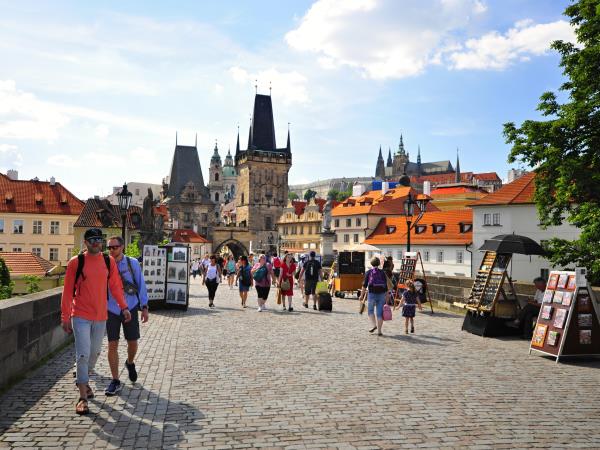
Czech Republic, Slovakia and Poland family tour
Action-packed Eastern European family week.
From
€1479
8 days
ex flights
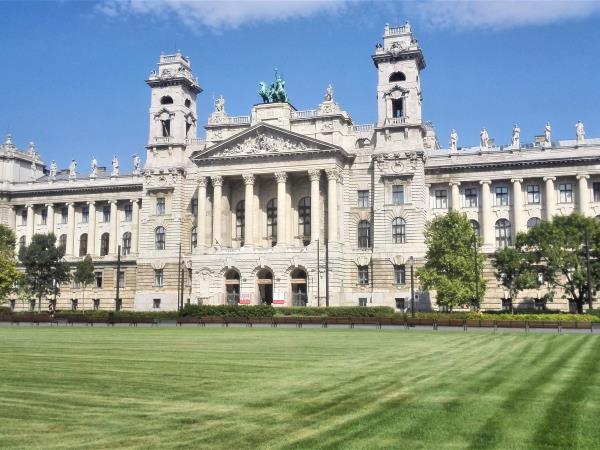
Prague, Vienna and Budapest tour
Discover romantic charms of Prague, Vienna and Budapest!
From
€3510 to €6940
11 days
ex flights
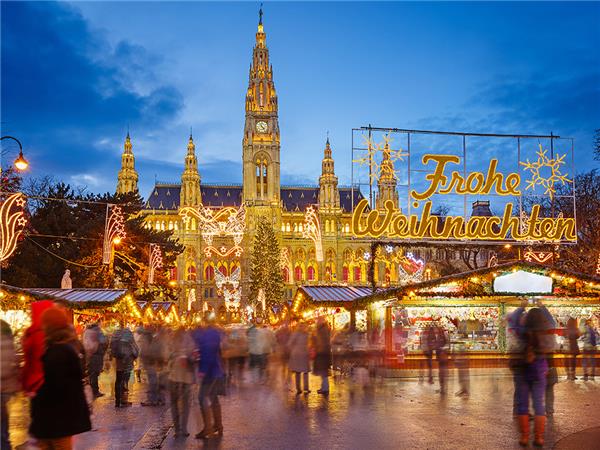
Christmas markets holiday in Central Europe
Indulge the senses by exploring the best of the festive market scene
From
£1587 to £2390
8 days
ex flights
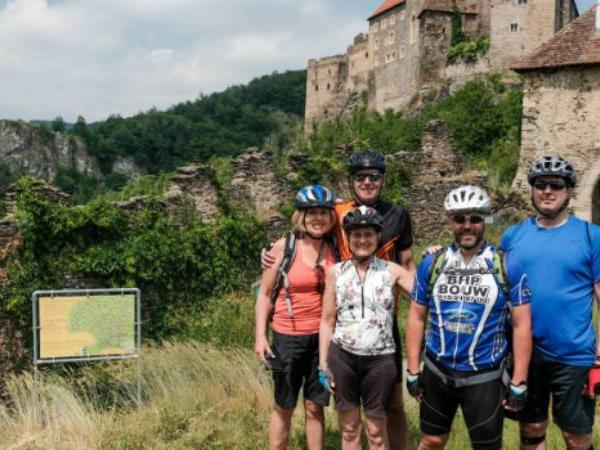
Prague to Vienna cycling holiday
Small group cycling holiday Prague to Vienna
From
£1850
8 days
ex flights


Contact Us
Call us for a chat about our holidays. We are happy to discuss your holiday and help in any way we can. No bots, queues or awful hold music.

01273 823 700
Call us tomorrow after 9am
Calling from outside the UK


When to go to in Czechia, month by month
January is the coldest month in Czechia. Lakes freeze over (ice hockey ties with football as the most popular sport in the country) and it’s very chilly in Prague’s town squares. February isn’t much warmer.
March is cold and grey, but in early spring you might come across Masopust, the Czech carnival celebration. The country isn’t very religious, and many festivals feel more pagan than Christian.
At Easter in Czechia, which falls in March or April, you might see elaborately decorated Easter eggs. The last day in April is Witches’ Night, when effigies are burned and sausages roasted on the fire.
The Czech for May is kveten – which comes from the word for blossom: on the first of the month, couples kiss under the blossom trees to ensure their love lasts. This is also when our group and cycling tours start.
March is cold and grey, but in early spring you might come across Masopust, the Czech carnival celebration. The country isn’t very religious, and many festivals feel more pagan than Christian.
At Easter in Czechia, which falls in March or April, you might see elaborately decorated Easter eggs. The last day in April is Witches’ Night, when effigies are burned and sausages roasted on the fire.
The Czech for May is kveten – which comes from the word for blossom: on the first of the month, couples kiss under the blossom trees to ensure their love lasts. This is also when our group and cycling tours start.
Summer is a time of festivals. June, July and August are the hottest months in Czechia, but average highs are around 24°C, similar to Paris. Late summer is a time for foraging – for mushrooms, berries and ingredients to make tasty compotes, which are popular here.
September kicks off autumn’s concert season. Dvorak Prague is an international music festival that celebrates the country’s most famous classical composer. Oktoberfest, a German import, begins in September, as does the grape harvest.
Most small group tours to Czechia wind down in October. November is a quiet month, though Christmas markets tend to open in the final week of November. Christmas traditions start on the 5th of December on Mikulas (St Nicholas’ Day). Groups of three haunt the streets dressed as St Nicholas, the devil and an angel, visiting children to give sweets… or to scare them into being good.
September kicks off autumn’s concert season. Dvorak Prague is an international music festival that celebrates the country’s most famous classical composer. Oktoberfest, a German import, begins in September, as does the grape harvest.
Most small group tours to Czechia wind down in October. November is a quiet month, though Christmas markets tend to open in the final week of November. Christmas traditions start on the 5th of December on Mikulas (St Nicholas’ Day). Groups of three haunt the streets dressed as St Nicholas, the devil and an angel, visiting children to give sweets… or to scare them into being good.
More Czechia (Czech Republic) articles
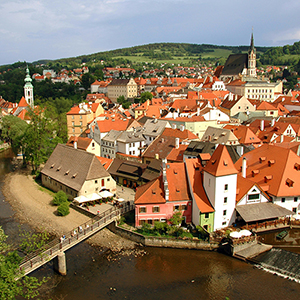
Find out the best places to go in Czechia, from Prague, the capital, to Moravian wine country, and Bohemian national parks.