Inhabited for over two million years, and home to some of the earliest humans on the planet, the 2,400km2 Lower Omo Valley is believed to have been an ancient crossroads for people migrating across the African continent. Today, over 130,000 people call the Lower Omo Valley home, divided into a network of around 12 pastoralist tribes including the Hamer, Bashada, Benna, Karo, Kwegu, Nyangatom, Dassanach, Mursi, Suri, and Bodi. With inter-tribal marriage not usually permitted, each tribe in the Lower Omo Valley has maintained its own, very distinctive traditions.
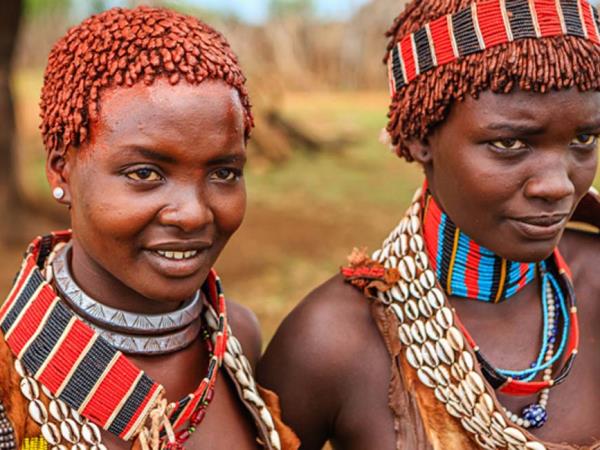
The visual differences between the tribes are striking – the heavy lip plates of the Mursi women, young Karo boys painted and patterned in thick white ash, the ochre-plastered hair of the Hamer, the blood-drinking Bodi men who compete to have the fattest stomach – but the diversity here runs deeper than body adornment. This small area is thought to be one of the most genetically and linguistically diverse in the world, and offers a significant insight into the history of human evolution.
But all of this is threatened. By an expanding, and some would say exploitative, tourism industry; and more recently by the Gibe III dam on the Omo River, which has stopped the biannual floods the tribes rely on to bring fertile silt to their lands, worsening the effects of drought in the valley.