Eastern Europe Tours

Let local guides introduce you to the regional specificities, and perhaps their own personal histories, too – as you get acquainted with the lesser-known but no less interesting side of Europe.

As sun sets on the botanical gardens in Balchik, on Bulgaria’s Black Sea coast, other tourists depart, leaving you to wander the grounds alone. You’re staying in them: in the summer residence of Queen Marie, the English wife of King Ferdinand of Romania. It’s a fitting end to our eastern Europe tour of Romania, Bulgaria and Serbia: looking out towards Asia, in a residence built by a Romanian for his English wife, in a seaside resort that was under Byzantine, then Ottoman rule, before a 20th century spent switching hands between Bulgaria and Romania.

When you tour Europe you get used to high-density history, but this faded grandeur, accessed so inexpensively, feels particularly eastern.

The most visited countries in the world, France and Spain, and the most visited sites in Europe: the Louvre, the Vatican, are all in the west. Mass tourism has been in place in western Europe since the 1960s – in fact, many of its countries have welcomed tourism to the point of saturation.

Yet, as our tours through eastern Europe show, there is another side to the continent. Europe, more so than any other continent, sits with a threshold to its east; it’s bunked up against the largest country in the world – Russia, and at one end of a Silk Road that goes all the way to China. To go east – through Ottoman strongholds and Russian-speaking villages – is to start to see Europe as a peninsula to Asia.

Traditional definitions of Europe put its eastern border at the Urals, a mountain range over 1,000km east of Moscow – making what many people consider the east actually closer to central Europe. To some, the term is pejorative. And 2020s geopolitics placed many of the largest countries in eastern Europe – Belarus, Russia, Ukraine – out of bounds.

In this part of Europe there are nations that are newer to the European Union and nations newer to nationhood, countries that made up the former Soviet Union and lay behind the Iron Curtain, countries that made up the former Yugoslavia, nations, like Romania, that have emerged from dictatorships and nations that international visitors remember principally from news headlines, rather than tourism brochures.
Contact Us

Responsible Travel, Travel Team

Call us for a chat about our holidays. We are happy to discuss your holiday and help in any way we can. No bots, queues or awful hold music.

Responsible Travel, Travel Team

What do eastern Europe tours entail?

What happens when you go east? Prices might get cheaper, people might get friendlier, cities feel safe and clean, but outside of them, there might be fewer amenities. “If you’re in Bulgaria but not Sofia, in Romania, but not Bucharest, you have to go with the flow,” says Tom Wilkinson from our partner for eastern Europe tours, Explore Worldwide. Though, he notes, “There’s a lot more infrastructure than there used to be.”

Touring eastern Europe gives you plenty of places to compare and contrast. Compare, for instance, the 20th-century Black Sea resorts to the Saxon villages of Romania, modernising Bucharest to Belgrade, one of Europe’s oldest continually inhabited cities.

Easy distances

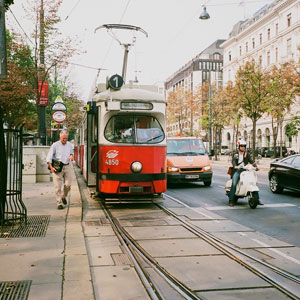
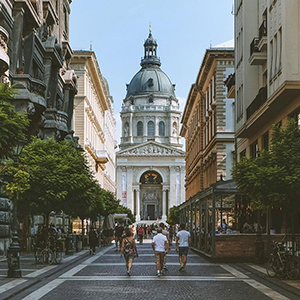
Tours of eastern Europe combine well with the countries of central Europe. You can easily see parts of Poland, Slovakia, Hungary, Austria and Czechia together on our tour of central and eastern Europe. Many great sights might be a border apart, but are never far away. Slovakia’s capital, Bratislava, is an hour by train from Vienna and two hours from Budapest. Krakow, Poland, is under three hours’ drive from the High Tatras and the Slovakia border, where a cable car can whisk you into high alpine nature that feels a lot wilder than the Alps further west.

“In Europe you’ve got so many countries packed together it’s relatively easy to join them together,” says Tom. “Prague and Vienna are geographically not that far apart, particularly if you’re coming from the USA. Also, you can be out in the countryside relatively quickly from these cities; you can get quite a big change in settings, in topography.”

On our tours you can travel between Budapest to Bucharest via train and coach, or travel between some of the countries that made up former Yugoslavia in southeast Europe: Albania, Macedonia and Kosovo.

Tours further east might take in Romania, Bulgaria and Serbia – the latter two countries sit just below Romania. Whilst Europe is a place full of charismatic cities, going on an organised tour gives you the ready-made means to get off the beaten track, too. On our holidays, these three countries are visited by tour bus rather than public transport, so you can access some more of the interesting rural areas: Bulgaria’s hot springs, and Romania’s castles.

Even further east? Tours combining Belarus, Moldova and Ukraine stopped running in 2022 after Russia’s invasion of Ukraine. You can still visit Moldova.

Easy borders

Whilst you’ll have your travel documents with you, you can cross borders between Schengen Zone countries with ease, as these have no border controls. – some people commute across borders every day. There are border controls to enter some non-EU countries. Our tours including Serbia usually allow an extra hour on the journey to get through (Serbia is not part of the EU, and not part of the Schengen Zone). Romania and Bulgaria became part of the zone in 2025.

Fast pace

Trips like this are quite full on – whilst these are not your typical coach tours, you are here to see a lot in a small space of time. Importantly, our tours let your feet touch the ground and see more of a country than just its capital – before whisking you off in a cable car, that is. Tours typically last two weeks; in that time you’ll see a good part of three or more countries.

Great guides

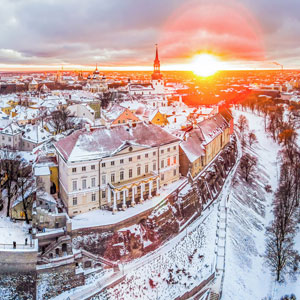
Seeing a country through the eyes of a local guide can give you a much better sense of place. Some of our guides might also have a direct experience of a regime or conflict, or know it from their parents, and can provide this context as you visit.

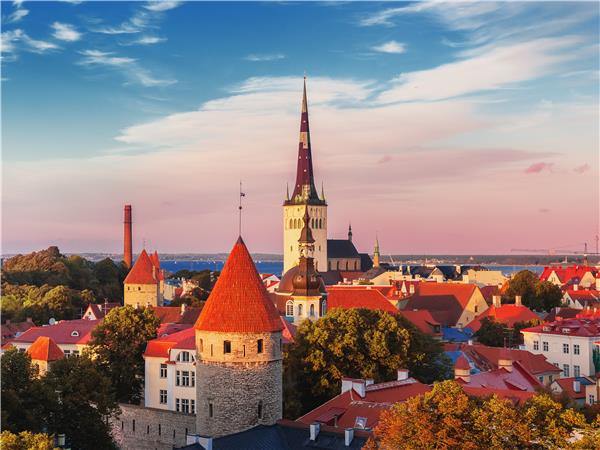
“Some of the guides have lived through it,” says Tom, which gives travellers the chance to “talk to someone who grew up in Communism or under dictatorship. Then, we’ll go to a Soviet museum, for example. It’s unique, having that exchange with a guide, when people are looking at history that occurred in their lifetime.”

Looking east across the Black Sea from a palace that has seen better days, eastern Europe can feel retro. In reality, many countries are modernising very fast – helped along by EU membership. Albania’s and Croatia’s coastlines show how overtourism – popularity at the expense of local communities – has spread here too. Responsible tourism – taking you into the heart of these countries, helped by great guides – can give you the 360-degree view that this area of the world deserves.
Written by Eloise Barker
Photo credits: [Page banner: Adventure Albania] [Intro: StefkaVasileva] [Easy distances: Martin Katler] [Great guides: Victor Malyushev]