Cycling holidays in Dordogne
Cyclists wanted: Dordogne has 1,200km of cycling routes, 500km created in just the last few years.
It’s part of national strategy for sustainable tourism: France wants to be the number one cycling destination in the world by 2030 and Nouvelle-Aquitaine, where Dordogne is set, is the region that tops most French cyclists’ to do lists.
So, the region wants you, but what’s in it for you? Only one of the most picturesque areas of France, a gastronomic heartland, and a prehistoric ‘Sistine Chapel’ – the caves of Lascaux.
The French call this region by its historic name, Perigord. It contains forests, farmland, and rivers in beautiful variations. There are, too, whole valleys of prehistoric finds and entire towns cut into cliffsides. The Dordogne was once on the frontline of the Hundred Years War between the French and English, but the fault-line is now a peaceful through-way for hikers and cyclists.
Travelling by bike is a great, low-carbon way to go. You could cover 50-60km a day and see a wealth of countryside and culture –or have a gentler route and still hit a handful of pretty villages on the way.
On our Dordogne cycling holidays you can expect not only picturesque landscapes but a chance to get closer to the culture behind the scenes, too. You’ll stay at quiet, independent hotels, where you’ll need to book in for dinner: because their restaurants, which use only the best local suppliers, are so popular among the residents.
It’s part of national strategy for sustainable tourism: France wants to be the number one cycling destination in the world by 2030 and Nouvelle-Aquitaine, where Dordogne is set, is the region that tops most French cyclists’ to do lists.
So, the region wants you, but what’s in it for you? Only one of the most picturesque areas of France, a gastronomic heartland, and a prehistoric ‘Sistine Chapel’ – the caves of Lascaux.
The French call this region by its historic name, Perigord. It contains forests, farmland, and rivers in beautiful variations. There are, too, whole valleys of prehistoric finds and entire towns cut into cliffsides. The Dordogne was once on the frontline of the Hundred Years War between the French and English, but the fault-line is now a peaceful through-way for hikers and cyclists.
Travelling by bike is a great, low-carbon way to go. You could cover 50-60km a day and see a wealth of countryside and culture –or have a gentler route and still hit a handful of pretty villages on the way.
On our Dordogne cycling holidays you can expect not only picturesque landscapes but a chance to get closer to the culture behind the scenes, too. You’ll stay at quiet, independent hotels, where you’ll need to book in for dinner: because their restaurants, which use only the best local suppliers, are so popular among the residents.

Cycling highlights in Dordogne
Sarlat-Cazoulès greenway
This relaxing, 35km former railway line ride is traffic free and flat, and provides a calm highway for pedestrians and cyclists alike. It starts from the medieval town of Sarlat, where many travellers begin their trips.Dordogne Valley
A companion you’ll bump into again and again on your journey, the Dordogne River provides flat cycling and pretty views, the odd fisherman in waders, historic stone bridge or river boat adding interest to the scene. There are numerous opportunities to canoe and swim here, for a break from the saddle.
Vezeres gorge
This entire valley has a UNESCO listing, containing no fewer than 40 prehistoric painted caves – the highest concentration in the world. Cycling and hiking routes make the most of the routes along the valley’s pretty contours, and the same views enjoyed tens of thousands of years ago by our early ancestors.
Rocamadour
You need to sneak across departments – out of Dordogne and into Lot – to reach this extraordinary pilgrimage town. Leave the forests behind, and you’ll find yourself cycling instead across limestone plateau to Rocamadour. The town clings to a gorge above the River Alzou, occasionally thronged by hot air balloons, frequently attended by pilgrims – and even more so by tourists, especially in July and August.
Domme
Domme is a bastide town – a fortified medieval settlement – that became a frontline in the Hundred Years’ War between the French and English. When Domme was built, its scenic setting was incidental, but now it’s everything, and crowds come to enjoy the extraordinary views of the valley from (cyclists take note) 250m above.
Going underground
Whilst you can’t cycle in any of the region’s many caves, it’s worth locking up the bike to see them. The world-famous Lascaux Caves can be experienced via a very swanky modern museum containing a perfect replica (the originals are too fragile to be open to tourists); the town of Les Ezies has the National Prehistory Museum, and then there’s Gouffre de Padirac, a cavern near Rocamadour with its own underground river.
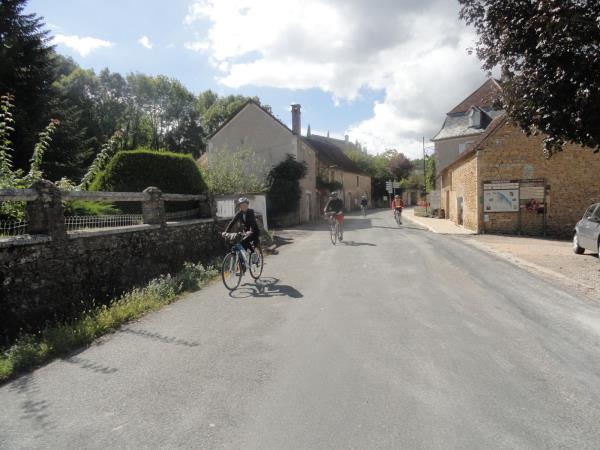
Dordogne cycling tour, France
Ride through remarkable Perigord and Quercy countryside
From
€1060 to €2360
8 days
ex flights
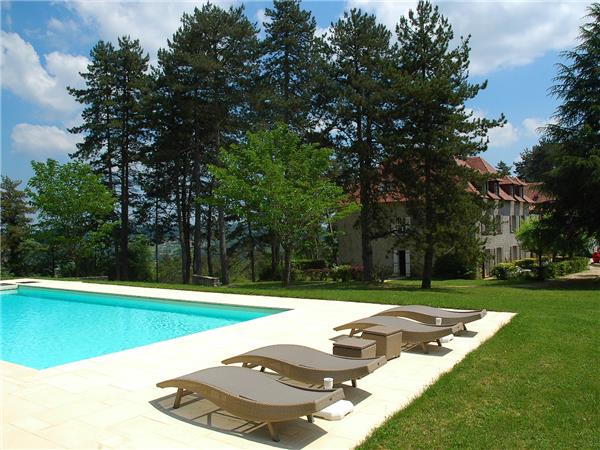
Dordogne self guided cycling tour, France
Dordogne gastronomic cycling in historic region of France
From
£1219 to £1349
9 days
ex flights


Contact Us

Call us for a chat about our holidays. We are happy to discuss your holiday and help in any way we can. No bots, queues or awful hold music.

01273 823 700
Call us until 4pm
Calling from outside the UK


What’s Dordogne like for cyclists?
Cyclists wanted
Dordogne is no stranger to visitors. Three million come every year, six times the number of inhabitants. The Lascaux Caves, found near the town of Montignac, are so famous that their replicas have gone on tour around the world. To French visitors, the region is renowned for two things above all others: duck and geese produce. Lots of domestic visitors who come to the Dordogne are here for the duck confit.The region is keen for more cyclists instead. And there are now more cycling operators here than anywhere else in France.
This is a touristy area of France in summer, but crowds are concentrated on the historic towns and caves. Going on a cycling holiday helps you spread tourist custom to further reaches, and quieter places.

Route Josephine Baker is a quiet road that runs close to the Dordogne River – it’s named after the dancer, whose former residence, the fantastical Chateau des Milandes, is nearby.![]()

Exploring the D roads
The area is threaded by quiet D roads (departmental roads). Whilst they might undulate, they’re smooth and in good condition. The way is lined with low oak trees and white limestone walls, and crosses between walnut plantations and sunflower fields. The local traffic is exceptionally familiar with cyclists, and courteous towards them too. The only major annoyance is likely to be overtaking campervans.
Why campervans? Because this area is renowned for being pretty. Staying green year-round, it has a climate that’s like the UK’s – except sunnier. Some nickname the area ‘Dordogneshire’; it’s second only to Paris for the number of British people who call it home. There are also plenty of domestic visitors, of course, most marching on an empty stomach to the nearest terrace for dejeuner. Cyclists can fuel up on potatoes cooked in enough goose fat to clad a cross-channel swimmer and cut through it with a glass of local wine: Bordeaux might be close, but Bergerac is even closer.
Why campervans? Because this area is renowned for being pretty. Staying green year-round, it has a climate that’s like the UK’s – except sunnier. Some nickname the area ‘Dordogneshire’; it’s second only to Paris for the number of British people who call it home. There are also plenty of domestic visitors, of course, most marching on an empty stomach to the nearest terrace for dejeuner. Cyclists can fuel up on potatoes cooked in enough goose fat to clad a cross-channel swimmer and cut through it with a glass of local wine: Bordeaux might be close, but Bergerac is even closer.
Cyclists can fuel up on potatoes cooked in enough goose fat to clad a cross-channel swimmer![]()
Pretty villages
There are 39 villages in the region that are on the official list of the ‘prettiest villages in France’ – the highest concentration in the country – so you’ll find plenty of places with their window boxes in order. The oldest houses have roofs made from stone tiles (known as lauze) – placed without mortar by a master lauzier. Fruit trees are espaliered against walls, as though frozen in the act of letting people pass. Cars are usually directed to park outside town walls and the streets are busy with foot traffic, grasping ice cream or heading for lunch at one of the many family-run restaurants.
Market day
The towns in the area are at turns very sleepy and very busy – depending on when market day is. Sarlat’s is Wednesday and Saturday, Les Eyzies, Monday. If you don’t go into the trip aware of what’s in season, by the end of the first day you’ll know – because the market will be full of it – truffles in winter, asparagus and strawberries in spring (Dordogne produces 60 percent of French strawberries, but they’re surely sweetest at source). It’s easy cut your food miles and eat seasonal here.
For cyclists, markets are fantastic for locally-sourced picnic fodder, ranging from the simple – figs, tomatoes, bread, to the elaborate – walnut tarts and cherry clafoutis (custard dessert).
For cyclists, markets are fantastic for locally-sourced picnic fodder, ranging from the simple – figs, tomatoes, bread, to the elaborate – walnut tarts and cherry clafoutis (custard dessert).
Practicalities
What’s the Dordogne like for cycling?
You can expect moderate cycling in the Dordogne region. It’s flat by the rivers. Most routes also go up into the surrounding countryside, which is gently undulating, with some hills up to the more dramatically situated towns, and up to the plateaus of Lot. There are quiet roads and traffic-free greenways throughout.
Travel with an e-bike, road bike, or hybrid. Mountain biking is increasingly popular, too.
Travel with an e-bike, road bike, or hybrid. Mountain biking is increasingly popular, too.
When is the best time to cycle?
The best time to cycle is April to October. The tourist season is in full swing by May, which means busier towns but also that more restaurants and shops will be open. The busiest time of year for the region is high summer (July and August) but your route will quickly whisk you away from the crowds.
It might get to 35°C in summer, but temperate weather is more common (though climate change is heating Southern France year on year). The one place that’s always a stubborn 14°C or so is underground – the caves.
It might get to 35°C in summer, but temperate weather is more common (though climate change is heating Southern France year on year). The one place that’s always a stubborn 14°C or so is underground – the caves.
Can I get there by train?
You can reach the Dordogne region by train from Paris (five and a half hours) or Toulouse (under two hours); alight at Souillac.
More France cycling articles
Find out when the cycling season starts and ends, and the best time to go.
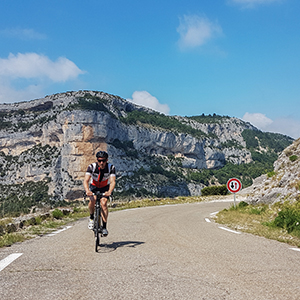
Our cycling in France travel guide finds quiet country lanes across the land.
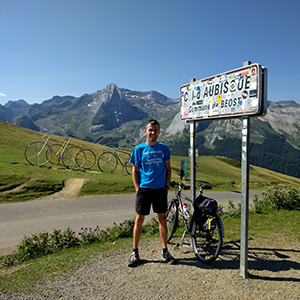
France is vast so you’d be wise to peruse our cycling in France map & highlights guide.
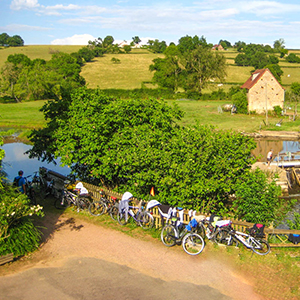
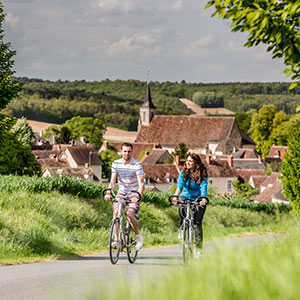
Less of an athletic endeavour, more a gentle way to explore the châteaux, vineyards and cuisine.
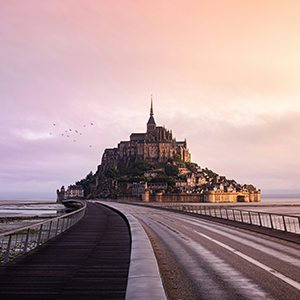
Our cycling holidays in Normandy explore the region’s natural and cultural delights. Find out where to go.
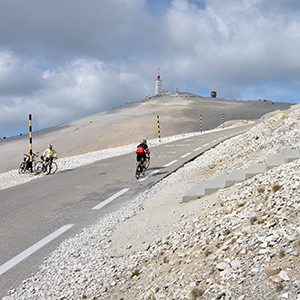
Discover the irresistibly charming landscapes and communities of Provence.
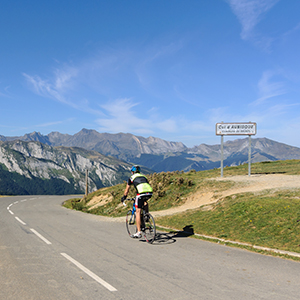
This coast to coast challenge isn’t for everyone, so do your homework before signing up.
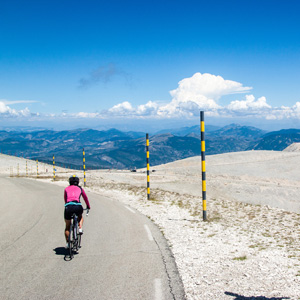
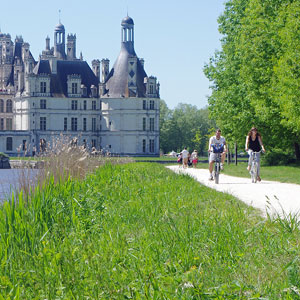
What a better way to explore the Loire Valley than on a chateau to chateau cycle.
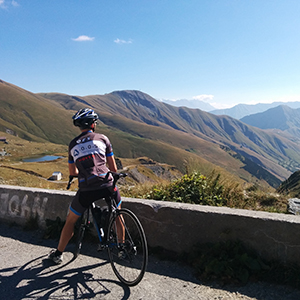
We’ve picked key tips from friends in France so you can climb cols with confidence.
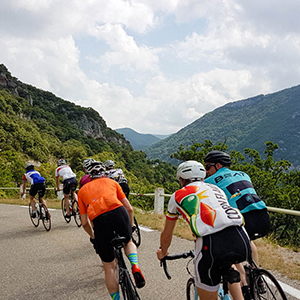
Decide which type of cycling holiday in France suits you before you set off.