French Polynesia culture
From a playlist to listen to on the plane to a pirogue-plying guide – here’s how to discover the culture of French Polynesia.
To reach Hervé’s house, you have to wade through a river. Once across, you’ll find a secret garden full of medicinal and useful plants, and Taievau Hervé Maraetaata himself, a Tahiti-based guide, Polynesian storyteller, and one of the guardians of the islands’ living heritage.Under his stewardship, travellers tour the garden, learn to make dishes from just-foraged plants, and, seated on the grass, listen to local legends.
There’s a version of French Polynesian culture that slots easily into a hotel dining room or the stage on a cruise ship – a dance troupe performing the haka or drummers playing on their pahu. In fact, travellers might be forgiven for thinking that this is a destination where culture comes to you – when our small ship cruise docks in the Marquesas, it’s met by stallholders and performers. Disembark from an aircraft and your first experience might be the strong scent of tiare – Polynesian gardenia – from the lei placed over your head.
But go deeper and you’ll discover more on these islands – the heritage of the Maohi people, revived cultural practices and locally-run experiences. It’s time to cross the river.
To reach Hervé’s house, you have to wade through a river. Once across, you’ll find a secret garden full of medicinal and useful plants, and Taievau Hervé Maraetaata himself, a Tahiti-based guide, Polynesian storyteller, and one of the guardians of the islands’ living heritage.Under his stewardship, travellers tour the garden, learn to make dishes from just-foraged plants, and, seated on the grass, listen to local legends.
There’s a version of French Polynesian culture that slots easily into a hotel dining room or the stage on a cruise ship – a dance troupe performing the haka or drummers playing on their pahu. In fact, travellers might be forgiven for thinking that this is a destination where culture comes to you – when our small ship cruise docks in the Marquesas, it’s met by stallholders and performers. Disembark from an aircraft and your first experience might be the strong scent of tiare – Polynesian gardenia – from the lei placed over your head.
But go deeper and you’ll discover more on these islands – the heritage of the Maohi people, revived cultural practices and locally-run experiences. It’s time to cross the river.

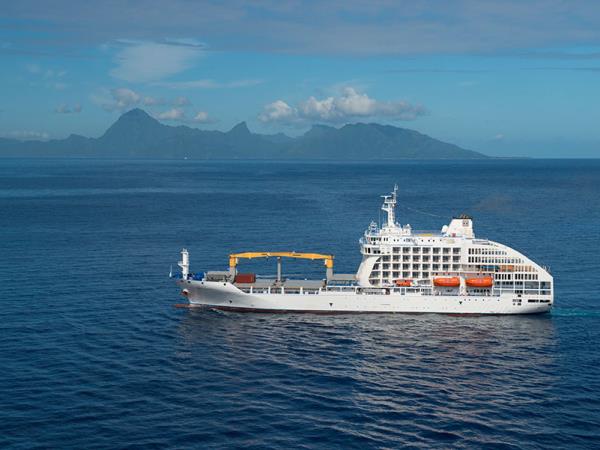
French Polynesia cruise in the South Pacific
Sail this Polynesian paradise visiting at least 12 islands
From
£2908 to £3125
12 days
ex flights
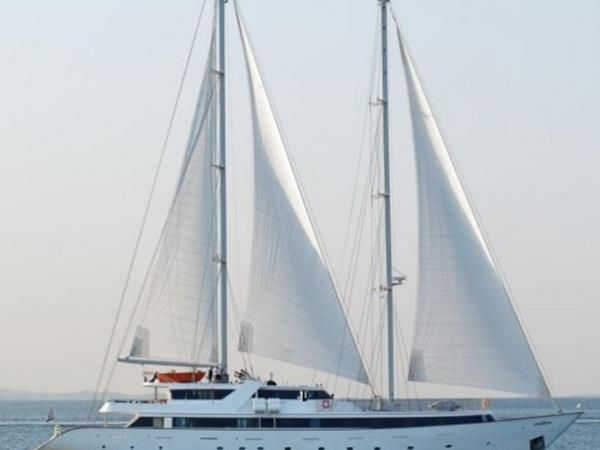
French Polynesia 10 night small ship cruise
South Pacific islands rich in nature and culture
From
£3122 to £5557
11 days
ex flights
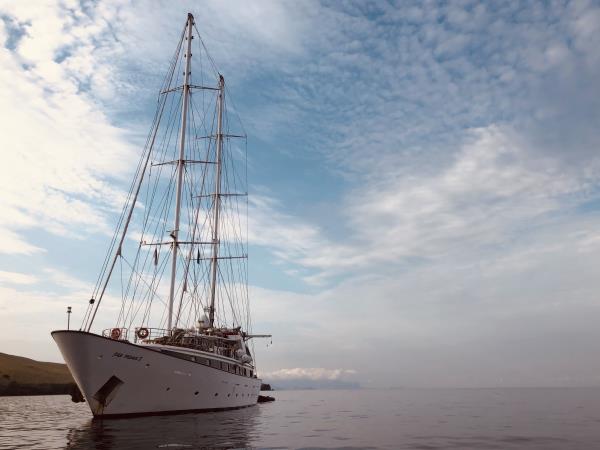
French Polynesia small ship cruise
Sail around the vivid turquoise lagoons of Tahiti
From
£2226 to £3904
8 days
ex flights
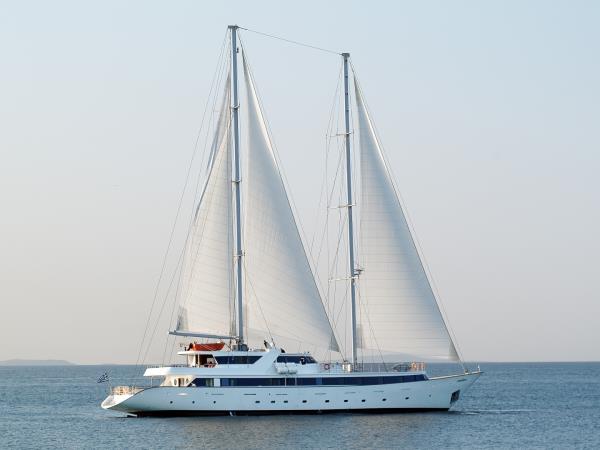
Tahiti and the Society Islands cruise
A cruise from Tahiti and the Society Islands 10 nights
From
£3417 to £5678
11 days
ex flights


Contact Us
Call us for a chat about our holidays. We are happy to discuss your holiday and help in any way we can. No bots, queues or awful hold music.

01273 823 700
Call us after 10am
Calling from outside the UK

Understanding French Polynesian culture

Polynesian culture is not just island culture, but an islands culture that spans an area of sea the size of a continent.![]()

A Polynesian man called Tupaia was employed as Captain Cook’s guide in the South Pacific. He astounded the European crew with his geographical knowledge, his ability to navigate between seemingly unconnected islands, and his communication with dispersed island inhabitants as he went. Polynesian culture is not just island culture, but an islands culture that spans an area of sea the size of a continent. Core to Polynesian culture is the idea of mana – a binding spirit that unites disparate places.
Now it’s easier to fly to Paris than to Samoa from Tahiti, and these island groups are linked to other nations, rather than each other – French Polynesia is now a semi-autonomous French territory. European colonisers didn’t just employ French Polynesians as navigators, but made use of the islands in other ways, changing the culture as they did.
Now it’s easier to fly to Paris than to Samoa from Tahiti, and these island groups are linked to other nations, rather than each other – French Polynesia is now a semi-autonomous French territory. European colonisers didn’t just employ French Polynesians as navigators, but made use of the islands in other ways, changing the culture as they did.
A lost culture
“Today, our culture is evolving, but we are trying to go backwards if that makes sense,” explains Alexandrine Wan, founder of a Tahiti-based tour operator, “We try to go backwards to reclaim our identity, understand our roots better, and take better care of what’s around us.
“With colonisation, with the missionaries, we lost a lot of our culture. So today it’s about renewal. New generations are going back to things like dancing and tattoos; they’re trying to find their culture and, when they do, they’re proud it.”
The last Friday in May has recently been celebrated as Pareu Day on Tahiti. The tourist board encourages Tahitians to don their pareu – a sarong-style garment – for the day. The day is not just for tourism. Traditional dress, tattooing, music, religious stories, dance – and even activities that might lead to dancing were all erased on the islands over the centuries by European missionaries. Pareu Day is one small step towards restoring pride in Tahitian culture.
From the 1950s onwards, as the influence of the church over society waned, traditional cultural practices started to return – but some had been lost. The oral tradition had been disrupted, breaking chains of knowledge transfer from elders.
Ironically, written accounts by some of the first foreign visitors and colonisers – biased as they were, could be used as sources from which to revive lost culture. When dancing was brought back, it found a space in hotels – where it could be performed for tourists before it was culturally acceptable in local spaces. A cultural revival followed in the 1970s and continues today. The annual Heiva Festival, previously banned, celebrates many of the once-lost dances every summer in Papeete’s To‘ata Square and across the islands.
“With colonisation, with the missionaries, we lost a lot of our culture. So today it’s about renewal. New generations are going back to things like dancing and tattoos; they’re trying to find their culture and, when they do, they’re proud it.”
The last Friday in May has recently been celebrated as Pareu Day on Tahiti. The tourist board encourages Tahitians to don their pareu – a sarong-style garment – for the day. The day is not just for tourism. Traditional dress, tattooing, music, religious stories, dance – and even activities that might lead to dancing were all erased on the islands over the centuries by European missionaries. Pareu Day is one small step towards restoring pride in Tahitian culture.
From the 1950s onwards, as the influence of the church over society waned, traditional cultural practices started to return – but some had been lost. The oral tradition had been disrupted, breaking chains of knowledge transfer from elders.
Ironically, written accounts by some of the first foreign visitors and colonisers – biased as they were, could be used as sources from which to revive lost culture. When dancing was brought back, it found a space in hotels – where it could be performed for tourists before it was culturally acceptable in local spaces. A cultural revival followed in the 1970s and continues today. The annual Heiva Festival, previously banned, celebrates many of the once-lost dances every summer in Papeete’s To‘ata Square and across the islands.
They’re rare people, and we want to respect that.![]()
Protecting French Polynesian culture
French Polynesian culture now has spaces to protect it – like the dedicated Maison de la Culture de Tahiti (Te Fare Tauhiti Nui) in Papeete, and the Matavaa O Te Henua Enana (the Marquesas Art and Culture Festival, occurring every four years on the Marquesas). But globalisation still threatens cultural practices here, as it does everywhere.
Today, tourism still has a role in preserving island heritage. Around 18 percent of the population are employed in the tourism industry – it has a large influence over the islands.
Yet the best experiences, like a day you spend with Hervé, aren’t necessarily, as Alexandrine explains, with ‘tourism people’, and her company recognises the need to protect their ‘guardians of knowledge’ from the demands of the tourism industry.
“Hervé teaches kids about the botanical world, the wind, the stars. He lived it, he didn’t study it… Hervé is well known in the community but we spent two years really getting to know him, creating a partnership – he doesn’t work with anyone else. We have staff dedicated to staying in touch with people like Hervé, ensuring their invoices are right. Because they’re rare people, and we want to respect that.”
Alexandrine has a sustainable tourism non-profit running alongside their tour company, dedicated to protecting French Polynesian nature and culture.
Today, tourism still has a role in preserving island heritage. Around 18 percent of the population are employed in the tourism industry – it has a large influence over the islands.
Yet the best experiences, like a day you spend with Hervé, aren’t necessarily, as Alexandrine explains, with ‘tourism people’, and her company recognises the need to protect their ‘guardians of knowledge’ from the demands of the tourism industry.
“Hervé teaches kids about the botanical world, the wind, the stars. He lived it, he didn’t study it… Hervé is well known in the community but we spent two years really getting to know him, creating a partnership – he doesn’t work with anyone else. We have staff dedicated to staying in touch with people like Hervé, ensuring their invoices are right. Because they’re rare people, and we want to respect that.”
Alexandrine has a sustainable tourism non-profit running alongside their tour company, dedicated to protecting French Polynesian nature and culture.
How to experience French Polynesia culture on your holiday
Polynesians are really about feelings... it’s about humanity, realness; they will host you for a month, open their hearts to you.![]()
“One word that comes to mind is humility,” says Alexandrine. “Come with a humble mindset that you could be taught something. When we teach sailing here, for example, we know the sea has the power to take us very quickly, so we know to be humble around it.”
Early Polynesians, Alexandrine explains, were humble and today some of those sensibilities endure. “Polynesians are really about feelings, they don’t care about money so much, it’s about humanity, realness; they will host you for a month, open their hearts to you. So it’s about energy, the way you act.”
Early Polynesians, Alexandrine explains, were humble and today some of those sensibilities endure. “Polynesians are really about feelings, they don’t care about money so much, it’s about humanity, realness; they will host you for a month, open their hearts to you. So it’s about energy, the way you act.”
Tips for top cultural experiences
Start before you travel. You might be encouraged to make a pledge before visiting to respect the islands and appreciate their culture. Listen to a curated playlist of modern Polynesian artists on the flight, look up artisanal makers before you go, and learn a few Tahitian or other island group phrases (‘hello’ is ‘Ia ora na’ in Tahitian).
Tour the markets and connect with makers. Look out for tapa cloth, which isn’t woven but is instead made from soaked bark, and admire beautiful tifaifai – colourful, hand-sewn quilts which take months to complete.
Go to church. Christianity is still the main faith on the island, and Sunday services can be busy and social. Our partner operating tours on Rurutu encourages guests to pop in if they fancy in between whale watching and whale swimming excursions.
Hire a car to explore islands like Moorea – giving you the chance to make your own stops and strike up your own conversations. On other islands, like Huahine, go by bike. That way you might discover a bringue – the French word is used on the island for any informal, fun gathering – a local favourite surf spot, or your new favourite snack from a roulette (a food truck).
Polynesian beauty traditionally utilises the islands’ natural resources: perfuming the hair with flowers and moisturising the skin with coconut. Resort spas replicate the experience – a Polynesian beauty package might involve massages with monoi oil – Tahitian scented oil – using taurumi – a massage art.
Tour the markets and connect with makers. Look out for tapa cloth, which isn’t woven but is instead made from soaked bark, and admire beautiful tifaifai – colourful, hand-sewn quilts which take months to complete.
Go to church. Christianity is still the main faith on the island, and Sunday services can be busy and social. Our partner operating tours on Rurutu encourages guests to pop in if they fancy in between whale watching and whale swimming excursions.
Hire a car to explore islands like Moorea – giving you the chance to make your own stops and strike up your own conversations. On other islands, like Huahine, go by bike. That way you might discover a bringue – the French word is used on the island for any informal, fun gathering – a local favourite surf spot, or your new favourite snack from a roulette (a food truck).
Polynesian beauty traditionally utilises the islands’ natural resources: perfuming the hair with flowers and moisturising the skin with coconut. Resort spas replicate the experience – a Polynesian beauty package might involve massages with monoi oil – Tahitian scented oil – using taurumi – a massage art.
Come with a humble mindset that you could be taught something.![]()
Get a meaningful tattoo. On our island-hopping holidays you can travel in a boat with a tattoo parlour on board. Marquesan tattoos are integral to local life and acquired over a lifetime. You can work with a Marquesan tattoo artist on one of the long crossings between island groups to realise your own message in the pictographs – the symbols used are shared, but their combination is unique to you.
Plantation and pearl farm tours help you appreciate how the islands’ natural abundance shaped life here: coconut and vanilla are exported, whilst farms also grow watermelons, lychees, pineapples, coffee, bananas and breadfruit.
The original people of French Polynesia were the Maohi – direct ancestors of those who live here today. Archaeological sites on the island point to their presence, and remain important in Polynesian culture today. Be respectful around marae and other important sites– very old ceremonial meeting places – some actions might be considered tapu (taboo).
At the end of Hervé’s experiences in his garden is a leave taking – a traditional closing ceremony known as an ‘ava. In a gesture of mutual respect and unity you’ll drink from a shared cup as you say your farewells. You’ll go away feeling a little closer to the people you’ve just met. There’s no better shortcut to cultural appreciation than that.
Plantation and pearl farm tours help you appreciate how the islands’ natural abundance shaped life here: coconut and vanilla are exported, whilst farms also grow watermelons, lychees, pineapples, coffee, bananas and breadfruit.
The original people of French Polynesia were the Maohi – direct ancestors of those who live here today. Archaeological sites on the island point to their presence, and remain important in Polynesian culture today. Be respectful around marae and other important sites– very old ceremonial meeting places – some actions might be considered tapu (taboo).
At the end of Hervé’s experiences in his garden is a leave taking – a traditional closing ceremony known as an ‘ava. In a gesture of mutual respect and unity you’ll drink from a shared cup as you say your farewells. You’ll go away feeling a little closer to the people you’ve just met. There’s no better shortcut to cultural appreciation than that.
More French Polynesia articles
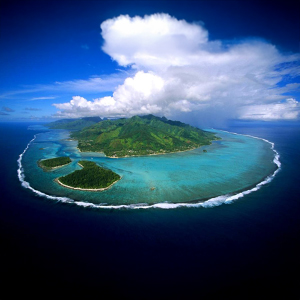
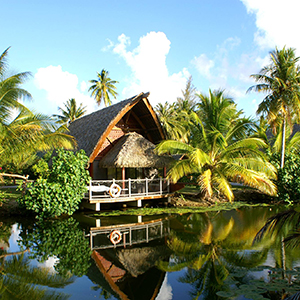
August to October is the best time to visit for whale watching, whilst December's expensive.
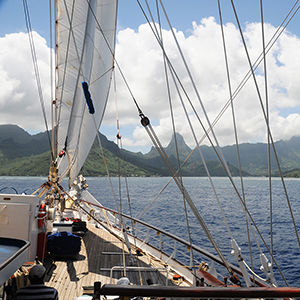
Travel on a ship that is also carrying vital supplies to the islands.
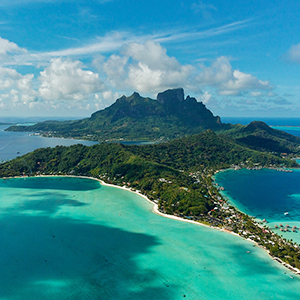
Swim or snorkel with sharks and manta rays, hike extinct volcanoes and explore a true tropical beauty.
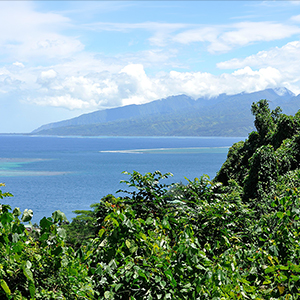
Our guide to the main island in French Polynesia covers our top things to do here from culture to food.
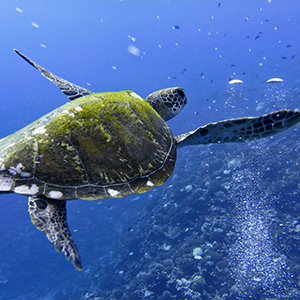
We look at overfishing, marine conservation and swimming with whales.



.jpg)