Toy trains in India, Shimla, Darjeeling & Nilgiri (Ooty)

It’s not about the speed; it’s about the experience. In fact, the slowness is the whole point.![]()

India’s toy trains, the heritage railways that climb laboriously into the Himalayan foothills in the north, and through the Western Ghats in the south, are some of the country’s loveliest heritage attractions, and superb examples of engineering skill from the 19th and 20th centuries. Originally built to transport administrators of the British Raj to cooler hill stations during the summer months, they are now a popular feature of our North India tour.

What are the toy trains in India?
India’s Toy Trains are mountain railways that involved astonishing feats of engineering as well as incredibly hard and dangerous labour for those carrying out the work. Routes had to be laid through treacherous highland terrain, up steep mountainsides; multitudes of bridges built; and tunnels dug through sheer rock walls. Consequently, the tracks had to be narrow gauge and the trains correspondingly small, hence why they are called ‘toy trains’.
In the mid-19th century, when the East India Company was nationalised and the British Empire took over its Indian interests, many administrators were required, and they were based predominantly in Calcutta, Bombay, Delhi and Madras. These places are prone to extreme heat and humidity in summer, so the British would retreat to the nearest hill stations, the highest elevations they could reach that were close to the cities. This is why the mountain railways had to be developed, and eventually they and the hill stations became popular with local Indians, too.
Three lines – the Kalka-Shimla Railway, the Darjeeling Himalayan Railway and the Nilgiri Mountain Railway – are collectively known as the Mountain Railways of India and are a UNESCO World Heritage Site. Two further lines, the Matheran Hill Railway in Maharashtra and the Kangra Valley Railway running between Punjab and Himachal Pradesh, are under consideration for listing.
Most of the trains are now diesel rather than steam, but otherwise they don’t look a great deal different from those of the 19th century. Well maintained and fairly comfortable, if a little cramped, they’re a beguiling experience that you couldn’t rush even if you tried. In fact, the slowness is the whole point.
In the mid-19th century, when the East India Company was nationalised and the British Empire took over its Indian interests, many administrators were required, and they were based predominantly in Calcutta, Bombay, Delhi and Madras. These places are prone to extreme heat and humidity in summer, so the British would retreat to the nearest hill stations, the highest elevations they could reach that were close to the cities. This is why the mountain railways had to be developed, and eventually they and the hill stations became popular with local Indians, too.
Three lines – the Kalka-Shimla Railway, the Darjeeling Himalayan Railway and the Nilgiri Mountain Railway – are collectively known as the Mountain Railways of India and are a UNESCO World Heritage Site. Two further lines, the Matheran Hill Railway in Maharashtra and the Kangra Valley Railway running between Punjab and Himachal Pradesh, are under consideration for listing.
Most of the trains are now diesel rather than steam, but otherwise they don’t look a great deal different from those of the 19th century. Well maintained and fairly comfortable, if a little cramped, they’re a beguiling experience that you couldn’t rush even if you tried. In fact, the slowness is the whole point.
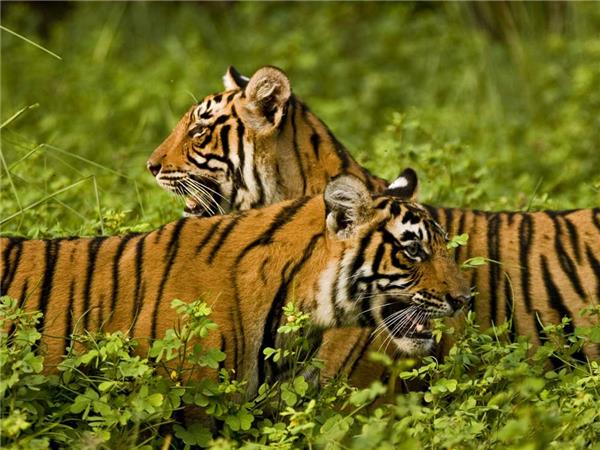
Rajasthan tours by rail, India
Discover the evocative northern province of Rajasthan
From
£988 to £1450
15 days
ex flights
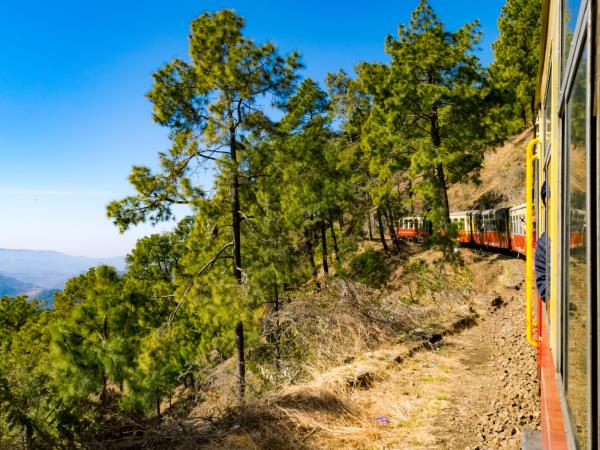
Indian Himalayas tour, toy trains and hill stations
A train through rural India & hill stations of the Himalayas
From
£3003
15 days
ex flights
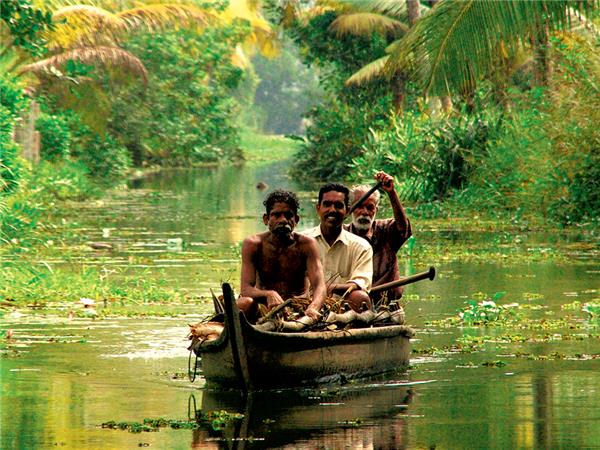
South India tour by bus & rail
Head to the beaches and backwaters of southern India.
From
£595 to £945
16 days
ex flights
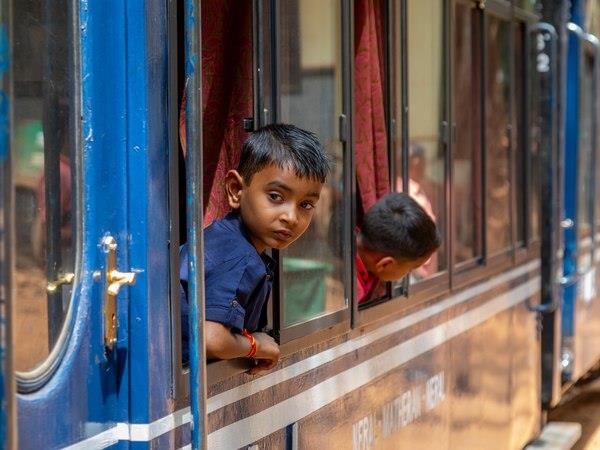
Northern India holiday, by rail and road
Rail journey from Punjab plains to Himalayan hills
From
£3003
14 days
ex flights

South India & Kerala holiday
Fishing villages and seaside communities plus iconic train journeys
From
£1285 to £1750
15 days
ex flights
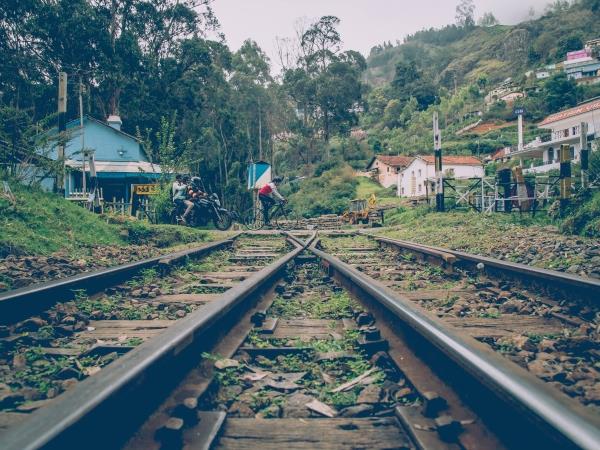
South India by rail holiday
Rail trip visiting Kerala and Tamil Nadu
From
£3330
19 days
inc UK flights


Contact Us

Call us for a chat about our holidays. We are happy to discuss your holiday and help in any way we can. No bots, queues or awful hold music.

01273 823 700
Call us after 10am
Calling from outside the UK


The Kalka-Shimla Railway
If you get the earliest train, you can witness sunrise over the Himalayas![]()
The Kalka-Shimla Railway, which can be easily folded into our tailor made tours of the Indian Himalayas, is the longest of the mountain railways of India, winding 96km into the Himalayan foothills, through forests laced with mist and dotted with small villages. When the line was constructed, whole armies of workers were needed, so there are communities all the way along the route where you’ll stop for 10 or 15 minutes at a time to stretch your legs, take photographs and perhaps purchase some snacks from platform vendors.
Along its route, the Kalka-Shimla train rounds over 900 bends, passing through more than 100 tunnels and over more than 850 bridges. Yet it took just five years to complete! Bridge 226 is particularly notable, a five-tier stone-arched beauty, while Tunnel 33 has a fascinating story attached to it. Legend has it that the British engineer Colonel Barog was charged with digging it and decided to save time by having two teams work from either side of the mountain and meet in the middle.
Sadly for Barog, he miscalculated, and the two teams missed each other. Such was his shame that the unfortunate colonel shot himself and was buried in front of the tunnel, which is said to be haunted by his ghost. There seems to be no actual evidence for any of this, but it’s an interesting story to entertain your fellow travellers with as you pass through the tunnel.
Creeping up from the plains below over some very steep inclines, the train can take six hours to reach its final destination in the late afternoon, although most journeys are much shorter. “It’s a beautiful journey but painfully slow and not exactly luxurious, so the full distance is really the reserve of train enthusiasts,” says Ravi Kumar, a destination manager for our partner Far and Wild Travel. “Most people will do just a 90-minute or two-hour section. And if you do want to do the complete journey then we recommend a night in Chandigarh (30km from Kalka) beforehand.”
Along its route, the Kalka-Shimla train rounds over 900 bends, passing through more than 100 tunnels and over more than 850 bridges. Yet it took just five years to complete! Bridge 226 is particularly notable, a five-tier stone-arched beauty, while Tunnel 33 has a fascinating story attached to it. Legend has it that the British engineer Colonel Barog was charged with digging it and decided to save time by having two teams work from either side of the mountain and meet in the middle.
Sadly for Barog, he miscalculated, and the two teams missed each other. Such was his shame that the unfortunate colonel shot himself and was buried in front of the tunnel, which is said to be haunted by his ghost. There seems to be no actual evidence for any of this, but it’s an interesting story to entertain your fellow travellers with as you pass through the tunnel.
Creeping up from the plains below over some very steep inclines, the train can take six hours to reach its final destination in the late afternoon, although most journeys are much shorter. “It’s a beautiful journey but painfully slow and not exactly luxurious, so the full distance is really the reserve of train enthusiasts,” says Ravi Kumar, a destination manager for our partner Far and Wild Travel. “Most people will do just a 90-minute or two-hour section. And if you do want to do the complete journey then we recommend a night in Chandigarh (30km from Kalka) beforehand.”
What are the trains like on the Kalka-Shimla Railway?
There are about four daily trains each way between Kalka and Shimla, and not all of them stop at every station. The Vistadome train is best for the views, as carriages have glass ceilings, panoramic windows and seats that rotate, whereas the Himalayan Queen is a more budget-friendly option. The time of day can make a big difference: if you get the earliest train you can witness sunrise over the Himalayas. Which is nice.
Onboard toilet facilities will be on the basic side, but snacks and meals are available. There is no Wi-Fi, but you won’t miss it with these views of mountain peaks and lush green hillsides cascading down into Himalayan valleys.
Onboard toilet facilities will be on the basic side, but snacks and meals are available. There is no Wi-Fi, but you won’t miss it with these views of mountain peaks and lush green hillsides cascading down into Himalayan valleys.
What to do in Shimla
Stretching out along a crescent-shaped ridge, shaded by forests of pine and fir that scent the crisp mountain air, the historic hill station of Shimla once served as the summer capital of British India. It sits at 2,200m above sea level – your elevation gain from Kalka is around 1,420m – so ensure you pack extra layers. The town is a short walk from the train station, but taxis and tuk-tuks are available should you prefer them.
“We recommend three days in Shimla,” says Ravi. “The first to arrive, the second to relax, and the third for sightseeing. The colonial architecture around the Mall is beautiful.” On our India holidays that include the Kalka-Shimla railway, you can admire highlights including the Post Office, Scandal Point with its mock Tudor architecture, and the Viceregal Lodge, where some of the negotiations around Indian independence were held.
“We recommend three days in Shimla,” says Ravi. “The first to arrive, the second to relax, and the third for sightseeing. The colonial architecture around the Mall is beautiful.” On our India holidays that include the Kalka-Shimla railway, you can admire highlights including the Post Office, Scandal Point with its mock Tudor architecture, and the Viceregal Lodge, where some of the negotiations around Indian independence were held.
The Nilgiri Mountain Railway
“The Ooty train in southern India is also popular,” says Ravi. “Though a little more basic than the Shimla Railway, it is no less charming.”
It takes around five hours to complete a trip of just 46km on the Nilgiri Mountain Railway in Tamil Nadu, which links the town of Mettupalayam with the hill station of Udhagamandalam (Ootacamund), or Ooty for short. This is the only rack-and-pinion line in India, where the train has a cog wheel beneath it that meshes with a toothed rail, allowing it to tackle very steep gradients. Indeed, this may be the steepest railway gradient in Asia, and you crawl along as the line traverses some 208 curves, 250 bridges and 16 tunnels.
Don’t let the height put you off, though. The views as you pass through the Nilgiri Hills, known as the Blue Mountains, are stunning – thick eucalyptus forests and verdant tea gardens drift slowly past the windows. Ooty itself is a small town, and most people don’t stick around for long before continuing on. Ravi and his team recommend shortening the journey, if you wish, by boarding the train in Coonoor instead of Mettupalayam.
It takes around five hours to complete a trip of just 46km on the Nilgiri Mountain Railway in Tamil Nadu, which links the town of Mettupalayam with the hill station of Udhagamandalam (Ootacamund), or Ooty for short. This is the only rack-and-pinion line in India, where the train has a cog wheel beneath it that meshes with a toothed rail, allowing it to tackle very steep gradients. Indeed, this may be the steepest railway gradient in Asia, and you crawl along as the line traverses some 208 curves, 250 bridges and 16 tunnels.
Don’t let the height put you off, though. The views as you pass through the Nilgiri Hills, known as the Blue Mountains, are stunning – thick eucalyptus forests and verdant tea gardens drift slowly past the windows. Ooty itself is a small town, and most people don’t stick around for long before continuing on. Ravi and his team recommend shortening the journey, if you wish, by boarding the train in Coonoor instead of Mettupalayam.
The Darjeeling Himalayan Railway
Perhaps the best-known toy train in India, the Darjeeling Himalayan Railway is a seven-hour ride between New Jalpaiguri (NJP) and Darjeeling, which lies at the feet of the mighty Himalayas in West Bengal. The journey is now done by diesel locomotives rather than steam, so it’s worth taking the 30-minute ride from Darjeeling to Ghoom – India’s highest train station at 2,226m – which still uses a steam loco.
There are just 88km between the towns of New Jalpaiguri (NJP) and Darjeeling in West Bengal. The twisting route passes through stunning scenery, but it takes more than seven hours to complete the trip. This also allows you to experience another fantastic feat of British-Indian engineering: the Batasia Loop, where the track spirals a full 360 degrees, taking in a Gurkha war memorial and stunning mountain views as it does.
There are just 88km between the towns of New Jalpaiguri (NJP) and Darjeeling in West Bengal. The twisting route passes through stunning scenery, but it takes more than seven hours to complete the trip. This also allows you to experience another fantastic feat of British-Indian engineering: the Batasia Loop, where the track spirals a full 360 degrees, taking in a Gurkha war memorial and stunning mountain views as it does.
When to travel on India’s toy trains
“October to March is the ideal time for these train journeys, and also when most people tend to visit India,” says Ravi. The only one that runs all year-round is the Kalka-Shimla Railway, however. Schedules tend to be fairly punctual, but they can be affected by both rain and snowfall.
More India railway articles
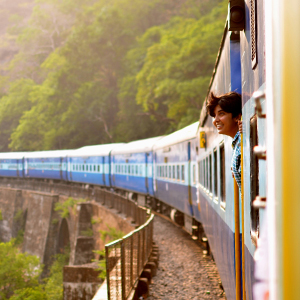
Going by train is a super-satisfying way, not just to get around in India, but to experience the country as you journey.
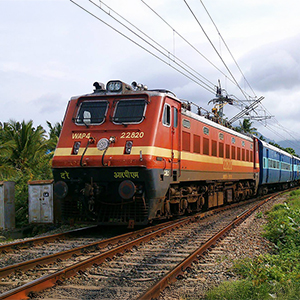
The beautiful south is awash with beaches, temples, tea plantations… and has a great rail network.
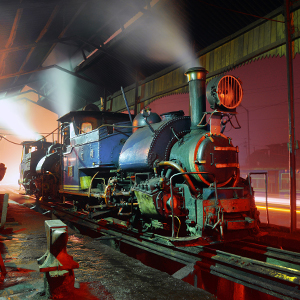
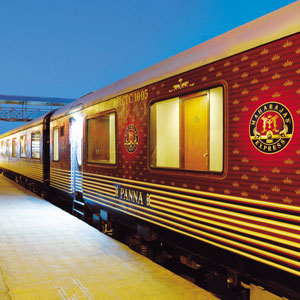
Go through Rajasthan in search of temples and tigers on the epitome of luxury transport.
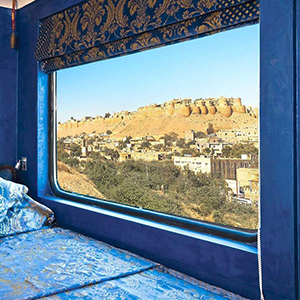
Trains, plains and automobiles: how to travel around India’s largest state.




-Hillgrove_Railway_Station-WUS05771.jpg)
