LGBTQ+ holidays in Morocco

Same-sex relations are illegal in Morocco, yet the country has a pull for LGBTQ+ travellers.![]()

Before gaining independence in 1956, Tangier, on Morocco’s northern tip, was declared an International Zone, overseen by nine European countries. At a time when much of Europe and North America imposed particularly conservative laws, Tangier – and Marrakech too – were seen as liberal havens where travellers had more freedoms.
Yves Saint Laurent, William Burroughs, Allen Ginsberg, Tennessee Williams and Jack Kerouac were amongst Morocco’s artist fans in the 1950s and 1960s, along with The Rolling Stones and The Beatles. It became a sanctuary for LGBTQ+ travellers, with Casablanca home to Georges Burou, a pioneering surgeon who discretely offered gender affirmation surgery to transgender women.
Morocco may well have had liberal attitudes towards the LGBTQ+ community in its more distant past, too. Al-Malhoun, for example, is an ancient form of sung poetry; some of the poems are believed to refer to romantic relationships between men. It has been suggested that the extreme segregation of men and women in Islamic cultures historically led to same-sex relationships becoming fairly commonplace (source: Grove Encyclopaedia of Islamic Art & Architecture).
Yves Saint Laurent, William Burroughs, Allen Ginsberg, Tennessee Williams and Jack Kerouac were amongst Morocco’s artist fans in the 1950s and 1960s, along with The Rolling Stones and The Beatles. It became a sanctuary for LGBTQ+ travellers, with Casablanca home to Georges Burou, a pioneering surgeon who discretely offered gender affirmation surgery to transgender women.
Morocco may well have had liberal attitudes towards the LGBTQ+ community in its more distant past, too. Al-Malhoun, for example, is an ancient form of sung poetry; some of the poems are believed to refer to romantic relationships between men. It has been suggested that the extreme segregation of men and women in Islamic cultures historically led to same-sex relationships becoming fairly commonplace (source: Grove Encyclopaedia of Islamic Art & Architecture).
Attitudes towards the LGBTQ+ community
Today, a combination of conservative Islamic beliefs, patriarchal Moroccan values and homophobic political rhetoric means that LGBTQ+ people have no rights and little recognition. There are no anti-discrimination laws referring to LGBTQ+ people, same-sex couples are not recognised by law, and they may not adopt children or use IVF or surrogacy to conceive. Almost 70 percent of Moroccans interviewed in the World Values Survey in 2021 believed that same-sex relationships were “not justifiable”.
Same-sex intimacy is punishable with up to three years in prison, with increasing numbers of prosecutions in recent years. Even kissing is illegal. In 2016, two Moroccan teenagers were detained after police were given a photo of them kissing in Marrakech. They stood trial in an adult court and could have faced up to three years in jail but were thankfully acquitted.
Same-sex intimacy is punishable with up to three years in prison, with increasing numbers of prosecutions in recent years. Even kissing is illegal. In 2016, two Moroccan teenagers were detained after police were given a photo of them kissing in Marrakech. They stood trial in an adult court and could have faced up to three years in jail but were thankfully acquitted.
Holding hands is a sign of friendship between men, however in recent years this has become less common in the cities as men want to avoid being considered gay. Family life and strictly patriarchal gender roles are held in very high regard in Morocco, and so anyone considered breaking these is frowned upon. In 2020, gay men were subject to an online outing campaign that fuelled a spate of violent harassment, driving an already secretive LGBTQ+ community further underground.
While lesbians have had fewer legal issues in Morocco, the difficulties they face are different to those of gay men. Women have fewer freedoms and, until 2004, were legally expected to be accompanied in public by their husbands or family members. Some hotels still bar Moroccan women who arrive without a male guardian. It was, and remains, difficult for women to have relationships with other women.
While lesbians have had fewer legal issues in Morocco, the difficulties they face are different to those of gay men. Women have fewer freedoms and, until 2004, were legally expected to be accompanied in public by their husbands or family members. Some hotels still bar Moroccan women who arrive without a male guardian. It was, and remains, difficult for women to have relationships with other women.
That said, some LGBTQ+ Moroccans believe that, despite the laws, people are becoming more accepting. Podcasts, online magazines and social media provide better visibility and offer a support network. Journalists cover more LGBTQ+ stories and use more respectful language. Abdellah Taïa, Morocco’s first openly gay author has published novels and directed a film called Salvation Army that depicts life in African Muslim society, rejecting the idea that Islam is fundamentally homophobic. Fatima Zahra Amzkar’s Lesbian Diaries was due to be showcased at Rabat’s 2022 International Book Fair before being pulled by the Ministry of Culture.
Fighting for LGBTQ+ rights
Morocco’s most high-profile LGBTQ+ rights organisation was Kif-kif, which means ‘same’ in Arabic. Founded in 2005, it was refused recognition by the Moroccan authorities, and is now an umbrella organisation based in Madrid that supports LGBTQ+ refugees and migrants, with Moroccan founder and activist Samir Bargachi still director. Kif-kif published Morocco’s first gay magazine in 2010 – a monthly publication called Mithly that’s no longer in print. Mithly means ‘like me’ in Arabic and is also used to mean gay. The word was coined by the LGBTQ+ community as an alternative to the derogatory words impressed on them.
In recent years, NGOs have been able to work more openly and without legal persecution. Newer organisations include Equality Morocco, which fights against discrimination through advocacy and research – and by helping to organise the country’s first known Alternative Pride in 2019. Nassawiyat is a feminist group that advocates for anyone discriminated against because of their gender or sexual orientation. Trans Dynamic, meanwhile, supports transgender, non-binary and gender non-conforming people in Morocco, providing a safe space in Rabat for events and workshops.
Contact Us
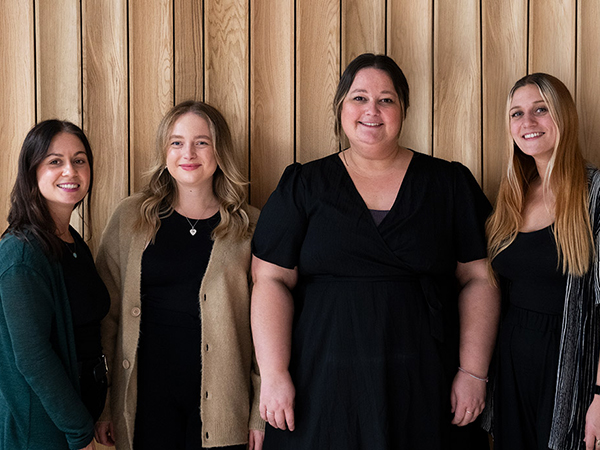
Call us for a chat about our holidays. We are happy to discuss your holiday and help in any way we can. No bots, queues or awful hold music.

01273 823 700
Call us until 4pm
Calling from outside the UK

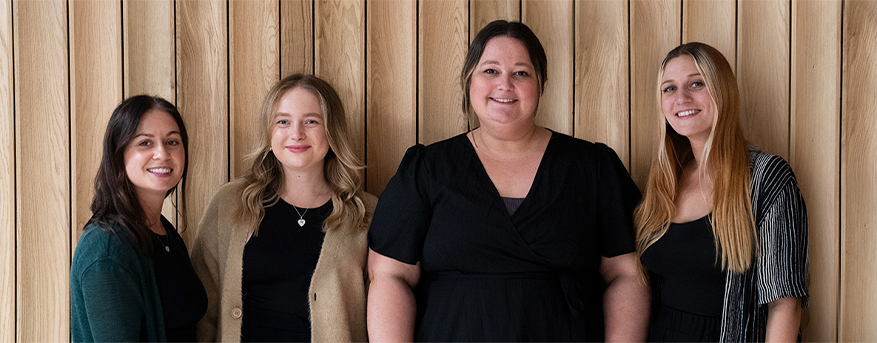
LGBTQ+ travel in Morocco
LGBTQ+ culture in Morocco remains fairly well hidden and is not widely acknowledged. You won’t find gay clubs and Pride marches, as the LGBTQ+ community is denied the ability to gather or protest in person. However, despite its regressive laws, Morocco remains one of the safest countries in Africa for LGBTQ+ travellers, and indeed, one of the most tolerant in the Islamic world.
LGBTQ+ travellers are largely cocooned from the persecution that Moroccans face. Same-sex couples are unlikely to encounter hostile reactions. This is helped by the country’s conservative culture; couples of any sexual orientation do not demonstrate affection in public here. Authorities are likely to turn a blind eye to tourists acting discretely and visiting riads and bars that are known to be LGBTQ+-friendly. In fact, in 2016, King Mohammed V awarded Yves Saint Laurent’s partner, Pierre Bergé, the Grand Cross of the Order of Ouissam Alaouite for helping to preserve the Majorelle Garden in Marrakech.
The exception is if tourists are seen with Moroccans. Moroccans are prohibited from accompanying tourists to their hotels unless they are authorised to do so – as tour leaders, for example. When a British man was seen out with a Moroccan man in 2014, he was sentenced to four months in jail as a result of private texts and photos found on their phones. The outcry at his sentence, and the desire to maintain Morocco’s image as a relaxed, tolerant holiday destination led to the charges being dropped, and both men were released after three weeks.
It may have had a storied past, but Tangier no longer has any kind of gay scene. Of the cities, Marrakech is considered to be the most open-minded. There are no LGBTQ+ clubs and bars per se, but certain areas are known to be LGBTQ+ hangouts, and some clubs attract a more mixed crowd. This is partly due to the number of LGBTQ+ couples who have moved here, particularly from France.
LGBTQ+ travellers are largely cocooned from the persecution that Moroccans face. Same-sex couples are unlikely to encounter hostile reactions. This is helped by the country’s conservative culture; couples of any sexual orientation do not demonstrate affection in public here. Authorities are likely to turn a blind eye to tourists acting discretely and visiting riads and bars that are known to be LGBTQ+-friendly. In fact, in 2016, King Mohammed V awarded Yves Saint Laurent’s partner, Pierre Bergé, the Grand Cross of the Order of Ouissam Alaouite for helping to preserve the Majorelle Garden in Marrakech.
The exception is if tourists are seen with Moroccans. Moroccans are prohibited from accompanying tourists to their hotels unless they are authorised to do so – as tour leaders, for example. When a British man was seen out with a Moroccan man in 2014, he was sentenced to four months in jail as a result of private texts and photos found on their phones. The outcry at his sentence, and the desire to maintain Morocco’s image as a relaxed, tolerant holiday destination led to the charges being dropped, and both men were released after three weeks.
It may have had a storied past, but Tangier no longer has any kind of gay scene. Of the cities, Marrakech is considered to be the most open-minded. There are no LGBTQ+ clubs and bars per se, but certain areas are known to be LGBTQ+ hangouts, and some clubs attract a more mixed crowd. This is partly due to the number of LGBTQ+ couples who have moved here, particularly from France.
While all the tour operators we work with describe themselves as LGBTQ+-friendly, it is worth asking questions to learn more about how this is put into practice in their Morocco holidays.
Are they able to incorporate village tours, homestays and explorations of Morocco’s rural cultures into an LGBTQ+-friendly holiday? Do they ask questions of riad hosts to ensure that couples can share rooms? Be aware that straight, unmarried couples have at times experienced difficulties when requesting a double room, too, as sex outside of marriage is taboo here. Good tour operators should be able to share information about customs and beliefs – not just for Morocco as a whole, but for individual cities, regions and cultures across the country.
Are they able to incorporate village tours, homestays and explorations of Morocco’s rural cultures into an LGBTQ+-friendly holiday? Do they ask questions of riad hosts to ensure that couples can share rooms? Be aware that straight, unmarried couples have at times experienced difficulties when requesting a double room, too, as sex outside of marriage is taboo here. Good tour operators should be able to share information about customs and beliefs – not just for Morocco as a whole, but for individual cities, regions and cultures across the country.
While we always do our best to call out any discriminatory or other unethical behaviour within the tourism industry, we also recognise that there is a very fine – and at times blurred – line between expressing your identity (whether on the grounds of sexuality, religion or political beliefs, for instance), and being respectful of local customs as a responsible traveller.
“Western people often see places according to their own principles,” author Abdellah Taïa told Afar magazine when speaking about LGBTQ+ travel in Morocco. “Rather than go to a place and say, ‘They are not free as we are free in the U.S. or France’, it’s better to try to understand what the historical, political, economic dynamics are and not judge.”
“Western people often see places according to their own principles,” author Abdellah Taïa told Afar magazine when speaking about LGBTQ+ travel in Morocco. “Rather than go to a place and say, ‘They are not free as we are free in the U.S. or France’, it’s better to try to understand what the historical, political, economic dynamics are and not judge.”
We would advise travellers to Morocco to wear clothing that covers their shoulders, for example, as well as to avoid public displays of affection. This advice applies for all visitors – regardless of gender or sexual orientation.
More LGBTQ articles
We have created this LGBTQ+ guide to help travellers understand if they will face discrimination.
In this formerly closed country, mindsets have taken a while to shift. But times are changing.
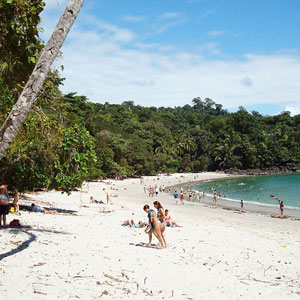
Costa Rica has a liberal mindset, increasingly progressive laws and superb nature.

After decades of persecution and harassment, new laws and a new constitution are giving LGBTQ+ Cubans long-denied rights.
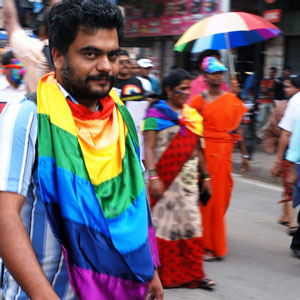
India’s changing laws have opened space for conversations, protests, festivals and a creeping acceptance of LGBTQ+ rights.
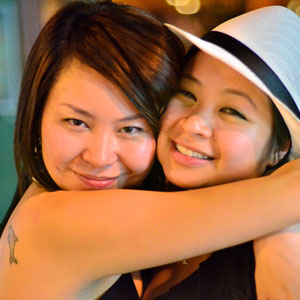
Malaysia is one of the more conservative countries in Southeast Asia.
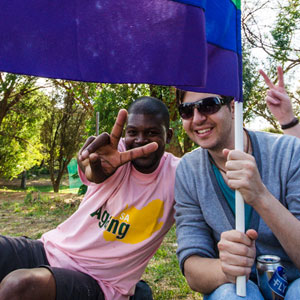
South Africa is seen as one of the most welcoming country in Africa for LGBTQ+ travellers.
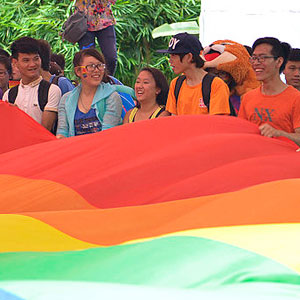
Thailand may be known as the gay capital of Asia, but Vietnam is at the forefront too.
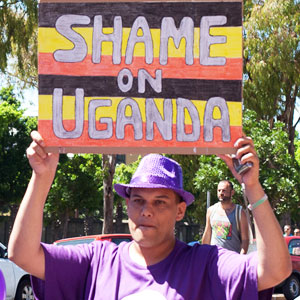
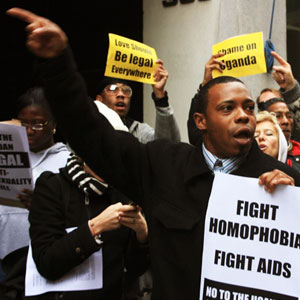
Uganda still has some of the harshest anti-LGBTQ+ laws in the entire world.
Our guide aims to help LGBTQ+ travellers make informed choices about where they travel.