Cycling in South Africa guide
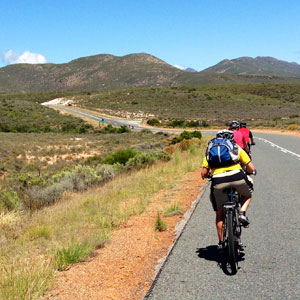
Whether you're looking for world famous wine and coastal roads in the Western Cape, wildlife safaris in Kruger, or river canyons in the Drakensberg Mountains, cycling in South Africa reveals a kaleidoscope of naturally colourful contrasts. South Africa cycling holidays roll out along the tarmac roads leading between fishing villages and farmlands in Overberg, or game reserves and mountains in Mpumalanga.

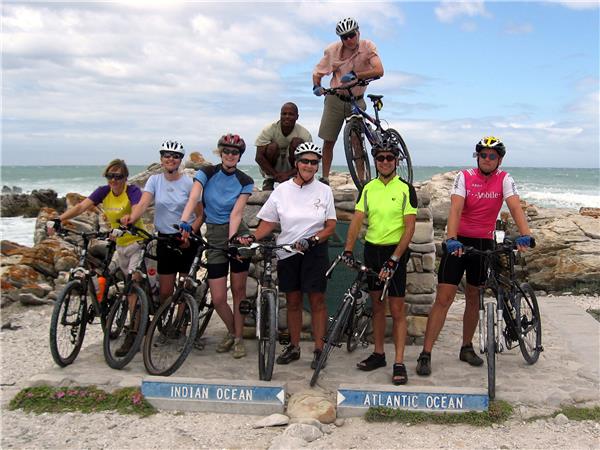
South Africa mixes moderate challenges with smooth surfaces to ease cyclists into whale watching, wine routes and watering holes. ![]()

Daily distances of around 50km leave afternoons free to rest or explore. Joining a small group, with group leader and back up vehicle, takes the stress out of cycling in unfamiliar territory, with the added bonus of luggage transfers in between guesthouses or safari lodges allowing for an enjoyable experience rather than an uphill slog. Make the most of mountain passes along the Panorama Route or whale watching from Hermanus as seasonal variations offer a wonderfully varied choice of South African scenery to match these classic cycling itineraries.

Best time to go cycling in South Africa
Whales appear from Oct to Dec whilst warmer weather from Jan to Mar also brings strong winds which can be a blessing or a curse. Eastern areas in the summer, around the Drakensberg and Panorama Route, will be hotter and wetter than the west. Mar and Apr are generally the best time to go on a South Africa cycling holiday in the east as temps are comfortable, rainfall low and wildlife watching in Kruger is less congested. Autumn is one of the best seasons to go cycling around the wine regions as it’s harvest time which adds a splash of colour to country scenes close to Cape Town.
Western Cape Weather Chart
MIN °C
MAX °C
RAIN (mm)
JAN
16
25
20
FEB
16
26
24
MAR
15
26
26
APR
12
23
65
MAY
10
20
110
JUN
9
19
130
JUL
8
19
125
AUG
8
19
120
SEP
10
20
60
OCT
11
21
50
NOV
12
24
25
DEC
15
25
25

a month by month guide
Our top trip
South Africa cycling holiday, Western Cape
Superb scenery, culture & wildlife
From
£2911 to £2963
12 days
ex flights
Small group travel:
2026: 11 Oct, 21 Dec
2027: 28 Mar, 19 Sep, 3 Oct, 24 Oct, 14 Nov, 5 Dec
2026: 11 Oct, 21 Dec
2027: 28 Mar, 19 Sep, 3 Oct, 24 Oct, 14 Nov, 5 Dec
Contact Us

Call us for a chat about our holidays. We are happy to discuss your holiday and help in any way we can. No bots, queues or awful hold music.

01273 823 700
Call us until 4pm
Calling from outside the UK

David Sear, from our partner Exodus
“The best time of year to go to SA really depends on what you want to see. If you are going for the flora and fauna then early in the year is recommended as the countryside is much greener after the rainy months. Whilst later in the year ( Oct – Dec) is best for whale spotting on the south coast and animal spotting in the game parks as the bush is less dense making animals easier to find.”
For more information on the best time to visit South Africa, check out our South Africa travel guide.
What can we expect?
Tarmac roads are the norm apart from a small percentage of routes which take you over hard pack dirt tracks, away from traffic. Some sections may take place on busy roads and also feature a couple of challenging climbs, followed by long flowing descents, although, in the main, South Africa cycling itineraries are fairly relaxed. Average daily distances are approximately 55km, with two-day safaris in Kruger National Park or a free day in Hermanus (depending on which tour you choose) offering a different perspective as well as a break from the bike. Most mornings you’ll be in the saddle, leaving afternoons free to get orientated before exploring at leisure or as part of an organised group tour.
What is included?
Although bike hire is included you’ll still need to bring your own safety helmet as well as suitable clothing, such as padded shorts, cycling gloves, wraparound shades and breathable cycle jersey. In addition, some cyclists like to bring their own saddle, pedals and/or gel saddle cover. A full kit list will always be sent out in advance.
More South Africa cycling articles