Tips for the first time traveller to South Korea
Perhaps you’ve country-hopped around Asia and are now turning your gaze away from the classic backpacker’s route. Maybe you’re riding the Korean Wave to its logical conclusion – a trip to the home of K-pop and K-beauty, Korean barbecue and kimchi, and some seriously dystopian thrillers. Or maybe you’re into history – the Korean War and the DMZ, or the island’s journey from Buddhism to Confucianism.
Whatever your reason for visiting South Korea for the first time, our first tip simple: stop thinking and go. We can near-guarantee that you’ll love it there. “I still remember coming up out of the subway in Hongdae in Seoul and immediately thinking, ‘Oh my God, I love it here’,” says Nicole Stirling, from our small group adventure specialist The Dragon Trip. “I had no idea what to expect apart from K-dramas. I fell in love with the city on sight.”
Experiencing that first-time wonder is made even easier with our tips to ease the way. Keep reading for advice on everything from navigating public transport to why, when it comes to food, sharing is caring.
Whatever your reason for visiting South Korea for the first time, our first tip simple: stop thinking and go. We can near-guarantee that you’ll love it there. “I still remember coming up out of the subway in Hongdae in Seoul and immediately thinking, ‘Oh my God, I love it here’,” says Nicole Stirling, from our small group adventure specialist The Dragon Trip. “I had no idea what to expect apart from K-dramas. I fell in love with the city on sight.”
Experiencing that first-time wonder is made even easier with our tips to ease the way. Keep reading for advice on everything from navigating public transport to why, when it comes to food, sharing is caring.

Cultural essentials

I like the 24/7 nature of Korea.![]()

Stay up late
Forget New York – Seoul is the city that never sleeps, summed up by its iconic 24/7 convenience stores that stock everything from high-tech gadgets to viral (TikTok viral that is) instant food that you can microwave and eat on-site. “It has that energy about it all the time,” says Nicole, “a classic example of a city that never sleeps.” After all, that’s what Gangnam Style is all about: working hard and playing hard, energised by the endless cafés, restaurants, clubs and bars. “I like the 24/7 nature of Korea,” says Rhian Osbourne, from our partner InsideAsia. It’s not all about rice wine and craft beer, either. “Café culture is really good and they’re open really late so you can go to a café not a bar and stay until 10pm.”
Pop a Korean drama on Netflix
Korean pop culture has travelled far and wide on the ‘K Wave’, so there are plenty of chances to tune into K-dramas and K-pop before you go. There’s also Hallyuwood – Korea’s film industry – that is famous for social satires and dystopian thrillers, including Oscar-winning Parasite and Squid Game. Even KPop Demon Hunters delves into a bit of social critique. “South Korea has its own social problems which I think Parasite really shows,” says Rhian. “It makes it more interesting to visit – to learn about.”
Don’t ignore the Korean War & DMZ
The 20th century was a catastrophic time, when Korea experienced colonisation by Japan, World War II, a rift between the Soviet-occupied North and US-occupied South, and the devastating Korean War. Korea has remained divided into North and South for over 50 years. A visit to the Demilitarised Zone (DMZ) is a must, where a museum houses exhibits on the impact of the war and hopes for unification. Our tours also include a chat with North Korean defectors who’ll add their personal stories. “It’s not even history; it’s the now,” says Nicole.
Experience culture beyond the exports
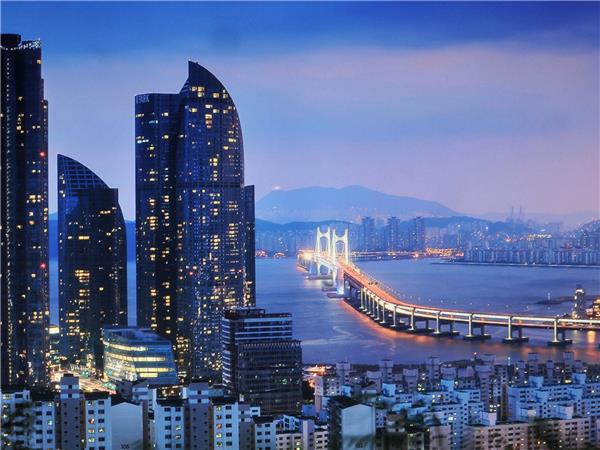
Don’t worry if K-pop isn’t your thing – it’s just the (very shiny) tip of the iceberg of Korean culture. “If someone is really into arts and crafts we can book them on a tour to see local fabric markets,” says Rhian, “or a stamp engraving experience in the south.” Hiking culture is big in South Korea too. Over 70 percent of the country is mountainous. “I think my all-time favourite thing is that in Seoul and Busan it’s city life,” says Nicole, “but you look beyond the high-rise buildings and there are mountains – even though you’re in the city.”
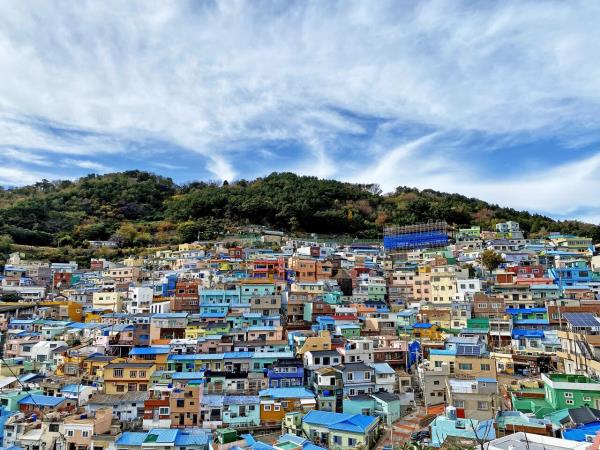
South Korea Highlights tour
Discover South Korea’s culture, cuisine, history and charm.
From
£2860 to £3895
8 days
ex flights
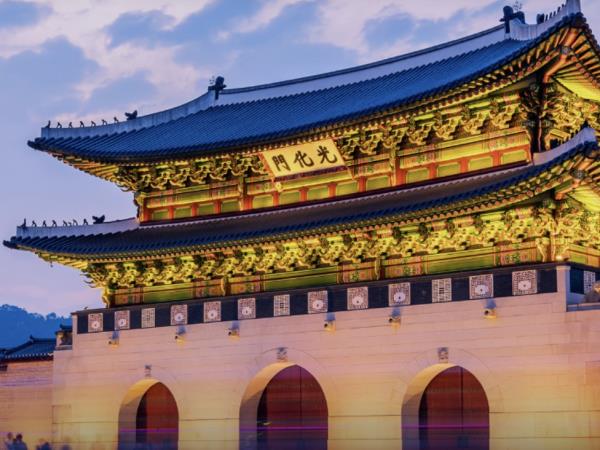
South Korea holiday
Discover the gems of South Korea in 12 Days!
From
£1899 to £2059
12 days
ex flights
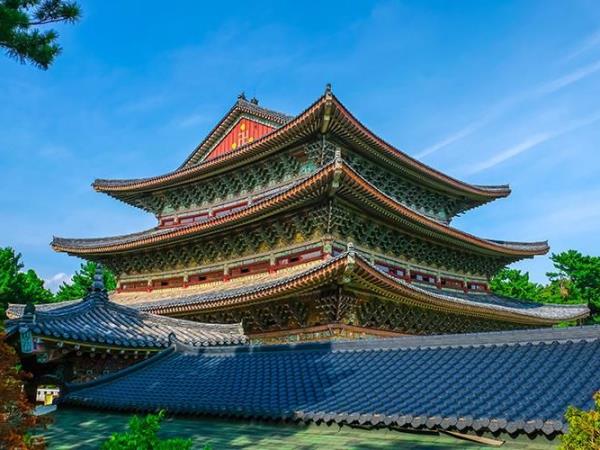
South Korea heritage and culture tour
Explore Seoul, Jeju Island, Busan, Daegu and Pyeongchang
From
US $4515 to US $4998
11 days
ex flights
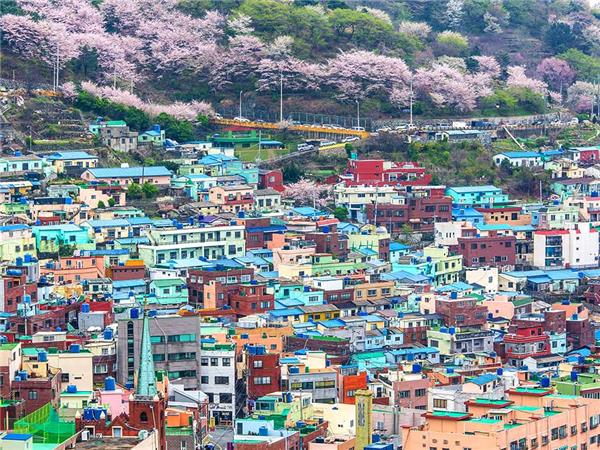
South Korea small group holiday
Mesmerising cityscapes, culinary delights and rich culture
From
£2395 to £3170
9 days
ex flights
South Korea discovery tour
Explore Seoul, the DMZ & the Land of the Morning Calm
From
£4710 to £4749
12 days
ex flights
Food tour in South Korea
Delve into the many flavours of Korean cuisine and cooking
From
£2083 to £3195
8 days
ex flights


Contact Us
Call us for a chat about our holidays. We are happy to discuss your holiday and help in any way we can. No bots, queues or awful hold music.

01273 823 700
Call us after 10am
Calling from outside the UK

Getting from A to B
I really found my time in a guided group so useful. Navigating the bullet train would have been much harder, and you get to take in the beauty of the country in a relaxed way.![]()
Keep moving
South Korea is a small country with great connections, which makes getting around easy. In fact, you can travel from Seoul to Busan – the entire length of the country – in under three hours. Public transportation is a pleasure. “We use all public transport,” says Nicole. “You’ll be on and off public buses and the subway – it’s so much more efficient and easier to get around.”
Travel by train & get a travel card
High-speed trains connect large swathes of South Korea, stocked with everything from English-language signs in the cities to TVs in the back of chairs. Taxis exist, but city subways are usually easier and always cheaper. Get a travel card that allows you to hop on and off in cities like Seoul and Busan – you just tap in and tap off.
Don’t dismiss buses
Mountains make up over 70 percent of South Korea – the only nemesis of the otherwise excellent train network. Don’t despair, though, there’s also a brilliant bus and coach network that include inter-city, express and night buses – with all routes clearly colour coded and electric boards with live times adorning many stops. Announcements are in English in cities like Seoul.
Explore TikTok & YouTube, but don’t rely on Google Maps
There are loads of Korean vloggers on TikTok and YouTube sharing food and travel shorts that’ll give you a feel for South Korea before you arrive. There’s one thing that catches out almost every first-time traveller to Korea, though, including Responsible Travel partnership manager Sophie Pearson. “Google Maps doesn’t work,” says Sophie, “so I really found my time in a guided group so useful. Navigating the bullet train would have been much harder, and you get to take in the beauty of the country in a relaxed way.” Things are set to change soon; just expect teething issues while it’s slowly rolled out. Meanwhile, Naver Map and Kakao Map are popular local alternatives.
Communication: from bye to bowing
People can be quite shy but they’re nice and polite and they mean well.![]()
Learn hello, sorry & thanks in Korean
Memorise an all-purpose ‘hello!’: 안녕하세요 (pronounced anyoung-ha-se-yo and accompanied by a nod). ‘Sorry’ is a handy one, especially when navigating busy stations. There are different versions for different situations, but a formal 미안합니다 (pronounced mi-an-ham-ni-da) is a simple one that works for all people, paired with a short bow. Finish off with ‘thank you’ (감사합니다 – pronounced gamsa-ham-ni-da). Check out YouTube for language videos that’ll help perfect your pronunciation.
Ditch Duolingo & go with a guide
“The bed is food.” “The bus climbs up to a chair.” There’s no need to spend too much time worrying about whether these are old Korean adages or Duolingo’s bizarre language learning technique (spoiler: it’s the latter). The guides on our holidays are multilingual, fluent in at least Korean and English. “They can bridge that communication gap and introduce you to the culture,” says Rhian, “their own culture or the culture that they’ve come to love.”
Master the art of the bow
A bow (인점 – injeol) is more than a polite gesture in South Korea – it’s a mark of Confucian values and believed to contribute to social harmony. As a first-time tourist, don’t worry too much about getting it perfect. Have a go at nodding when greeting someone and offer a slight bow if apologising. Just remember to avoid pressing your palms together, namaste-style, keeping your arms to your sides. Check out YouTube for a visual check. Another gesture to remember: pass things with two hands, as handing over something with one is considered rude.
Embrace the peace & ask for photographs
Korean Confucian values also rate modesty, so you might find that people are more reserved than you’re used to, especially in public spaces like transport and shop queues. It’s not rudeness; it’s a way of respecting shared spaces and privacy. “People can be quite shy but they’re nice and polite and they mean well,” says Nicole. “They don’t make you feel unwelcome.” Asking someone to take your photograph is a great icebreaker. Koreans will take it very seriously, flipping into camera settings you didn’t know you had and leaving you with a pro-level photoshoot as a souvenir.
Look for free Wi-Fi & preloaded SIM cards
South Korea has one of the largest and most easily accessible public Wi-Fi networks in the world – and it’s free! Subway stations, shopping malls, cafés and tourist hotspots are all covered. Alternatively, pay for a portable pocket router so that you can truly log in anywhere. If you’d rather have fast data on your phone, buy a prepaid SIM card – available everywhere from the airport to the 24/7 convenience stores.
Go beyond the barbecue & other food tips
I thought I had a good grasp of Korean food before I went but there is so much more to discover than kimchi pancakes and bibimbap.![]()
Food culture is big, so embrace it
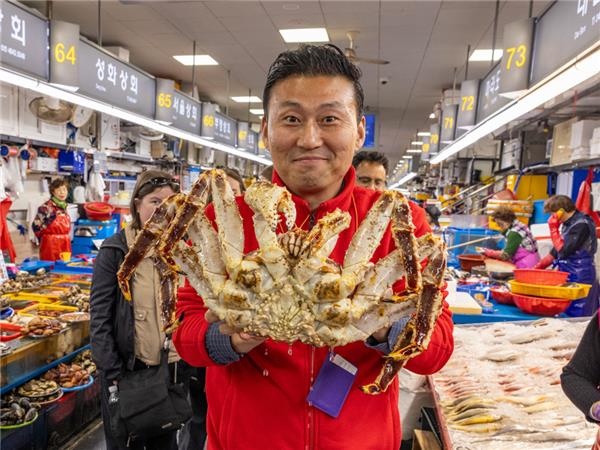
“Food is everything in South Korea,” says Patrick O’Neill from our small group tour specialist Intrepid Travel. “It’s an intrinsic part of daily lives of Koreans. This is evident by the amount of food all over the place, from super cheap street food to high-end dining, and everything in between.” Read all about it in our South Korea food guide.
Try everything
The Korean Wave has boosted the popularity of Korean food across the world, so you might already be familiar with barbecue and kimchi, as well as post-war Americanised favourites like Korean fried chicken, hot dogs, and corn and cheese. “Sample all the food,” advises Sophie. “I thought I had a good grasp of Korean food before I went but there is so much more to discover than kimchi pancakes and bibimbap. I enjoyed the savoury porridge dish, juk, alongside roasted barley tea and my favourite dish was a classic japchae – a stir fry made with sweet potato noodles.”
Prepare to share
Sharing is central to dining in South Korea, commonly illustrated by banchan – a communal sharing platter. “The plate of banchan that arrived on the table consisted of no less than 25 little dishes and local delicacies,” says Patrick. “I can’t begin to explain the complexity of this food, in cooking and in flavour. It’s hard to fathom how this can all come out of one little kitchen and also be so affordable.” By eating in a group, you’ll also pick up on more social cues, such as waiting for the oldest person to drink first.
Veggies: make for the monasteries
Meat and seafood dominate Korean menus, but there are vegetarian and vegan options out there – it just takes a little digging. Let our tour partners know in advance about any dietary requirements, and they’ll share tips on ordering, recommending dishes. If in doubt, visiting a Buddhist monastery is a sure-fire route to delicious vegan cuisine. “Stay in a monastery,” says Sophie. “This was the highlight of my trip and the food here was incredible. Baekyangsa temple is famous for vegan monk food served ‘family style’ where you share multiple communal dishes.”
See a queue? Join it
Koreans only queue for the good stuff, so you’re bound to find something delicious at the end of the line. “I walked past a queue of people on the fringe of Namdaemun Market and decided to join in,” says Patrick. “It turns out it was a famous vegetable hotteok stand, which is a stuffed fried pancake popular all over Korea, and it was one of the most delicious things I’ve ever eaten. I went back three times on my short stay in Seoul.”
How to pick a trip
Choose a small group tour for sociable, readymade itineraries
Small group holidays make great introductory tours for first-time travellers to South Korea. They hit all the highlights such as Seoul, Busan and Gyeongju, but also weave in things that you’d miss without an expert guide. Guided tours are also great for solo travellers. “I saw how well they’d all bonded together and that included the guide as well,” says Nicole, reminiscing on joining a small group tour halfway through the trip. “I really loved that.”
Travel with local guides for cultural shortcuts
Local guides will share real-time travel tips, as well as insights about what it’s like to live in South Korea. “We offer you an insider guide in Seoul – a half-day visiting the most up-and-coming neighbourhood or somewhere with a festival on at the moment,” says Rhian. “It’s not just ‘there’s the palace; here’s the Hanok village’. Instead, you’re doing something more bespoke each time… You can ask questions about their life in Korea and get them to show you how to use the subway and what to order at Korean barbecue.”
Bring the family – especially teenagers
South Korea has long been ranked one of the safest countries in the world, with low levels of opportunistic street crime and violent crime. Young children will always be welcome, but older kids and teenagers will get more of a kick out of the K-pop craze, searching out film and music video locations. “It’s more fun for teenagers and up,” says Rhian. “I get a lot of mother-daughter trips… they are really fun to work on.”
Consider last minute tours – even at cherry blossom time
Tourism in South Korea might be booming, but it is still unlikely to reach the heights of East Asian neighbours like Japan. That means there’s usually plenty of availability for last minute trips – and often at great prices. You can even choose to experience the spectacular cherry blossom season in March-April at the last minute – an event that requires booking up to a year in advance in Japan. “Koreans love going out and experiencing the blossom and going to have picnics in the parks,” says Rhian.
A final word of warning
You’re in danger of becoming a tenth-time traveller
“I really want to get people into South Korea,” says Nicole. “People think ‘what’s in Korea?’ but they are so pleasantly surprised when they go by how much is there and how amazing it really is.” It’s people like Nicole steering our tours – former first-time travellers who fell in love with Korea and have become second-, third- and even tenth-time travellers. So here’s our final tip: just give in to that urge to plan your second trip as soon as your first is drawing to a close.More South Korea articles
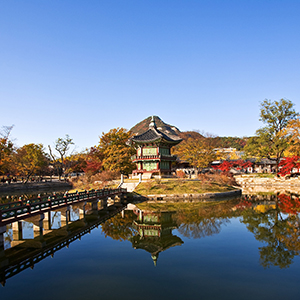
Learn the best time to visit for temperature, rainfall and cultural events here.
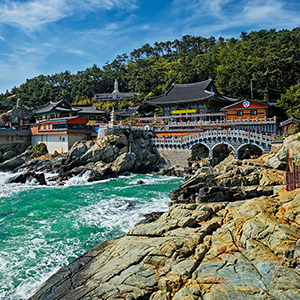
Our South Korea travel guide is packed full of highlights to help you make the most of your time on holiday.
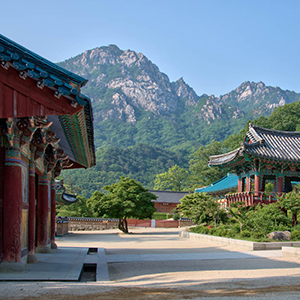
Destination inspiration: discover our top six places to go in South Korea.
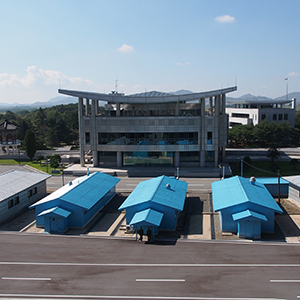
A sombre but fascinating must-visit for history buffs, Panmunjom is a living relic of the Cold War.
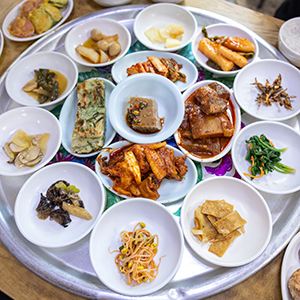
Discover the food scene, from Seoul’s street food markets to Busan’s seafood.
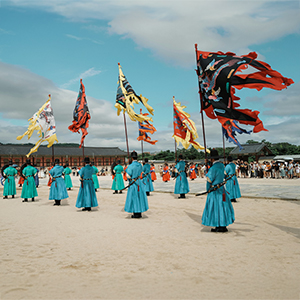
A small country with an extraordinarily global reach, and a capital that makes Tokyo look retro.