Botswana and Zimbabwe Ivory Route lodge tour



Minimum age 12

Description of Botswana and Zimbabwe Ivory Route lodge tour
This classic journey covers Botswana, Namibia & Zimbabwe and the core of the international Kavango Zambezi (KAZA) Transfrontier Conservation Area. This initiative is a multi-country effort to create a vast network of interlinking reserves and provide corridors for wildlife movement along natural migration routes, particularly for elephants. The lodges are beautiful, comfortable & make for a great adventure safari.
Highlights
* Victoria Falls–adventure activities
* Hwange–game drives in an open vehicle
* Matobos–game drive
* Moremi game reserve–game drive
* Okavango Delta–river cruise
* Chobe National Park–sunset river cruise
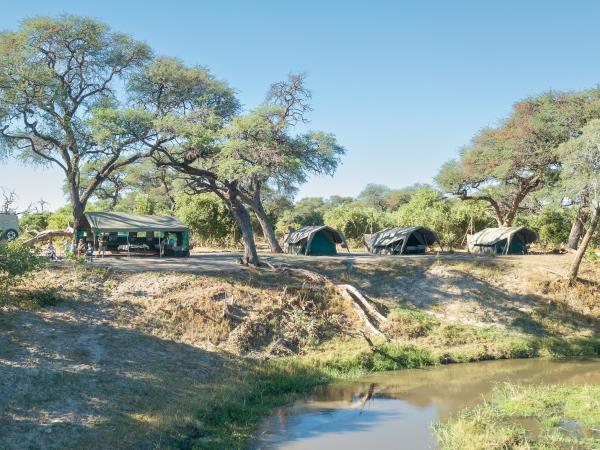
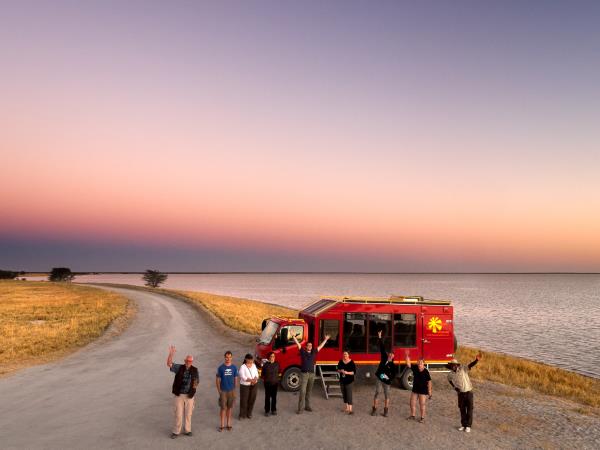
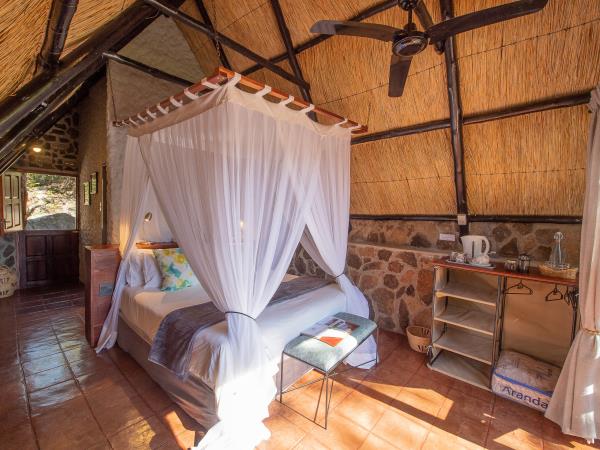
Overnight - The accommodation throughout this classic journey is of3+ star style and are chosen not only for their service and comfort level but also for their wonderful locations and local wildlife viewing opportunities. All rooms have private en suite facilities. The Moremi tented bush camp on a private concession bordering Moremi GR is a particular highlight. Meals - 14 breakfasts,5 lunches and 8 dinners are included. All of which are provided by the lodges at which we are staying. Due to travel arrangements or game viewing activities, 3 of the lunches will be packed picnic lunches. Where meals are not included there will be an opportunity to buy a meal en route, but these are mostly travel days, so a quick stop is required. Transport for the majority of this safari you travel in a Mercedes Sprinter bus with 12 forward facing seats and air conditioning; or (on 30% of tours) in a Safari truck with 12 seats. For the game drives in Hwange, Matobos, Moremi and Chobe we use open sided 4WD vehicles with local guides. On participation - This is an adventure tour, and as such please expect to get involved. Where there are porters, they’ll help you, otherwise you’ll need to carry your own bag. Included meals are all lodge provided. If you have a particular interest, please let your safari leader know, and he/she will endeavour to make your journey more rewarding.
Itinerary
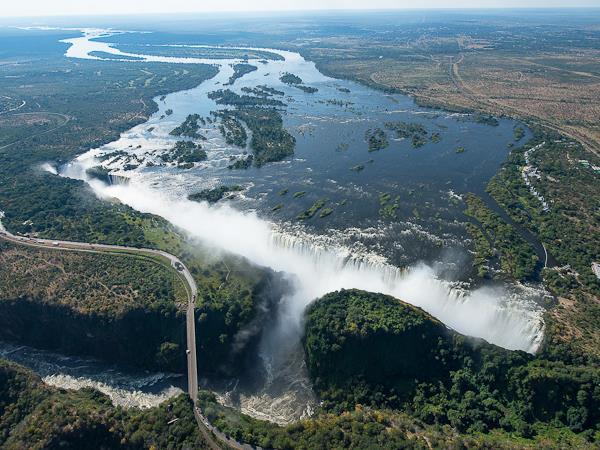
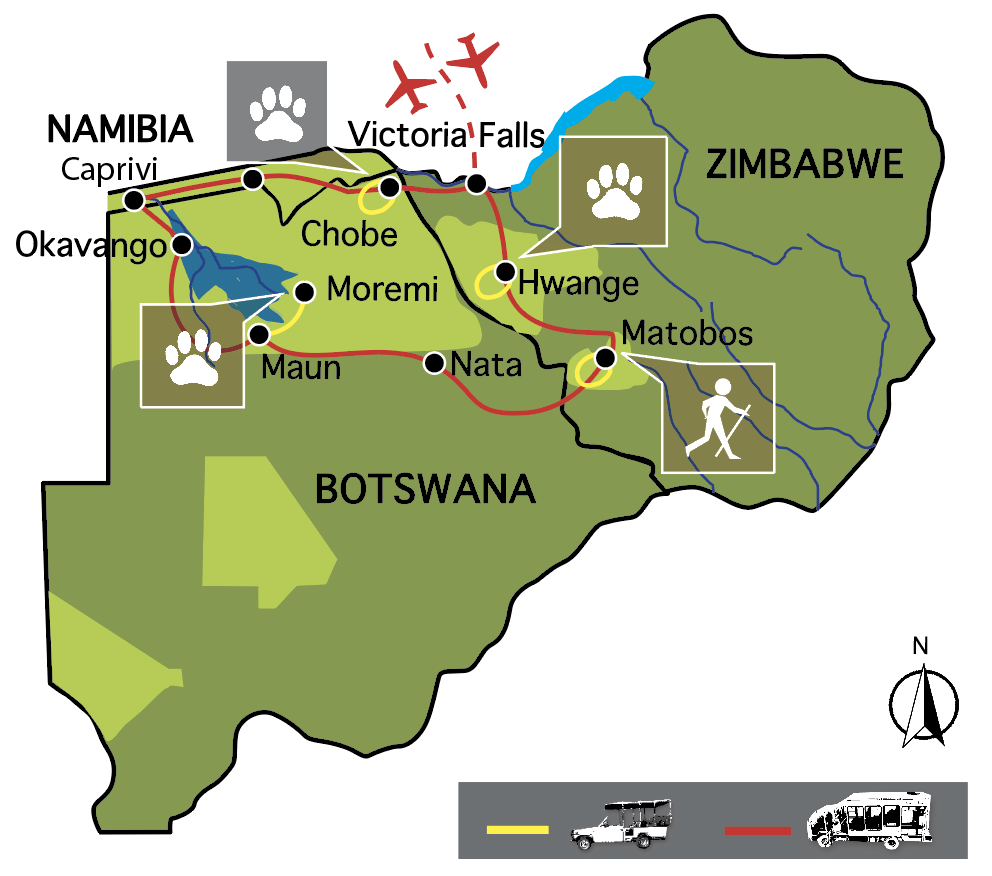
| Day 1: | VICTORIA FALLS: The majestic sight of the mighty Zambezi River plunging over the Victoria Falls, welcomes you to your Zimbabwe and Botswana adventure. We check into our lodge before we explore the falls and tropical rain forest surrounds on foot in the afternoon before heading out to a local restaurant for dinner (own expense). [hotel - - -] |
| Day 2-3: | HWANGE NATIONAL PARK: Hwange National Park is a wildlife jewel, famous for its big game and large herds of elephant. Hwange is home to a wide variety of habitats, from it’s western regions on the edge of the Kalahari through large grass plains to the forested woodland in east Hwange. Our comfortable lodge for two nights is situated on the private concession on the eastern boundary of the park, our time is spent on a full day game drive, in open 4WD vehicles, in the park in search of big game. [chalet Bx2, Lx1, Dx2] |
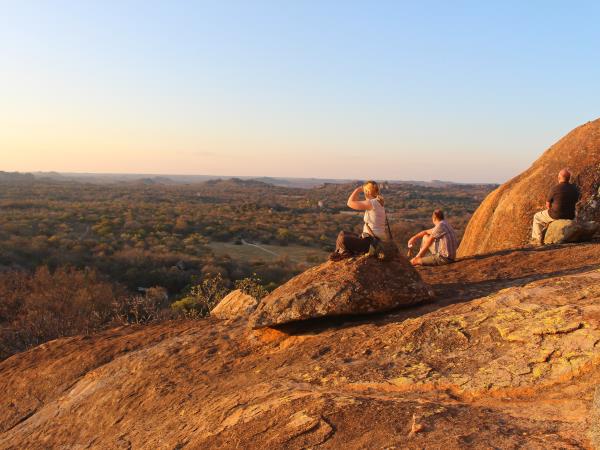
| Day 4-5: | MATOBOS NATIONAL PARK: The rounded granite boulders and undulating valleys of the Matobos National Park are home to some of the last of the rhino in Zimbabwe. We spend our day on an excursion into the park that includes a game walk to see the rhino, discovering the ancient Bushmen paintings that adorn the rocks, and admiring the landscapes from Worlds View, the site of Cecil John Rhodes’ grave. [chalet Bx2, Lx1, Dx2] |
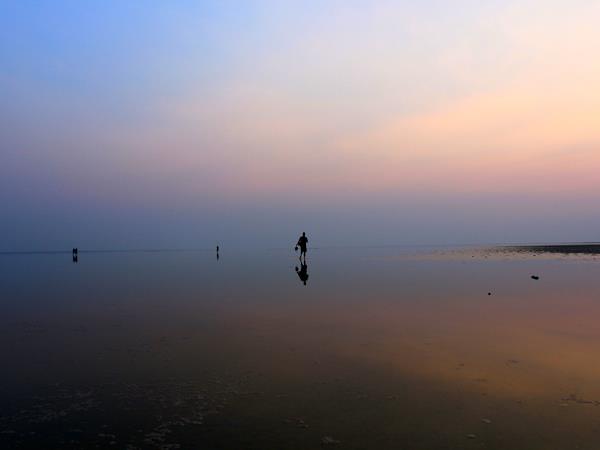
| Day 6: | NATA: This morning we leave Matobos and head west towards the Botswana border, we cross at Plumtree and we make our way to the Nata area for our overnight stop. In the late afternoon we will head out onto the Makgadikgadi Pans, vast saltpans that seem to stretch on to infinity. We will explore the area and have some fun taking photographs before the sunsets golden over the horizon. [chalet B - -] |
| Day 7: | MAUN: Maun’s name is derived from a San word meaning “place of the short reeds” is nestled at the southern end of the Okavango Delta where our lodge overlooks the beautiful Thamalakane River. Here we prepare for our trip into Moremi Game Reserve and our afternoon is free to bird watch along the river, relax around the pool or take a optional scenic flight over the Okavango Delta (own expense). [lodge B - -] |
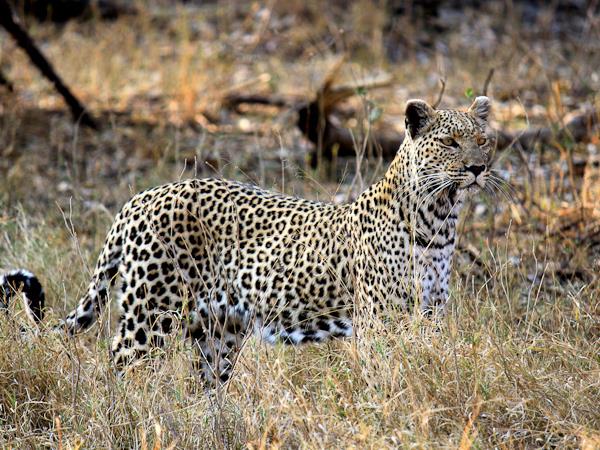
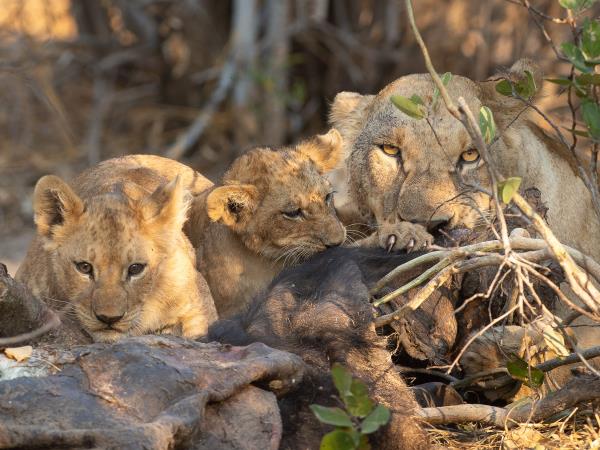
| Day 8-10: | MOREMI GAME RESERVE: Startling and unexpected contrasts are created as the waters of the Okavango flood into the drier Kalahari creating the magnificently rich wilderness area with amazing wildlife of the Moremi Game Reserve. Rivers, lagoons, savannah, woodland, Moremi offers some excellent game viewing. With over 400 species of birds, Moremi is also a great place to sight leopard, lion, wild dog, elephant, giraffe and a variety of antelope. We spend our time on game drives in Moremi GR and the surrounding concession along the Khwai River where the lagoons attract the thirsty animals to drink in late afternoon. Our lodge is on the private concession north of Moremi, where our boma overlooks a large pan where we enjoy our meals while watching the animals drinking and enjoy the wilderness far from civilization. On the morning of day 10 we have one last game drive on the concession before heading back to our lodge in Maun. [2 x tented bush lodge, 1 x lodge Bx3, Lx3, Dx2] |
| Day 11-12: | OKAVANGO DELTA: We drive around the Okavango Delta, and north to our lodge on the banks of the Okavango Pan handle. From the lodge we’ll explore the Okavango by mokoro and motor boat. Tranquil reed lined rivers, crystal clear water and abundant bird life. Time to rest, relax and enjoy the views of the Okavango Delta. [lodge BLD] |
| Day 13: | CAPRIVI: Crossing out of Botswana into Namibia and the Mahango Game Reserve. We game drive through the reserve to our lodge on the Kavango River. We spend our afternoon exploring on a river cruise. [chalet B - D] |
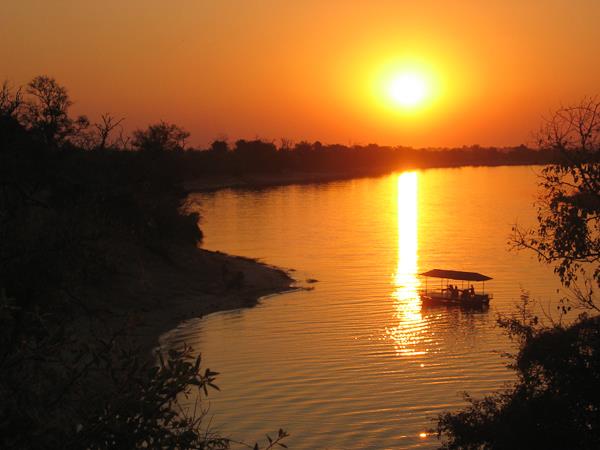
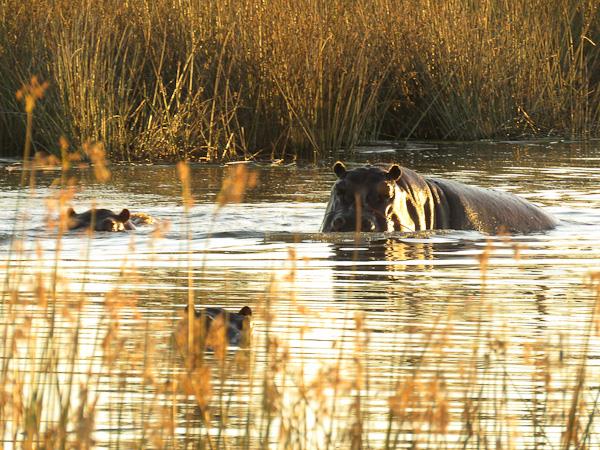
| Day 14: | CHOBE NATIONAL PARK: The Caprivi Strip, Zambezi Region, is a thin wedge of Namibia, which separates Botswana in the south and Angola in the north. We cross the Caprivi, back into Botswana at Ngoma and head to our lodge in the town of Kasane. The Chobe river attracts large herds of elephant as it flows lazily along the northern boundary of the Chobe National Park. Our final afternoon is spent on arguably the best wildlife activity in Southern Africa, the game-viewing cruise. See herds of elephants, large crocodiles, pods of hippo and other wildlife as they quench their thirst at the end of the day. The magnificent river sunset is a photographer's dream. [chalet B - -] |
| Day 15: | VICTORIA FALLS ZIMBABWE - TOUR ENDS: Enjoy an optional early morning game drive (own expense) before our last breakfast together. We bid a sad farewell before we embark on a road shuttle transfer to either Kasane airport in Botswana, or Victoria Falls airport in Zimbabwe, in time for midday flight departures. Our tour ends 11:00am. [ - B - -] |
Map
Price information
Minimum age 12
Check dates, prices & availability

Travel guides
Holiday information
Reviews
1 Reviews of Botswana and Zimbabwe Ivory Route lodge tour
Reviewed on 29 Oct 2018 by Robert Jenner
1. What was the most memorable or exciting part of your holiday?
Walking in the bush to see white Rhino in Matobo hills, Zimbabwe. This was a very special experience.
2. What tips would you give other travellers booking this holiday?
Bring binoculars, sun hat and an open mind.
3. Did you feel that your holiday benefited local people, reduced environmental impacts or supported conservation?
Yes, we stayed in small lodges that employed a high percentage of local people and travelling in small groups has a low impact.
4. Finally, how would you rate your holiday overall?
This is a varied trip with many highlights, the wildlife viewing and standard of lodges exceeded my expectations. Our two Zimbabwean guides Brian & Chris added greatly to the trip with their knowledge and enthusiasm. Travelling in Zimbabwe was amazing with friendly people great wildlife and scenery.
Read the operator's response here:
Responsible Travel
Planet
Small Group TravelWe specialise in small group safaris, with a maximum of 12 and a minimum of 4 clients per tour. Travelling together means transport and activities are shared between a limited number of travellers, while our experienced guides manage the driving and logistics.
Fuel Use
Our purpose built safari trucks average approximately 25L/100km. With an average of 9.5 clients on board, this equates to approximately 2.6L/100km per passenger. For comparison, a typical 4WD rental using 12L/100km and carrying two people uses around 6L/100km per passenger. Actual fuel use varies according to the vehicle, route, road conditions and passenger numbers.
Waste and Water
We follow a leave no trace approach and collect waste for disposal at appropriate facilities. At our workshop, we recycle used oil and containers, use oil traps and use biodegradable cleaning products wherever practical. Our safari vehicles carry tanks of clean, safe tap water, which clients can use to refill reusable bottles, reducing the need for single use plastic water bottles.
Resources and Wildlife
Where practical, we use gas rather than wood or charcoal for cooking, particularly in remote areas where firewood is limited. We also ask clients to use water thoughtfully, especially in the drier regions we visit. Our guides follow established wildlife viewing practices, including maintaining appropriate distances, avoiding unnecessary disturbance and never feeding wild animals.
People
Local Crafts and MarketsWhen visiting curio markets, we encourage clients to buy locally made crafts and to consider smaller wooden items rather than large pieces. This supports local artisans while reducing the amount of timber required for larger carvings. When bartering, we encourage clients to do so respectfully and remember that even a small purchase can be meaningful to a local vendor.
Tours for Young People, South Africa
We run educational trips to South Africa’s national parks for young people aged 14 to 18 from Johannesburg, in partnership with the PEN Organisation. Many participants have never visited a protected area or experienced wildlife in the wild. The trips provide an opportunity to learn about nature, conservation and careers in tourism.
National Park Fees
National park entry fees contribute towards the operation and management of protected areas. Depending on the park, these funds can contribute to infrastructure, conservation activities and services for park staff and surrounding communities. Clients can ask their guide about the park fees included in their safari and how they are used.
Locally Owned Accommodation
Where practical, we use locally owned lodges, guesthouses, B&Bs and tented camps. Staying at locally owned properties means that our accommodation spend contributes to businesses operating in the areas we visit, including through local employment and the use of local services and suppliers.
Local Guides and Community Experiences
Our safaris include two professional Sunway guides, and we also use local guides and community experts for specific activities. Their knowledge provides a direct connection to the places we visit, while the activities provide income and employment within local communities.
Okavango SOS Trees Project, Botswana
For generations, mokoros in the Okavango Delta have been made from sausage trees. As tourism has increased, so has demand for mokoros. To reduce the need for new trees, the host company supports the use of fibreglass mokoros, which are more durable than traditional wooden mokoros. A portion of the tour fee contributes to this project, and guests can also make additional donations. Since the project began, more than 30 traditional mokoros have been replaced with fibreglass versions, while local poler communities continue to benefit from mokoro based activities.
Matobo Rhino Trust Support
Rhino conservation is an important part of protecting Zimbabwe’s wildlife and the natural areas in which rhinos live. Sunway Safaris supports the Matobo Rhino Trust, an organisation involved in rhino monitoring and protection in Matobo National Park, Zimbabwe. Established in 2013, the Matobo Rhino Trust works with teams involved in protecting rhinos and monitoring populations in the park. The work can involve long periods in rugged terrain and challenging conditions. Sunway has donated equipment to support the Trust’s field teams and continues to raise funds for practical items needed during their work.
Popular similar holidays
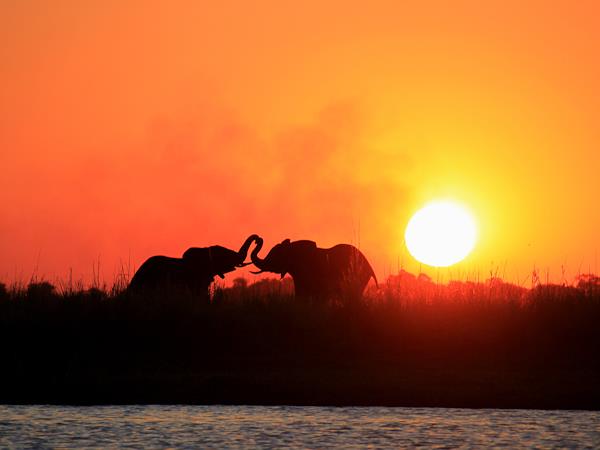
Zimbabwe & Botswana game tracker safari
From €3180 - €3320 16 days excluding flights
A lodge safari through Kruger, Zimbabwe & Botswana
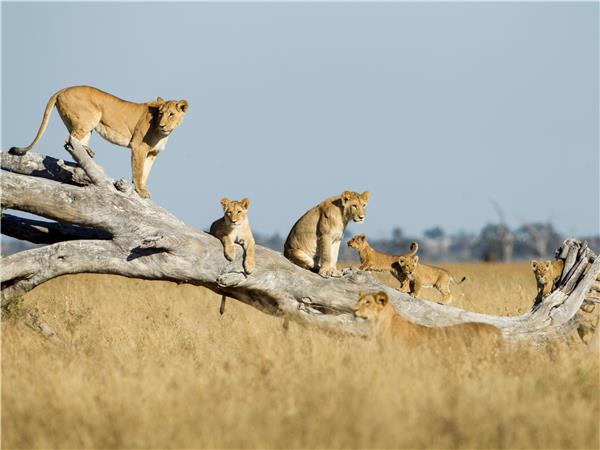
Botswana and Zimbabwe lodge safari
From £4815 - £5199 14 days excluding flights
Victoria Falls & meandering waterways of the Okavango Delta
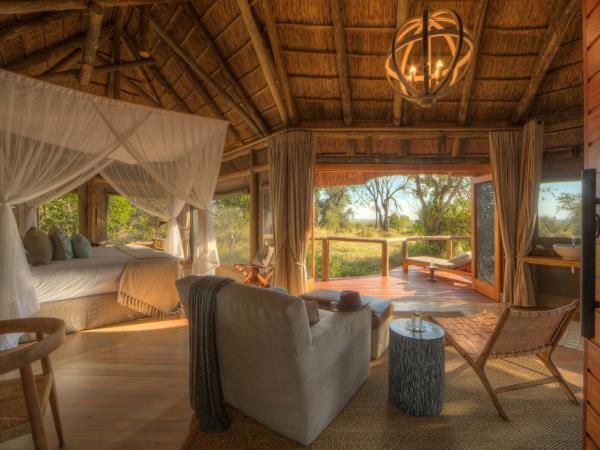
Highlights of Zimbabwe and Botswana, tailor made
From £3469 - £5730 8 days excluding flights
Victoria Falls, Chobe and the Moremi Game Reserve