Morocco Sahara Desert adventure tour
Price
£1699 excluding flights
Convert currency:


Duration
9 Days
Type
Tailor made
More info
Not included:
International flights & airport taxes.
Insurance cover.
Insurance cover.

Description of Morocco Sahara Desert adventure tour
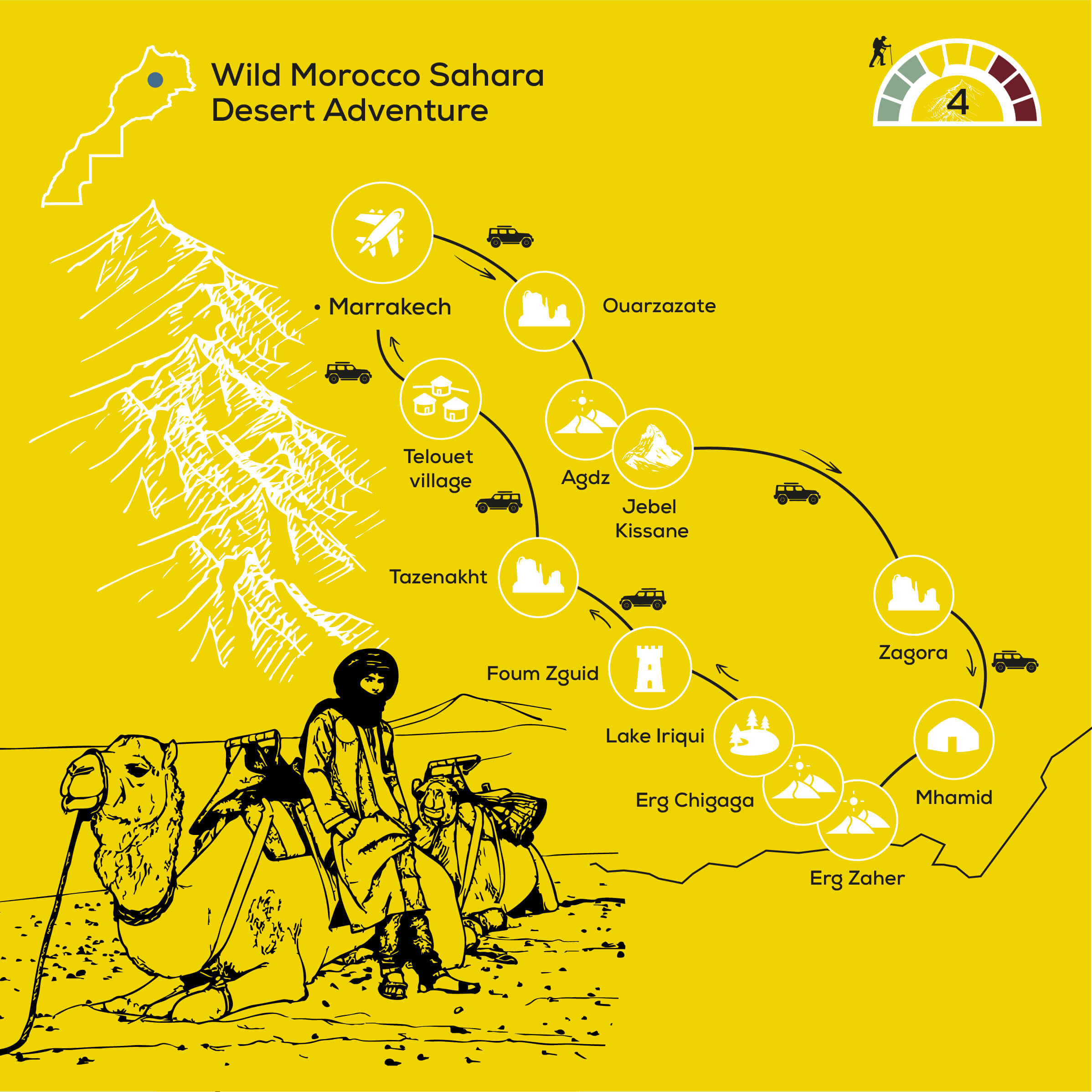
Map
Price information
£1699 excluding flights
Convert currency:
Not included:
International flights & airport taxes.
Insurance cover.
Insurance cover.
Departure information
This trip can be tailor made throughout the year to suit your requirements
Travel guides
Our Morocco travel guide whisks you into a rainbow of raucous colours and enlightening Islamic culture.
Fancy some sea kayaking? Keen on Costa Rica? What about Wales? Choose your own adventure with our guide.
Responsible Travel
As the pioneers of responsible tourism, we've screened this (and every) holiday so that you can travel knowing we've worked to maximise the benefits of your holiday to local people and places, and minimise any negative impacts.
Planet
CARBON REDUCTIONThis itinerary has been designed to reduce operational emissions by limiting internal air travel and using overland transport throughout Morocco. All movement between regions, including transfers from Marrakech to the High Atlas, the Draa Valley and the Sahara Desert, is completed by shared private vehicle or 4WD. While the distances are significant, this avoids domestic flights and supports a lower-carbon approach to long-distance travel within the country.
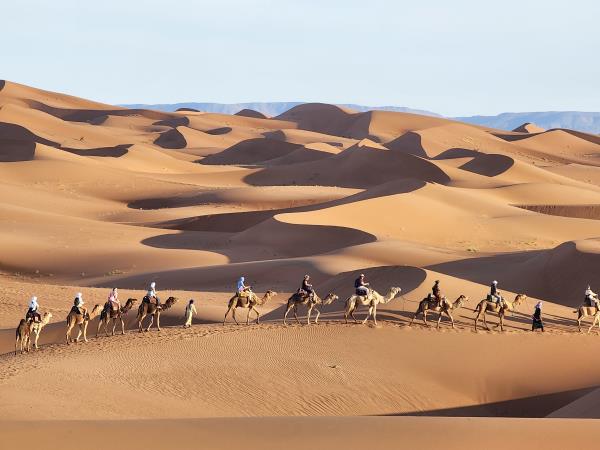
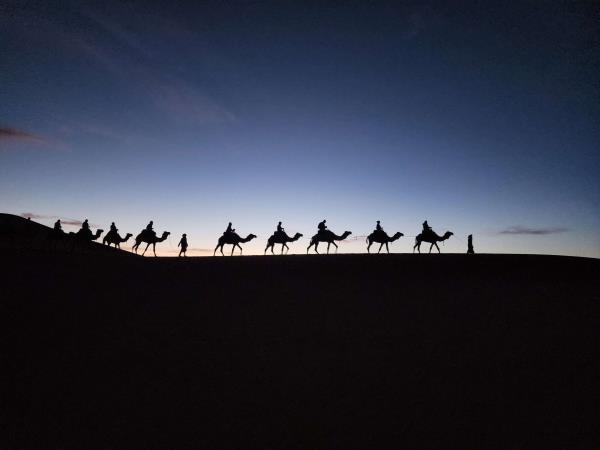
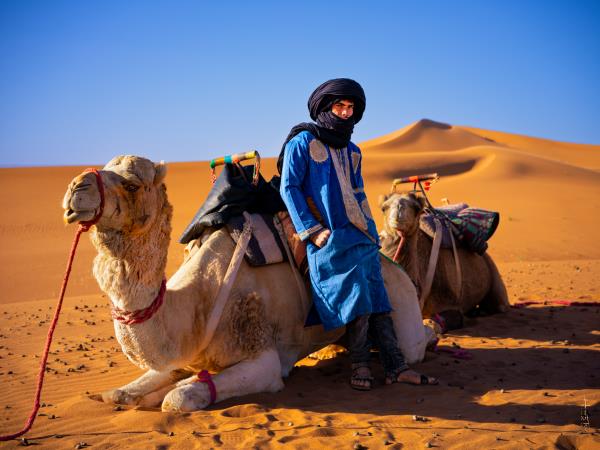
The itinerary includes multiple days of human-powered travel in the form of trekking and camel-supported desert journeys. In the Erg Chigaga region, travel is conducted on foot with the assistance of local camel caravans that carry equipment and supplies. This significantly reduces reliance on motorised transport during the most remote stages of the trip and provides a lower-impact way of moving through fragile desert environments.
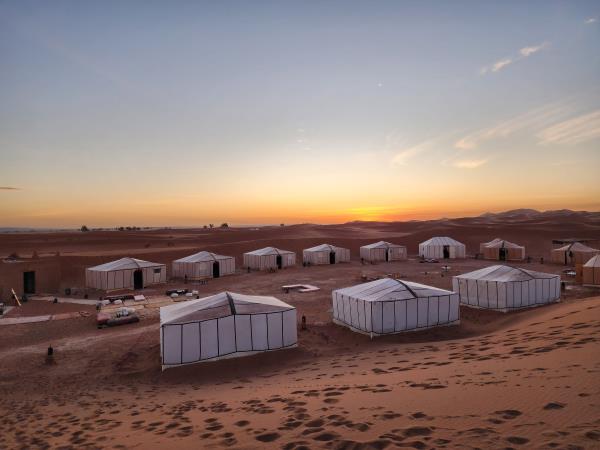
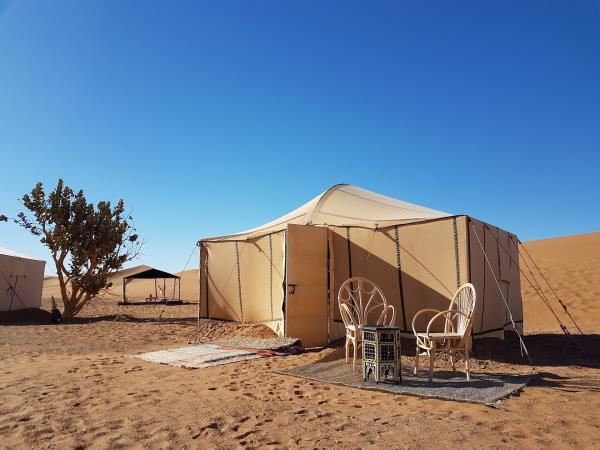
Accommodation choices also contribute to reduced energy use. Nights in desert camps and rural guesthouses typically operate with limited electricity and basic infrastructure. Many camps use solar power for lighting where available, and rely on traditional low-energy systems. In more remote areas, energy consumption is naturally minimal due to the absence of large-scale facilities.
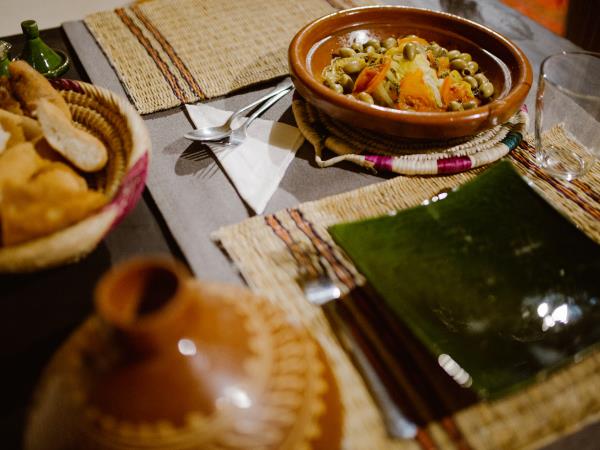
Food provided throughout the itinerary is largely prepared using locally sourced ingredients, particularly in rural guesthouses and desert camps. Meals are based on regional staples such as grains, vegetables and preserved foods, reducing reliance on imported goods. Vegetarian options can be provided throughout, and plant-based meals are naturally aligned with many traditional Moroccan dishes such as tagines and couscous.
Travellers are encouraged to minimise waste and avoid single-use plastics, particularly in desert environments where waste management infrastructure is limited. Water use is also carefully managed in arid regions, where supply is naturally constrained. The combination of overland transport, low-impact accommodation and human-powered travel helps to reduce the overall carbon intensity of the trip compared to more conventional touring routes.
ENVIRONMENT AND WILDLIFE
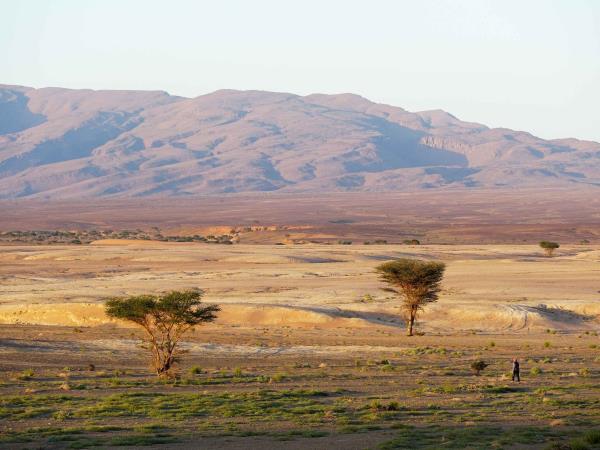
This itinerary passes through a range of sensitive environments, including mountain valleys, oasis systems, and desert ecosystems. The route is designed to follow established tracks and traditional pathways to reduce erosion and avoid unnecessary disturbance to fragile landscapes.
In the High Atlas and Anti-Atlas regions, travel routes pass through agricultural valleys and sparsely populated mountain terrain. These areas are managed through long-standing traditional land-use systems, including terraced farming and irrigation channels. The itinerary is designed to observe these systems without disruption. In addition, guides provide context on how local communities manage water and land use in challenging environmental conditions.
In oasis areas such as Agdz and the Draa Valley, palm groves and irrigation systems are carefully maintained by local communities. Walking routes are kept within established paths to avoid damaging cultivated areas or water channels. These ecosystems are particularly sensitive to changes in water availability and travellers are briefed on responsible behaviour in these environments.
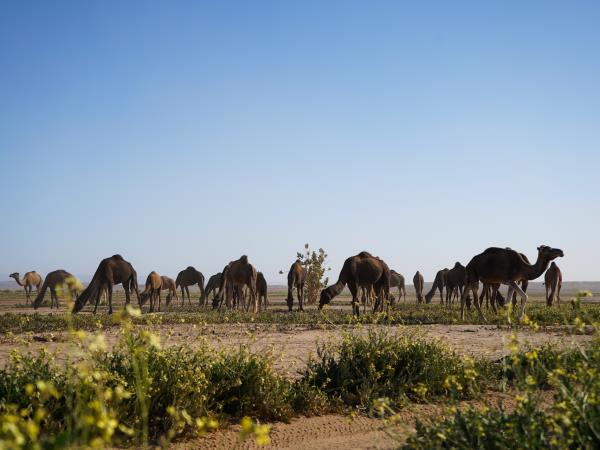
The desert sections of the itinerary, particularly within Erg Chigaga, are home to low-density but important wildlife populations adapted to arid conditions. Species such as desert foxes, gazelle and migratory birds may be present depending on seasonal conditions. Wildlife viewing is conducted at a distance and without interference, with guides trained to minimise disturbance.
Camping practices in the desert follow low-impact principles. Temporary camps are dismantled daily in mobile sections of the journey, ensuring that no permanent structures are left in sensitive areas. Waste is carried out where possible, and strict guidelines are followed to prevent pollution of sand and soil environments.
Cultural and natural heritage sites such as Ait Ben Haddou are visited using designated routes, with a focus on minimising footfall impact on historic structures. These UNESCO-listed sites are already subject to conservation management and visitor access is guided to reduce pressure on fragile architecture.
Overall, the itinerary is designed to balance access with protection, ensuring that travellers can experience remote environments without contributing to long-term degradation of landscapes or cultural sites.
People
LOCAL ECONOMYThis itinerary is structured to ensure that tourism revenue is distributed across a range of local communities in southern Morocco, from urban centres to remote desert regions. Accommodation includes locally owned riads in Marrakech, family-run guesthouses in rural valleys and traditional kasbah-style properties near Ait Ben Haddou, all of which contribute directly to local employment and supply chains.
In rural areas such as the Draa Valley and Agdz, stays in earth-constructed guesthouses support small-scale hospitality businesses that are typically family operated. These properties source food and services locally, ensuring that economic benefits remain within the immediate region.
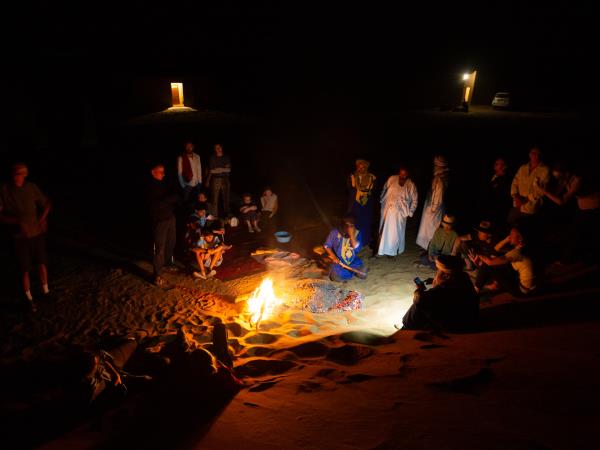
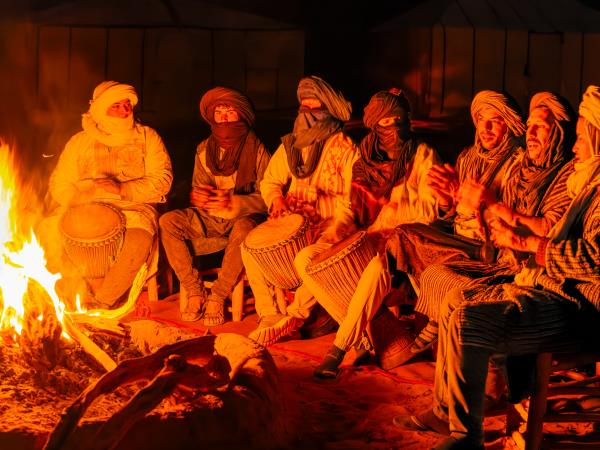
Desert sections of the itinerary are operated in partnership with local nomadic and desert communities. Camel handlers, cooks and guides are employed directly from these groups, providing income linked to traditional livelihoods. This supports the continuation of desert-based knowledge systems while offering travellers an authentic experience of Saharan travel.
Food plays an important role in supporting local economies throughout the journey. Meals are prepared using regional ingredients purchased from local markets or produced within guesthouse gardens and surrounding farms where possible. This includes staple products such as grains, vegetables, olives and preserved foods, contributing to small-scale agricultural income.
Visits to craft-producing towns such as Tazenakht, known for traditional rug weaving, provide indirect economic support to artisanal industries. While not structured as commercial stops, these areas benefit from awareness and visitor flow linked to tourism routes through the Anti-Atlas region.
Guides and drivers are locally employed and bring region-specific knowledge to the experience. Their involvement ensures that economic benefits are retained within Morocco and that interpretation of landscapes, culture and history is grounded in local perspective.
EMPLOYMENT, INCLUSIVITY AND DIVERSITY
The majority of staff involved in delivering this itinerary are Moroccan nationals, including guides, drivers, camel handlers, cooks and accommodation providers. Employment is distributed across both urban and rural areas, with a strong reliance on small, locally owned businesses rather than large external operators.
In desert regions, employment structures often involve extended family groups or community-based teams. This includes camel caravans and camp support staff, where roles are shared across households and provide a key source of seasonal income. These arrangements help sustain traditional livelihoods in areas with limited alternative employment opportunities.
Accommodation providers, particularly in rural guesthouses and kasbah-style properties, typically employ local staff in hospitality, food preparation and maintenance roles. These positions are important contributors to rural economies where employment opportunities can otherwise be limited.
The itinerary is inclusive in its design, welcoming travellers from a range of backgrounds. However, due to the physical nature of the itinerary, including trekking, desert walking and extended travel days, it may not be suitable for those with limited mobility. This is clearly communicated in advance to ensure expectations are appropriate.
Cultural sensitivity is an important part of the experience. Travellers are guided on appropriate behaviour in rural and traditional communities, including dress codes and interaction norms. This helps ensure respectful engagement between visitors and host communities.
Gender representation in tourism roles varies by region, with increasing participation of women in hospitality, guiding and artisan production, particularly in urban and peri-urban areas. The itinerary supports engagement with a range of local providers where possible, reflecting the evolving nature of employment in the region.
Overall, the trip prioritises local employment, fair working practices and community-based tourism, ensuring that economic benefits are widely distributed and that cultural exchange takes place in a respectful and mutually beneficial way.
Popular similar holidays
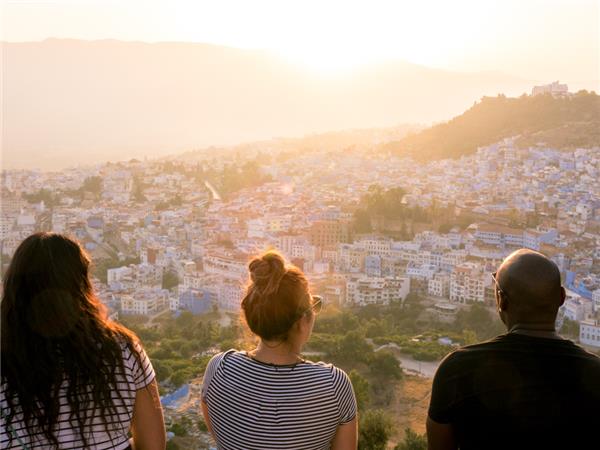
Morocco cultural tour
From £829 - £1315 15 days excluding flights
Come and see Morocco's kaleidoscope of colours
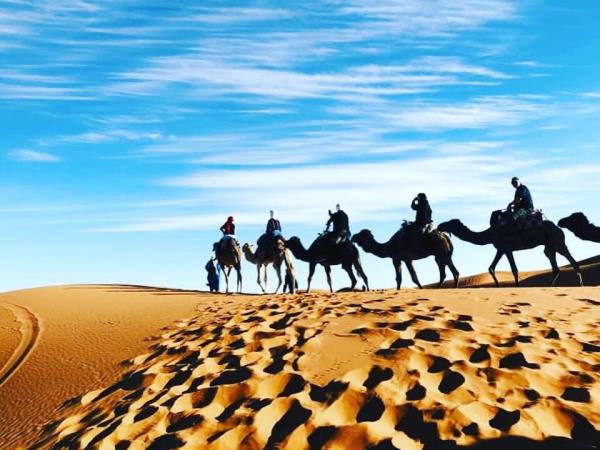
Morocco family holiday with teenagers
From £849 - £899 8 days excluding flights
Exciting Moroccan adventure for teenagers and parents
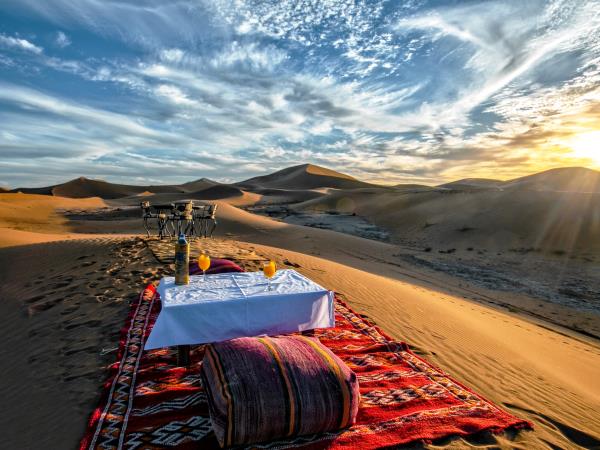
Morocco holiday, Marrakech to the Sahara
From £1195 - £1275 7 days excluding flights
Marrakech and Sahara - stay in a Riad, sleep under the stars