Walking in Valbona Valley National Park

I dream of abandoned villages being restored by tourism![]()

You hear the bleats of the sheep long before you see them, as you approach the remote smallholding where you’ll pause for lunch while walking in Valbona Valley National Park. At this height the sweeping views over the valley and the mountains are breathtaking. Lunch is a chance to really absorb the scenery, as your shepherd hosts ply you with fresh cheese and milk, while your local guide translates the pleasantries.
The national parks of northern Albania are no longer as ‘off the beaten track’ for international travellers as they once were. Popular trails get very busy in the summer, and villages like Valbona and Theth now have more of a resort feel to them. But our walking holidays escape the day-tripping crowds, and forgo the huge hotels that are increasingly being built in favour of small, locally run guest houses and experiences so you can enjoy a genuine taste of rural life.
After you’ve arrived in the afternoon, slipped out of your boots and exchanged a few greetings with your hosts, you might be invited to pick mulberries and plums in the garden for dinner, help milk the sheep, or pitch in with preparing the evening meal. “The way tourism develops in these untouched places is not always ideal but Valbona Valley is definitely not spoilt,” says Emma Heywood, co-founder of our partner Undiscovered Balkans, who organise some of our Albania walking holidays. “You still get amazing hospitality and views, the mountain tourism there is wonderful.”
“This is a golden era of opportunity for northern Albania, we have been craving this tourism boost,” says Marjana Koçeku, who advocates for the preservation of Albanian nature, cultural identity and traditional life. “We have a rich history and culture here, hundreds of years of untouched tradition due to our isolation.” Marjana’s family home is a traditional kulla house. These houses are emblematic of the northern mountains, handcrafted from stone and wood that had to be carried in by hand or on people’s backs, often for hours. “I tell guests that ‘sustainability’ is a word that’s only been in use for a few decades but in Albania we’ve been practising it for centuries. I dream of abandoned villages being restored by tourism, starting with kulla houses.”
The national parks of northern Albania are no longer as ‘off the beaten track’ for international travellers as they once were. Popular trails get very busy in the summer, and villages like Valbona and Theth now have more of a resort feel to them. But our walking holidays escape the day-tripping crowds, and forgo the huge hotels that are increasingly being built in favour of small, locally run guest houses and experiences so you can enjoy a genuine taste of rural life.
After you’ve arrived in the afternoon, slipped out of your boots and exchanged a few greetings with your hosts, you might be invited to pick mulberries and plums in the garden for dinner, help milk the sheep, or pitch in with preparing the evening meal. “The way tourism develops in these untouched places is not always ideal but Valbona Valley is definitely not spoilt,” says Emma Heywood, co-founder of our partner Undiscovered Balkans, who organise some of our Albania walking holidays. “You still get amazing hospitality and views, the mountain tourism there is wonderful.”
“This is a golden era of opportunity for northern Albania, we have been craving this tourism boost,” says Marjana Koçeku, who advocates for the preservation of Albanian nature, cultural identity and traditional life. “We have a rich history and culture here, hundreds of years of untouched tradition due to our isolation.” Marjana’s family home is a traditional kulla house. These houses are emblematic of the northern mountains, handcrafted from stone and wood that had to be carried in by hand or on people’s backs, often for hours. “I tell guests that ‘sustainability’ is a word that’s only been in use for a few decades but in Albania we’ve been practising it for centuries. I dream of abandoned villages being restored by tourism, starting with kulla houses.”

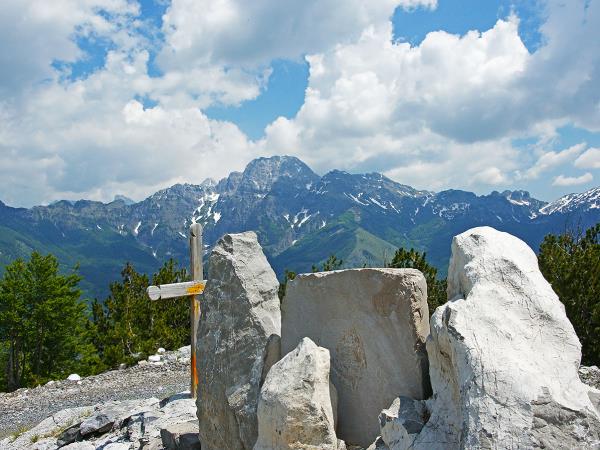
Albanian alps hiking holiday
Stay with highlanders in stunning Albanian Alps Valleys
From
£1200 to £1650
10 days
ex flights
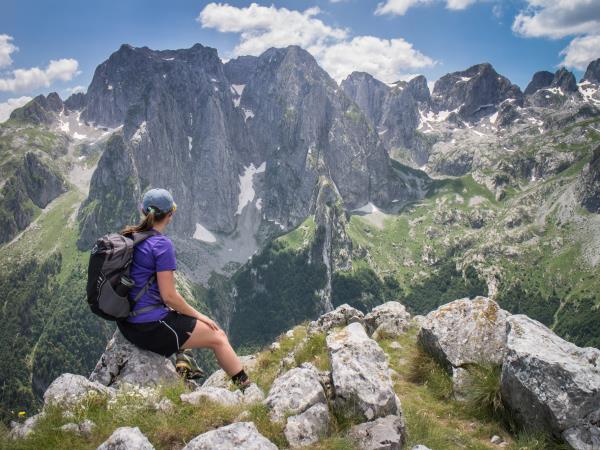
Walking holiday in Montenegro and Albania
Hike the most stunning peaks of Montenegro and Albania!
From
£1195 to £1245
8 days
ex flights
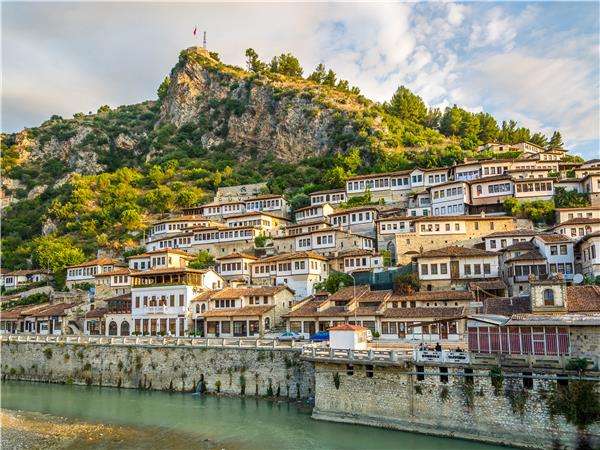
Albania walking holiday
A wild and rugged landscape with historic folkore
From
£1907
8 days
ex flights
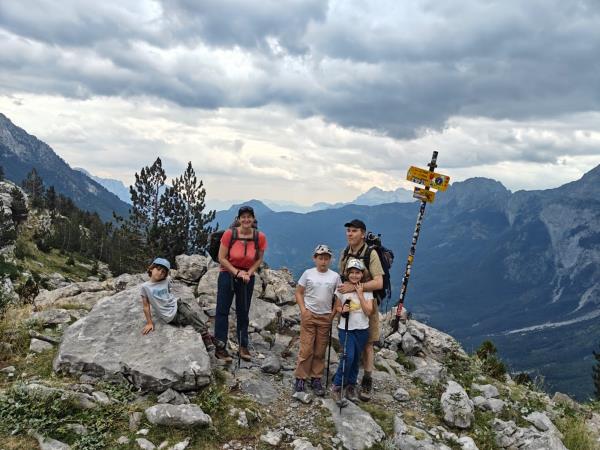
Albania walking holiday for families
Family-friendly trekking in the legendary Dinaric Alps
From
£1245
8 days
ex flights
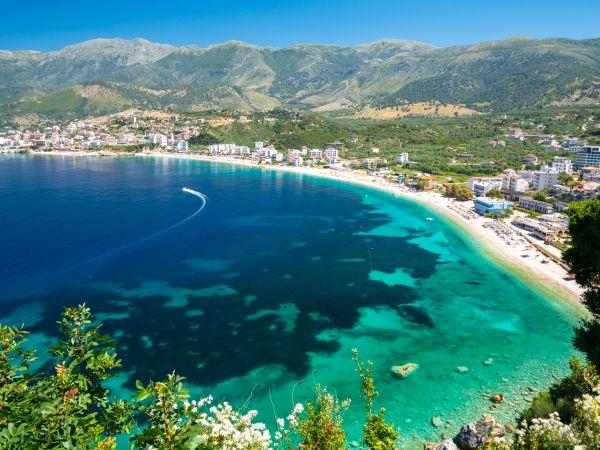
Walking in Southern Albania holiday
Walk the southern mountains through which Byron once walked
From
£1935 to £1985
8 days
ex flights


Contact Us
Call us for a chat about our holidays. We are happy to discuss your holiday and help in any way we can. No bots, queues or awful hold music.

01273 823 700
Call us until 4pm
Calling from outside the UK

What to expect when walking in Valbona Valley National Park
A land of blood feuds that can last generations, where people will give up their own beds to make a stranger comfortable in their home, where nothing is as important as one’s sense of honour![]()
Our walking holidays in Valbona Valley National Park are usually bookended by time in Shkodra, on the southern shore of Lake Shkodra, and the capital, Tirana. From Shkodra you travel 50km east to the town of Koman, from where you take a memorable two-and-a-half-hour ferry ride up Lake Komani to Fierza. The journey is comparable to voyaging along the Scandinavian fjords, with turquoise waters surrounded by steep, densely forested walls. Sadly, parts of the lake are badly polluted with plastic – our holidays help by following Leave No Trace principles, providing water bottle refills, and working to reduce single-use plastic packaging. Finally, a short minibus ride from Fierza takes you into the heart of Valbona Valley National Park.
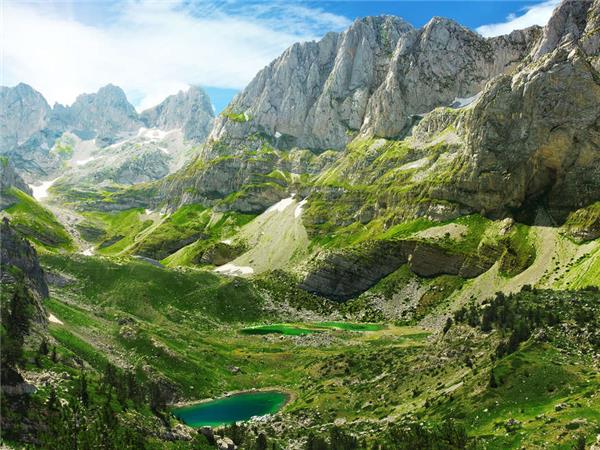
This mountainous region, where some of the last remaining pockets of true wilderness in Europe can be found, is full of mystery, legend, and fascinating history. It is a land of blood feuds that can last for generations, where people will give up their own beds to make a stranger comfortable in their home, where nothing is as important as one’s sense of honour. Brown bears, chamois, lynx, wolves and wild goats roam the imposing jagged peaks of the Albanian Alps, also known as the Accursed Mountains, while eagles and kestrels soar above.
One of the most popular (and busiest) walks in the region is the high mountain pass between the villages of Valbona and Theth, which can take up to eight hours. In Theth you can visit the ancient kulla house that was historically used by families sheltering from blood feuds, and which now serves as a museum of the tribulations of life in self-imposed exile. Other routes include the White Circle Trail, following shepherds’ paths to the foothills of Mount Jezerca, the highest mountain in Albania, and old caravan routes where you might be accompanied by mules and muleteers. There’s also the option to combine Albania with Kosovo and Montenegro, as the Accursed Mountains span all three countries.
Our Valbona Valley walking holidays explore dense forests of pine and beech, dramatic karst rock formations, and, at higher elevations, expanses of juniper and alpine bluegrass. The Valbona River flows through the valley, with numerous swim spots available. You’ll walk to isolated hamlets across meadows blazing with wildflowers; stop in at the homes of shepherding families to learn about their milk- and cheese-making practices and how they knit clothes from the wool of their sheep, to share herbal tea with local families, and to picnic by waterfalls.
Another common feature of the landscape in Valbona Valley National Park, indeed everywhere across Albania, are the abandoned concrete bunkers. They were built in the late 20th century on the orders of the former communist leader Enver Hoxha. Paranoid about invasion, he wanted the Albanian citizenry ready to repel the enemy using guerilla warfare. While some of the bunkers have been converted into dwellings, or museums, or animal shelters, most are crumbling slowly away, a curious reminder of a futile endeavour.
This mountainous region, where some of the last remaining pockets of true wilderness in Europe can be found, is full of mystery, legend, and fascinating history. It is a land of blood feuds that can last for generations, where people will give up their own beds to make a stranger comfortable in their home, where nothing is as important as one’s sense of honour. Brown bears, chamois, lynx, wolves and wild goats roam the imposing jagged peaks of the Albanian Alps, also known as the Accursed Mountains, while eagles and kestrels soar above.
One of the most popular (and busiest) walks in the region is the high mountain pass between the villages of Valbona and Theth, which can take up to eight hours. In Theth you can visit the ancient kulla house that was historically used by families sheltering from blood feuds, and which now serves as a museum of the tribulations of life in self-imposed exile. Other routes include the White Circle Trail, following shepherds’ paths to the foothills of Mount Jezerca, the highest mountain in Albania, and old caravan routes where you might be accompanied by mules and muleteers. There’s also the option to combine Albania with Kosovo and Montenegro, as the Accursed Mountains span all three countries.
Our Valbona Valley walking holidays explore dense forests of pine and beech, dramatic karst rock formations, and, at higher elevations, expanses of juniper and alpine bluegrass. The Valbona River flows through the valley, with numerous swim spots available. You’ll walk to isolated hamlets across meadows blazing with wildflowers; stop in at the homes of shepherding families to learn about their milk- and cheese-making practices and how they knit clothes from the wool of their sheep, to share herbal tea with local families, and to picnic by waterfalls.
Another common feature of the landscape in Valbona Valley National Park, indeed everywhere across Albania, are the abandoned concrete bunkers. They were built in the late 20th century on the orders of the former communist leader Enver Hoxha. Paranoid about invasion, he wanted the Albanian citizenry ready to repel the enemy using guerilla warfare. While some of the bunkers have been converted into dwellings, or museums, or animal shelters, most are crumbling slowly away, a curious reminder of a futile endeavour.
Responsible tourism in Valbona Valley National Park
Catherine Bohne moved to the region in around 2009, started the tourist information website ‘Journey to Valbona’, and led a campaign against dam construction. “When I first arrived in Valbona I found this sort of medieval Shangri-la, a beautifully preserved pearl. There is value in tourists coming here but not the way it’s been done so far. It’s about moving as many people through as fast as possible, which is not sustainable or a great experience for anyone. Far more money seems to be spent on marketing than infrastructure. So far as I can see the national park has little in the way of management or staffing. And the approach to development seems very short-sighted, there appear to be no environmental assessments done.”
Tourism can be a real blessing for Albania but if we’re not careful it could become a curse![]()
Marjana agrees that the pace of development, and the way it’s being done, leaves a lot to be desired. “Tourism can be a real blessing for Albania but if we’re not careful it could become a curse. I grew up here and I remember it as a peaceful wilderness full of butterflies and wild goats, and I am in favour of development only if it is in harmony with nature. If the government does not control it properly and work with local people then in the long term we will have problems.” Both Marjana and Catherine feel that it would help to promote tourism elsewhere in the region. “Just two hours from me there are miracles of beauty that aren’t being promoted at all including villages such as Vermosh and Lepushe,” says Marjana. “Sharing these places will empower communities and enrich tourists’ experiences, and also help with crowding.”
Rather than just popping in for a day walk, which cause overcrowding with few benefits for local communities, our holidays spend around a week in the region, allowing you to go well beyond the hotspots, and accommodating you in small, locally run guest houses. They also give you brilliant cultural encounters, like lunch with shepherds, or learning how to cook a traditional meal with a local family at their farmstead. All of which helps spread the benefits of tourism while also giving you a more immersive experience.
Rather than just popping in for a day walk, which cause overcrowding with few benefits for local communities, our holidays spend around a week in the region, allowing you to go well beyond the hotspots, and accommodating you in small, locally run guest houses. They also give you brilliant cultural encounters, like lunch with shepherds, or learning how to cook a traditional meal with a local family at their farmstead. All of which helps spread the benefits of tourism while also giving you a more immersive experience.
What does walking in Valbona Valley National Park involve?
Small group or tailor made?
Opt for a small group tour if you’re travelling solo and would like some friendly companionship on the trail. Or if you appreciate the convenience of simply following a guide and never needing to consult a map. Our partners use brilliant local guides who have grown up in these communities and know the routes between them well. Beyond leading the way they offer great insights into rural ways of life, and the region’s history and culture.
Tailor made walking holidays give you greater scope on when you travel, while the routes can be adjusted according to your abilities and preferences. You’ll be walking alone, but you’ll be provided with detailed route notes and maps, and your luggage will be transferred between guest houses so you can walk unencumbered.
Tailor made walking holidays give you greater scope on when you travel, while the routes can be adjusted according to your abilities and preferences. You’ll be walking alone, but you’ll be provided with detailed route notes and maps, and your luggage will be transferred between guest houses so you can walk unencumbered.
How fit do I need to be?
Routes vary depending on the holiday, but you’ll want to be in reasonably good shape for a week of walking, as you’ll cover up to 15km per day. Be ready for some steep ascents and descents, particularly on the Theth to Valbone crossing – the pass is 1,795m above sea level. It makes sense to pack a collapsible set of walking poles.
When to go
Our holidays operate between May and September. Note that remote mountain communities like Valbona and Theth, and the trails between them, can get busy during the summer months of July and August. Snow at higher reaches can last well into May making some remote trails impassable. Safety is always the highest priority and if weather forces it then routes may be subject to change.
More Albania articles
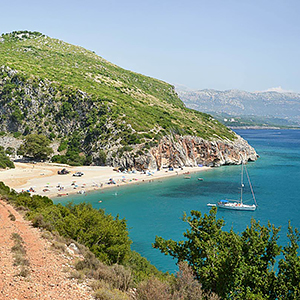
Read why the best time to go to Albania is spring, early summer and early autumn – with bonus weather charts too
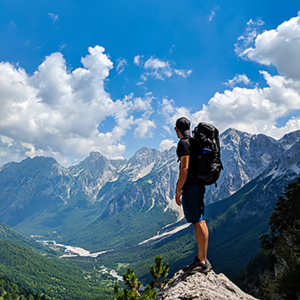
Our Albania travel guide explores Ottoman architecture, Accursed Mountains, Mediterranean coastline and sublime lakes.
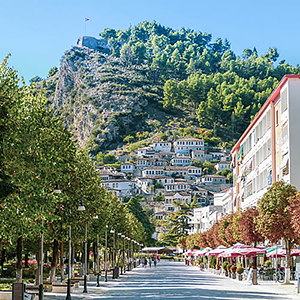
Our Albania map and highlights reveal where to go in Albania, from the sunny Riviera to the snowy mountains.
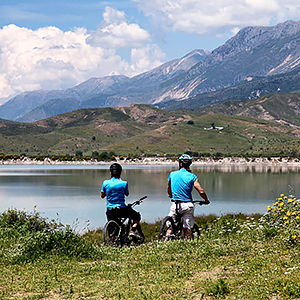
Find out more about small group and self guided cycling in Albania, including some of the bets routes.
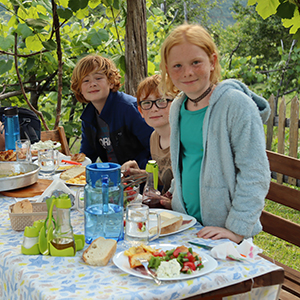
It may not be off the beaten track anymore, but adventurous families will still be ahead of the curve.
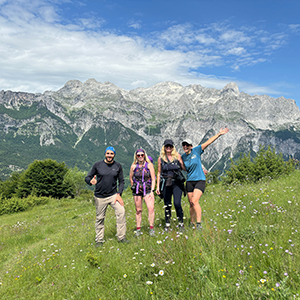
Our holidays focus mostly on Albania's mountainous northern reaches.
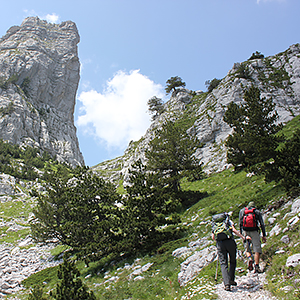
Walking holidays in Albania follow in the footsteps of woodcutters and shepherds through forests and mountains.
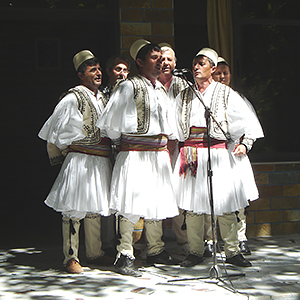
Albania’s cultural heritage hides away from the bright lights and beaches of the Riviera.
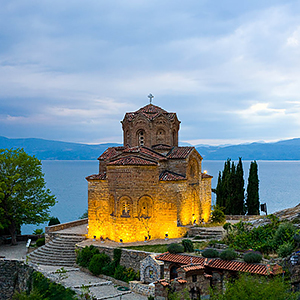
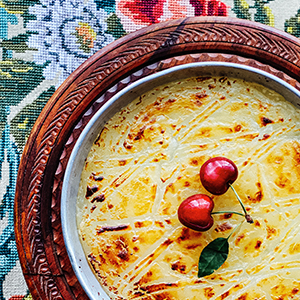
Words that describe Albanian cuisine include surprising, spectacular, authentic and generous.
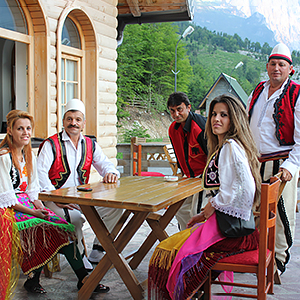
Get Albania travel advice from our local experts on everything from where to stay to snowshoeing in the mountains.
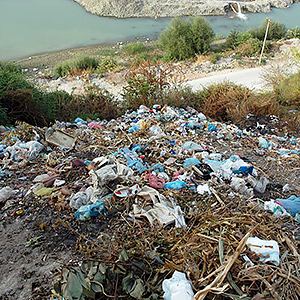
Read about responsible tourism in Albania and learn how to make a positive impact.