Algeria history tours

Roman graffiti carved on a stone in the Algerian city of Timgad reads: “venari lavari ludere ridere occ est vivere” – “to hunt, to go to the bath, to play, to laugh: this is to live.”

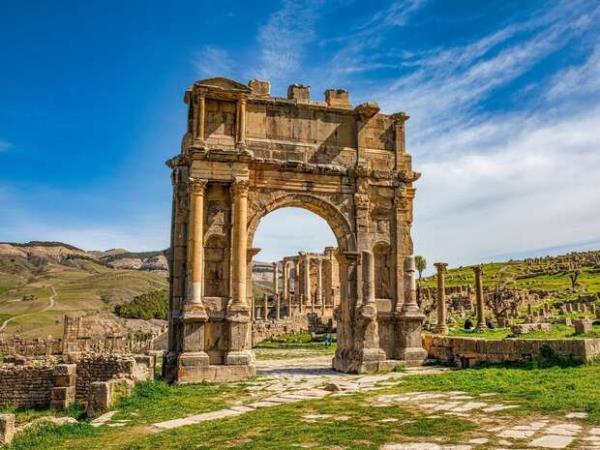
The Romans certainly did know how to live in Algeria. UNESCO-listed Timgad, ‘the Pompeii of northern Africa’, was built under the rule of Emperor Trajan. There’s a 3,500-seat theatre, markets, temples and churches, even the remains of a gigantic library – and of course, there are many baths.

Much as the Timgad inscription begs to differ, the Romans couldn’t always afford to subscribe to their Live, Love, Bath motto because they were busy fending off other ancient civilisations. After defeating the Carthaginians, they took control of Algeria’s coast. Like the Carthaginians before them, they needed to find a way to live alongside the country’s Indigenous Berber population. The Berber kingdoms of Numidia and Mauretania eventually became part of the Roman Empire, and Romanised Berber kings ruled, eventually as client kings to Rome. Then Vandals sacked the north African coast. After them, the Byzantines moved in.

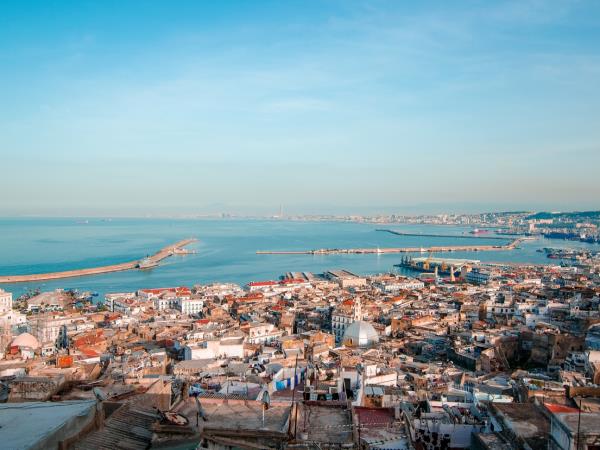
In this massive country with seven UNESCO World Heritage sites, our Algeria history tours uncover thousands of years of history, from Constantine, one of the oldest cities in the world, to Algiers itself, with its amazing kasbah.
These are amazing sites, enhanced by fantastic settings, and by their total lack of crowds.

Ruins without the queues

Despite the historic sights on offer, there’s very little written internationally about what to see in Algeria, let alone about archaeology tours. For years, Algeria hasn’t been part of the tourist map, in part due to the civil war (1991-2002) and subsequent unrest. Its neighbours to the east and west, Tunisia and Morocco, are tourism titans. Instead, oil is Algeria’s main business – comprising a quarter of its GDP. Tourism only makes up around two percent of Algeria’s economy – and most travellers are visiting friends and family, not forums. The result? All those splendid sites to yourself.

Ruins with a view

Juba II, one of Algeria’s Berber-Roman kings, built one of Algeria’s most striking sites: the Mausoleum of Mauretania. This massive brick structure resembles the Royal Albert Hall and a beehive all at once. In fact, it was designed to be a royal tomb with some prestigious inhabitants: Juba II married the daughter of Cleopatra, Cleopatra Selene. The mausoleum all the more striking for its coastal setting: from the sea, 250m below, it looks like a strange ancient stadium.

In fact, many of Algeria’s best historic sites are enhanced by their settings. Constantine’s old town is built above a huge gorge, from which bridges radiate out to connect to the new town. The Romans built Tipaza overlooking the sea, and Djemila, a windswept mountain town on the edge of their Aures Mountains, built to deter invading Berbers. The north of the country was Rome’s breadbasket – the fruits of Algeria’s agriculture supplied much of the empire; even today you’ll be surprised by its greenness, making certain sites all the more scenic.

No time like the present

So much of the pleasure of a history tour comes from the marvel that these structures still exist in the present day – and so after spending your days seeing historic sights, spend your evenings unpacking what you’ve seen in the company of your hosts. Our holidays use local guides (a huge benefit when there’s little in the way of written travel guides) and find local hotels where they can, so you can meet modern Algerians. On some holidays you can stop in someone’s house for drinks and snacks in an intimate setting. Many Algerians live on less than a dollar a day; tourism can be a force to lift people out of poverty.
Saint Augustine, one of the most important figures in early Christian thought, was born in Algeria.

Contact Us

Responsible Travel, Travel Team

Call us for a chat about our holidays. We are happy to discuss your holiday and help in any way we can. No bots, queues or awful hold music.

Responsible Travel, Travel Team

Example itineraries for seeing Algeria’s ancient and historic sites

Since the Romans, and other invading ancient Mediterranean civilisations, didn’t penetrate too far into the desert, you’ll find many of the best ancient sites in Algeria on the coast. This means that, whilst this is a massive country, many tours can minimise travel between sights.

From Algiers you can easily go for day trips to the city of Cherchell and the ruins at Tipasa (founded by Carthaginians), stopping at the Royal Mausoleum of Mauretania along the way. Next, head east along the coast to the town of Setif, home to the national museum, near the ruins at Djemila. It’s not far from here to Constantine, the third-largest city, from where you can head out to see the Roman site of Tiddis and the Mausoleum of Medracen (a Numidian tomb). From here it’s 120km to Timgad, near the modern-day city of Batna.
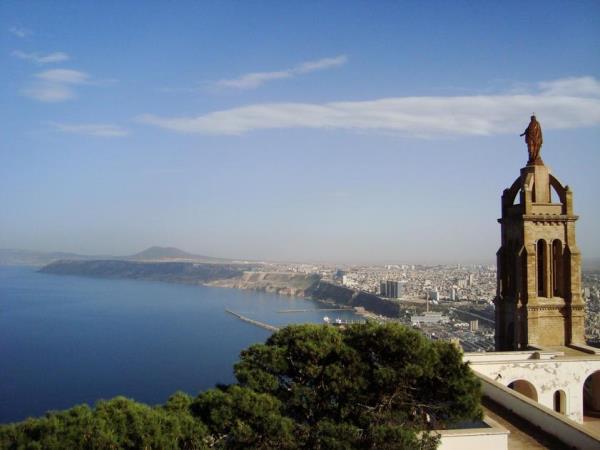
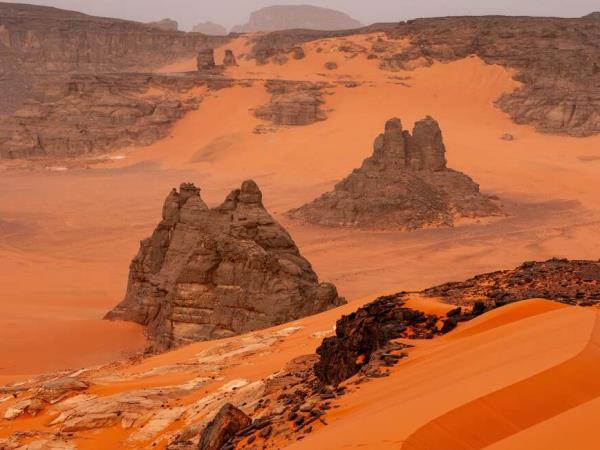
Alternatively, head south into the desert to escape the Romans and see Biskra, dip down to the town of El Oued, sitting in the shadow of the Grand Erg Oriental in the Sahara. Next, explore the M’Zab valley, where the Mozabite people live a traditional existence across five ksours (fortified villages). These villages have distinctive, desert-proof architecture, and you’ll find Mozabite culture very distinct from the rest of Algeria. You may then go on to El Menia, a 9th-century ksar (fortified village) before looping up to see the medieval mosques and palaces of Tlemcen and ending at Algeria’s second city, Oran, 420km west of Algiers.

You can go on small group or tailor made history tours in Algeria. For a comprehensive tour, expect to spend around 15 days in the country. You could do a shorter trip, and still see a lot: Algiers, Tipasa, Djemila with its amazing mosaic museum and Constantine, a city with 3,000 years of history, can be squeezed into a five-day Algeria history trip.

Tourism infrastructure isn’t very well developed in Algeria. Don’t expect visitor centres or interactive exhibitions at historic sites, and not all sites will be in good repair. Entrance fees go towards conservation – and your visit also highlights the value of the sites. Standing alone, seeing the empty windswept hillside framed by the 12m-tall triumphal Arch of Trajan in Timgad, you may think, like the Romans: this is to live.
Written by Eloise Barker
Photo credits: [Page banner: Alioueche Mokhtar]  [Ruins without the queues: Vallee] [Ruins with a view: Dreams] [Timgad: Habib kaki]