California’s 58 counties are generally divided into Northern and Southern California. Californians don’t always agree where the border should be but most consider everything south of the line made by the northern boundaries of San Luis Obispo, Kern and San Bernardino counties to be Southern California, and the remaining two-thirds of the state to be Northern. The physical geography of the country falls naturally into 12 regions of varying size, as follows.
Shasta Cascade
In the far northeast, this is a region of volcanic mountains and lava beds featuring the Shasta-Trinity National Forest, the vast Shasta Lake and sparkling rivers.
North Coast
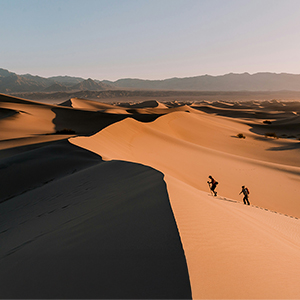
The coastal strip from the Bay Area to the Oregon border is lined with rugged cliffs, rocky beaches, rolling green hills and misty forests of giant redwood trees, among them the Avenue of the Giants. The region has no large cities but it has a good number of small towns and communities with Victorian architecture and an arty, ecologically-aware vibe.
San Francisco Bay Area
This region includes San Francisco itself, densely populated and the cultural hub of Northern California, the East Bay cities of Oakland and Berkeley and the Silicon Valley city of San José. North of the San Francisco Bay are the counties of Marin, Sonoma and Napa, known for their open countryside, woodlands and wineries. To the south are San Mateo, Santa Cruz and Santa Clara counties, a mixture of farmland, affluent suburbs and scenic coast such as Half Moon Bay.
Gold Country
Named after California’s 19th century Gold Rush, this region is made up of historic mining towns, farms, wineries and small arts communities. The American River, a lively tributary of the Sacramento, runs down from the crest of the Sierra Nevada and crosses the region.
High Sierra
This dramatic region is home to some of the most stunning mountain terrain in the state, sculpted by glaciers over millennia. Lake Tahoe, Mono Lake and some of California’s best known parks including Yosemite, Sequoia and Kings Canyon are all located here.
Central Valley
The flat Central Valley is a welcoming region which stretches through the middle of the state from just north of Sacramento to Los Angeles. Rich, fertile soil makes this one of the world’s most productive agricultural regions, with large farms growing almonds, tomatoes, grapes, apricots, and asparagus.
Central Coast
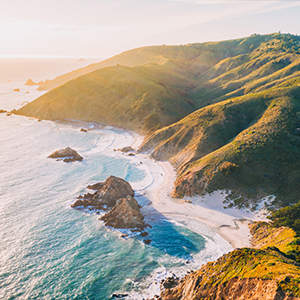
The section of coast between the San Francisco Bay Area to Santa Barbara includes Monterey beside its broad bay, the striking Big Sur cliffs and several historic Mission communities. The winelands of San Luis Obispo, Paso Robles, Edna Valley and Santa Barbara County, the Danish-built settlement of Solvang and the appealing beachside town of Santa Barbara are also found here. Five of the Channel Islands, offshore, are a national park.
Los Angeles County
Los Angeles, California’s most populated and glittering city, lies on a hilly desert plain between the Pacific and the forested San Gabriel Mountains, with the foothills of the Santa Monica Mountains to the northwest. Malibu, Beverly Hills and Hollywood are all in the northwest part of the city, west of Downtown LA. The coast is lined with beaches and boardwalks and the attractive island of Santa Catalina lies offshore. Beyond the city’s vast grid of streets are the San Bernardino Mountains.
Orange County
This beachside county is sandwiched between San Diego, Los Angeles, and the Inland Empire. Formerly an important spot for fruit-growing, most of its orange groves have now been replaced with must-see amusement parks, shopping centres and resorts. This is the smallest and most affluent county in Southern California.
Inland Empire
The Inland Empire lies east of Los Angeles in California’s extreme southwest, adjacent to the Deserts region. Beyond the suburbs which house much of the Los Angeles workforce are the San Bernardino Mountains and National Forest.
The Deserts
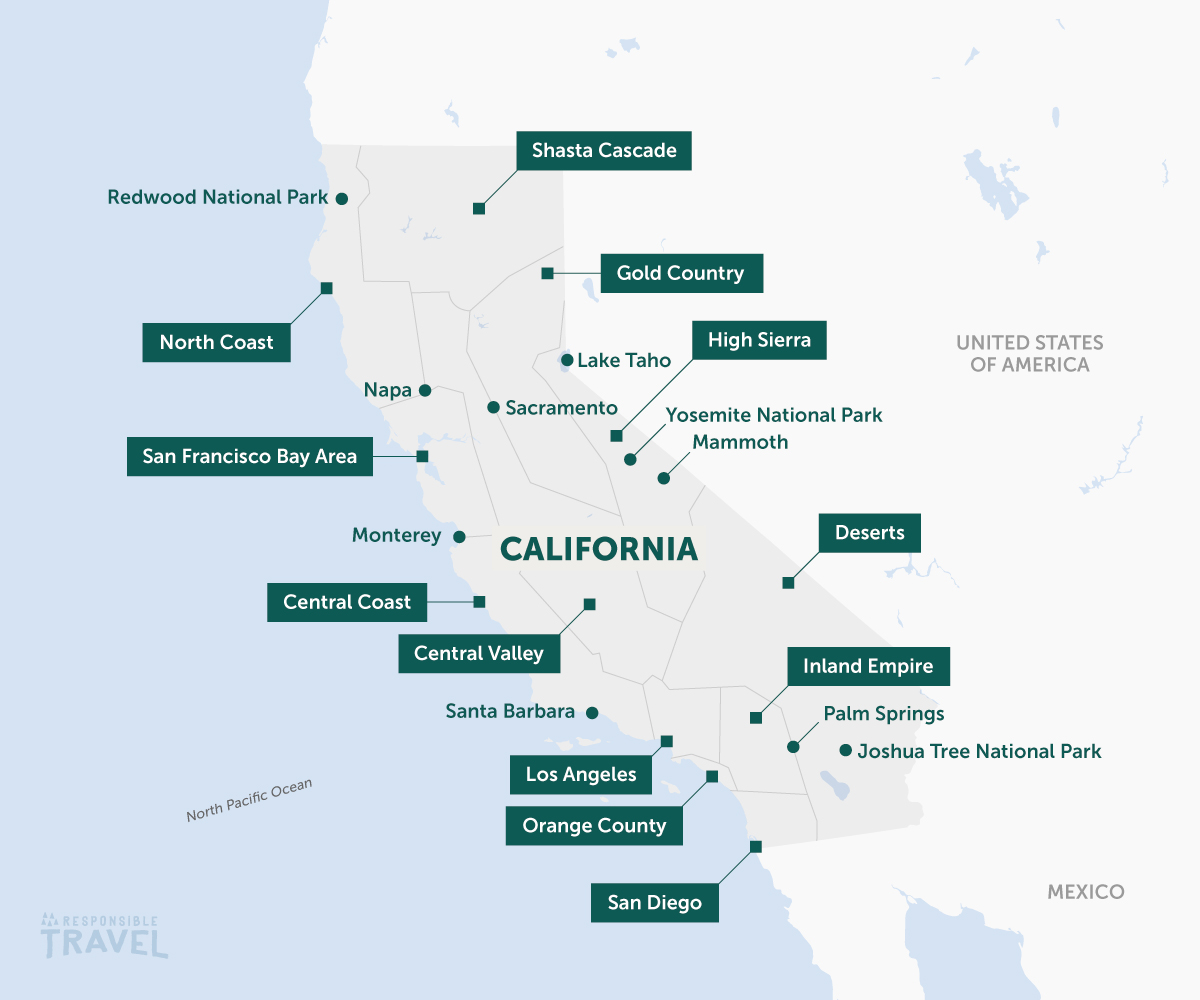
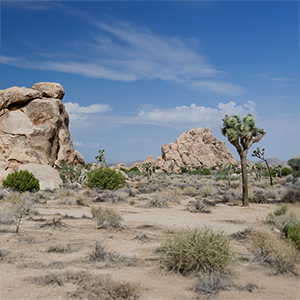
This vast region in the southeast of the state includes arid plains, dunes and mountains of unsurpassed beauty. Death Valley National Park, the Mojave National Preserve, Joshua Tree National Park, the heavily irrigated Coachella and Imperial Valleys and Anza-Borrego Desert State Park are all found here. The elegant town of Palm Springs is its main urban base.
San Diego County
A coastal city very close to the Mexican border, San Diego is California’s second largest metropolis, but its population is half that of LA. Hills and canyons create pockets of open space throughout the city. Long stretches of sandy beach occupy San Diego’s coastline, while to the east are avocado farms, the chaparral of Cleveland National Forest and the grassy slopes of the Laguna Mountains.