

Hokkaido wildlife in Japan

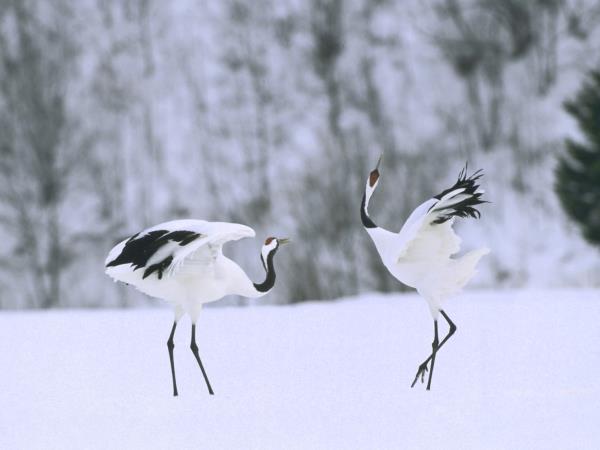
Winter is breeding season for red-crowned cranes at Kushiro, Hokkaido – and that means lots of dancing. These massive and massively rare cranes mate for life, and life partners make the best ballroom partners. Their jumping, calling and flapping is both gangly and beautiful to behold – love at first flight.

Cranes in Hokkaido have plenty to dance about. In the last 100 years the population has recovered from fewer than 20 pairs to over 1,000 birds and are no longer considered a threatened species.

They aren’t the only species worth making a song and dance over on Hokkaido, which is heaven for a wildlife watching holiday. Japan’s northernmost main island has the world’s highest concentration of brown bears, the world’s largest owl, and icy seas roamed by big marine life, plus enormous Stellar’s sea eagles, which like to perch on ice floes.
Japan is not very well known for its wildlife. But that is possibly the biggest mistake people can make when thinking of travelling here.

Why is Japan underrated for wildlife?

Save, perhaps, for Tokyo’s crows, if you go to Japan as a regular sightseeing tourist you might not see much of its nature. You might ring bells as you walk on the Nakasendo Trail to warn Asiatic black bears that you are coming through – but you probably won’t see one.

Japan, famously home to the world’s largest metropolitan area, experienced a 20th century replete with rapid urbanisation. Today, you’ll see riverbanks secured with cement and coasts shored up with concrete. Most rivers are dammed. Satoshi Tajiri, the Japanese creator of Pokemon, grew up wanting to be an entomologist. He made the famous game in part so that he could give children the feeling of bug hunting without the bugs in their increasingly concreted environments.

All this would lead you to believe that there’s very little wildlife. Think again. “Japan is not very well known for its wildlife,” says Martin Royle, from our expert wildlife partner Royle Safaris. “But that is possibly the biggest mistake people can make when thinking of travelling here.”
In my opinion, Hokkaido is the heart of wildlife watching in Japan.

Why is Hokkaido good for wildlife watching?

For all the urbanisation there’s a strong interest in the natural world in Japan – each seasonal change is marked with celebration. The country was home to the longest running natural history column written by a single author in a newspaper ever written – Wild Watch, which ran for 33 years in The Japan Times. Even the concreted rivers have in-built shelters to protect the country’s endemic giant salamander.

Southern Japan is better known for endemic wildlife, but Hokkaido has the beauty of snow: it first settles in November and makes for a canvas for animal footprints, the pop of a Ezo red fox or the glimpse of a Siberian flying squirrel.

“In my opinion, Hokkaido is the heart of wildlife watching in Japan,” says Martin. “The winter period is iconic, with dancing cranes, huge sea eagles on the broken sea ice and the world’s largest owls booming their deep call through the forests at night, Hokkaido is a wildlife watching and particularly wildlife photography hotspot.”

Contact Us

Responsible Travel, Travel Team

Call us for a chat about our holidays. We are happy to discuss your holiday and help in any way we can. No bots, queues or awful hold music.

Responsible Travel, Travel Team

From owls to algae: Hokkaido wildlife highlights

People know all too well about the salmon runs and the abundance of brown bears in the north-west of America and Canada, but Japan has this also: it’s great to witness.

Dancing cranes

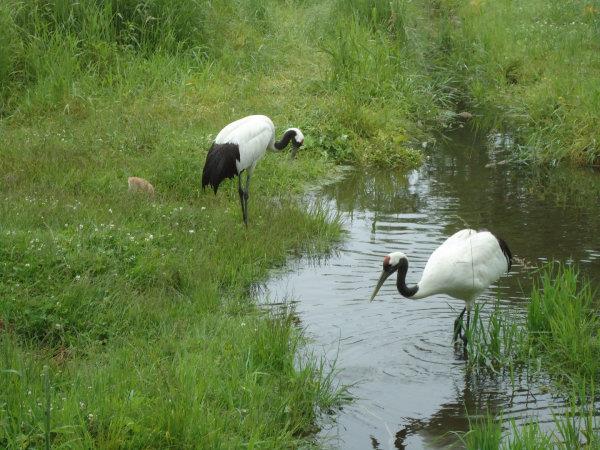
Leggy and loud, everyone wants to party with Hokkaido’s famous cranes. Land use change killed off the red-crowned crane’s food source, making their numbers plummet in the 20th century. But a single farmer started feeding the remaining dozen or so and helping them thrive – there are now over a thousand living year-round in Kushiro, closely monitored by conservationists.

Salmon runs

You can spot two species of bear in Japan – the brown bear and the Asiatic black bear. Hokkaido actually has the highest density of brown bears present in the world, meaning they are often out and about, competing for food. September is salmon month – great for a bear watching expedition where you can see them gathering at rivers.

“This is perhaps the biggest unknown when it comes to wildlife watching in Japan,” says Martin. “People know all too well about the salmon runs and the abundance of brown bears in the north-west of America and Canada but Japan has this also: it’s great to witness.”

Eagles on icebergs

The Stellar sea eagle has the kind of beak a child would draw – cartoonishly orange and enormous, and it pops like nothing else against the shifting sea ice. Add in a 2.5m wingspan, and the fact they like to perch on icebergs in the Sea of Okhotsk in between hunting trips, and the world’s heaviest eagle is a star attraction, best seen on boat trips in the winter months. Look out for smaller (though still very impressive) white-tailed eagles, too.

Winter vistas

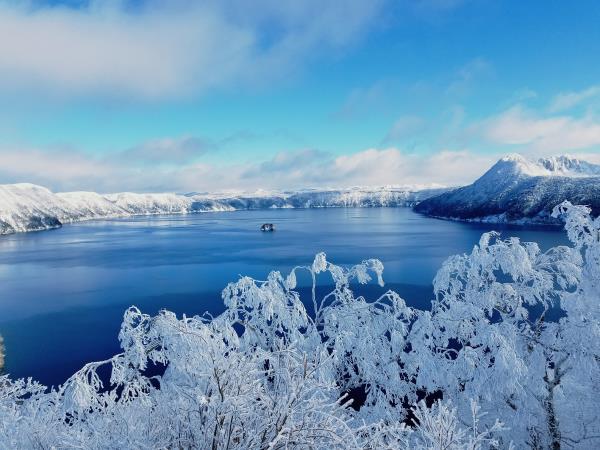
Japan is a country where all four seasons are welcomed with equal relish – but photographers might yearn for winter – where a white canvas makes for fantastic shots of Ezo red foxes, herds of sika deer in bare forests, and red-crowned cranes against the snow. At Lake Kussharo, hot springs thaw the waters enough for whooper swans to swim – much like the famous snow monkeys you can see near Nagano, Honshu. The bears are sleeping, though.

Marine marvels

The cold, nutrient-rich waters of the sea north of Hokkaido attract plenty of fish – which in turn attract plenty of showy predators. On boat trips from the Shiretoko Peninsula you can encounter whales, including Eden’s whale, as well as orcas and dolphins, up close. In the winter, when the sea fills with ice, you’ll see largha seals who have swum all the way from Russia having a well-deserved flop on the floes.

From the world’s largest owl…

The world’s largest owl stands watch over the nature of Hokkaido’s forests. Blakiston's fish owl is a vulnerable species the size of a fire hydrant. It lives in old tree hollows and is revered by Hokkaido’s indigenous Ainu people. You might also spot hares, foxes, raccoon dogs, sables, and rare nocturnal flying squirrels.

…To the world’s largest algae

Meet the world’s most low-maintenance pets: marimo moss balls. Lake Akan, a crater lake in the Lake Akan National Park is famous for its giant spherical algae, which have become popular aquatic ‘pets’. The ones found for sale on Amazon are not from the lake, where they are protected; you can see the real thing in a small observation centre by the lake. The Lake Akan region is also home to the largest community of indigenous Ainu people in Hokkaido.

Beyond Hokkaido

Explore the rest of Japan to see more of the country’s wildlife. Black bears in Honshu’s alps complement the brown bears you can see on Hokkaido, and going south of Hokkaido gives you a chance to see more of Japan’s endemic wildlife, including giant salamanders, Japanese badgers, Iriomote cats, plus macaques and the famous snow monkeys.

Best time to watch wildlife in Hokkaido

Winter is the most famous season for Hokkaido’s wildlife. It’s the breeding season for red-crowned cranes and you’ll be able to take photographs that project them onto serene screens of snow. You’ll see icebergs in the Sea of Okhotsk – and hopefully perching eagles and resting seals, too. It’s also the time of the Sapporo Snow Festival. Come prepared, however: “It is very cold,” says Martin, “so lots of layers and down jackets are essential.”

Japan is a country in love with its seasons and seasonal change, and each one brings beauty – to watch brown bears gorging on salmon from the shore – and seals, sea lions and whales taking advantage of the fishy feast from the waves, head in September. For spring flowers, aim for April for cherry blossom, May for the Sapporo Lilac Festival, and summer for flowers in Wakka Nature Centre.
Written by Eloise Barker
Photo credits: [Page banner: pen_ash] [Why is Japan underrated for wildlife?: Zdenek Machacek] [Dancing cranes: Getty Images / Unsplash+] [Winter vistas: Birger Strahl] [From the world’s largest owl…: Takashi Muramatsu]