Walking the Via Francigena

The Via Francigena is an ancient pilgrimage route through England, France, Switzerland and Italy. Far less busy than the well-established Camino de Santiago, at 1,900km it is far longer too. Enjoy tantalising views of European countryside that most visitors miss, avoid over touristy parts of Italy, and get a taste for local ways of life.

Had you a bit of free time on your hands in the Middle Ages, you could have sailed from Ireland to England and then to France, followed the Via Francigena as far as Brindisi in Puglia, then caught a ship to Istanbul and carried on to Jerusalem. Meanwhile, pilgrims making their way north to Santiago de Compostela could walk through northern Italy on the Via Francigena to reach France, where they could connect with the Camino de Santiago.

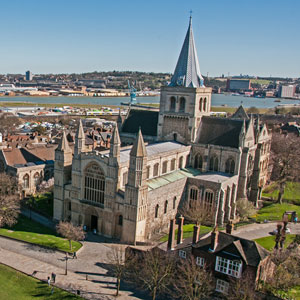
Walking the Via Francigena, you’ll be embarking on one of the most fascinating pilgrimages in existence. This ancient trail from Canterbury Cathedral in England to Rome is in fact the main thoroughfare of a great spidery sprawl of ancient routes across Europe all culminating at the ports of Bari, Brindisi, and Otranto, from where the pilgrim could continue as far as the Holy Land.

While the route shifted according to climate, regional politics, trade requirements, and war, the Via Francigena as we discuss it here largely follows the journey known to have been taken by a newly minted Archbishop known as Sigeric the Serious (always put in charge of the coats at parties) as he made his way home from Rome to England in 990 AD. Walkers usually go in the other direction, however. Rome is a popular pilgrimage destination because the apostles Peter and Paul, regarded as the founders of the Roman Catholic Church, were both martyred there.

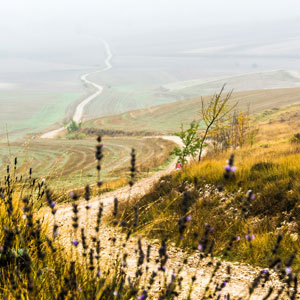
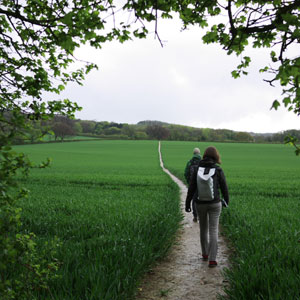
Most holidays focus on Italy, and they traverse scenery that many tourists never see. Particularly in as crowded a destination as Tuscany, walking the Via offers a completely different experience of the region. It takes you through gloriously beautiful landscapes laden with Roman ruins, welcoming historic communities, and sumptuous traditional cuisine. “Pretty much all of the towns and villages enroute are geared up to hosting the walk,” says Susan Blunt, co-founder of our partner, Adventurous Ewe, who offer a growing number of walking holidays along the Via Francigena. “Everyone wishes you 'Buon Camino' and all the cafes and bars are ready to stamp the journey cards.”

What does walking the Via Francigena entail?

The route

Southbound, the Via Francigena begins at Canterbury Cathedral in Kent, England. The route meets the coast at Dover, so walkers can take the ferry over the English Channel to Calais. Then it continues past the World War I battlefields of northern France, through the Champagne region, and negotiates the Jura Mountains into Switzerland where it skirts beautiful Lake Geneva.
One of our groups just came back and they noted that the pizza was completely different in each region they passed through!
The Via Francigena meets Italy in the Alps, at the Great Saint Bernard Pass. It descends through the valleys of Aosta and Po, crossing the Apennines – known as the spine of Italy – before reaching Tuscany. The most popular, and arguably the most scenic, sections are to be found linking these predominantly rural landscapes. Finally, the Via enters the Lazio region, where it culminates at Rome, the Vatican, and the tombs of Saint Peter and Saint Paul. Each area has its own unique identity: “One of our groups just came back and they noted that the pizza was completely different in each region they passed through!” says Susan.

It’s really only in Italy where you’re likely to regularly encounter other pilgrims on the trail, but the number is growing. Around 50,000 people are thought to walk the Via Francigena each year, and they came from some 70 countries – mostly Europe, but increasingly from North America and Australia too. You may not always be able to hold a conversation, but a friendly “buon camino” will always be understood.

This is a very different experience to the Camino de Santiago, which is walked by up to 400,000 people every year, and is very well way-marked throughout. There is an ongoing project to restore the Via Francigena, spearheaded by the Italian government, and the organisation responsible coordinates with the various local authorities whose land the route crosses. But it’s very much a work-in-progress which makes walking the Via a bit more of a challenge. Like the Camino de Santiago it’s also possible to cycle the Via Francigena, which considerably shortens the amount of time needed to complete it.

Credentials & the Testimonium

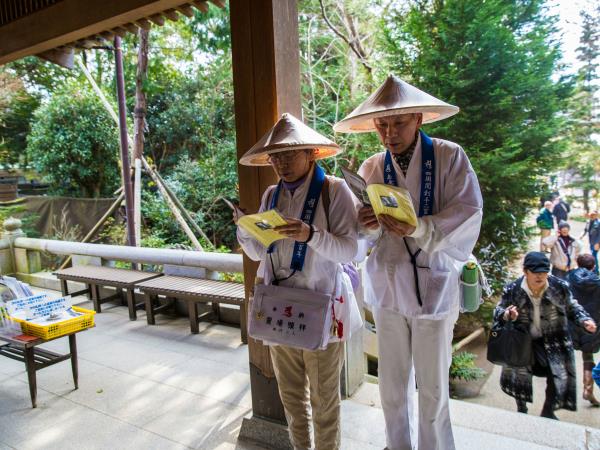
There’s no obligation to use one, but many walkers like to carry with them their Credential, or ‘Pilgrims’ Passport’. The idea is that you have it stamped at various establishments along the way, in restaurants or hotels for instance. Once you reach Rome, if you’re going that far, you can present your Credential and collect your Testimonium, or certificate of completion, from the Vatican.

The other reason to get your Credential regularly stamped is that it gives authorities greater visibility over how many people are walking the Via Francigena, when, and where, which helps them to prioritise protection of and investment in the trail.

Tailor made trekking

Our holidays are usually tailor made and self-guided, with all the necessary arrangements made for you, so that you can fully relax and enjoy the journey. That includes your accommodation, naturally. While there isn’t the breadth of options you would get along the Camino de Santiago, in towns and cities you will certainly have a variety of properties to choose from.

Tailor made trips also give you complete flexibility on your schedule. You can choose your start and end point, your arrival and departure dates, and how many nights you stay in each place along the route. Some towns, such as San Gimignano in Tuscany for instance, merit an extra day to fully explore.

Our responsible partners organise itineraries with realistic daily distances so that you arrive at your hotel each day with plenty of energy left to go out for dinner and have a wander around. You set your own pace on a self-guided holiday. Stop for a drink in this taverna here, take an hour to look around that ruined castle there, spread out your picnic blanket on that hill over there. Entirely up to you.

The other advantage of a tailor made trip is that it needn’t focus entirely on the walking. This after all is a route infused with ancient history, with exquisite regional cuisines, with tempting vineyards, with breathtaking natural scenery from mountains to lakes, valleys, and rolling hills. Your itinerary can be adapted to take into account your interest in food, wine, or ancient sites. If you want, we can even help you to arrange a cycling holiday.

When to go

The best time for walking the Via Francigena very much depends on the section you’re going to be tackling. You don’t want to be crossing the Grand St. Bernard Pass in the Swiss Alps amid the depths of winter – it’s not unknown for there to be a dusting of snow as late as June. And you may want to avoid walking the most popular Tuscany sections in summer, given that many of the region’s picturesque hill towns get very crowded, and accommodation prices will be higher. Summer temperatures can also get uncomfortably hot (into the 30s°C).

It’s possible to walk on the Via at any time of year, but spring (April to June) and autumn (September to November) are ideal. The weather in both France and Italy is reliably warm and sunny between May and October, there are resplendent colours in the landscapes, and visiting outside summer means the communities you pass through feel the economic benefit of tourism beyond peak season.

How long does it take to walk the Via Francigena?

Most people will walk just one stage (around 150km) of the Via Francigena over a week or so. Some will aim to walk one stage a year, or every couple of years. A rare few hardy pilgrims will attempt to complete the whole thing in one go. Lausanne to Aosta in Switzerland might be walked in 11 days. Siena to Lucca, one of the most attractive sections, takes eight, and you can walk from Orvieto to Rome in ten. To walk all the way in one direction, non-stop, would take upwards of three months. For comparison, the French Way of the Camino de Santiago takes around a month.

How difficult is the Via Francigena?

“I think one of the major pluses of the Via Francigena is that it’s a very achievable route,” says Susan. “Yes, you do a big chunk of walking every day, but it’s not too hardcore, it’s not exhausting. So you have plenty of time to enjoy the towns every night after you shower and have dinner without rushing. You can pause and mingle with the locals who are really friendly on this route.”

A question that is bound to be front of many people’s minds when contemplating any long distance walk is ‘how fit do I need to be?’. The answer for the Via Francigena is that if you’re only tackling one section, it shouldn’t prove too demanding.

On a typical 8-10 day trip you will be walking most days, and the daily distance is around 20km, so you will need to be adequately prepared in terms of fitness and equipment. A few practise hikes in the weeks leading up to your trip won’t go amiss even if you’re already in good shape. The terrain varies from section to section but you should expect hilly, uneven ground in places. Suitable footwear and layered clothing are essential, and a set of lightweight foldable walking poles is also worth packing.

Hot weather can make it more difficult, and until you get close to Rome there isn’t the same ecosystem of cafes and shops along the route as you will find on the Camino de Santiago. So, you need to make sure you have adequate snacks and a picnic lunch, and take every opportunity to fill up your water bottle.

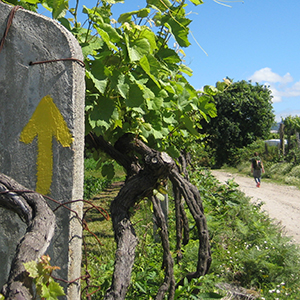
“The route is really well signposted,” adds Susan. “They’re taking the time to make it clear, which makes it easier to walk, and breaks down barriers for people of different nationalities.” Complicating things a little is that there remains some inconsistency in the types of markings used by country, even by region. But if you see a little red and white flag, or a figure of a pilgrim, you’re on the right track.

If you’re on a self-guided walk then our partners will provide you with detailed GPS maps and route notes. The notes provide hints on places to stop for a view, a drink, or a meal, as well as points of historical or cultural interest. If you do get lost, or feel that you might be, support is never more than a phone call away. And stopping to ask directions now and again is also a nice way to meet local people and start a friendly conversation.

Where do you stay?

Back in 990 AD, the freshly promoted Archbishop Sigeric stayed in a succession of abbeys and religious houses on his way back from Rome to England. Today, of course, many of those buildings are in ruins or are used for other purposes. Instead, most pilgrims stay in small hotels, guest houses, and agriturismi, ranging from two to four stars, well-located either on the route or not far off it. They are usually family-run, giving you a pleasant taste of local life. On an organised tour your luggage will be reliably transferred between accommodations so it’s ready for you every afternoon, and you can walk with just the essentials in a daypack.

It's not uncommon to see walkers on the Via who are camping as they go, which is the cheaper option but of course leaves one at the mercy of the weather. And in some parts of England you can ‘champ’ – or stay overnight in churches, much as Sigeric would have done. But would he have had filter coffee on tap and the option of a chocolate croissant for breakfast? Probably not.

Contact Us

Responsible Travel, Travel Team

Call us for a chat about our holidays. We are happy to discuss your holiday and help in any way we can. No bots, queues or awful hold music.

Responsible Travel, Travel Team

Community benefits

The Via Francigena is quieter than the Camino de Santiago, but what you lose in sociability you gain in space for peaceful meditation, and the chance to let your thoughts drift where they may.
The presence and custom of pilgrims has always shaped the communities and cultures along the routes, not least through the money they spent. In the past, a bed in a religious house was not always available, so other accommodation and hostelries would have been needed too, and tradespeople from blacksmiths to storekeepers and physicians would find plenty of custom. Shrines housing holy relics, some more authentic than others, would spring up along roadsides for passing pilgrims to pay their respects. Many would offer ‘miracle cures’ perhaps of bunions or sprains – for a fee, of course.

Armed groups like the Knights Templar and the Knights of Malta sold protection to pilgrims on their way to the Holy Land, as well as providing accommodation, and letters of banking credit. In a way, they were early travel agents, although their brochures lacked substance, with the printing press still some centuries away from being invented.

Today, it’s estimated that the Via Francigena is worth around €25 million annually to the regions it passes through. Many rural parts of Europe suffer from depopulation as young people move to urban areas in search of employment. Our walking holidays and similar forms of ‘slow tourism’ create job opportunities and incentives for these people to remain.

There is a popular marathon in September, following the Via Francigena through Tuscany, and cultural festivals and fairs that are dedicated to the route, or have seen their popularity increase through it. Sites of historic significance are also being restored because of the Via Francigena’s resurgence as a pilgrimage. One example is the Isola Abbey near the town of Monteriggioni in Tuscany, which is now used as a hostel and event space, and will soon house a museum.
As you walk through the Italian countryside, you feel a connection with pilgrims from another age

Campanilismo

The Italian expression campanilismo roughly meaning a pride for one’s hometown comes from campanile, or bell tower, and it relates to civic pride. Back in medieval times, any form of long distance travel was fraught with difficulties and dangers. That was especially the case in places like Italy, which of course wasn’t Italy back then, but a grouping of city-states and republics whose allegiances and feuds shifted constantly. It was rare for people to go far from their own communities, and normal for there to be suspicion and antipathy directed at neighbouring towns. These communities would often have bell towers which were used to ring good tidings or warnings, and would come to be symbolic of one’s home.

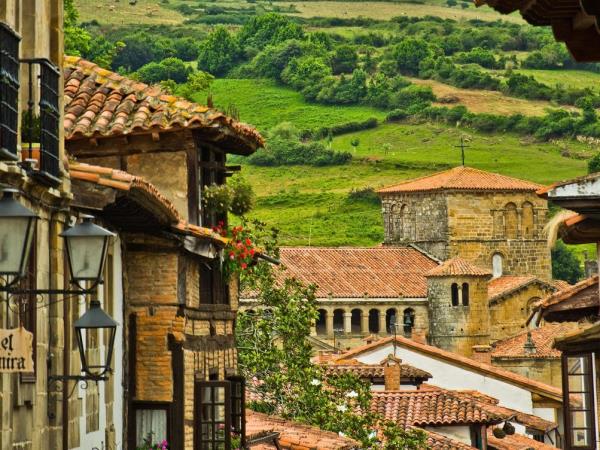
Pilgrims on the Via Francigena preferred to stay in hill towns which, with their high vantage points, were more secure. Bell towers would serve as helpful navigation points for travellers on the road, while also allowing for citizens to keep a watchful eye out for robbers. Today these hill towns and their towers continue to be cherished by their inhabitants (as well as cultural tourists). As you walk through the Italian countryside, you feel a connection with pilgrims from another age, because the sight of the next bell tower on the horizon would have evoked similar thoughts of sanctuary, sustenance, and rest.
Written by Rob Perkins
Photo credits: [Page banner: Luca Casartelli] [Intro: Adventurous Ewe] [Landscape: Adventurous Ewe] [When to go: Adventurous Ewe] [Where do you stay?: Adventurous Ewe]