Self drive holiday in Andalucia
“Do I want to live in a converted cortijo?” you think, as you pass another one. These abandoned farmhouses on the Andalucian hillside have only the sun for company. Their whitewash is coming off; they are crumbling where they stand. This is the fifth one you’ve passed this morning. You’ve only come for a driving and walking holiday, but the temptation to up sticks and move here is intensifying.
Your drive out of Cadiz has been a gentle meander through groves and hills. Reaching the top of the pass, the narrow road, a dropped white ribbon, falls down towards a lake. You get out and walk. As the day warms up, the air fills with scent. Through the thick silence, cow bells fade in and out of earshot. You wonder about that farmhouse again.
By evening, you’ve reached your destination for the night – a country house known here as a finca. Your hosts offer a home-cooked meal and a good night’s sleep. So, you think, ruefully admiring your lodgings, someone else has already had the same idea as you.
This is Andalucia, mainland Spain’s most southerly region, and an area heady with cultural history. Tourists flock to its famous cities, intent on deciphering its enigmatic traditions via flamenco clubs and sherry bars. The countryside, by contrast, is silent and secretive, and best explored by car. A tailor made tour by a local expert provides the key to unlocking the area’s treasures.
Your drive out of Cadiz has been a gentle meander through groves and hills. Reaching the top of the pass, the narrow road, a dropped white ribbon, falls down towards a lake. You get out and walk. As the day warms up, the air fills with scent. Through the thick silence, cow bells fade in and out of earshot. You wonder about that farmhouse again.
By evening, you’ve reached your destination for the night – a country house known here as a finca. Your hosts offer a home-cooked meal and a good night’s sleep. So, you think, ruefully admiring your lodgings, someone else has already had the same idea as you.
This is Andalucia, mainland Spain’s most southerly region, and an area heady with cultural history. Tourists flock to its famous cities, intent on deciphering its enigmatic traditions via flamenco clubs and sherry bars. The countryside, by contrast, is silent and secretive, and best explored by car. A tailor made tour by a local expert provides the key to unlocking the area’s treasures.

White villages
Andalucia’s famous pueblos blancos (white villages) are best reached by vehicle. The villages are strung between lonely roads, each stacked in increasingly improbable ways on the side of rivers, or in defensive positions on hilltops. Whilst their striking traditional whitewashing looks deliberately eye-catching in the landscape, it is simply the most practical way to keep the buildings cool. Some get overrun by tour buses, in others you might arrive to find only napping dogs for company.
Human landscapes
Much of the region’s identity comes from the centuries in which it was under Moorish occupation. The landscape remembers them; Moors were responsible for the still-visible irrigation systems, for the rice paddies on the Andalucian coast, for much of the decoratively tiled architecture in the cities, and for introducing almonds. If you come here in spring, you’ll be greeted by a fantasy of frothy pink almond blossom on the trees.
Human hands shaped the region’s unique dehesa landscape: wooded pastureland is common in the area – shaped by people and maintained by nature. Pigs snuffle for acorns under holm oaks and goats, tails flicking, converge in the shade.
Andalucia is a place that has been shaped by its people. Driving and walking here, between abandoned farmhouses and lonely valleys, you’ll wonder where they all are.
Human hands shaped the region’s unique dehesa landscape: wooded pastureland is common in the area – shaped by people and maintained by nature. Pigs snuffle for acorns under holm oaks and goats, tails flicking, converge in the shade.
Andalucia is a place that has been shaped by its people. Driving and walking here, between abandoned farmhouses and lonely valleys, you’ll wonder where they all are.
Empty Andalucia
Spain’s emptiness might be part of its charm, but it is also part of its sadness. Unemployment and lack of opportunities has seen mass emigration away from Andalucia. Falling product prices hit the region very hard and as people moved away from agriculture, the farm buildings were left to crumble.
Climate change is turning the screw. Water shortages are common. Illegal water taken from Andalucia’s aquifer to water fruit farms (mango and avocado are thirsty culprits) and to serve tourists’ needs reduced the lake in Doñana National Park to a puddle in 2022.
In such a difficult climate, traditional practices are dying out. Pressing olive oil using the traditional method fetches so little that farmers who help with production are sometimes paid with the oil itself instead of money.
Climate change is turning the screw. Water shortages are common. Illegal water taken from Andalucia’s aquifer to water fruit farms (mango and avocado are thirsty culprits) and to serve tourists’ needs reduced the lake in Doñana National Park to a puddle in 2022.
In such a difficult climate, traditional practices are dying out. Pressing olive oil using the traditional method fetches so little that farmers who help with production are sometimes paid with the oil itself instead of money.
Good tourists wanted
By visiting inland Andalucia, and doing so without false expectations of the area, you can contribute much-needed money and interest in the area, and help revive and preserve traditional practices.
On a self drive and walking holiday you can visit a traditional olive press and stay in country houses. The traditional production of whitewash was given UNESCO status in 2011, and there are campaigns to preserve other traditions – like the intangible art of chatting in the street.
Eco-conscious hotels in the area are forgoing the swimming pools and using traditional materials – such as cork from the cork oak stands that are common in the area – to insulate their buildings. Andalucia’s tourist board promotes eco-tourism practices on their website.
On a self drive and walking holiday you can visit a traditional olive press and stay in country houses. The traditional production of whitewash was given UNESCO status in 2011, and there are campaigns to preserve other traditions – like the intangible art of chatting in the street.
Eco-conscious hotels in the area are forgoing the swimming pools and using traditional materials – such as cork from the cork oak stands that are common in the area – to insulate their buildings. Andalucia’s tourist board promotes eco-tourism practices on their website.
What does a self drive holiday in Andalucia entail?
Why rush? The best way to see the area by car is slowly and steadily. For example, a 20-day itinerary will take you from Seville to Malaga – a distance of only 200km, but with so many national parks, natural parks, changing landscapes and culturally important cities to see along the way, you’ll be grateful for the time. You won’t drive for long stretches on any of the days.
There’s only so much you can get out of an area by winding down your car window. Stepping out on walks and stretching your legs on the hills is one of the best ways to see Andalucia. You’ll find that the focus is more on what you can explore outside your car. You’ll get a compact car and detailed trip notes to assist you on your adventure.
There’s only so much you can get out of an area by winding down your car window. Stepping out on walks and stretching your legs on the hills is one of the best ways to see Andalucia. You’ll find that the focus is more on what you can explore outside your car. You’ll get a compact car and detailed trip notes to assist you on your adventure.
Contact Us
Call us for a chat about our holidays. We are happy to discuss your holiday and help in any way we can. No bots, queues or awful hold music.

01273 823 700
Call us after 9am
Calling from outside the UK

Best places to go
Sierras Subbéticas Natural Park
Found in the very heart of Andalucia, these hills are a pleasant surprise for anyone coming out of the busy surrounding cities of Granada, Cordoba or Seville. They are very rarely visited, so you’ll have the wildflower meadows to yourself.
Sierra de Aracena
Found in the Huelva province, north of the town of Huelva, the Sierra de Aracena is part of the Sierra Morena Mountains. Follow old drovers’ tracks through these gentle wooded hills, keeping a look out for Iberian pigs. Legs of cured iberico ham hang in the shops; your legs might drop off too, if you try and walk all the trails in the area.
Cabo de Gata
The Cabo de Gata is a peculiar peninsula, in that it is technically a desert – albeit a very small one – on the coast. Flat, arid, and literally like nowhere else in mainland Europe, you’ll understand why so many spaghetti westerns were filmed here once you see the first cactus. It’s a great place to horse-ride, so come channel your inner cowboy.
Doñana National Park
In the wetlands, trails of pink dots break up the pale landscape. These are flocks of flamingos, here to feed in the shallow, briny waters of this low-lying coastal park. The estuary location is a hit with migrator birds, and thus, a hit for birdwatchers too.
Sierra de Nevada National Park
A highlight – and high point – in any Andalucia itinerary, the Sierra de Nevada has such altitude that it’s a popular ski resort in winter, and the peaks remain snow-capped into late spring. Walking in its foothills, you’ll get great views of its 3,000m-high peaks.
Grazalema Natural Park
This area is the stunning setting for many white villages, including Grazalema itself, but the countryside is worth a mention too. This mountainous area – green and lush thanks to winter rains – is great for walkers. You’ll have a hard time deciding whether to look down – at the abundance of wildflowers – or up, at the beauty of the surrounding hills.
More Spain self drive articles
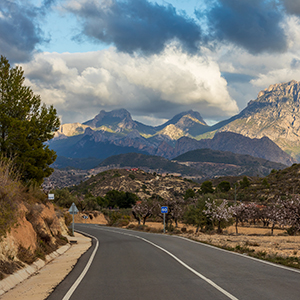
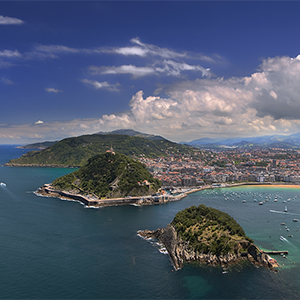
Sunshine, sandy beaches and great cuisine are threads that run through any road trip in Spain.






_-_3452879904.jpg)

.jpg)
