Sailing holidays in Spitsbergen
Don’t just learn about explorers past: sailing in Spitsbergen is an opportunity for your very own expedition.
In 1897 the Swedish explorer Salomon August Andrée set off from Virgohamna (Virgo Bay), on Danskoya (Danes Island), 79°N in the Svalbard archipelago, in a hot air balloon made of 600 pieces of fortified silk. His party were attempting to reach the North Pole. The expedition proved fatal: their balloon was forced to land, and they spent two months walking back across the ice. They died on White Island, close to Svalbard.
Today Virgohamna doesn’t look much changed. There are still old blubber ovens on the beach – remnants of 17th-century Dutch whaling operations – whalers’ graves, and rusted petrol drums – the remains of expedition bases. Sailors on our remote Svalbard sailing expeditions can moor in the bay and step ashore – with permission from the Governor of Svalbard. The bay was the starting point for not one, but two failed North Pole expeditions – Walter Wellman, an American, also attempted to reach it from here via airship in the 1900s. Sailing here you often come across tales of explorers past – Svalbard’s location, striking distance below the North Pole, has made it a land of expeditions.
In 1897 the Swedish explorer Salomon August Andrée set off from Virgohamna (Virgo Bay), on Danskoya (Danes Island), 79°N in the Svalbard archipelago, in a hot air balloon made of 600 pieces of fortified silk. His party were attempting to reach the North Pole. The expedition proved fatal: their balloon was forced to land, and they spent two months walking back across the ice. They died on White Island, close to Svalbard.
Today Virgohamna doesn’t look much changed. There are still old blubber ovens on the beach – remnants of 17th-century Dutch whaling operations – whalers’ graves, and rusted petrol drums – the remains of expedition bases. Sailors on our remote Svalbard sailing expeditions can moor in the bay and step ashore – with permission from the Governor of Svalbard. The bay was the starting point for not one, but two failed North Pole expeditions – Walter Wellman, an American, also attempted to reach it from here via airship in the 1900s. Sailing here you often come across tales of explorers past – Svalbard’s location, striking distance below the North Pole, has made it a land of expeditions.

A land of expeditions
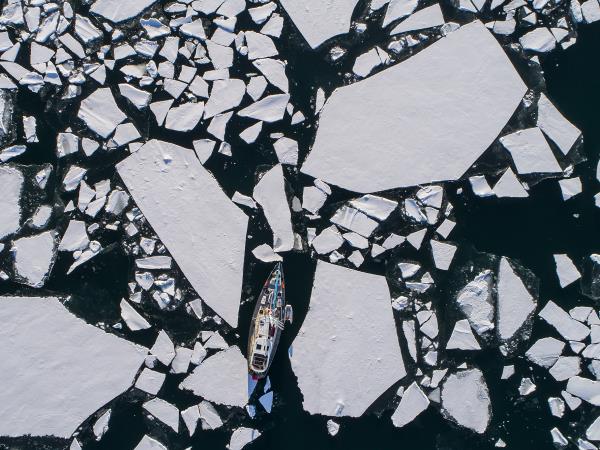
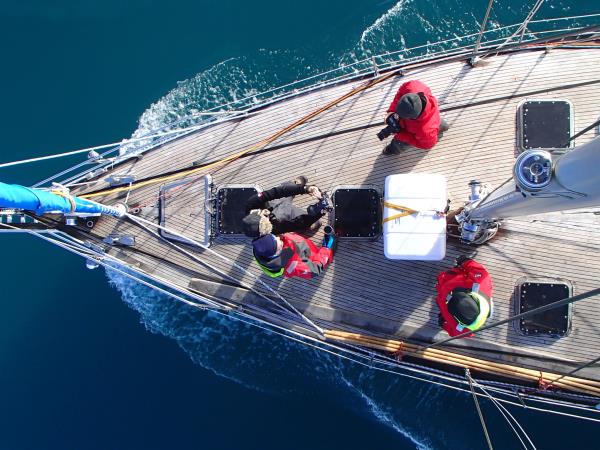
Situated halfway between Norway and the North Pole, the archipelago has more polar bears than people, the world’s most northerly post box, and is so frozen that bodies are often transported to be buried on mainland Norway. It’s a place where it’s easier to explore by boat than by land: there are very few roads, and overland sledders must travel armed, in case of polar bears. Historically Svalbard was used as the springboard for Arctic explorers, but there’s plenty of adventure to be had right here.When you sail here, you aren’t just following in the wakes of famous adventurers, but making adventures of your own. You’re prey to the whims of the winds, dodging ice, calculating the tides, navigating changing sea conditions, keeping watch for whale spouts, and trying not to fall prey to one of Svalbard’s perspective tricks.
Travellers often report a funny phenomenon in Svalbard: the air is so clear and pollution-free that everything looks closer than it is. It’s a strange feeling, thinking you’re sailing next to massive mountains, free of trees, houses or other familiar landmarks that might give you a sense of scale. It’s only when they never get closer that you realise that they are miles away.
You might even notice it on your flight in: “The aeroplane turns between mountains and the air is so pure that you have a feeling that the aeroplane will hit the mountain,” says Marcin Sanetra, founder of our partner for sailing adventures, Sail Arctic. Add in the strange lighting effects you get in the north when sun meets snow – days that stretch into nights in the summer, nights that reach into the days in winter – and you have an adventure that borders on the surreal. That’s before we’ve even mentioned the skiing.
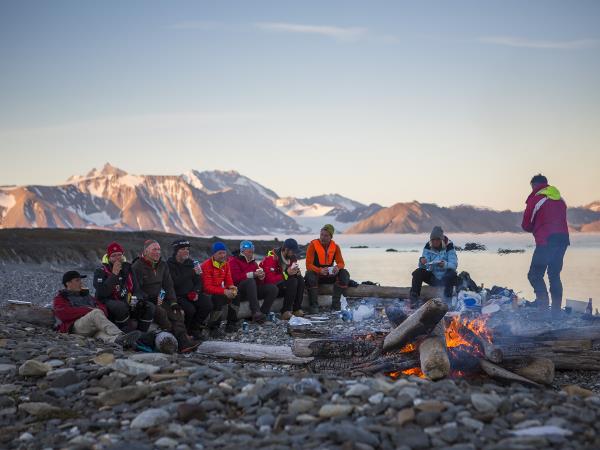
Arctic Circle sailing expedition, Spitsbergen
Unique opportunity to experience Arctic wildlife & scenery
From
NKr72300
12 days
ex flights
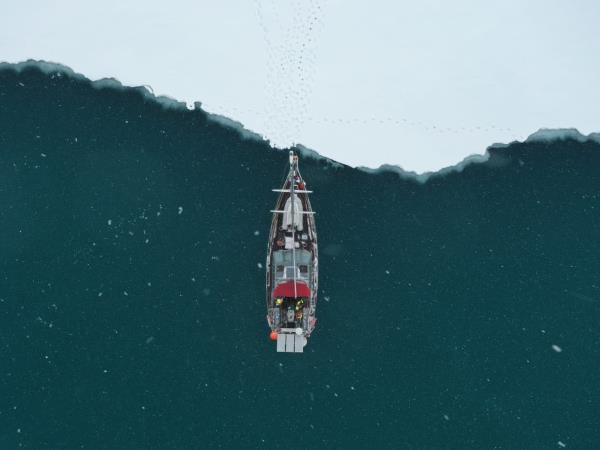
Svalbard sailing holiday
Sail aboard an expedition yacht + ski touring & trekking
From
€4005
14 days
ex flights
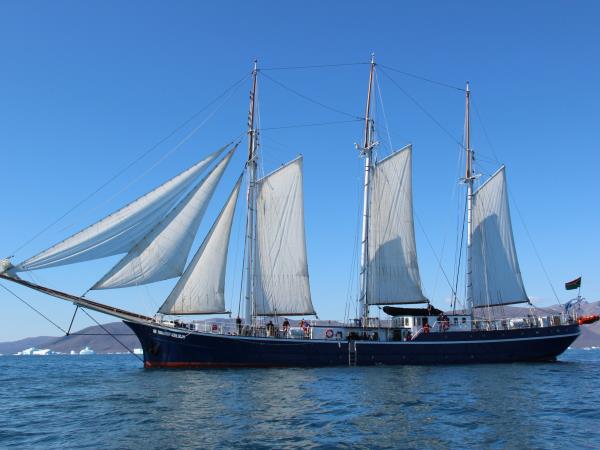
Arctic sailing voyages, North Spitsbergen
Spitsbergen tall-ship wildlife and natural history sailing
From
€3790 to €5350
8 days
ex flights
Svalbard sail & ski holiday
Wind-powered sailing meets epic ski touring in Svalbard
From
€2880
7 days
ex flights
Svalbard summer sailing holiday
Discover the history, culture & wildlife of Northwest Svalbard
From
NKr55500
8 days
ex flights
Arctic sailing safari
Navigate icy waters to spot polar bears and whales
From
€2415
7 days
ex flights


Contact Us

Call us for a chat about our holidays. We are happy to discuss your holiday and help in any way we can. No bots, queues or awful hold music.

01273 823 700
Call us after 10am
Calling from outside the UK



Sail past massive mountains, free of trees, houses or other familiar landmarks that might give you a sense of scale. It’s only when they never get closer that you realise that they are miles away.![]()

Going ashore: skiing, strolling, spectating
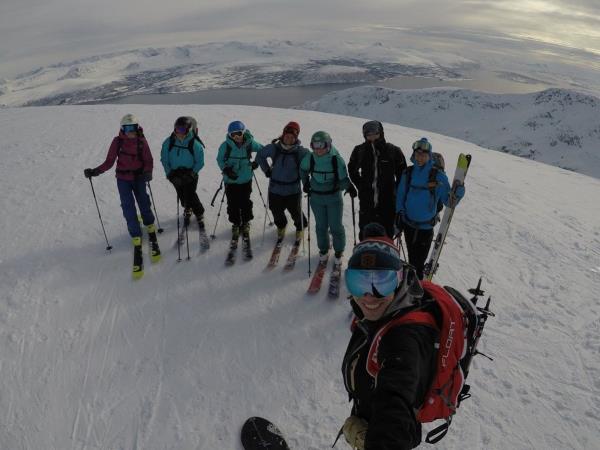
In the right season, Svalbard’s snow reaches from the tops of its hills all the way down to the sea –the perfect conditions for an unusual Arctic activity: sail and ski.
“Our idea is to climb directly from the seaside and go down to sea level,” says Marcin. On their expeditions, groups go ashore with an experienced ski touring instructor and climb up into the hills on skis before skiing down – all the way back to the boat, making some satisfyingly tracks down the mountain as you go. It’s a world away from a chairlift-clad ski resort: “On Svalbard you are ski touring on the roof of the world”.
There are other reasons to go ashore – to shadow explorers, to learn about whaling, and to explore some of Spitsbergen’s settlements, like Pyramiden, a former Russian mining town that was abandoned, has only a handful of residents, and remains enigmatically frozen in time. “It’s amazing because you have the feeling that all the people have just vanished,” says Marcin.
Going ashore often requires permission, as 65 percent of Svalbard’s land area is protected. “There are some restrictions on being close to the cliffs and to closed areas like reserves,” says Marcin. “We know what we can do and what we can show.”
Marcin’s Svalbard expedition aims to reach Edgeoya, fittingly anglicised as Edge Island. Edgeoya is on the southeast of the archipelago, its third largest island, uninhabited, and very rarely explored. Going ashore here brings you face to face with Arctic tundra – where reindeer roam, Arctic foxes hunt kittiwake colonies and polar bears den with their cubs.
“Our idea is to climb directly from the seaside and go down to sea level,” says Marcin. On their expeditions, groups go ashore with an experienced ski touring instructor and climb up into the hills on skis before skiing down – all the way back to the boat, making some satisfyingly tracks down the mountain as you go. It’s a world away from a chairlift-clad ski resort: “On Svalbard you are ski touring on the roof of the world”.
There are other reasons to go ashore – to shadow explorers, to learn about whaling, and to explore some of Spitsbergen’s settlements, like Pyramiden, a former Russian mining town that was abandoned, has only a handful of residents, and remains enigmatically frozen in time. “It’s amazing because you have the feeling that all the people have just vanished,” says Marcin.
Going ashore often requires permission, as 65 percent of Svalbard’s land area is protected. “There are some restrictions on being close to the cliffs and to closed areas like reserves,” says Marcin. “We know what we can do and what we can show.”
Marcin’s Svalbard expedition aims to reach Edgeoya, fittingly anglicised as Edge Island. Edgeoya is on the southeast of the archipelago, its third largest island, uninhabited, and very rarely explored. Going ashore here brings you face to face with Arctic tundra – where reindeer roam, Arctic foxes hunt kittiwake colonies and polar bears den with their cubs.
Great guides
An expedition of this nature relies on seriously experienced guides. Our trips bring guides on board with amazing backgrounds as polar scientists, explorers, and authors. Marcin has previously used a guide who was a technical base operator on the island, and one of the rare people with permission to hunt on the island – “It’s very rare to be able to do so, less than a dozen people in total have that permission. Taking a person like that on board gives you great knowledge. They can tell you stories about the past, the region and the people.”Spitsbergen sailing map
Where to go sailing in Spitsbergen?
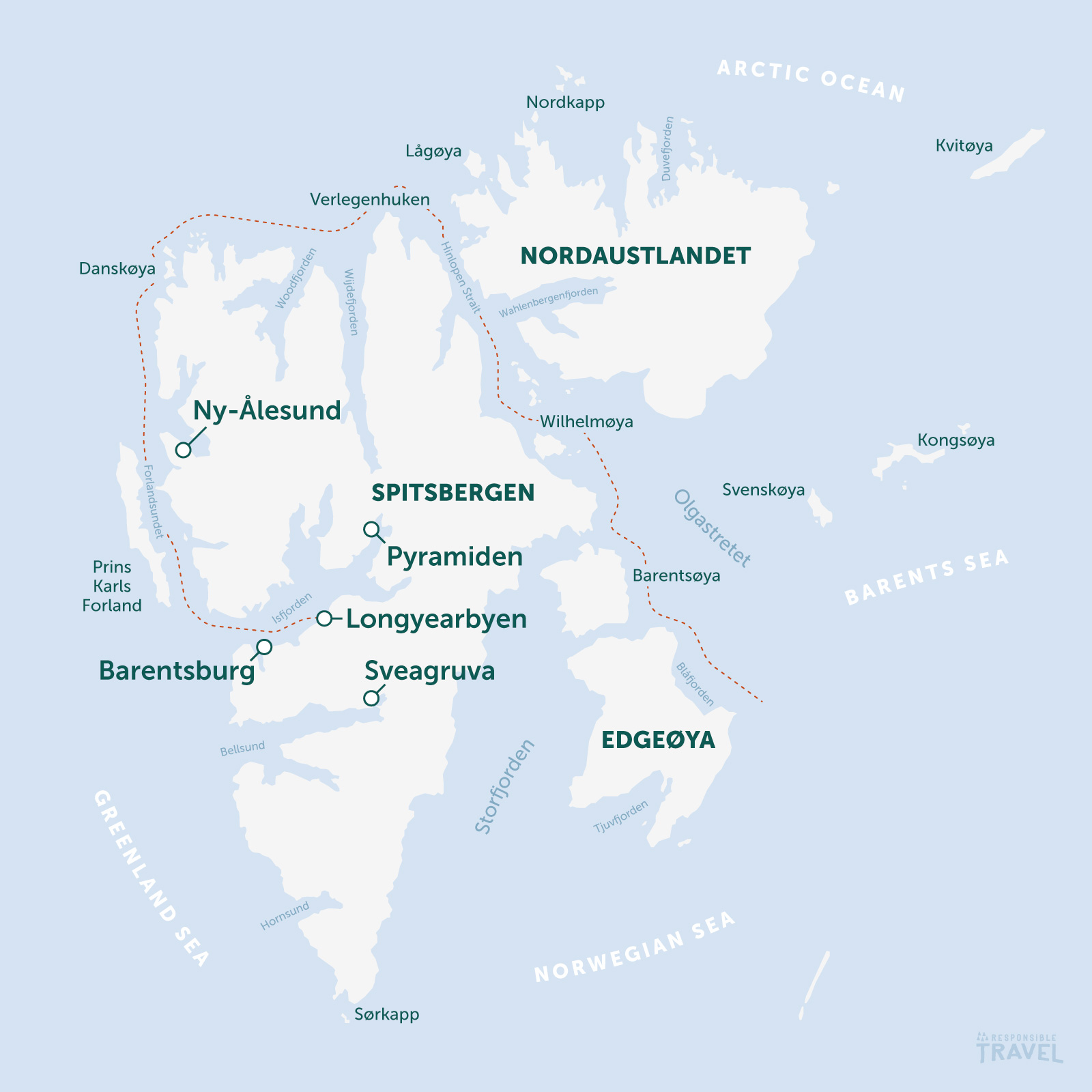
You can get a fantastic taste of Svalbard simply by sailing in Isfjorden. Spitsbergen’s longest fjord has many arms to explore, the human settlements of Longyearbyen and Barentsburg vie with walrus and seabird colonies, and there are glacier-blocked bays and massive mountains.
Most expeditions start in Longyearbyen, before sailing out of Isfjorden and heading north along the west coast of Spitsbergen, which is famously scenic. From here you can sail between Prins Karls Forland (Princes Charles Forland, named after English king Charles I), a narrow island, and the coast of Spitsbergen. Heading further north along the island of Spitsbergen you reach Danskoya, or Danes Island, the basecamp for those two ill-fated polar expeditions. It’s a short hop to Ny Alesund, a settlement with the world’s most northerly post office. Shorter expeditions may return from here along the coast to Longyearbyen. Longer trips make the jump to other islands in the archipelago.
Beyond Spitsbergen, you reach Nordaustlandet, the archipelago’s second largest island, and famous for its glacier: the Austfonna ice cap is one of the largest in Europe, covering most of the island. Under sail you can approach and spend hours watching the ice. Even fewer people make it out to Edgeoya, the third largest island, in the south-east. Smaller islands, like Hopen and Bjornoya (Bear Island) make useful stopping points if you are aiming to head to mainland Norway.
Most expeditions start in Longyearbyen, before sailing out of Isfjorden and heading north along the west coast of Spitsbergen, which is famously scenic. From here you can sail between Prins Karls Forland (Princes Charles Forland, named after English king Charles I), a narrow island, and the coast of Spitsbergen. Heading further north along the island of Spitsbergen you reach Danskoya, or Danes Island, the basecamp for those two ill-fated polar expeditions. It’s a short hop to Ny Alesund, a settlement with the world’s most northerly post office. Shorter expeditions may return from here along the coast to Longyearbyen. Longer trips make the jump to other islands in the archipelago.
Beyond Spitsbergen, you reach Nordaustlandet, the archipelago’s second largest island, and famous for its glacier: the Austfonna ice cap is one of the largest in Europe, covering most of the island. Under sail you can approach and spend hours watching the ice. Even fewer people make it out to Edgeoya, the third largest island, in the south-east. Smaller islands, like Hopen and Bjornoya (Bear Island) make useful stopping points if you are aiming to head to mainland Norway.
What does sailing in Spitsbergen entail?
More Spitsbergen articles
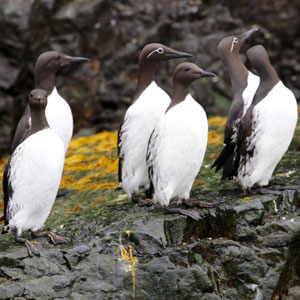
The best time to visit Spitsbergen is when the sun reappears and the pack ice begins to melt.
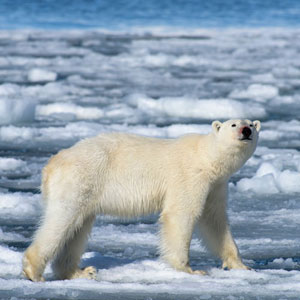
Our comprehensive Spitsbergen travel guide looks at the extreme nature of the Svalbard archipelago.
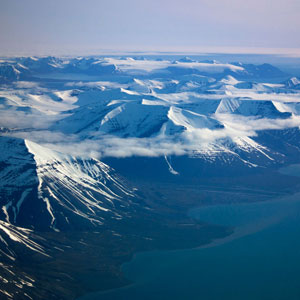
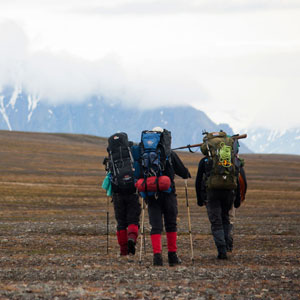
Land-based trips on Spitsbergen take place all year round for many activities.
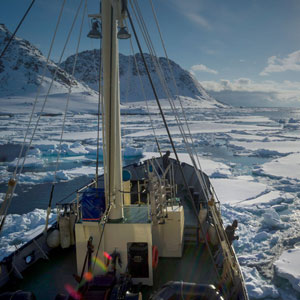
Taking a small ship cruise around Spitsbergen is the most enjoyable way to go.
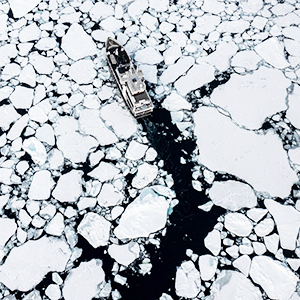
Our micro cruises in Svalbard take no more than 12 adventurous passengers on epic Arctic voyages.
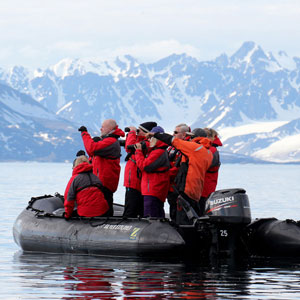
People who have been to Spitsbergen are always keen to share their tips and their experiences.
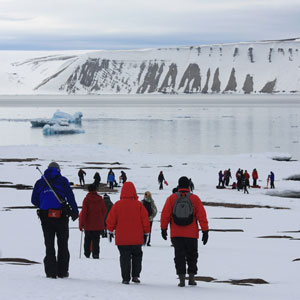
Giant cruises to polar bear safety, all the issues pertaining to Spitsbergen.