Rewilding in Tanzania
“There’s an eagle owl that lives nearby, a spectacular bird. He sometimes comes and roosts on top of our lodge. We’ve got fish eagles nesting around here too. One of our recent volunteers was a young zoology graduate, and whenever we’d be driving around he would get me to stop because he’d got excited about something he’d seen in his binoculars. He spotted something like 125 different bird species during his time here. So creating this birdwatching trip was the obvious step.”
Graham McClure is the founder of our partner Go Make a Difference, a charity that runs a wide range of effective community projects in East Africa. They are now, er, branching out, into a huge reforestation project on the Tanzanian shore of Lake Victoria. With biodiversity flourishing among the trees they have launched a bird-watching trip to complement the safari and volunteering holidays that help support their work.

We bought a derelict bit of land, with just scrub on it, and planted 30,000 trees![]()

There are eastern plantain-eaters here, woodland kingfishers, double-toothed barbets and stunning lilac-breasted rollers. Red-cheeked cordon-bleus, crested eagles and Von der Decken's hornbills are among the other eye-catching attractions. And hopefully their numbers will swell as more and more trees are planted – 120,000 so far, across three sites. “We bought a derelict bit of land, with just scrub on it, and planted 30,000 trees,” adds Graham. “Now it’s rife with birds, and we’ve seen hares, antelopes and snakes too.”

Deforestation and its effects in Tanzania
Tanzania suffers from one of the worst rates of deforestation in Africa. Between 2015 and 2020, the country lost almost 470,000 hectares (1.16m acres) of forest annually. There are several causes, including the lucrative international timber trade, and agricultural expansion. But much of it is down to people harvesting trees to burn for charcoal. Some 90 percent of Tanzanian people are estimated to use charcoal or firewood to cook.Tree-planting efforts on our volunteer holidays have several benefits beyond just creating safe havens for birds ![]()
“The hills around here have been near-completely stripped of trees,” says Graham. “Whenever there’s a drought the local people can’t make an income from maize or cassava, so they chop down the trees and sell the wood for charcoal. And you can’t blame them.” But as well as having a devastating effect on Tanzania’s forests and the biodiversity they contain, deforestation also has a range of other serious consequences from soil erosion to disruption of rainfall cycles, water pollution and health and social issues. It’s thought that over 30,000 Tanzanians perish every year from household air pollution, much of it caused by fumes from cooking with firewood and charcoal.
So the tree-planting efforts of our volunteers have several benefits beyond just creating safe havens for many bird species. They help to hold together the soil that farmers depend on, and to filter pollutants out of water sources such as rivers and lakes.
So the tree-planting efforts of our volunteers have several benefits beyond just creating safe havens for many bird species. They help to hold together the soil that farmers depend on, and to filter pollutants out of water sources such as rivers and lakes.
Environmental threats to Lake Victoria
Lake Victoria is the largest lake in Africa, shared by Tanzania, Uganda and Kenya. Millions of people rely on it for fishing, drinking water, and irrigation. Yet the lake is seriously polluted with litter and fish waste, dangerously high levels of lead, aluminium and arsenic, and algae contamination. There are fears too of oil spills in the future, from drilling projects in Murchison Falls National Park and Lake Albert, just to the north.Couple all of this with deforestation, and climate change causing heavy rains and floods, and there is a risk of ecological disaster that will affect millions of people, not to mention the amazing biodiversity that the lake supports. Community forest management schemes, which award permit for logging to ensure it remains at sustainable levels and reinvest profits into the local area, are one solution being posed to this issue.
Ultimately, reforesting and rewilding the landscapes around Lake Victoria is not going to solve all of its problems. But it’s a very useful place to start.
Contact Us
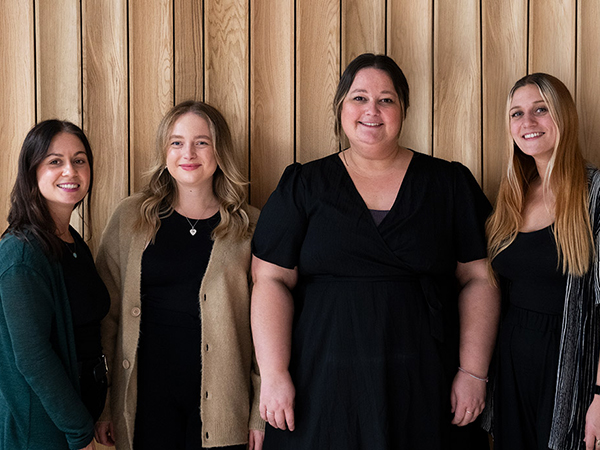
Call us for a chat about our holidays. We are happy to discuss your holiday and help in any way we can. No bots, queues or awful hold music.

01273 823 700
Call us after 10am
Calling from outside the UK

What do rewilding holidays in Tanzania involve?
Rewilding volunteer projects are a superb example of what we call ‘nature positive tourism’ – where your holiday is not simply doing the bare minimum to reduce negative environmental impacts, but actually creates significant benefits.
Practicalities
Typically, volunteers can get involved in a number of well-established projects over a few weeks or longer. Claire Anderson is a former volunteer and now helps to coordinate their our trips in Tanzania. Like Graham, she speaks Swahili. Under her guidance you might spend your time helping to plant trees and rewild the area, and perhaps also building water tanks and latrines, doing a little teaching, or pitching in at one of the successful malaria clinics run by the charity. Among their many achievements to date, the charity’s volunteers have helped to build several hundred tanks to store rainwater, most for family homes, some large enough for hospitals.
Volunteers share accommodation at the charity’s Eagle Lodge, close to Lake Victoria, with strict rules around the frugal use of water, such a precious resource here. You can stay for months at a time if you wish – and can also enjoy safaris and birdwatching, in the Serengeti (an hour away by road), in the Masai Mara, and further afield.
No special skills are required for these Tanzania volunteer holidays beyond a decent level of fitness and a willingness to get stuck in. Though of course anyone with experience in fields such as medicine, teaching, engineering will be very welcome. And volunteers come from all sorts of backgrounds: religious groups, gap year travellers, families, people on career breaks or wanting something to do in retirement.
Volunteers share accommodation at the charity’s Eagle Lodge, close to Lake Victoria, with strict rules around the frugal use of water, such a precious resource here. You can stay for months at a time if you wish – and can also enjoy safaris and birdwatching, in the Serengeti (an hour away by road), in the Masai Mara, and further afield.
No special skills are required for these Tanzania volunteer holidays beyond a decent level of fitness and a willingness to get stuck in. Though of course anyone with experience in fields such as medicine, teaching, engineering will be very welcome. And volunteers come from all sorts of backgrounds: religious groups, gap year travellers, families, people on career breaks or wanting something to do in retirement.
Your holiday is not simply doing the bare minimum to reduce negative environmental impacts, but actually creating significant benefits ![]()
Speaking of the charity’s various projects, Graham says that “our impact is very strong. We’re one of the biggest employers in the area, with thirty full-time staff and many more on a seasonal basis. We work with the regional government on some projects. And I am an honorary member of the tribe – we’ve developed great local connections here. So you arrive in East Africa and we get you straight into the community.”
“One of the trees we’re planting is the native Melia volkensii, a valuable hardwood that’s ideal for this dry climate and thin soil. They can grow four metres in the first year. We’ve planted about 50,000 of them. We work with farmers who intercrop them between their vegetables. They’re planted by local people with no vehicles, they just go off into the hills and get to work. So they’re carbon positive from year one.”
The aim is for these trees to provide a sustainable income for the communities around Musoma. But more than that – one day, it’s hoped, the landscapes here will look, and function, much as they did forty years ago.
“One of the trees we’re planting is the native Melia volkensii, a valuable hardwood that’s ideal for this dry climate and thin soil. They can grow four metres in the first year. We’ve planted about 50,000 of them. We work with farmers who intercrop them between their vegetables. They’re planted by local people with no vehicles, they just go off into the hills and get to work. So they’re carbon positive from year one.”
The aim is for these trees to provide a sustainable income for the communities around Musoma. But more than that – one day, it’s hoped, the landscapes here will look, and function, much as they did forty years ago.
More Tanzania volunteering articles
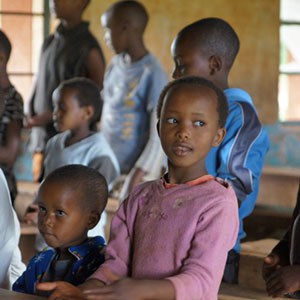
On the job training, cultural exchanges and safaris in the Serengeti at weekends; find out more in our guide.
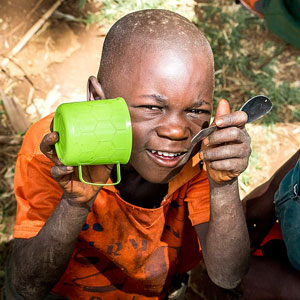
Empower local people through employment, healthcare and education.
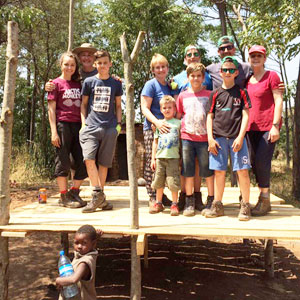
Take your family on a holiday that will make a difference to you and to the people of Tanzania.
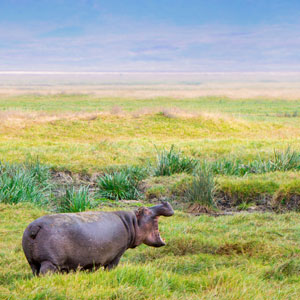
A volunteer holiday in Tanzania can easily be combined with an equally unforgettable safari.